


Meet the Man Running Cairo's Oldest Independent Theatre, Rawabet
A Q&A with Ahmed El Attar, the veteran theatre director behind Rawabet Art Space, Studio Emad Eddin, and D-CAF.
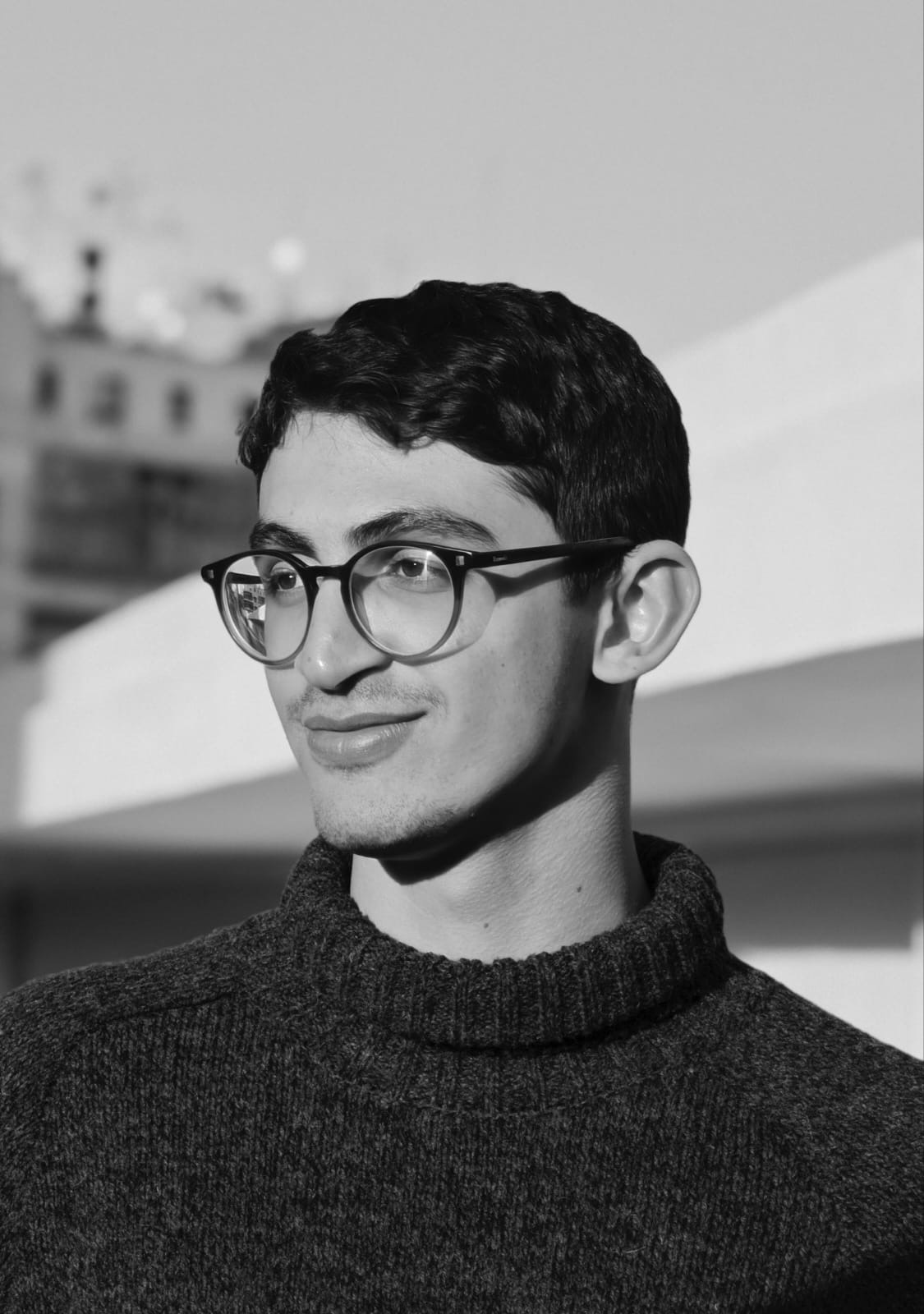
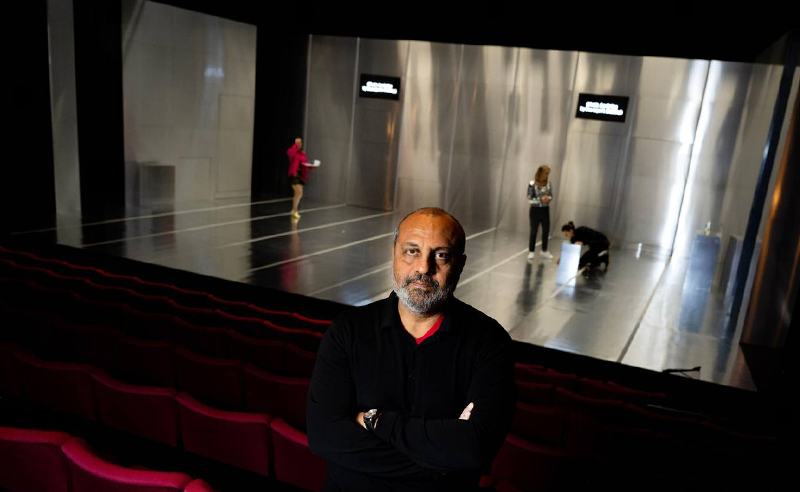
Ahmed El Attar’s first foray into theatre was accidental. He was a Computer Science major at AUC in the early 90s when, in his first year of studies, someone asked if he was interested in being an assistant stage manager for a student production. He said yes, knowing nothing about theatre. Some 30 years later, Ahmed El Attar is either the founder or director (or both) of some of Cairo’s most prominent independent performing arts institutions: the Downtown Contemporary Arts Festival (D-CAF), Rawabet Art Space, Orient Productions, and Studio Emad Eddin, to name a few.
He’s also, first and foremost, an acclaimed theatre director and playwright. Since his debut in 1998, his works have made their way across the world from the Kennedy Center in Washington to Saint Petersburg’s Alexandrinsky Theatre, the Hong Kong Arts Festival and the major stages of the Gulf, making him perhaps the most internationally-represented contemporary Egyptian playwright. In 2023, he also became the first Arab playwright to be commissioned to create a work for Sweden’s national theatre, Dramaten. His most recent play, Salma, Mon Amour, featured in the 2026 Cairo International Festival for Experimental Theatre after premiering in France’s Festival d’Avignon in July.
But it is in Egypt, and particularly Cairo, where the crux of El Attar’s managerial efforts are focused. This is not a byproduct of his career as a director and playwright, but a parallel effort that has unfolded across just as many years, producing in its path institutions that arose out of a practical need to bridge gaps in the ecosystem.
To understand what it takes to run an independent theatre in Cairo today, we asked El Attar about the makings of Egypt's independent theatre ecosystem, what makes (or doesn't make) independent art sustainable, and what is most needed in the theatre scene next.
You wear many hats, but how would you introduce yourself?
I’m an independent theatre director and a playwright, and the artistic director of a few independent cultural organizations—mainly D-CAF and Studio Emad Eddin.
What’s the relationship between D-CAF and Studio Emad Eddin, and Orient Productions?
Orient Productions is a production company, but also a kind of mother company. Projects and initiatives like D-CAF, Studio Emad Eddin, the Cairo Arts Technical Program (CATP), the creative co-working space Maktabi, and our mentoring production grants, all of these fall under Orient Productions.
You also founded the Temple Independent Theatre Company?
The Temple Independent Theatre Company is something I created in 1993 when I graduated, but it’s not a company in the sense of constantly working on something. When I have a project that I’m interested in, then I do it through that.
Does being an artistic manager and producer take away from your own work as an artist?
On the contrary, as an artist I benefit from also being a producer because I’m someone who only likes to create when I feel I really have the need to say something. I don’t need to create to survive if I don’t have anything important to say that’s eating me up, which is why it takes me two or three years between productions. For most artists, that’s a luxury.
But how did it come to be that you’re now associated with so many of these cultural institutions as a producer?
It started from a real desire to give something back, and also a belief in the capacity of art to change people. Theatre saved my life. I believed that it could do that for other people.
In 2004 I was working on a play called Mother, I Want to Be a Millionaire, which was produced by Berliner Festspiele, one of the biggest and oldest festivals in Europe. I had the budget that I wanted, had a big cast starring Sayed Ragab, had a professional set and lighting designer from Beirut, and was working with Falaki Theatre, which was then the most well-equipped theatre in the country. Everyone was even getting paid. These are conditions that even today are very hard to come by as an artist. And yet I was still rehearsing in my living room.
So I was like, if with all the means I have right now, if I’m still rehearsing in the living room, imagine what artists who are still up and coming have to go through. Where will they rehearse? That’s where the first idea came for Studio Emad Eddin, which began as a rehearsal space.
And afterwards? Once you had Studio Emad Eddin up and running, what came next?
Well then as an independent director and playwright in Cairo you could now have a rehearsal space, but you still had no money for the production. So we started thinking about tackling that gap, and partnering with international organizations on production grants. Then there was the question of where to perform, so we took up the management of Falaki after the AUC left Downtown and moved to New Cairo. We ran it for seven years, from 2012 to 2019.
When we took over Falaki, we started to see what else was missing, and we realized that there’s little technical training in Egypt for light and sound technicians. This was another problem we needed to tackle, and we brought in professionals from abroad for workshops, and launched the Cairo Art Technical Program. The cohort that just graduated this August had 30 newly-trained professionals: ten for light, ten for sound, and ten for video.
So everything you build is to complete the circle. This is what people don’t understand about theatre, whether independent or not. You can’t have Broadway without everything that happens around it. It would be like planting a tree in the desert without watering it.
-7f1f496c-4a99-46a2-9221-1e0b6aede3e1.png) Orient Productions now also manages Rawabet Art Space, which is usually cited as the oldest independent theatre space in Cairo. How did that come to be?
Rawabet is not only the oldest independent theatre space in Cairo, it’s the only independent space. Falaki belongs to a university, and as much as the AUC is open, they have their own restrictions and rules. Likewise, the El Nahda Jesuit Theatre is bound by the institution that it’s in. When Rawabet was created, it was an art space within an art space: the Townhouse Gallery. It was only bound by the limitations that its founders and managers put on it, not a big institution telling it what to do. That’s the importance of Rawabet.
So when it closed in 2019, we had a discussion in Orient saying okay, that’s the only one left. If it closes then the whole sector will collapse. Because of Falaki, we were the only ones who had the experience of running a venue like this in Cairo, so we went and got some money together to refurbish it, and we re-opened Rawabet in 2021.
It’s currently owned by Al Ismaelia for Real Estate Investment, who are also our partners and co-founders in D-CAF.
I’m still wondering though, how do you make it sustainable? What does it take to run an independent theatre in Cairo?
There’s something important that you have to understand: independent slash alternative art is not sustainable. The only part that is sustainable is the commercial side of it. An independent theatre can’t survive on ticket sales alone.
Look at Broadway. People think Broadway means musicals, but it’s a technical term that means a theatre with a capacity of more than 500 seats. Why is that? Because on Broadway they calculated that in order to recoup the cost of a typical production that has, let’s say, eight weeks of rehearsals, with a certain number of performers and leads, and runs for a set period of time, you need to have no less than 500 seats. Broadway is a financial term, not an artistic term. It’s sustainable because it’s been designed like a business project. It’s art, but it’s also business.
Can this model or a similar one not work for independent theatres?
When your main target is not the financial outcome but the artistic outcome, your whole process changes. The Salma Mon Amour show I just did, it took me from November last year to June to produce, to put together, to create. That’s a hell of a long time of rehearsals and production. We’re talking 8 months. It doesn’t work. No matter how you look at it, it doesn’t function. How many tickets can you possibly sell?
But still, you do generate income.
We generate income. That’s the difference between us and other institutions; when we took over Rawabet we had a rule that we won’t do any free shows. The running costs are already subsidized because we partner with international organizations on a project basis, so we give the artist the stage at a rate that’s 30-40% of market price. But there’s one rule: they have to sell tickets.
So for example, when an artist sells a full house at Rawabet and generates 45,000 EGP, after rent and other costs are deducted, they would still make around 24,000 EGP. That’s not what was happening before. Now at least they can pay the artists and part of the cost of producing the work. That’s why we’re still surviving. We have that balance between generating income—which doesn’t cover us completely but still covers us quite well—and helping artists to generate income from their work.
That’s why Rawabet first collapsed. They had no income. We generate income. And most importantly we help artists generate income.
-3d120a79-3043-421f-a4c1-ec04f856144d.png) Do you set the ticket price, or does the artist? Every show I’ve been to at Rawabet was a full house, and I felt that this is also because the prices are reasonable.
We let the artist determine the price. We advise them, but for example if they think they can sell at 500 EGP, we tell them to go ahead. We don’t interfere.
Besides income, what are the main barriers to managing an independent space like this in Egypt?
Managing anything in Egypt is tough. It’s even clear on the street. Why would theatre be different from managing traffic?
The most important thing is to try and create models that show a different way, to not just talk the talk but walk the walk. When you come to Rawabet, we always start on time. And if the artist instructs that no one enter after we close the door, then no one will enter. I know these things might not seem important, but they’re very important.
When we started doing this years ago, people would say, ‘but the Egyptian audience is not used to it.’ I said okay, make it happen to them two or three times after they buy a ticket and arrive late, and they will get used to it. This is what you need to create the models that you aspire to be, because this is what causes other people to get inspired.
What role does commercial theatre then play in creating these models and supporting this ecosystem?
The private sector in Egypt is flourishing again, and this is great. Commercial theatre was extinct in Egypt by the 90s. It started to come back slowly in the 2000s, and now it’s really come back. We can’t have a strong alternative theatre without a strong commercial theatre. Everything affects the other. Technicians, actors, directors. One of the most successful plays ever in Egypt, Shahed Ma Shafsh Haga, came from commercial theatre. The writer of Madraset El Moshaghbeen, which was one of Arab theatre’s biggest hits, was one of the strongest writers in Egypt and had beautiful pieces that were very literary and very political.
For example, I consider myself a director and playwright of non-commercial theatre, but of course I also work with actors. And an actor might come work with me this time, and work on a commercial musical next. It’s a whole circle. When one is strong the other is also strengthened. When one is weak the other will weaken.
So then what do you think independent theatre in Egypt needs most today?
We need government support. Today, in countries like France, the UK, Germany, Holland and even the United States, the national government and cities and towns support independent art with big money every year.
We have great cultural institutions in Egypt – I’ve been all over the Arab world, and there’s no country that has the institutions we have here, the Cultural Palaces that are in every big or medium city – but why were state-run theatres first created? There was the private sector long before the Ministry of Culture, and people were going to shows and paying expensive tickets. The goal of state theatres was to make quality culture accessible to the wider public as part of a whole vision of culture and art, and that’s the role independent or alternative theatre plays today.
So I think a whole restructure needs to be done based on supporting the independent or alternative sector, not just in theatre but in all the arts. The system these state institutions are running on is the same as in the 1950s. It worked at the time, but now it has to change, or it will drown.
Related Articles
Trending This Week
-
-
-
 Nov 08, 2026
-
 Nov 09, 2026