



Reemaz Oqbi Wants Opera to Ask More Questions
From performing arts magnet schools in California to singing Puccini in front of the Colosseum, Reemaz Oqbi has spent her life harmonising two worlds, and she's only just getting started.
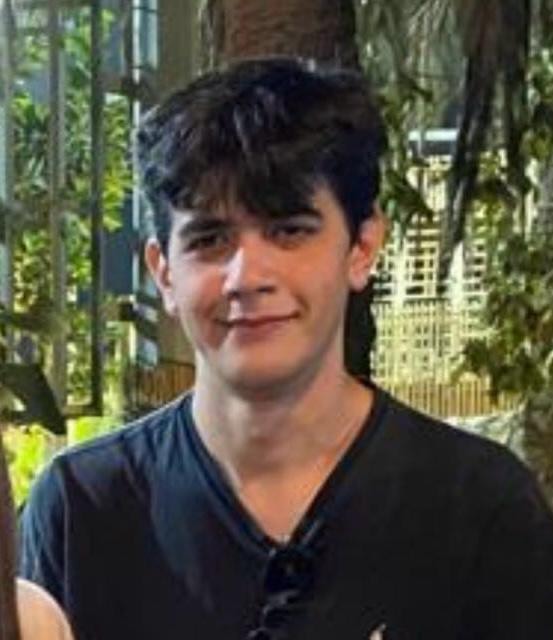
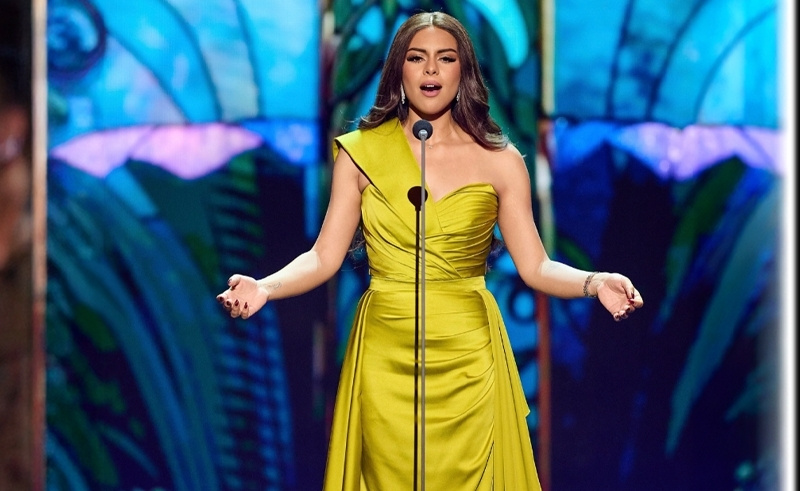
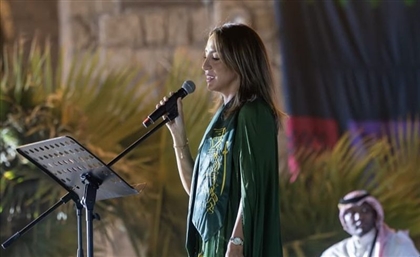
When the Saudi National Orchestra took the stage in Rome on May 2026, as part of their sweeping 'Marvels of Saudi Orchestra' world tour, they did so in the shadow of the Colosseum, a setting that, historically, has had a way of putting things in perspective. Alongside Andrea Bocelli and under the baton of maestro Marcello Rota, the orchestra wove together Saudi, Italian and international works for an audience in one of Europe's great cultural capitals. Somewhere in that orchestra, holding her flute and desperately trying to stay in tune, was Reemaz Oqbi.
Oqbi is, by any measure, a difficult person to summarise. She is an opera singer and a flautist, an artist manager and a TV host — in short: the kind of person whose business card might require a second page. Born in Madinah, raised in the Bay Area, and now firmly rooted back in Riyadh, she has spent her career at the intersection of two musical worlds that most people would scarcely think to place side by side: the grand theatres of Western classical music and the rich, centuries-old traditions of Arabic song.
There is no performance of reconciliation in how she moves between Puccini and Umm Kulthum, between bel canto and Andalusian MuwashaHat — to her, they were always the same conversation. She recently sat down with SceneNowSaudi to talk about the moment opera chose her, the Arabic roots of classical music, and what it means to be a woman making music in Saudi Arabia today.
Q: You grew up in California. How did that shape your early relationship with music?
A: Yes. My parents relocated to the Bay Area in 2004. I was probably six. I did all of my schooling in California, at performing arts magnet schools, so there was a primary focus on performing arts: dance, music, choir, band, orchestra, all of that. Around maybe 10 or 12, my mom was like, "This could be a real thing for you," and she enrolled me in private lessons — music theory, flute, singing. Around the age of 16, I decided opera is where I want to be. I made that choice pretty early on and I've just been chasing it ever since.
Q: It's quite rare nowadays for a young person to grow up and decide opera is what they want to pursue. Was there a specific moment where it clicked for you?
A: I can pinpoint it. My ninth-grade choir teacher took us to San Jose University for a student recital. There was this girl singing O mio babbino caro by Puccini. She was in this red dress, blonde, with really long hair. I was just absolutely floored — at the emotion, the expertise, how much control she had over her voice. Suddenly it just clicked: "I've tried jazz, funk, R&B, musical theatre. This is what I want to do." I don't know her name. I don't know what she's doing today. I hope she knows that that moment was the moment.
Q: You think of someone like Nina Simone, for example, who started in classical music and eventually developed into something entirely her own. Have you ever found yourself at a similar crossroads where you wondered whether opera might be a foundation for something else?
A: This is literally a question I've been asking myself this week. I don't have original music. I've never had anything that's my own. And now I'm starting to get into the space of, "Okay, what do I want to do? Where do I see myself as a commercial artist?" I grew up in the Bay Area, so I'm really influenced by R&B, hip-hop, soul, funk — Lauryn Hill, Sade, Nina Simone, a lot of jazz. I do see myself eventually stepping into that direction. A lot of people think classical music is constricting, but I think the opposite. It gives you the skill and expertise to master the quality of your own voice so you can step into other things. I'm working on a few things now that maybe will allow me to release my own music soon.
Q: Growing up fully Saudi but spending your formative years in the Bay Area, how did those two cultures come together to shape your understanding of music?
A: It was such a dichotomy. I'm fully Saudi on both sides, and every year we'd go back to my hometown of Madinah for the summer. But also, my parents were always playing Saudi music at home. I grew up going to classical music lessons, but then I'd drive in the car with my mom and dad, and they'd be playing the greatest Saudi hits. To me, they never seemed all that unrelated. Opera, Puccini, Mozart, and Saudi music — they're so completely different on paper. Growing up, they happened in such parallel. I've never had trouble equating both sides of my identity. I think they eventually harmonised into one thing.
I know so many of Abadi Al-Johar's songs, not just because I love him, but because he was always on at home. Warda, Fairuz, Umm Kulthum — all of them. Making the transition back to the Middle East in my adulthood wasn't difficult musically, because I already had those roots.
Q: Talking about your repertoire, there's a real crossover happening between your classical training and Arabic music specifically.
A: It’s a really interesting crossover that a lot of people wouldn't expect. Muwashahat — really old classical, Andalusian-style singing. Recently I performed at the opening of the Islamic Games with Omar Khairat. I sang a composition of his, this kind of Andalusian, Muwashah vibe, in fusha Arabic. I was nervous at first. But when I recorded it and then performed it live, it didn't feel that different. It was just a different language.
I mean, look at Asmahan. By all intents and purposes, she did operatic singing. It's not Italian bel canto per se, but it is the Arab world's version of opera. Look at Ya Toyour. She does a lot of really beautiful things with her voice that are inherently operatic. I never want to shy away from performing in Arabic.
I was also part of the first grand opera in Arabic — Zirqaa al-Yamama — in 2024, commissioned by the Ministry of Culture. Twelve shows in Riyadh, starring Dame Sarah Connolly. There are so many meeting points between opera and Arabic like the modal systems, the Phrygian scale, the Mixolydian. I mean, that's just Hejaz at the end of the day.
On the Western side, I'm a Puccini girl till I die. I very recently performed in Rome with the Saudi Orchestra, singing Vissi d'arte from Tosca. And O mio babbino caro was my first aria with the Saudi Orchestra and my introduction into singing opera in Saudi. Full circle, given that it was the aria that made me fall in love with opera in the first place.
I'm 26 this year, and I'm now starting to tackle harder repertoire like Verdi and Wagner. When you're nearing 30, that's when you start to look at bigger, harder roles.
Q: We actually had Andrea Bocelli here in Egypt just a few days ago. He performed Nessun dorma for the encore and I couldn't believe I was hearing it live. But you were actually in that orchestra when he performed it in Rome!
A: I almost cried. Any classical singer dreams about sharing a stage with Bocelli, and by the grace of God, that dream became a reality. I was sitting there watching the back of his head, holding my flute, desperately trying to stay in tune while he sang Nessun dorma. It was such a surreal experience. He's such an institution.
Looking at the infrastructure for opera in Saudi Arabia, where were things before 2017, and where are they now?
Opera didn't really have a place pre-2017. Then things started opening up with Vision 2030. I was invited by the Music Commission in 2023 to perform at the International Opera Festival in Riyadh, which saw the likes of Vittorio Grigolo and Sarah Brightman — and also me, imagine, on the same stage as these people. It was an amazing, accessible way to introduce opera to Saudi audiences.
The music scene is in its infancy, but what that means is there's such room to grow. I don't think there's a genre of music that Saudi artists haven't made their way into — R&B, jazz, funk, even metal bands. And Saudi audiences are so curious. When a clip of me goes viral, people approach me with curiosity — it's not always positive, it's not always negative, but it is mostly curiosity. And at the end of the day, isn't that really our goal as artists? To have people start asking questions? The more questions we ask, the more room we have to grow.
Q: Before we wrap up, you mentioned wanting to touch on womanhood and what it means to be a woman in music in Saudi Arabia right now. It feels like an important thing to end on.
I can't be dishonest and say it's always been rainbows and roses. It hasn't. But I've found myself gaining so much strength from the women around me. Being an artist is really vulnerable. You're bearing who you are in your soul out there, whether it's releasing a song, singing on stage, or simply recording a TikTok. And I've been so fortunate to have my preconceived notions about Saudi, and my own insecurities, really quelled by how much strength there is in womanhood in Saudi right now.
There are a lot of commercial ideas about how women in music need to look a certain way, dress a certain way, dance a certain way. But then you look at the music industry in Saudi, and you see women who maybe wear hijab, maybe have their faces covered — you don't even know who they are. But they let the art speak rather than what their face looks like. And I personally have learned so much, in these last few years, about who I am as a Saudi woman from that community.
- Previous Article SceneNoise x Amsterdam Dance Event Present CROSSFADE: Egypt
- Next Article Is Egypt Moving Towards Energy Independence?