


Saudi Artist Bashaer Hawsawi Turns Brooms and Palm Fronds Into Art
At Asia NOW in Paris, Bashaer Hawsawi showed dried lemons on a vintage table, extending a practice shaped by family rituals, palm-frond brooms and materials inherited from home.
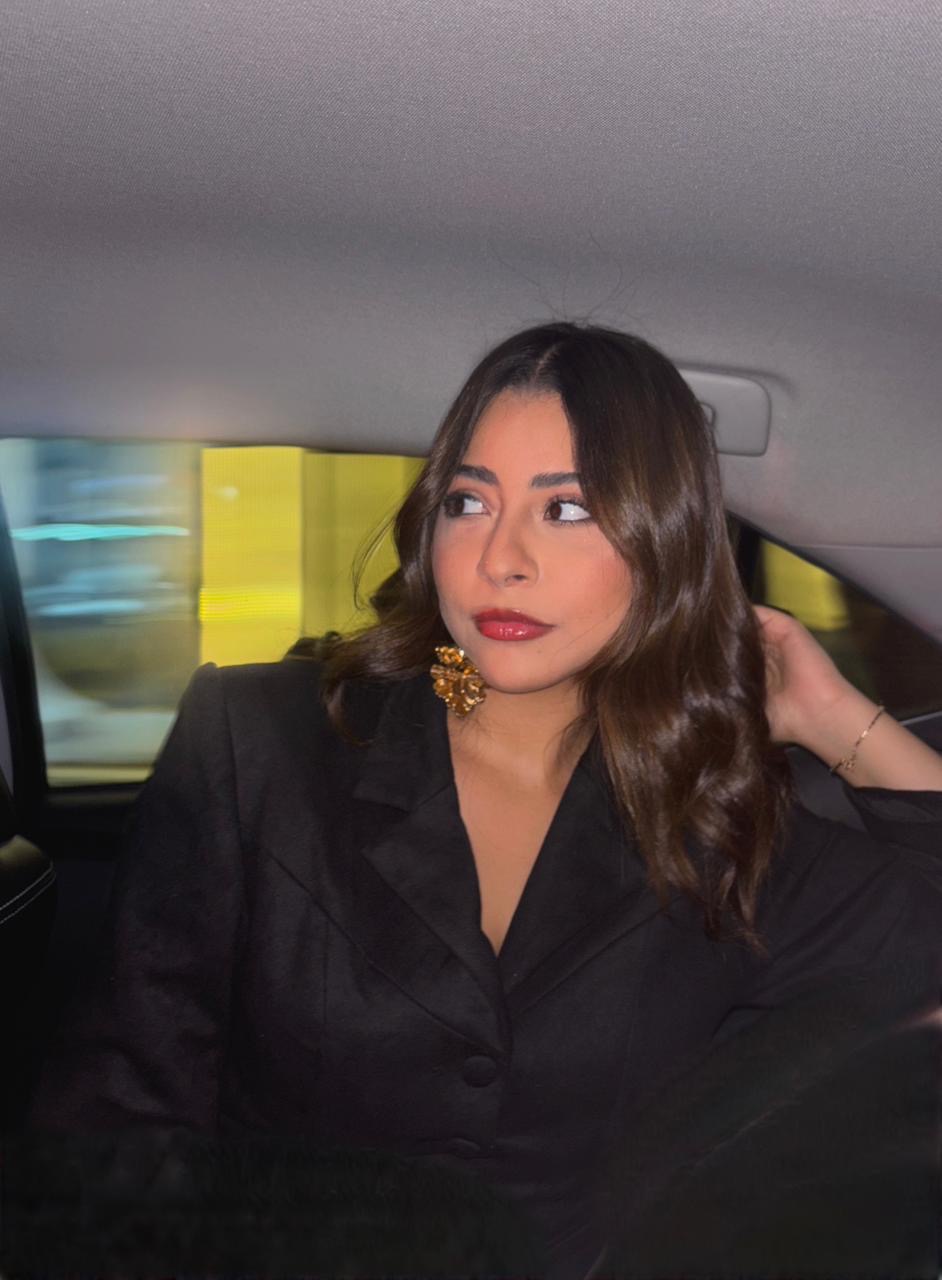
Bashaer Hawsawi, a Saudi visual artist, was among seven women artists presented by Villa Hegra at Asia NOW, the Paris contemporary art fair featuring artists from Asia through galleries and institutions from around the world.
The exhibition, Tables Around: Six Proposals from Saudi Arabia, ran from October 20 to 24 at the Monnaie de Paris, the historic institution where France produces coins, medals and official decorations. It brought together six proposals conceived specifically for Villa Hegra's presentation at Asia NOW.
Hawsawi presented Her First Steps "Second Life" (2021-2026), an installation made from dried lemons, a material that has long been part of her artistic practice, and a vintage table.
Hawsawi says the work developed in connection with her wider Villa Hegra residency, with its Paris phase shaping its development.
Villa Hegra says work from the residency will be unveiled during the 2027 AlUla Arts Festival, though Hawsawi has not confirmed whether Her First Steps "Second Life" itself will be presented there.
The cross-residency programme between Saudi Arabia and France is organised by Villa Hegra and the Mobilier national, bringing Saudi contemporary art into contact with French craft and design expertise.
Hawsawi took part in the residency at the Manufactures Nationales in Paris in November 2025, where she encountered French craft practices including tapestry weaving, dyeing and textile work.
She continued the residency at Villa Hegra in AlUla in June 2026. The research process took her into the local landscape and the materials it offers, with walks through AlUla farms drawing her attention to agricultural leftovers such as tree bark.
 "The experience opened up new possibilities in the way I engage with the material," she tells SceneNowSaudi.
Hawsawi was born in Saudi Arabia in 1992 and received her BFA in sculpture and ceramics from King Abdulaziz University in 2015. Her practice has since broadened into installation and mixed media, with material leftovers at the core of her research.
She works with brooms, bricks, fabric, papyrus, dried lemons, sand, metal and palm leaves, many of them materials that already had a place in her life.
"My relationship with materials and transformation began at home," she says.
Her mother used to dry lemon and pomegranate peels, as well as various herbs, in the family courtyard for cooking and traditional remedies.
Hawsawi watched their colour and texture change under the sunlight and later recreated that experience in Early Ripening (2022), making illuminated sculptural forms inspired by dried lemons and their stages of transformation under the sun.
-4c7de891-aab2-49af-81f3-1aabff14fb5d.png) "Sustainability was part of my life long before I started incorporating it into my art practice. Preserving what could be preserved, transforming what could be transformed, and giving another life to what could be discarded," she says.
Cleansing is at the core of her practice. Hawsawi approaches it as a physical process, a domestic ritual and a way of thinking about care, memory and repetition.
The broom was one of the first everyday objects to enter her work.
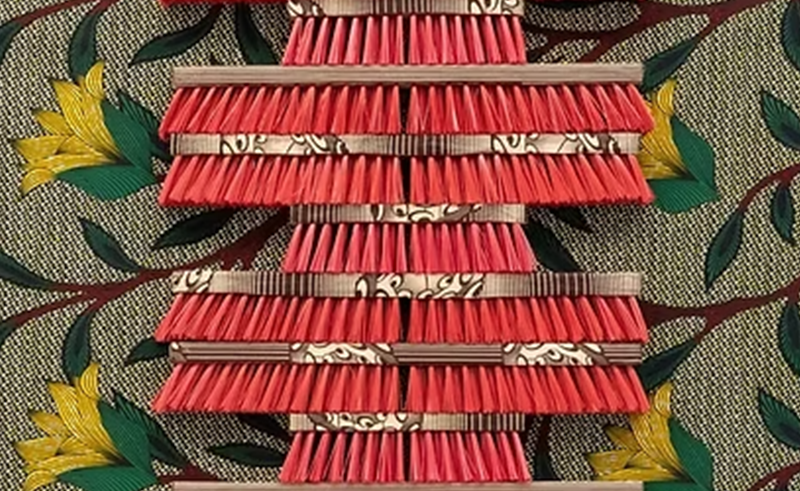
Hawsawi started her Cleansing series in 2019 using an industrial red plastic broom. Cleaning already had a place in her family history.
Some members of her mother's family were Mutawwifeen, guides who hosted and assisted pilgrims coming to Makkah for Hajj and Umrah. Preparing for their arrival included cleaning the house and sweeping the courtyard, and that domestic action became part of her series.
Palm fronds bring another part of her family history into Cleansing through her maternal grandfather's craft.
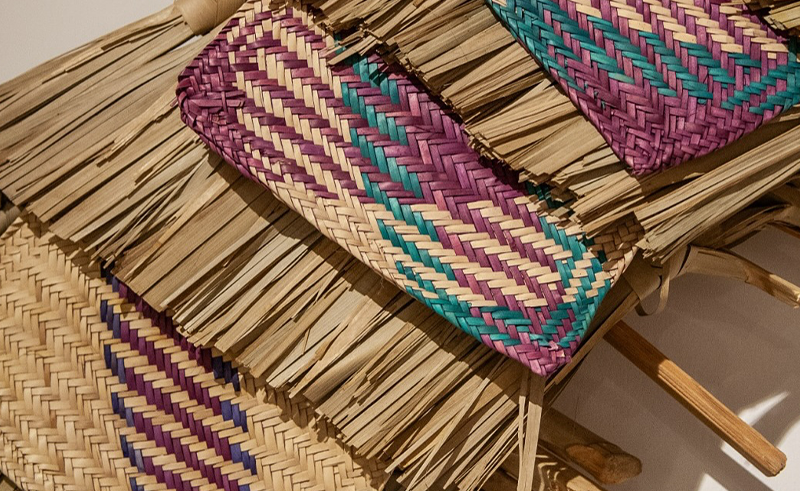
Her grandfather practised khasf, weaving palm fronds and reeds into brooms and other domestic objects. His family was known as Al-Khasafi, meaning "the weavers", after the craft they practised.
"Through the stories and memories my mother told me, I came to understand the deeper sense of my connection to this material," she says.
"I carry a very personal memory of the khoos broom from my grandmother's old house and from the house where I was growing up."
The natural palm-frond broom eventually entered Cleansing when Hawsawi moved from Jeddah to Makkah and began engaging more closely with her family.
-56100097-59b2-4459-9f17-ed27424e4d0c.png) "I began the Cleansing series using an industrial broom. Later, the natural palm-frond broom entered the series, carrying a different kind of history and meaning. Through the palm, my exploration continued toward questions of origin, roots, and the essence of things."
Palm fronds became a larger strand of her practice through Holy Thirst, a series of works shown at Art Dubai in 2024. The material moved beyond the broom into sculptural forms inspired by palm weaving.
Hawsawi says her grandfather's craft has now almost disappeared as a profession.
"Through my practice, I feel that I am giving it another form of life by allowing its memory to continue through another language."
Her research into the date palm later widened beyond her own family history, particularly in The Chain That Rebelled Against the Earth, an extension of her Holy Thirst series.
Commissioned for the Saudi Ministry of Culture's 2024 Between Two Cultures programme, the work grew out of her research into the date palm's place in Saudi and Iraqi culture.
Hawsawi became interested in the loss of Iraqi palm trees through war and decades of neglect, and in what disappeared with them, from livelihoods to traditional crafts.
"Through the palm frond, I found a material that connects two countries and carries traces of both land and people," she says.
The work was later acquired by the King Abdulaziz Center for World Culture, Ithra, in Dhahran and exhibited in Baseqat: The Palm Tree, which opened on October 10, 2025 and closed in March 2026.
Hawsawi returned to the broom on a large scale in 2025 with My Gift to You Is a Garden at the Islamic Arts Biennale in Jeddah. Hundreds of red-bristled brooms were displayed across the floor, bringing the physical act of sweeping into a work connected to family rituals.
Hawsawi has continued experimenting with the palm through work developed since her residency between Paris and AlUla. Her 2026 piece تدبّر النخلة, Contemplating the Palm, is made from palm fibre, pins and synthetic leather.
"I do not simply choose materials for what they look like or what they can physically do," Hawsawi tells SceneNowSaudi.
"I am drawn to what they have lived through. Sometimes I feel that I do not actually choose the material at all," she says. "I recognize myself in its story, and that recognition is what begins the work."
- Previous Article Cairo Gallery TINTERA Makes Paris Photo Main Sector Debut
Related Articles

Trending This Week
-

-
-
-
 Oct 30, 2026