






Bedouin Architect Lobna Sana Maps the Naqab's Unrecognised Villages
Bedouin architect Lobna Sana maps the Naqab villages that official records leave out, and builds shelters from palm trunks and woven reeds that can be rebuilt after every demolition.
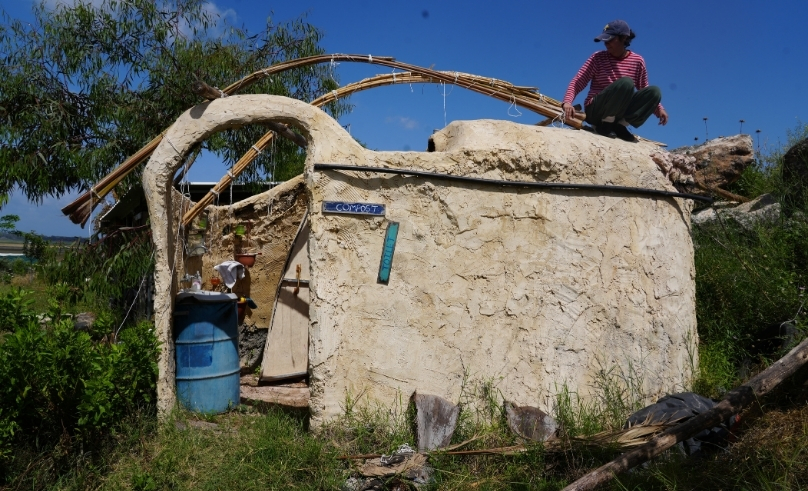
How do you build when you know a structure might not be allowed to remain, or when you are building in a place that appears on no official map?
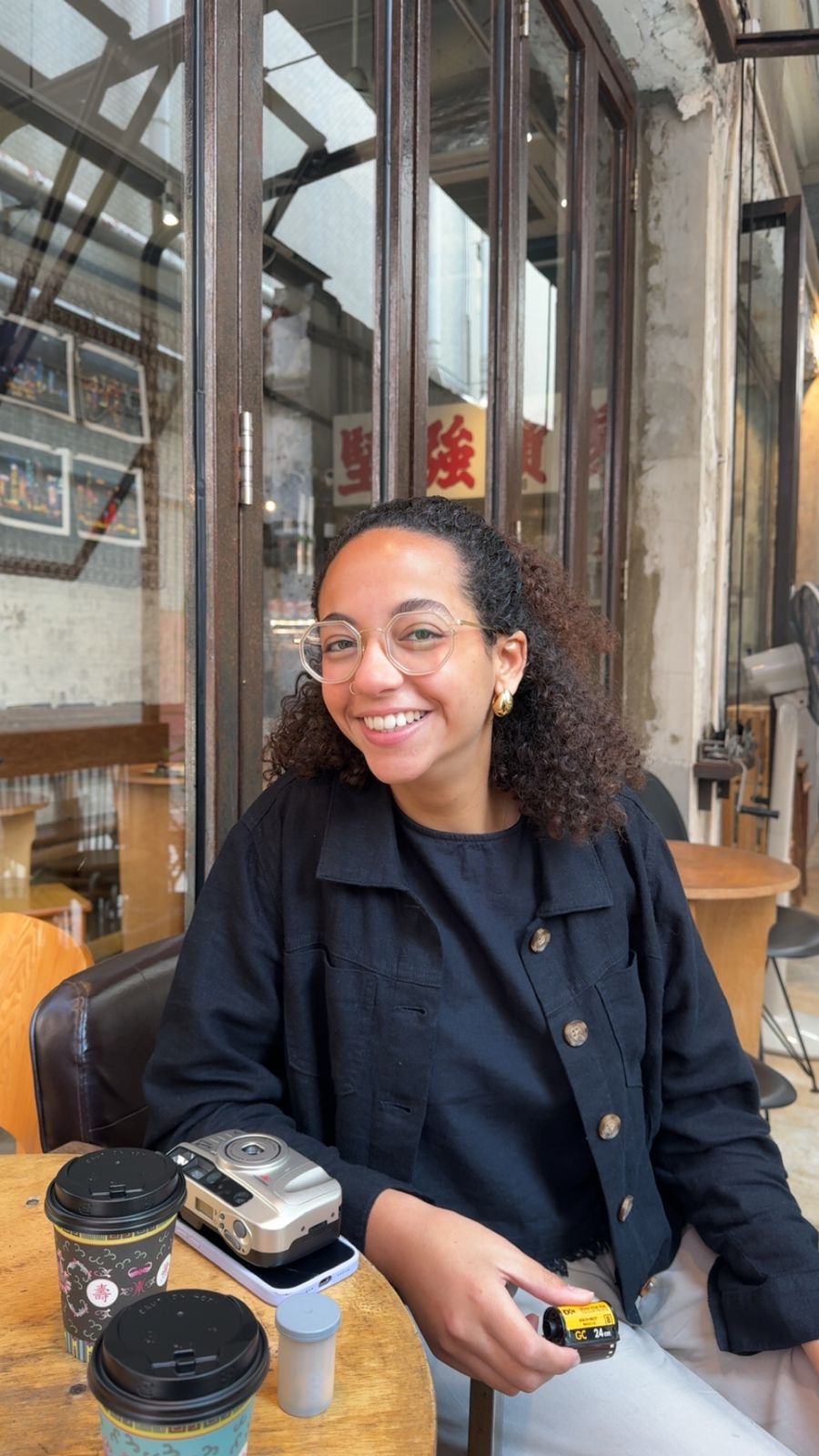
Those questions drive Lobna Sana's practice. A Bedouin architect and artist from the Naqab, the southern region of Palestine. She was born and raised in Al Lagiyya, a township where the line between recognised and unrecognised villages has shaped her whole life.
The name carries a connection to the land that existed before the township. Sana explains that it comes from the Arabic word for finding.
After studying architecture at the Bezalel Academy of Arts and Design in Jerusalem, she began questioning a discipline that, in her view, prioritises appearance and formal design over the realities and needs of the people who live in a place.
"I was born in one of these townships," Sana says. "But what happened, which is a much bigger issue, is the phenomenon of our unrecognised villages."
According to Sana's own mapping project, the Naqab is home to 72 Bedouin villages, many of them unrecognised by the Israeli state. Some face repeated demolitions. Others go without basic infrastructure, including water and electricity.
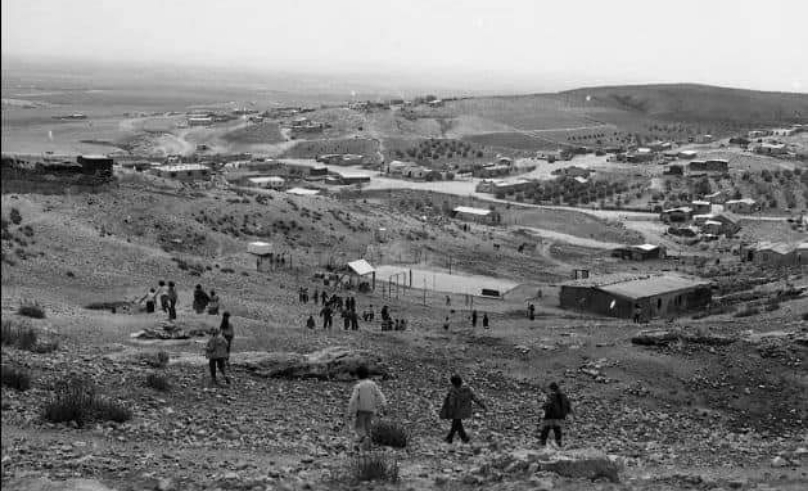 Sana does not approach these villages through what they lack. She sees them as places that hold generations of knowledge about the land, its resources and collective life.
"I see that they [the Naqab villages] have great knowledge of the land and natural resources more than anyone else," she tells SceneHome.
Growing up in the Naqab shaped what she thinks architecture can and should do. While she was studying, the education in front of her felt disconnected from the communities she came from.
"The star architects are usually architects that serve a very specific class that I'm not interested in," she says.
Architecture, in her view, has drifted too far from everyday life, and the discipline needs to move beyond the systems holding it. "Architecture is failing us," she says. "I don't want to preserve it. I want to break out of it."
Western architectural teaching, she says, distanced her from her own context and pushed her towards a concrete housing model that erased parts of her identity and her relationship with place.
Her first response was to write.
While studying in Jerusalem, Sana began developing what she calls the Imran Letters to the Human Being. Imran, in Arabic, carries meanings of prosperity, longevity and the flourishing of a civilisation.
The letters explored how people in the south of Palestine could build using techniques suited to their own environment, knowledge and relationship with the land. They examined homes, neighbourhoods and agricultural land, and grew into a manual for building in the local context at a time when construction in the Naqab often happened without any formal architectural guidance.
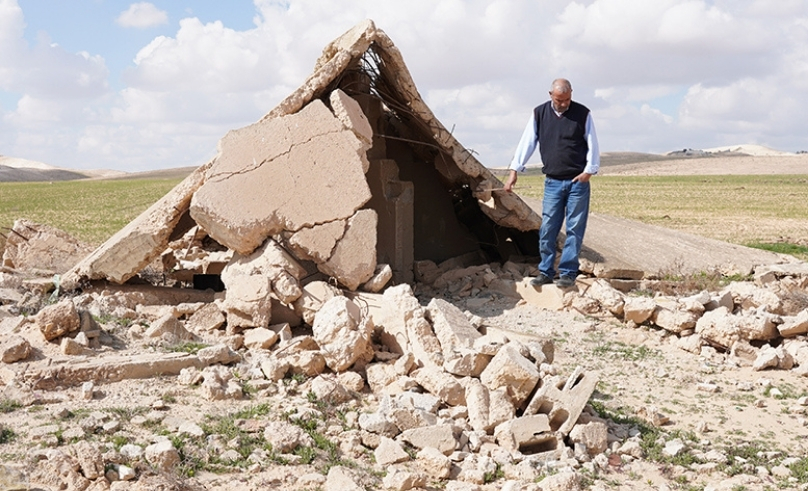 They also began her investigation into indigenous building techniques, which later became practical guides for putting up emergency shelters from palm trees. Built in response to displacement, Sana describes those structures as closer to war trenches than to conventional architecture.
Later she worked with the farmer Haytham Canaan at Nabat Farm in Palestine, experimenting with the most familiar material in the region: the palm tree.
Her first question was structural. Could palm trunks form arches and enclosed spaces?
Then came the harder one. Once she had a skeleton, how do you cover it?
She went back to something she had grown up around. "I returned to a solution from the women in my village," she says. "They used to weave their houses."
Bedouin homes in the Naqab were historically built as lightweight woven structures that answered the desert directly. Sana describes the traditional black tents, made from strips of goat hair that swelled when wet to keep the rain out and tightened in the summer heat to let air move through.
Drawing on that, she developed a prototype built from palm trees, assembled from local materials and adapted for emergency shelter in places where homes are routinely demolished.
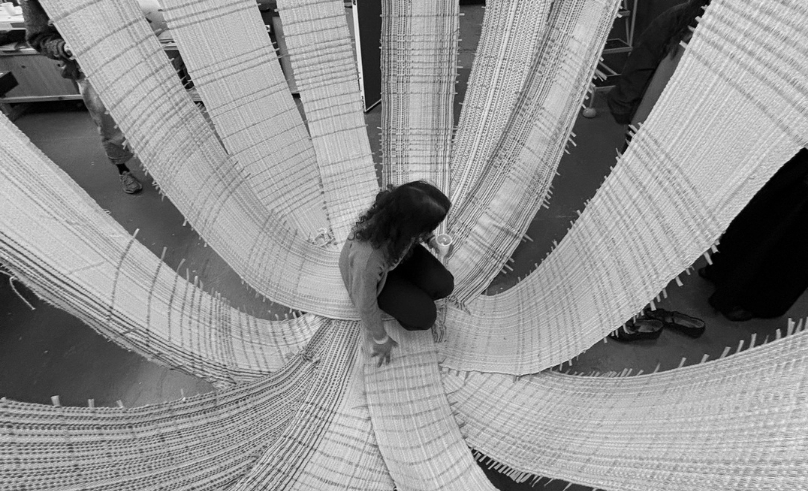
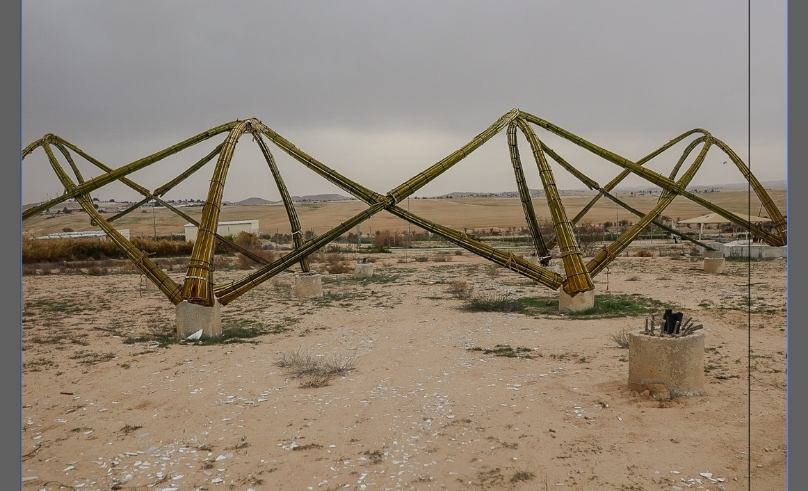 The covering became what she calls an architectural loom, weaving reeds and other native plants into lightweight skins around the palm framework, with an outer sheath over the top forming a protective shell.
The materials are chosen because they are close at hand and because permanence cannot be guaranteed. Palm and woven fibre can be repaired, rebuilt and returned to the land, making structures that move with change instead of standing against it.
"Demolition is part of the cycle of your architecture," Sana says. "I build with these materials because if I build with palm trees and they ruin it in a month, it is still tragic, but there is something that makes sense about it."
Israeli authorities have called her a terrorist architect for encouraging people in unrecognised villages to build their own shelters and homes. Sana took the label and kept it.
"They came out with an official article that called me a terrorist architect because I invite people to build illegal houses," she says. "I thought, yes, I am definitely an illegal architect, and I will keep building illegal structures."
Alongside the building, she documents the landscapes and histories at risk of disappearing.
 Her current work centres on the Be'er Sheva Valley, where seven villages form one continuous landscape despite the political boundaries drawn across it. Through Naqab Architects, working with residents, the Regional Council for the Unrecognized Bedouin Villages and other partners, she records wells, cemeteries, mosques, community centres, libraries, footpaths and gathering places that rarely appear on official maps.
For Sana the map is a record of memory, drawn from the perspective of the people who have always lived there.
"We realised that no one is going to recognise us," she says. "So we better recognise ourselves."
The project runs on collective authorship. She rejects the idea of the architect as sole decision-maker, and sees her own role as bringing knowledge, imagination and tools into a process shared with the people who know the land best.
That way of working continues in Nadi Al Naqab, an art and architecture centre she is developing with her sister and collaborators on family land. The building is the first full-scale prototype of her palm and woven skin system, and the centre is designed to host making, learning and experimentation for a new generation of artists, architects and craftspeople.
"I'm going back to a place where architecture is not a fetish that stands as itself," she says. "It is part of something whole; it is part of how you relate to your society."
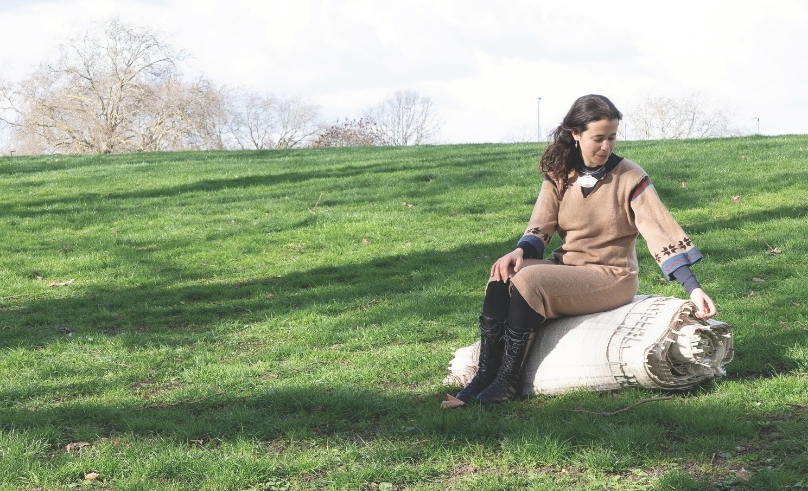 Sana continues developing the palm structures, the woven skins and the mapping across the Naqab. She is not building monuments. She is building systems of knowledge, memory and connection that survive after the structures are gone.
Related Articles
Trending This Week
-
-
 Sep 10, 2026
 -
 Sep 10, 2026
 -