




How the Arab World’s Overlooked Materials Could Shape Future Design
Dr. Mohamed Midani walks us through the Arab materials bioeconomy, and the systems that shape design futures in the region.
Palm fronds stacked outside homes in Upper Egypt after seasonal pruning. Olive press waste collected in rural Tunisia after harvest. Cork bark left to dry in the forests of northern Morocco. Seaweed gathered along the Mediterranean and Red Sea coasts, drying in the sun before informal processing. Date palm residues scattered across oases in Saudi Arabia and the UAE. These are ordinary scenes across the MENA region, often overlooked as part of daily agricultural and coastal life. Yet most of what appears here rarely enters architecture studios, product design labs, or material libraries. It is treated as waste, or low-value export, before reappearing elsewhere as engineered materials or industrial products.
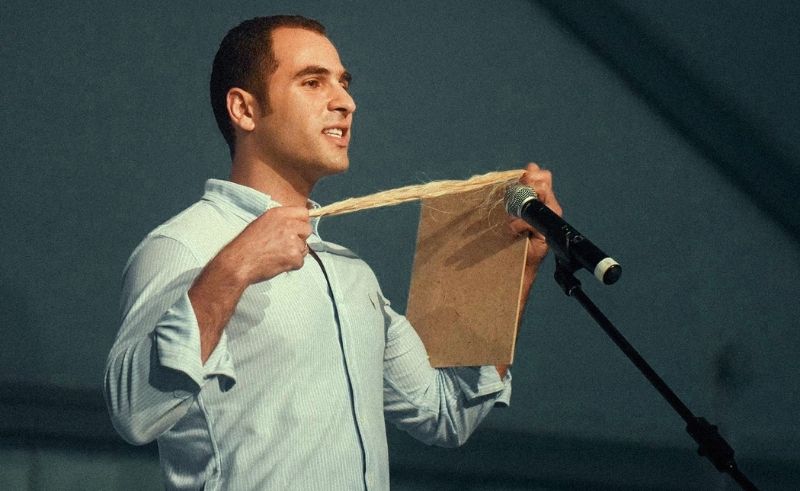
This is where the work of Dr. Mohamed Midani begins. A material scientist with a background in mechanical engineering, a Master’s in textiles technology and management at North Carolina State University, and a PhD in fibre and polymer science, Dr. Midani has spent years moving between academia, textile industries and consulting in material innovation. His concern is not about sustainability in abstract terms, but how regions build real economic and creative value from the materials already embedded in their landscapes by designing, processing and scaling them locally. "In the Arab world, there is no crisis of resources. There is a crisis of value,” Dr. Midani tells SceneHome. The problem, in other words, is not material scarcity, but the failure to recognise, develop, and build industries around what already exists.
Terms around sustainability are often used interchangeably, despite referring to very different systems. The circular economy focuses on keeping materials in use for as long as possible through reuse and recycling. The green economy is largely concerned with reducing environmental impact, mainly through renewable energy. The bioeconomy, however, is broader than both. It is about building entire production systems around biological resources such as plants, animals and microorganisms – and creating the infrastructure needed to turn them into products, industries and economic value.
Dr. Midani’s work is now taking shape in a forthcoming book on mapping the Arab materials bioeconomy, which is currently still in development ahead of its expected publication in 2027. The book, which he leads alongside roughly 25 contributors from across the Arab world, is the first large-scale attempt to systematically map the region’s biological resources country by country, covering everything from agricultural waste and marine biomass to desert landscapes, wetlands and animal-based materials. Each chapter functions as both research and analysis, tracing what resources exist, what infrastructure is available to process them, where value is captured, and where it leaks out of the system. “We don’t need to copy-paste models from outside," Dr Midani says. "We need to build the economic model ourselves according to our region.”
The mapping would reveal why so many abundant materials remain stuck in raw form, never making the leap into products, industrie, or design applications. For example, in Egypt, palm waste generated through annual pruning is often discarded or burned, despite its potential to be processed into MDF panels, insulation, or composite boards for construction. Across coastal Arab countries, seaweed remains largely untapped, although it could be used in bioplastics, packaging and textile innovation. Morocco has some of the world’s largest cork forests, yet much of the material is exported in raw form. In Portugal, however, cork is not only used for bottle stoppers, but also for acoustic panels, flooring systems, aerospace insulation, automotive interiors and architectural applications. The same natural resource produces entirely different economies depending on how it is processed, researched and designed into new uses. Again and again, the pattern is the same: raw material exists, but the industries needed to refine, engineer, and scale it often do not. “Bioeconomy is less about the resources and more about unlocking their value,” Dr. Midani explains.
Globally, more than 60 countries have already developed national bioeconomy strategies, treating biological resources as the foundation of future industries. In the Arab world, such frameworks are still largely absent, leaving what Dr. Midani describes as “the missing middle”, which is the infrastructure that connects resource extraction to research, industrial processing and design application. Without this chain, materials remain stuck in raw form and are unable to evolve into scalable industries.