






2,000-Year-Old Fortress With Horse Burial Discovered in Beheira
Excavations at Tell el-Abqain uncovered planned streets, food storage areas, a deliberate horse burial and inscriptions linked to Ramesses II and Merneptah.

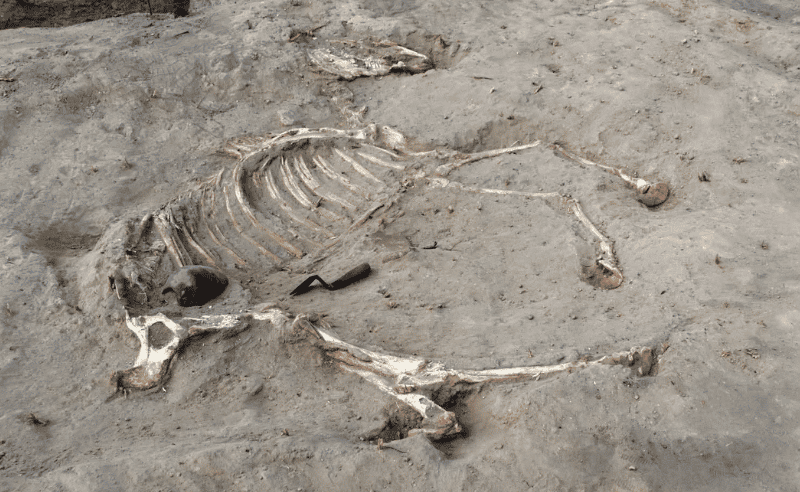
An Egyptian archaeological mission at Tell el-Abqain in Beheira Governorate has uncovered new sections of a New Kingdom fortress, including planned streets, residential rooms, food-storage areas, a complete horse burial and inscriptions linked to Ramesses II and Merneptah.
The residential sector includes a four-metre-wide east–west street intersecting a north–south road, with rooms containing grain silos and pottery ovens used for cooking and baking. Large storage jars holding charred wheat were also found, while three stone wells bearing titles of Ramesses II had previously been identified nearby.
One of the most notable discoveries is the complete burial of a young male horse. Preliminary analysis suggests an agile animal associated with military training or chariot use. Its skeletal position indicates deliberate burial, while nearby alabaster and limestone fittings may have belonged to a chariot horse harness.
Other finds include cooking and storage pottery, perfume and oil containers, loom weights, grinding stones, jewellery and a flask associated with pilgrimage to Abydos.
A fragmentary limestone stela preserves a hieratic inscription associated with Merneptah, described by the mission as the first of its kind found in Beheira, while another stela bears the names of Ramesses II. A separate scene depicts a bound Meshwesh captive, and scarabs bearing the names of Ramesses II and Seti I were also recovered.
Related Articles
Trending This Week
-
 Oct 06, 2026
 -
-
-