


PPI Makes the Case for Brand-Building as Infrastructure
Founded by four multidisciplinary creatives who wanted to rethink the agency model, PPI grew from an independent studio in Cairo into a regional creative force working across industries and markets.
Ask most people what a branding agency does, and you'll get some version of the same answer: a logo, a palette, maybe a font pairing that looks nice on their merch or website. Ask Tameem Khaled, the founder of PPI and he'll tell you that's precisely the misunderstanding his agency was built to correct. "A lot of people still think branding is mainly about designing logos and making things look good," he says. "For us it is much bigger than that. We build design systems, strategic systems and brand hierarchies that help the business function and grow."
That distinction between a look and feel and an infrastructure sits at the centre of everything Pragmatic People Inc., or PPI, has become since four friends decided to stop freelancing separately and start building something together.
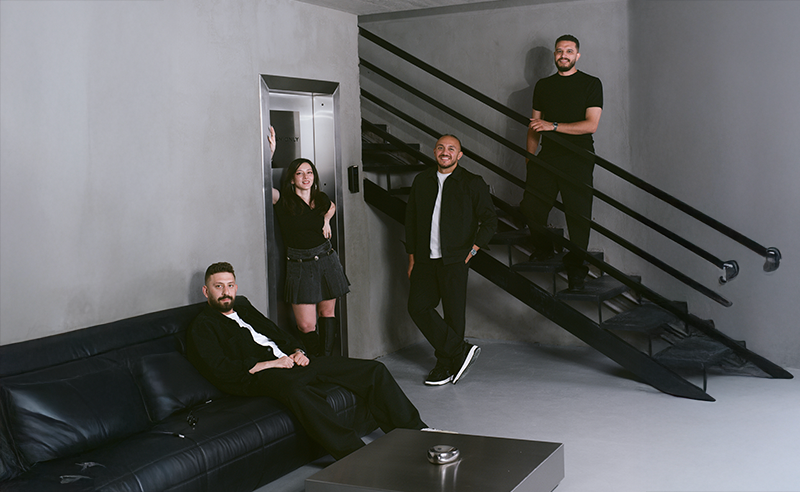
Tameem Khaled, Aly Ramzy, Mariam Ashraf (known to everyone as Mimosh), and Youssef Magdy first worked together at Havas in 2018, where they would each bring in freelance clients and collaborate across different projects. Over time, those collaborations made it clear that they had a strong creative and working chemistry. In 2022, they decided to bring that work under one roof and build something of their own. Their experience working together had already shown them they were a strong fit, but the bigger decision was about what they wanted PPI to be. Rather than continue offering broad, 360-degree marketing services, they chose to specialise in branding and creative work, going deeper into the discipline instead of trying to cover everything.
The four sat down, compared notes on what they wanted to build, and shaped PPI around that focus. "We knew we shared a strong standard for branding and creative work," Ramzy says. "We also wanted to build the kind of agency environment we ourselves would have wanted to work in."
Each founder brought a different discipline and perspective to the agency. Tameem, who had already built experience across events, operations, branding, marketing and production, brought the broader vision that would shape PPI. Ramzy came up through graphic design and went on to become a Creative Manager at a multinational agency, while Mimosh's background spans visual art, marketing and production. Youssef developed his instincts across social media, communications and account management. Those different paths continue to shape how the four approach their work. As Youssef puts it, "Those differences encourage us to challenge ideas and produce more considered work."
The way PPI approaches a project starts with a look at the business itself beyond any client brief: what is the business trying to do, where it is struggling, how it speaks to its audience and what needs to be in place for the brand to actually work. From there, the work can stretch across strategy, positioning, naming, identity, communication and brand architecture.
That process looks different from project to project because the problems are different. For an Egyptian lab-grown diamond brand, the challenge went beyond introducing an unfamiliar category to the market. The brand architecture also needed to distinguish the retail brand from its counterpart, the 'LGD supplier', which served as a trusted source and educational platform. PPI gave the two entities distinct roles, helping them communicate with their respective audiences without appearing to compete with each other. "We were creating a platform that allowed the brand to educate, communicate and build a distinctive presence," Mimosh explains.
The same thinking applies when PPI works with an established international brand. The agency now handles Lamborghini and Bentley in Egypt, working within global brand standards while figuring out how those brands should communicate locally. A hospitality and F&B project in Jeddah required another shift in approach. “The strategic depth and standards remain consistent, but the cultural references, tone and expression need to respond to the place where the brand lives,” Tameem says.
Working across different markets has made that balance increasingly important. PPI has expanded into the GCC, Jordan and other regional markets, bringing its way of working with it while adapting to each place. ‘Something that can work perfectly in Egypt can fail miserably in Jordan,’ Tameem says.
As PPI’s projects expanded, the agency itself had to evolve. Its early years were almost entirely founder-operated, with the four partners involved in everything from strategy and design to client communication, presentations and execution. As the team grew, they had to translate the knowledge and standards that had previously lived between the four of them into clearer roles, systems and workflows that a larger team could understand and build on. “We had to learn to move from execution into direction, critique and decision-making,” Ramzy says. “The objective was to grow without losing the level of involvement and care that shaped the work from the beginning.” That balance remains central to PPI’s culture.
However, the things that work when it is a four-person operation can become difficult to hold onto when the team gets bigger. PPI kept the informality and closeness of its early days while building teams, managing international accounts and maintaining a consistent standard across very different kinds of projects. Ramzy describes the culture as “Structured without being corporate”.
As PPI looks towards its next stage, the founders are focused on expanding the studio’s regional reach and multidisciplinary capabilities without becoming everything to everyone. Part of that ambition is internal. “We want PPI to be a place where great designers are developed,” Ramzy says. “Almost like a design school within a working agency.” The other part is about the scale and nature of the work itself. PPI is increasingly interested in building complete brand worlds that can move across identity, communication, content, spaces and experiences without losing the focus that gave PPI its shape in the first place.
Related Articles
Trending This Week
-
 Oct 06, 2026
 -
-
-