






Core Sports AI Turns Squash Match Footage Into Performance Data
Its Digital Twin builds a model of a player's game across matches, tracking recurring patterns and helping explore how they could approach a particular opponent.

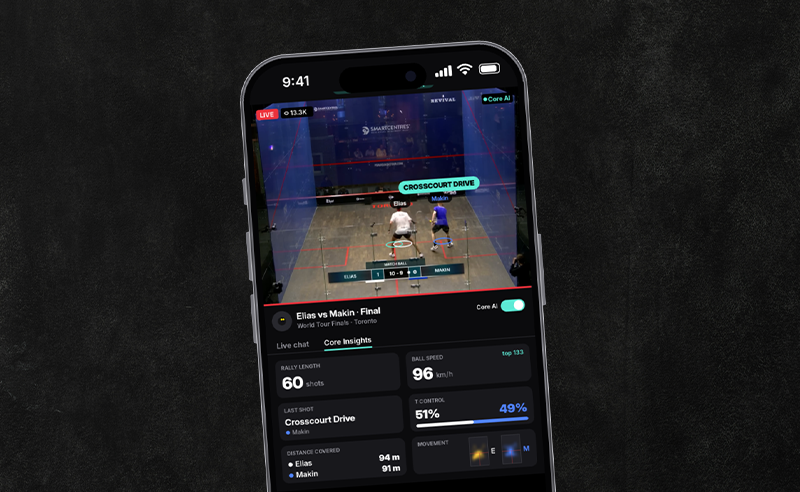
For many squash players, filming a match is the easy part. Understanding what went wrong, which shots are costing them points or why they keep struggling to recover to the T is another matter.
Getting that level of insight often means sending footage to a coach for a detailed review, a process that can be both time-consuming and expensive.
This is what Core Sports AI is looking to address. The platform uses artificial intelligence to turn match footage into performance reports, allowing players to look beyond the final score and examine the decisions and movement patterns that shaped a match.
"Every match here in the US, they have the phone, they have the tripod, and they film it, and then it goes wasted," Ziad Sakr, Co-Founder and CEO of Core Sports AI, told SceneSports. "The parent who wants to see the analysis sends it to the coach, and they charge them maybe $150 per video."
The cost is only part of the problem. Coaches also have limited time to review every match, and even a detailed analysis can miss things. Core Sports AI aims to make that footage more useful, identifying where points were won and lost, how players select and place their shots and what their movement and recovery reveal about their game.
Its squash analysis is now live. Players can record a match from one phone angle and upload the footage without additional sensors or specialised hardware.
The timing also places the company inside a changing moment for the sport. Squash will make its Olympic debut at Los Angeles 2028, with the qualification process already underway.
The idea came from a shared interest in squash and data. Abdelrahman Nassar, Co-Founder and CMO, and Sakr had both been exploring ways to help players better understand their games when they reconnected after graduating.
Nassar had been coaching young players and was looking for a clearer way to show them what was happening during matches.
Their different strengths helped shape the early product. Nassar worked on the visuals and graphs that would make the findings easier for players to understand, while Sakr focused on the technology, automation and AI.
The two later brought in Taha Dinana, Co-Founder and CFO, whose finance background completed the team's mix of skills.
The founders first tested demand through a beta programme in 2025, offering three months of access for $15. Sakr recalled that 80 players paid to join before they had even seen the product.
Their feedback helped the team refine the platform and the way it presented its findings to players, parents and coaches. The waitlist had grown to 330 players by the time of the interview.
One of the platform's more ambitious features is its Digital Twin, which builds an evolving model of a player's game using data collected from their matches. Instead of treating each performance in isolation, it uses that information to identify recurring tendencies, strengths and weaknesses.
The model can also be used to study a particular opponent. By combining a player's own performance data with footage of their opponent, the platform can simulate matchups and identify tactical approaches worth considering.
A player who relies heavily on front-court drop shots, for example, could use the analysis to understand how that strength might work against an opponent's patterns. The simulations are designed to test possible approaches, rather than predict who will win.
The model also looks beyond shot selection. It can track positioning, recovery to the T, movement patterns and lunges, giving players a closer look at how they move around the court and where they may be losing ground.
For younger players still developing their technique, Dinana sees potential in using this data to help them adjust their swings, particularly those transitioning into squash from another sport.
Making all that information useful means finding the right balance between detail and accessibility. The platform's reports offer different levels of analysis, from a more accessible story-style summary aimed largely at younger players to deeper data for coaches, with filters for users looking for specific details.
"We also learned that there's such a thing as too much data. We didn't think that was possible initially, but some people get overwhelmed, especially kids," Dinana told SceneSports.
The aim is to make the analysis useful beyond the individual player. Coaches can follow performance across matches, focus on the information relevant to a player's development and use the findings to inform training.
The academy offering brings this into a shared space, giving coaches and institutions a way to manage players and access their performance reports.
Building trust in a relatively new product has also meant getting it in front of the squash community. Partnerships with academies and players have been central to the team's outreach, alongside social media and squash groups.
MSquash in Connecticut says it tested and launched the live version of Core Sports AI with the company in 2026. Professional players have also used the platform and shared feedback, despite the founders initially focusing much of their attention on juniors.
Core Sports AI had 133 paying users at the time of the interview, alongside three academies and two colleges, each bringing around 30 players onto the platform.
Turning that early interest into a sustainable business has also meant finding a pricing model that works across different squash markets.
In the US, where the sport is often played in country clubs, families may already be accustomed to spending on coaching and player development. In markets such as Egypt, the founders have had to consider different spending habits and how to make the service accessible without undermining the business.
The team has responded by keeping its individual plans flexible, including a pay-as-you-go option, while tailoring academy packages according to the number of players and minutes required. Feedback has also shaped how the product is packaged, with the founders revisiting their plans and adjusting them to suit users.
Squash remains the platform's available sport, while pickleball is in beta. The founders are also developing further training and coaching features, with the broader aim of bringing performance analysis into more parts of a player's development.
A match recording can show what happened, but it does not always explain why. By identifying patterns across matches, showing players where their decisions and movement could improve and giving coaches more information to work with, Core Sports AI is trying to make that next layer of understanding more accessible.
The value of the footage could extend well beyond the final point.
- Previous Article Yazeed Fahad Makes His COLORS Debut with New Single 'Um Alayal'
- Next Article Norigami is Folding Sushi Into Pizza Slices
Related Articles

Trending This Week
-
 Nov 22, 2026
-

-

-