





Egyptian Diver Michael Wafaa Wants You to See Sharks Differently
From close encounters with oceanic whitetips to tracking individual sharks, Egyptian diver Michael Wafaa is building a record of the Red Sea’s sharks.

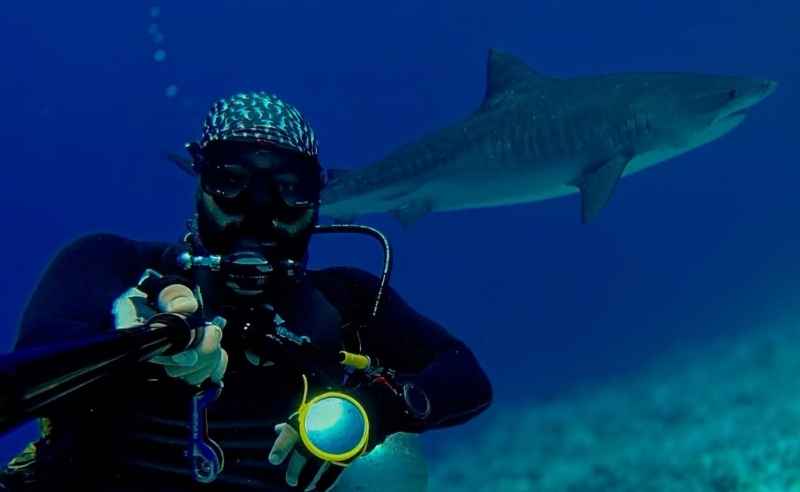
The sight of a shark is enough to make most people panic. For Michael Wafaa, it's the moment a dive starts to get exciting. Based in Egypt's Red Sea, the liveaboard dive guide has built a career around introducing people to some of the ocean's most misunderstood animals while working to protect them.
"The shark isn't coming to attack you. It's curious," Wafaa tells SceneTraveller. "We're curious with our hands. Sharks are curious with their teeth because they don't have hands."
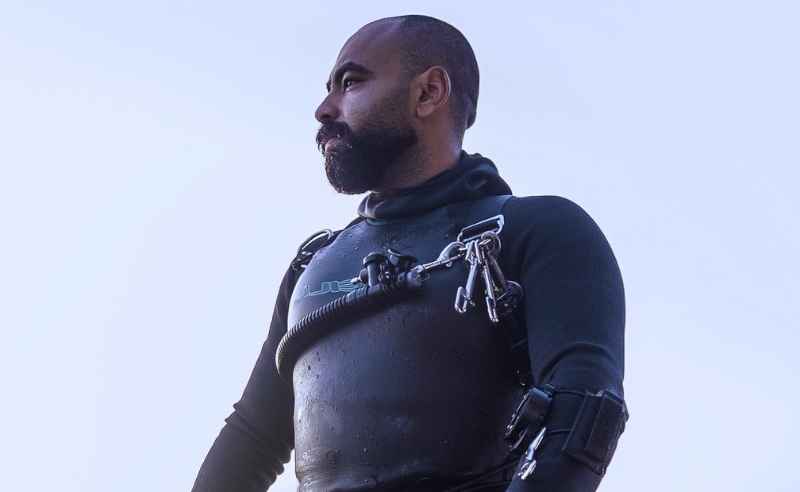
It is a sentence that neatly sums up his work. Part dive guide, part educator and part researcher, Wafaa has built his life around getting people closer to the Red Sea's sharks while documenting what he sees. He founded the Red Sea Sharks Discovery Project, a non-profit initiative focused on shark research, documentation and conservation awareness, and works as a PADI and SDI scuba instructor and Shark Conservation Awareness Instructor.
Long before he was photographing sharks in the open sea, Wafaa was a competitive swimmer. He discovered scuba diving during a trip to Sharm El-Sheikh while studying at Assiut University, initially taking it up as a hobby. He started diving with sharks in 2020, and the hobby has since grown into a series of research and identification projects covering some of the Red Sea's largest marine species.
His Oceanic Whitetip Shark Identification Project focuses on one of the species that draws divers to the Red Sea. Rather than simply recording a sighting, Wafaa photographs individual sharks and studies their markings, allowing him to distinguish one animal from another. He can then keep track of where and when it appears, as well as visible injuries or other changes.
"The idea isn't to know the exact number," he says. "You can collect it and track every year. Did you see it last year? Did you see it this year? Is it still the same size? If there's an injury, you can track it."
Wafaa carries out much of this work himself, while also inviting other divers and underwater photographers to contribute photographs and sightings. He has also worked on a manta identification project at Daedalus Reef and tiger shark research across Egyptian dive sites, creating records that can become more useful as they build over time.
That long-term view matters because there is still plenty we don't know. Last year, Wafaa saw several manta rays at Daedalus; this year, he hasn't seen a single one. "They might come back by the end of the year," he says. "We'll see." For now, the only way to know what is changing is to keep looking.
That same idea runs through Wafaa's work with divers. He created the Red Sea Sharks Guide, which helps identify shark species and highlights dive sites according to the likelihood of sightings, while his Red Sea Sharks Presentation covers shark behaviour and safety, particularly around oceanic whitetips and silky sharks.
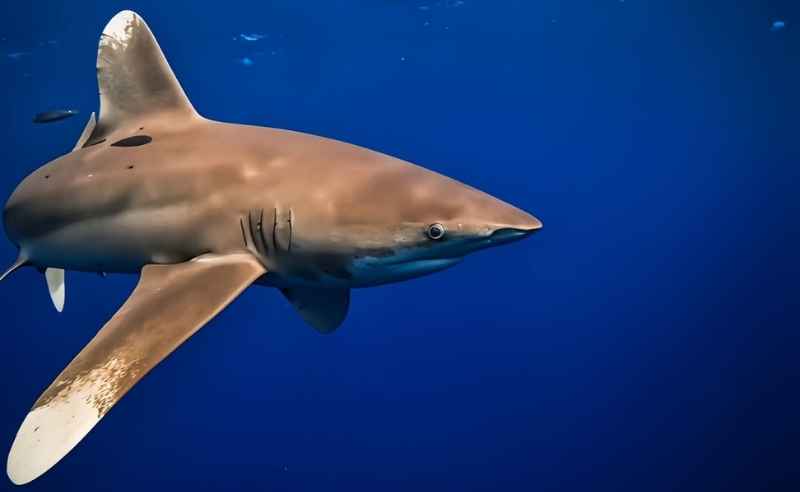
He also wants to make the research much bigger than his own dives. Wafaa has been exploring the idea of an AI-powered software that would allow divers to upload shark photographs and compare them against a shared database. The AI would analyse the shark's distinctive markings and match the photograph against existing records, helping determine whether it is a shark that has already been documented or a new individual.
"Imagine you dive in Sharm El-Sheikh and I dive in the south," he says. "I saw a shark today. I take a picture and put it on the application. The AI will tell me if it's new or old."
He has spoken to developers about the idea, but the cost remains a major obstacle. "It's a great idea," Wafaa says. "But it's very expensive. I can't do it alone."
Until then, much of his research happens alongside what he already does every day: taking people into the Red Sea. Before a shark dive, Wafaa briefs his guests on the species they could encounter, how they behave and how to respond if one approaches. His first rule is simple: "Stay calm. This is number one. Don't be nervous or panic."
He knows that staying calm matters because what feels like an ordinary dive can quickly become complicated. On one of his most memorable times, his group had finished their main descent and stopped at around five metres for their safety stop. They hadn't seen much during the excursion, but as the first zodiac arrived to collect them, an oceanic whitetip appeared nearby.
The shark followed the sound of the zodiac's engine, so the boat moved away from the group to draw it away and give the divers a clear route back to the surface. The first zodiac filled up with guests while a second boat came to collect the remaining divers. But when it arrived, it brought four sharks with it, three of which began circling Wafaa.
The guests, understandably, wanted out. As they started making their way towards the second zodiac, Wafaa stayed in the water with the sharks, using his sidemount tank as a barrier to keep some distance between himself and the animals. "I put the tank between me and the shark to avoid touching it."
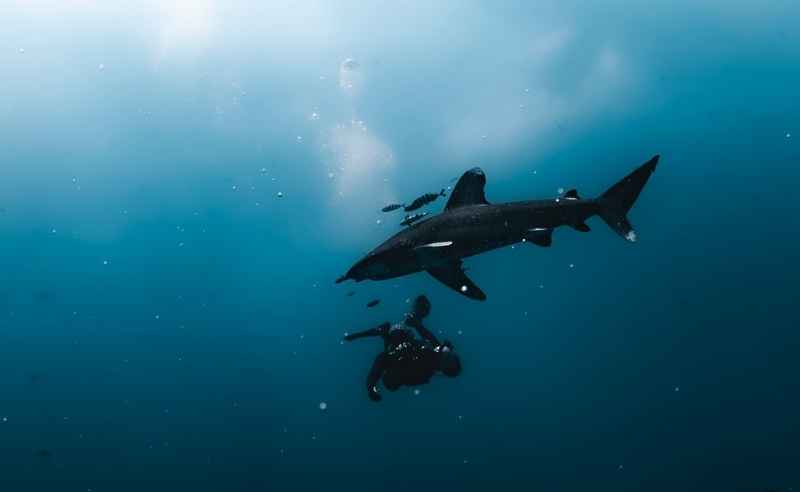
For Wafaa, the encounter was about managing its curiosity safely. Oceanic whitetips are known to investigate divers closely, but that doesn't make them harmless. "If you follow the rules, its curiosity won't bother you," Wafaa tells SceneTraveller. "But if a diver is not calm or is not able to control themselves, don't dive because a shark is still a shark."
Wafaa isn't asking people to forget that sharks are wild animals; he wants them to understand their behaviour before reacting to them. Much of the fear surrounding them, he believes, comes from the way sharks have been portrayed in films and on television, rather than from what divers actually see when they encounter them in the wild.
His own approach is very different. He photographs sharks, records sightings, teaches divers how to behave around them and why they matter to the Red Sea's ecosystem, then shares what he learns with an audience that extends well beyond Egypt.
For now, the Red Sea remains his laboratory. His database is still growing, his identification projects are still young and the AI application remains an idea waiting for the funding to make it possible. But Wafaa keeps going back into the water, looking for the next shark and, perhaps more importantly, another piece of the puzzle.
"When I dive with sharks, I experience a unique feeling," he says. "They give me both happiness and motivation."