




Hamsa Mansour Outlines Egypt by Bicycle and by Camera
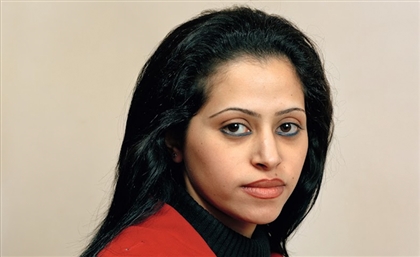
From a solo ride across Sinai to two years spent filming 11 tribes across Egypt, Hamsa Mansour has spent a decade documenting how the outdoors shapes identity and culture, one landscape at a time.
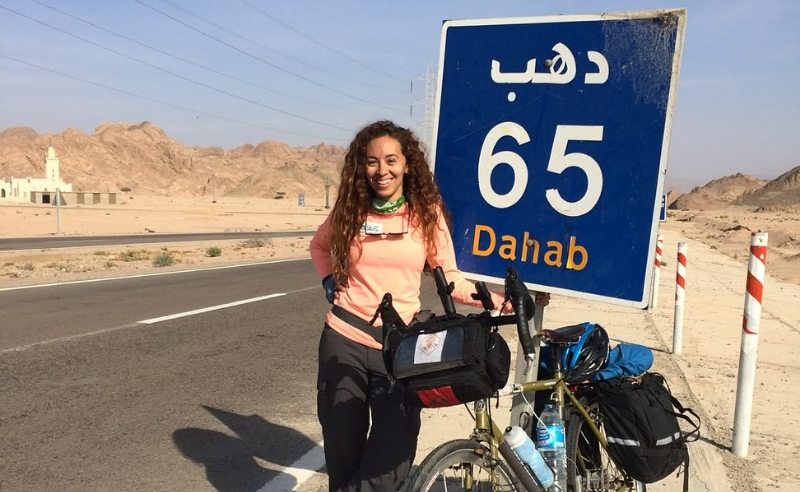
Somewhere on the road between Sharm El Sheikh and Dahab, something in Hamsa Mansour's mind changed.
The days before had been difficult: she pushed toward mileage targets, chased an invisible schedule, judged herself against it. Then, on that stretch of hill and coastline, she stopped counting. "I never actually stopped and I just... fundamentally enjoyed every hour on that road," she told SceneTraveller.
Mansour's daily life splits cleanly in two. By day, she manages events and strategic operations for a real estate company. Pluck her out of that job, and she becomes an unstoppable force, designing and leading outdoor expeditions, then documenting them on film, through what used to be a production company called Blue Camel Media and is now, by her own description, shifting toward freelance work.
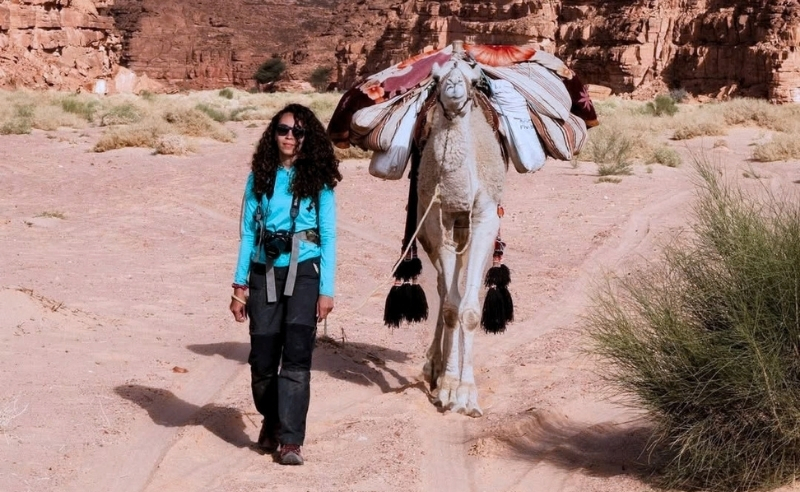
Her interest in long-distance cycling began, by her account, with a perfect stranger. Years before she owned a bike herself, she passed a cyclist on the road to Sokhna and found the sight unexpectedly striking.
The idea sat dormant for years, resurfacing only once she had bought a bike and begun commuting through Cairo, then testing longer rides: first to Ismailia, a single-day, 120-kilometre stretch, then further east toward Nuweiba.
In 2017, Mansour cycled solo along the Red Sea coast through Sinai, a trip that earned her recognition as the first Egyptian woman to complete a long-distance solo cycling expedition inside the country.
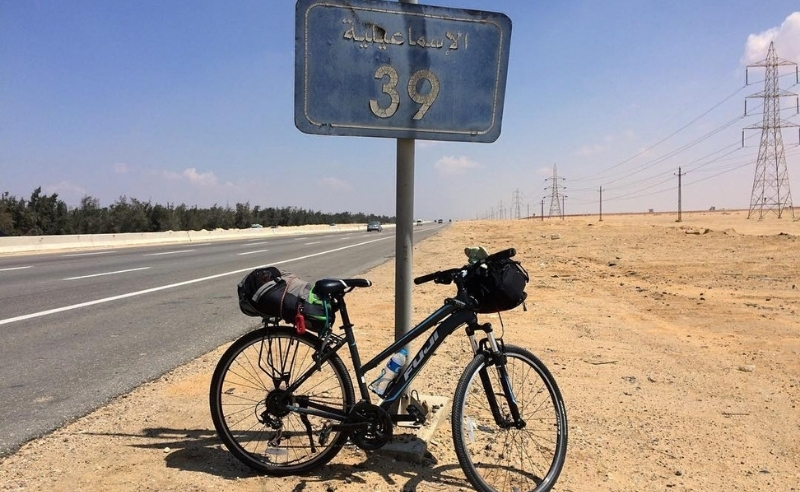
She is careful about the distinction. "Other Egyptian women have cycled solo outside of Egypt, and I wouldn't want to take credit that is not mine," she told SceneTraveller. "At the time that I did my trip, we could not find anyone who'd done long-distance solo cycling inside Egypt who was Egyptian."
What the bicycle changes, according to Mansour, is proximity that most other transport removes. Cars slow down for a cyclist in ways they would not for anyone else. Bedouin children on the roadside strike up conversations. Drivers ask if she has water, food, anything she might need.
The assumption that solo cycling through remote stretches of Egypt is dangerous did not match what she found. "Everyone you meet on the road actually wants to help you," she told SceneTraveller.
Long before she began designing her own trips, Mansour spent four and a half years working under Omar Samra at Wild Guanabana, moving through marketing, then domestic trip management, then the company's youth enrichment programme, designing outdoor experiences for children up to 18. She now runs her own expeditions independently, capping groups at eight people, a number she says keeps the experience close and intimate.
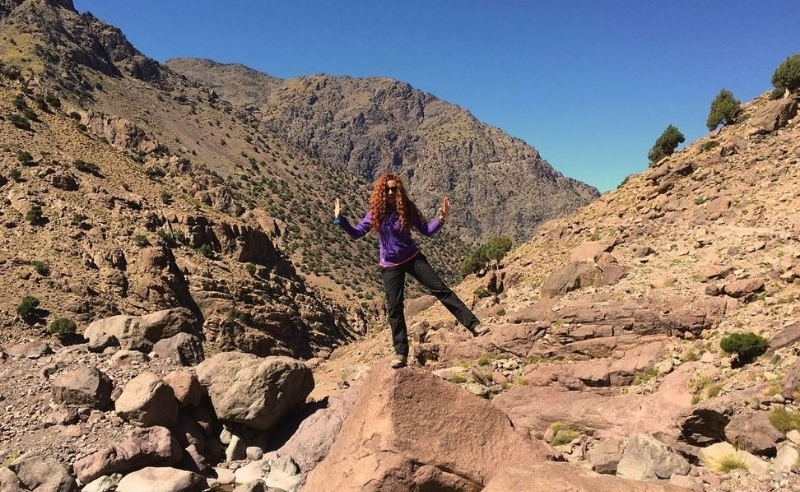
Mansour frames her outdoor trips as introducing people to something Egypt has and rarely uses: a wide range of landscapes many residents grow up disconnected from. She recalled watching people who insisted they could not climb a mountain complete three summits in three days under her guidance. Climbing one, she said, "is not conquering a mountain. It's just being able to take it one step at a time."
Part of leading these trips involves teaching outdoor conduct alongside the physical challenge, namely, how to move through a landscape without damaging it, and how to interact with the local communities she considers central to outdoor life in Egypt.
Mansour's documentary work grew out of the same instinct that drew her to cycling and trip leading: an interest in how people relate to land.
Tribal Talks, the largest project produced under Blue Camel Media and now streaming free on the ECO Egypt YouTube channel, began as a commission for 30-second social media videos through ECO Egypt, the UNDP and the Ministry of Environment.
Mansour and her collaborator, Nour El Din, decided early on that the format could not hold what they were trying to document. "I cannot tell stories in 30 seconds," she told SceneTraveller. "I'd be reducing the cultures in those tribes into some aesthetically pleasing video, which is not what I do."
What began as a three-month commission became a two-year production spanning 11 short films about 11 tribes across Egypt, organised around how each community's relationship to land shaped its culture.
Filming took her through Sinai, the White and Black Deserts, Shalatin and Halayeb, and many other locales, where she worked with the Ababda and Bashareya tribes. Some elders she met there, she said, did not speak Arabic at all, communicating instead in Rutana, understood mainly by younger generations who could translate. The same pattern applied among Nubian communities and the Bedouin population of Matrouh, on the North Coast.
Across those communities, she found recurring patterns unrelated to geography, the throughline being a fervent desire to protect the natural area. Such communities have set rules against certain practices such as overfishing near the coast, cutting live trees in the desert, and how to carefully ration water.
"If you get your water from a well on top of a mountain and you have to walk there to get it, you'll be very conscious about how you use that water," says Mansour.
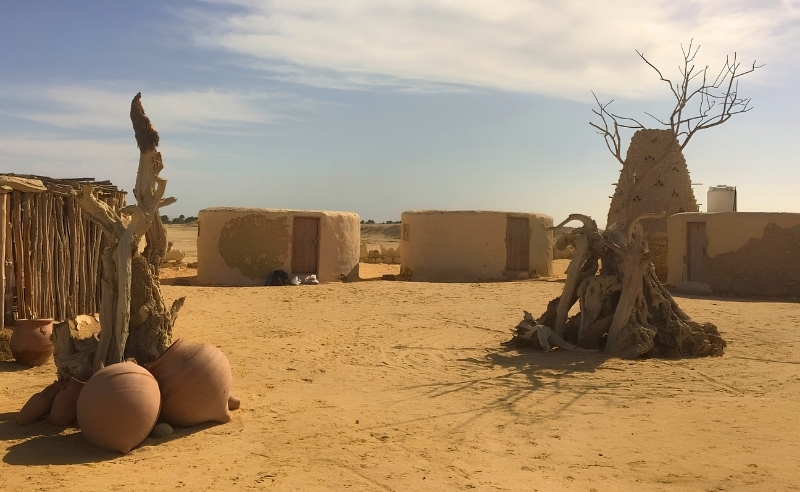
The Ababda and Bashareya tribes, she noted, still perform a wedding dance recreating how elders once fought lions in the desert, a form of cultural record keeping that predates any camera. "It was life changing, honestly," she told SceneTraveller, of the years spent moving between these communities.
Tribal Talks was later screened at the Gouna Film Festival library, where Mansour joined a panel discussion on storytelling. She described sitting alongside filmmakers she admired, discussing why documenting environmental and cultural change matters, as one of the more meaningful moments to come out of the project.
A second project, not yet released, took her to Wadi Rum in Jordan, filming the heritage of Bedouin climbing in the area's sandstone formations, a practice she said has continued there for centuries. The shoot combined hiking, climbing and rappelling, and remains, for now, without a release date.
Mansour has stepped back from cycling for now, occupied instead with designing new outdoor experiences and finishing pending film projects.
One destination remains on her list without a set timeline: El-Gelf el-Kebir, a remote plateau in Egypt's southwest that once hosted desert expeditions and now sits closed to visitors, home to Neolithic petroglyphs of giraffes, ostriches and cows.
"I'd like to go and see how people survived in this very remote area," she told SceneTraveller, before finally adding: "there's something very beautiful in being challenged in nature and being able to just deal with those challenges in nature."
- Previous Article Egypt’s First Fintech Unicorn MNT-Halan Plans 20% Stake Sale in IPO
- Next Article 48 Hours in Rosetta