





Abeer Balubaid's Melody of Grief Will Play on AlUla's Musical Road
The Musical Road is a grooved stretch of tarmac near AlUla's gates. Balubaid won it with a piece she never meant to share, and signed the rights over to the Royal Commission to get it there.

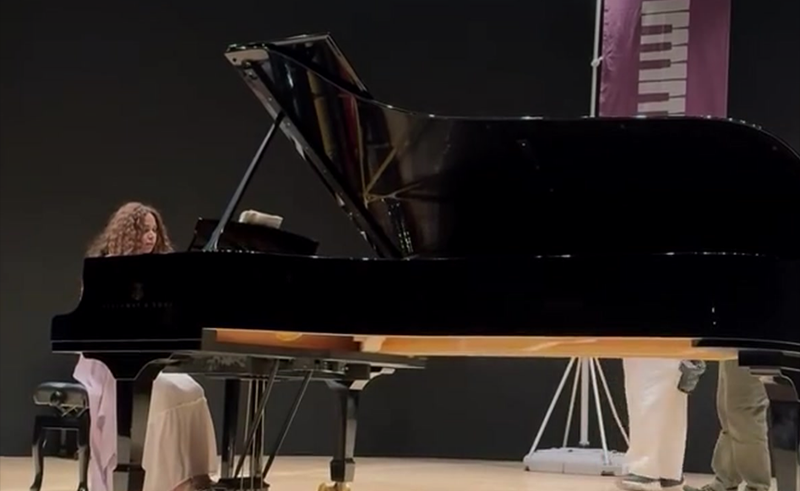
Saudi musician Abeer Balubaid wrote Passage of Light in the raw months after her father died in 2019, and played it alone at the piano for years afterwards. It is now about to be installed as a musical road near the gates of AlUla, where it will sound through the tyres of arriving cars.
Passage of Light (Masar Al-Nour) won the AlUla Music Competition, held in June 2026 by Arts AlUla, the cultural department of the Royal Commission for AlUla. The prize was SAR 100,000, around USD 26,600, and a place on the Musical Road, a stretch of tarmac that plays the piece to everyone who drives across it.
Balubaid came to professional music by an unusual route. She taught herself piano and guitar as a girl, then studied architecture at Effat University in Jeddah, composing in whatever hours she could steal from her degree and playing the results only to her family.
"Music has always been the means through which I express myself," she tells SceneNowSaudi. "Self-teaching allowed me to freely develop my artistic voice, while proper education gave me all the necessary knowledge and skills to polish it."
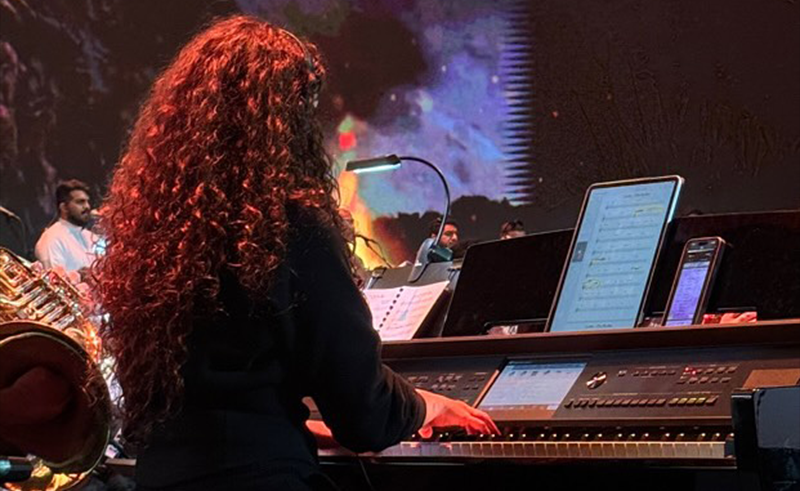 In 2023 she left architecture to join the Saudi National Orchestra. "Working for the Saudi National Orchestra completely changed my perspective," she says. "For the first time in my life, I found myself in the environment where I could study music professionally, work with outstanding musicians and get a chance to build a career in music."
The melody itself came from grief, written for solo piano in the months after her father's death. "I haven't been thinking of orchestration or of any particular destination for this piece at the moment," she says. "At that point in time, the piano was all I needed to channel my feelings."
The AlUla competition changed that. "I felt that the melody had found the place it had been searching for," she says. "I wasn't changing the melody itself; I was discovering a new way for it to speak."
The way she built it out owes a great deal to the discipline she left behind. Balubaid still thinks like an architect when she composes. "Architecture gives a structure to space, while music gives a structure to the emotions," she says. "In both cases, we are designing a journey."
That is why she accounts for every note. "I am not adding anything just because it sounds pretty," she says. "Every melody, harmony, rhythm, and even silence must serve the story that the music is telling."
To make the piece belong to AlUla, she set the piano in dialogue with the oud. "Piano is a voice that is more universal and contemporary, while oud contains the memory of this land, its history, heritage, and cultural identity," she says.
The cello carries the "emotional load that we carry before our healing, our vulnerabilities, reflections, and searching," she says, and the strings do the widening. "The sustained strings create a sense of vastness, while the dialogue between the instruments reflects the layers of history that continue to echo through the landscape."

None of it was written for a concert hall. The Musical Road is heard from a moving vehicle, a grooved section of asphalt near the gates of AlUla that plays the piece as tyres pass over it. Arab News reported that more than 150 submissions competed for the chance to greet arriving visitors, and Balubaid's was the one chosen. Her winning version runs to between 30 and 60 seconds.
"It was like taking the introduction, the heart of the story, and its conclusion, and then weaving them into one shorter piece," she says. "Sometimes saying more with less could be as powerful."
The move from private grief to public property is literal as well as figurative. Under the competition's terms, the SAR 100,000 is paid in exchange for the intellectual property, and full rights to the winning composition transfer to the Royal Commission for AlUla.
"This piece of music started from the very personal experience, but I've never intended to keep it to myself," she says. "Once it is shared, it stops belonging only to the composer anymore. Everyone who listens to it brings his or her memories, emotions, and experiences, and the music starts leading a different life in everyone's mind."
Leaving AlUla after the competition, she felt the piece change in her hands. "It was as if I was saying goodbye to the part of my grief that had lived within this piece of music for such a long time," she says, "not because it disappeared, but because it got transformed into something that could belong to someone else."
An installation date has not yet been confirmed.
- Previous Article Chinese President Xi Jinping Arrives in Egypt
- Next Article Behind the Making of 'Comfortably Numb, Reimagined'