






‘Cairo Portraits’ Remembers a Forgotten Artist of Studio Portraiture
Stefan Ruiz has photographed Trump, Jay-Z, and Taylor Swift. His latest book is about an Armenian-Egyptian named Artin Sarafian.
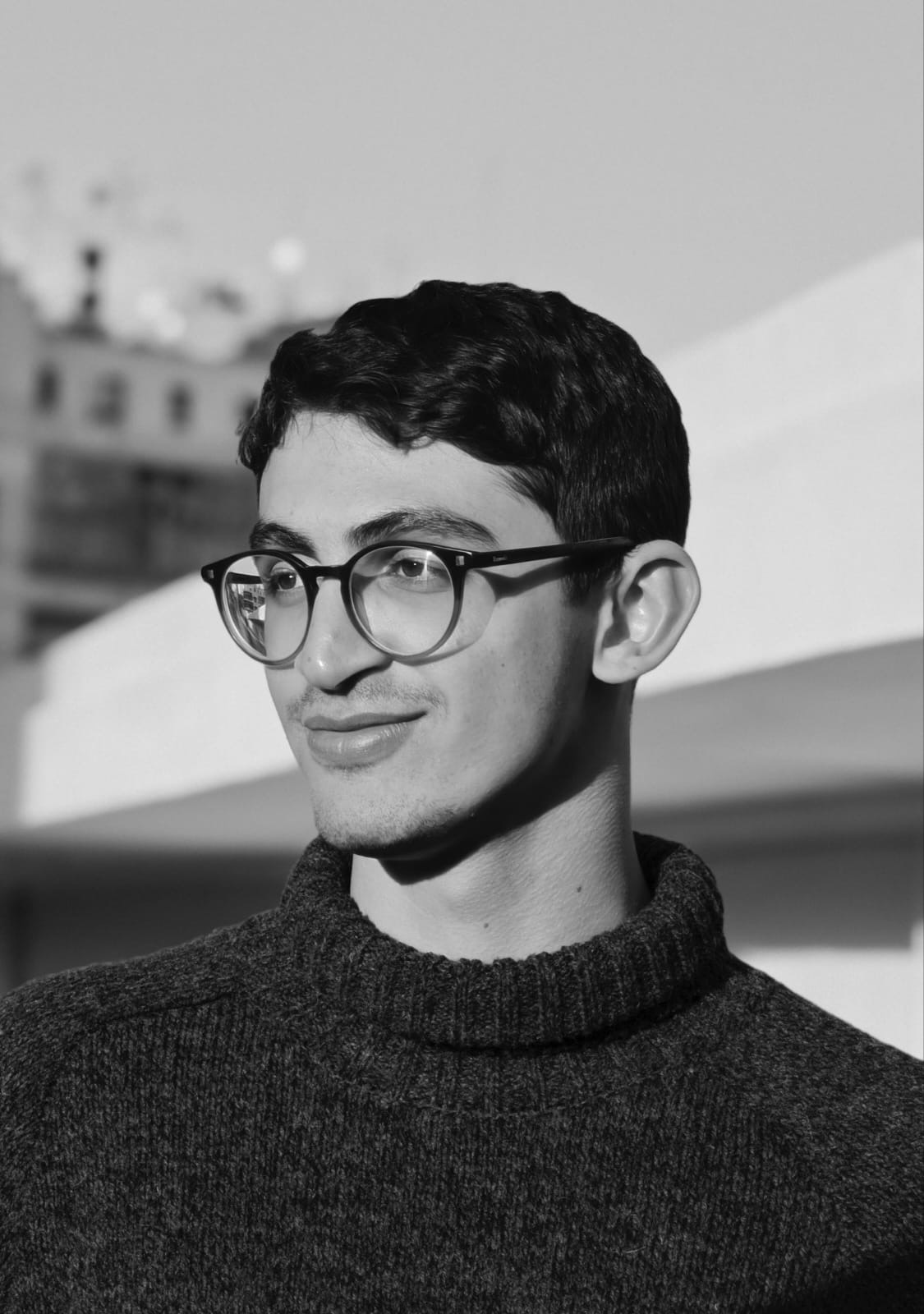
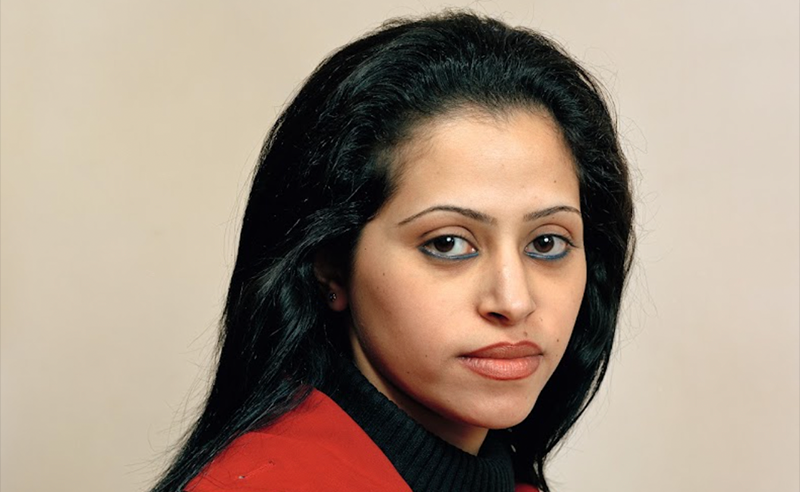
In February 2003, American photographer Stefan Ruiz arrived in Cairo to shoot a campaign with the Spanish shoe brand, Camper. He had lugged with him a German-made, large-format camera—an exceptionally large piece of equipment which, despite being new at the time, relied on technology a century old and required the photographer to stand beneath a light-sealed hood to adjust the frame or press the shutter.
In the 23 years since then, he’s used the very same camera to shoot the portraits of Donald Trump, Kendrick Lamar, and some of the most famous people in America. But his latest book, Cairo Portraits, is not about anyone famous. Published in September with New York-based Middle East Archive, the photography book is a kind of time capsule of Cairo’s people, and of one person in particular: an Armenian-Egyptian by the name of Artin Sarafian.
“My crew and I were going around Cairo and setting up the camera in markets, for example,” Ruiz recalls, “and we would do some castings. If Camper ended up using the photographs, the subjects got paid. But I always tried to give the Polaroids away, since the camera could shoot Polaroid in one holder and film in the other.”
Cairo was, for Ruiz, a transitional moment. It was the last of six cities in a campaign that took him around the Mediterranean with the Spanish shoe brand, and it came just as he accepted an offer to join Italy-based magazine Colors as creative director.
“Camper were interested in taking time and slowing down, taking photos of real people,” he says. “I had a lot of creative freedom, and I wanted to do portraits. But I was also looking for ideas for the magazine, and one of the themes I was thinking about was about studio photographers around the world. At the time, the common studio photographer was going out of business everywhere because of digital cameras.”
One day, driving through Cairo’s busy downtown, Ruiz saw a camera shop that caught his eye. “We stopped the van and hopped out, and we all kind of piled into this shop,” Ruiz says. This was Studio Atro D’Art, Sarafian’s photography studio on 2 Sherif Street. There were several things that told Ruiz to stay.
“It was like a museum. I don’t know the last time he had a portrait commissioned, but he was in there. He was very quiet. There were photos everywhere, and vitrines filled with old camera boxes or cameras or even more photos.”
As Ruiz leafed through the photos and spoke with the man, who was already 78 years-old at the time, he learned that Sarafian hand-coloured his portraits, a technique which had mostly died out with the arrival of affordable colour film in the 1970s. Ruiz described it as “like Photoshop, before Photoshop.”
Ruiz ended up interviewing Sarafian and purchasing a box-full of his photos, one of which became the cover for Issue 58 of Colors magazine in October-November 2003, titled ‘Photo Studios’. Sarafian’s interview appeared alongside those of studio photographers form India, Ukraine, South Africa, and Spain.
Then as now, what little is known about Sarafian is known from this interview. Born in Cairo to Armenian parents, his contemporaries would have included the likes of Van Leo, another Armenian-Egyptian photographer who found fame and acclaim in his portraiture of celebrities during the golden age of Egyptian cinema. But Sarafian’s world was a much more mundane one.
“He had a sister whom I met one of the times I went there,” remembers Ruiz. “I don’t think either of them had much money, and I don’t think he had kids.”
In his studio, where he was charging EGP 30 for a portrait in 2003, Sarafian had accumulated a lifetime’s worth of work. He learned photography at 14 in the city of Suez, where he went around the Second World War to pick up the trade by photographing British troops.
In the 1960s and 70s, when Studio Atro d’Art was at its busiest and customers were queuing up to have their portraits taken, Sarafian’s subjects consisted mostly of Arab tourists, newlyweds, families commemorating important occasions, and the like. Sarafian took his job seriously—and he was good at it.
“Colouration is an art,” Sarafian told Ruiz in 2003. “I can make anyone look good with retouching.” This was part of what Ruiz had termed Sarafian’s higher purpose: “People have their portraits taken because they want to look beautiful,” Sarafian had said. “We all want to be protected, to be preserved.”
Sarafian allowed himself many liberties with his subjects: “I used to clarify the eyes. Then I’d erase the wrinkles and the spots out, things that didn’t look good. Sometimes I took off the beard,” he told Ruiz.
Though separated by decades, Ruiz says that he and Sarafian shared a common language. Ruiz himself has become known for a startlingly frank kind of portraiture. In his portraits, the celebrity – Bad Bunny, Taylor Swift, Jay-Z, but also Kissinger, Clinton, and Trudeau – is allowed to be themselves, but they are not allowed much more. It was a matter of respect, for Ruiz, giving everyone he photographed the same kind of attention, regardless of how much money they had or how many times they’d sat in a studio.
Most of Sarafian’s subjects, on the other hand, would not have known a studio outside his. His attention to them, out of duty or out of craftsmanship and artistry, elevated them momentarily to the rank of celebrity.
“I thought some of his portraits were really beautiful,” Ruiz says. “I’d love to have taken them.”
In Cairo Portraits, the Middle East Archive has placed Ruiz’s photographs of Cairo from 2003 and Sarafian’s hand-tinted portraits from the 1960s, 70s, and 80s, side by side. Some of the photos are of Sarafian and his studio, including one where he is standing inside a back room, a photograph of Anwar El Sadat to his right, and Mona Lisa to his left.
The book, curated by Romaisa Baddar and designed by Egyptian photographer and bookmaker Dania Hany, opens in two directions. The viewer is meant to flick through both sides simultaneously, creating an interplay between the two bodies of work, the two artists, and the decades which separate their craft and the city they captured.
Ruiz has not been back to Cairo since 2003. Sarafian’s photos in Cairo Portraits are from the same box of photographs Ruiz bought from him when the pair first met. After leaving Cairo, Ruiz lost contact with Sarafian.
Walking down to 2 Sherif Street today, where Studio Atro d’Art once stood, Sarafian’s studio has disappeared. One man remembers him, the owner of a butchery across the street, who says the studio closed down more than 15 years ago—before the Arab Spring. It was owned by a khawaga, the man recalls. In its place now, a store named Camera Shop sells digital cameras and photography equipment. It is not unlikely that Sarafian had anticipated this fate.
“Studios are over,” he told Ruiz in 2003. “Computers are the future. It’s not good. Computers are wrong. They aren’t artists.”
- Previous Article What to Wear to the Longines Global Champions Tour in Cairo
- Next Article 4LFA Embraces Poetry & Philosophy on Conscious Rap EP ‘Diwan’
Related Articles
Trending This Week
-
-
 Oct 15, 2026
-
-