


How Jeddah’s Sculptural Roundabouts Became Everyday Landmarks
‘Jeddah Roundabouts: Circling the City’ looks beyond Jeddah’s monumental public sculptures to the memories, directions and stories that have accumulated around them.
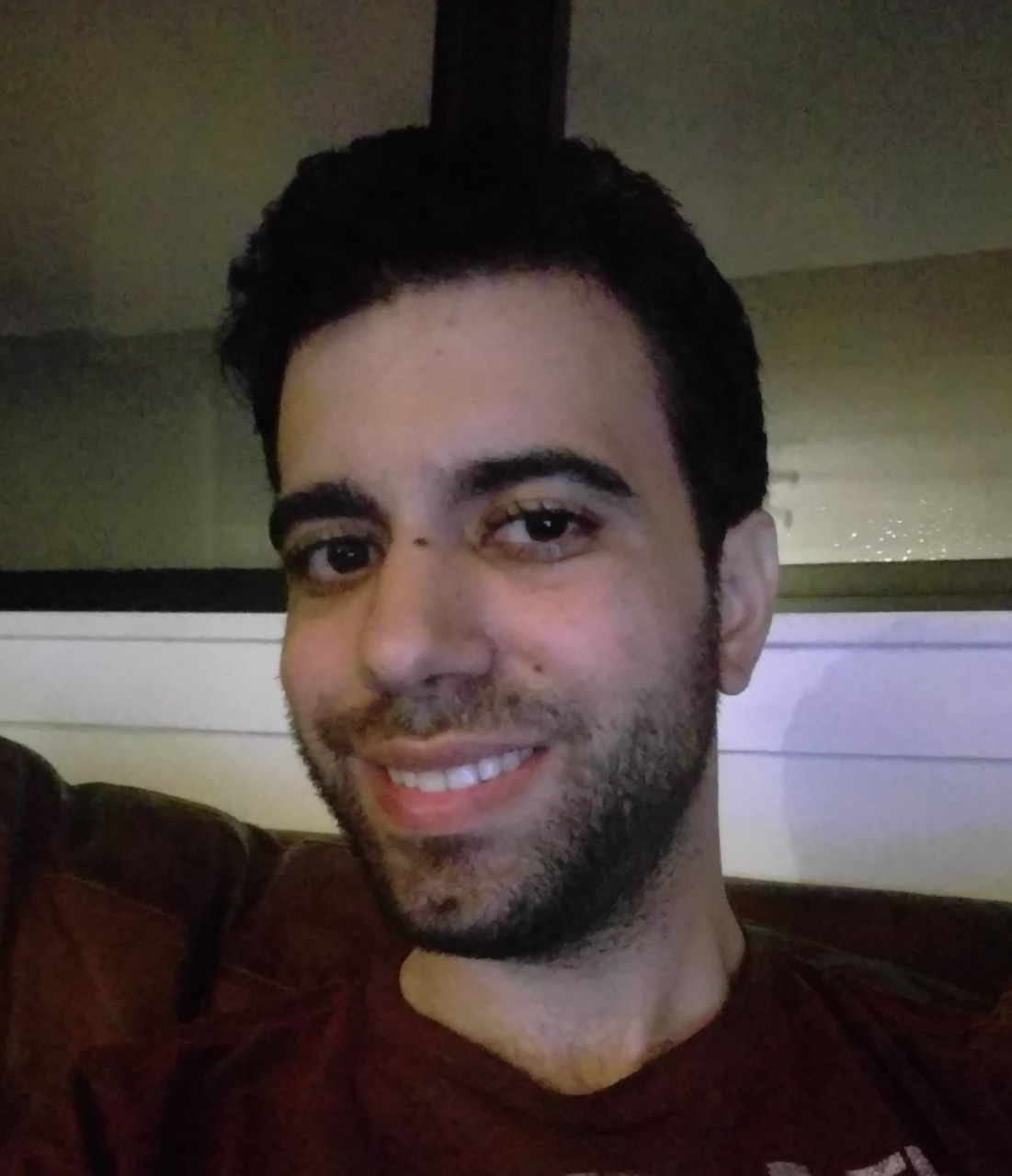
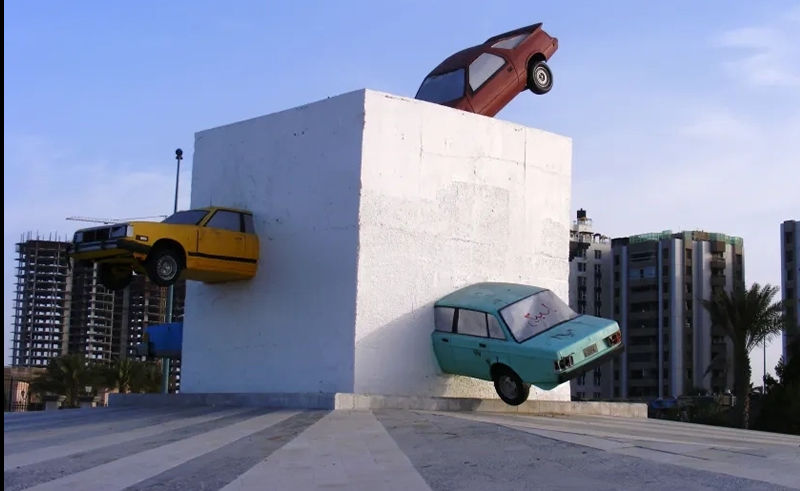
For generations of Jeddah residents, directions have not always started with a street name. They might begin with a bicycle, a globe, a lantern or one of the monumental sculptures planted at the centre of the city’s roundabouts.
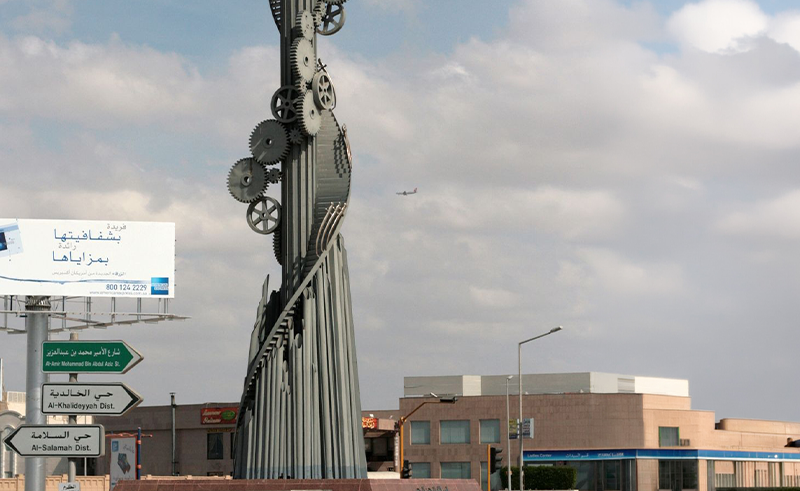
These landmarks became embedded in the everyday geography of Jeddah during a period of rapid urban expansion in the 1970s and 1980s, when former mayor Mohammed Said Farsi commissioned artists from Saudi Arabia and abroad to create public works across the city. Rather than being confined to museums or cultural districts, many were placed directly within Jeddah’s growing road network, becoming part of the routes people used every day.
Over time, their identities stretched beyond the intentions of the artists who made them. A sculpture could become a meeting point, an unofficial address or simply the easiest way to explain where something was. Some acquired nicknames and stories that travelled between residents. Others became so familiar that they faded into the background despite their enormous scale.
It is this relationship between artwork and city that Art Jameel and FLEE revisit in ‘Jeddah Roundabouts: Circling the City’, a new publication bringing together photography, oral histories and critical writing around Jeddah’s sculptural roundabouts.
“Jeddah’s roundabout sculptures offer a way of reading the city through its changing landscape,” Art Jameel tells SceneNowSaudi. “They belong to a particular moment in the city’s urban history, but their significance extends beyond the circumstances of their making.”
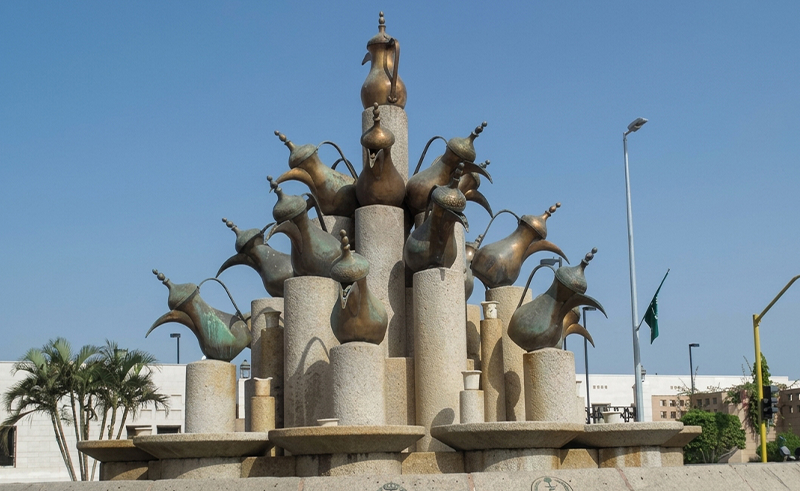 Over decades, the sculptures have become part of how residents move through Jeddah, recognise places and remember different periods of their lives. For Art Jameel, that means they hold several kinds of history at once: the history of urban development and public art, but also the personal histories that accumulate around places people repeatedly encounter.
Architect and Bricklab co-founder Turki Gazzaz examines their architectural and urban history, while researcher Nouf Al-Harthi turns towards the people who have spent decades navigating around them, speaking with taxi drivers about the landmarks and stories through which Jeddah is remembered. Photographer Hatun Al-Harthi approaches them by returning to the sculptures with a camera and looking at objects that had long been familiar from a distance.
“I had never really looked at the roundabouts this way before,” Hatun Al-Harthi tells SceneNowSaudi. “Working on this book allowed me to get closer to the sculptures, develop a sense of familiarity with them, and understand their details.”
Getting close changes the way the sculptures read. Features that disappear at driving speed become visible, while monuments generally understood through a nickname or silhouette begin to reveal the artistic decisions behind them.
That process led Al-Harthi to Julio Lafuente’s Qibla sculpture and an unexpected reference point: the Winged Victory of Samothrace at the Louvre in Paris.
“I loved discovering how the two sculptures share somehow a similar spirit, while each has its own meaning and beauty,” she says. “I also really enjoyed learning about the creative process behind the sculpture and seeing how a visual reference can inspire something with its own distinct identity.”
 The connection illustrates one of the tensions running through Jeddah’s collection. The sculptures belong to an international history of modern art and architecture, yet many residents encounter them first as intensely local objects: the thing beside a familiar road, the landmark used in directions or the monument associated with a particular part of the city.
Photographing them also exposed how difficult it can be to experience some of these works outside that everyday relationship with traffic. The Globe Roundabout and Camel Roundabout were among the hardest for Al-Harthi to document.
“Their large scale and the heavy traffic around them made it difficult to move around on foot, and reaching each angle to take photographs took time,” she says. “I tried to visit them during quieter hours, when there was less traffic, and I remember going back several times until I got the photographs I wanted.”
That difficulty is part of what makes the roundabouts unusual as public art. They are among Jeddah’s most visible monuments, yet visibility does not necessarily mean accessibility. Thousands of people might pass one repeatedly without ever standing beside it, studying its materials or learning who designed it.
For Al-Harthi, documenting them raised the possibility that these landmarks could be experienced differently.
“I think it would be wonderful if they were treated more as destinations in their own right, places for tourists to visit, become familiar with, and discover the stories behind,” she says. “It would also be a way of preserving this part of Jeddah’s history.”
Throughout the book, ‘Circling the City’ is just as interested in the less tangible material that has gathered around the sculptures: directions, anecdotes, associations and stories that may never have appeared in an official account of the artworks.
That is where Nouf Al-Harthi’s conversations with taxi drivers become particularly important. Few people experience a city through its informal geography as consistently as drivers do. Official street names coexist with the landmarks passengers actually use, and a sculpture can remain useful as a point of reference long after the surrounding roads have changed.
Art Jameel says taxi drivers develop a particular knowledge of Jeddah through the routes they repeatedly travel, the encounters they have and the places they watch change around them. Their recollections offer another record of how the city is recognised and remembered, including meanings that shift between generations as roads are rebuilt, neighbourhoods change and familiar landmarks acquire new associations.
For Art Jameel Senior Public Programmes Manager Eiman Elnaiem and Art Jameel alumnus Sara Hammami, those conversations take the roundabouts beyond their physical role in the city.
 “The roundabouts are no longer exclusively an urban fact, but become the source of an almost psychoanalytical journey, in which they reflect the soul of the city’s inhabitants,” they say. “In this sense, the book places dialogue and listening as critical cultural practices, coexisting with the fleeting rhythms of everyday life and the poetics of space.”
The roundabouts therefore form a kind of parallel map of Jeddah. Their meanings are partly designed and partly accumulated, produced by artists but continually rewritten by the people moving around them.
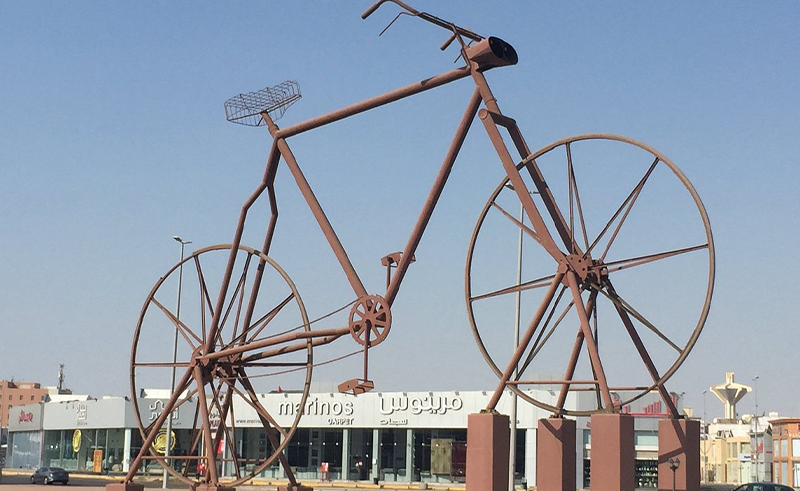
The Bicycle Roundabout is perhaps the clearest example. Asked which sculpture she would show someone unfamiliar with Jeddah, Hatun Al-Harthi chooses the bicycle not primarily because of its form, but because of the folklore that has grown around it.
“There are local legends associated with it that were passed down among pilgrims visiting Jeddah,” she says. “One of these stories claimed that the bicycle belonged to Prophet Adam. I find it fascinating how these stories became part of the way people remember and relate to the sculptures.”
The story does not need to be historically true to become part of the monument’s history. Its significance lies in the fact that people told it at all, passing it between visitors and residents until an oversized bicycle became more than an artwork at the centre of a traffic junction.
One history can identify the artist, commission, date and visual references behind a sculpture. Another can record what residents called it, what they believed about it and which neighbourhoods or memories became attached to it. Art Jameel describes this accumulation as part of Jeddah’s “living archive”, where the city’s history is carried not only through its physical structures but through the memories and everyday experiences attached to them.
‘Jeddah Roundabouts: Circling the City’ grew out of an ongoing collaboration between Art Jameel and independent publishing platform FLEE, following their 2024 ‘Echoes of Shells: Sounds of the Red Sea’ workshop at Hayy Jameel. The publication also builds on more than a decade of Art Jameel’s work around Jeddah’s public sculptures, including restoration and research into the city’s urban histories.
‘Jeddah Roundabouts: Circling the City’ will be available through Art Jameel Shops in Jeddah and Dubai from November 5th, as well as online, before appearing at PaperBack in JAX, Diriyah from December 3rd to 5th.
- Previous Article Karen Wazen on Insecurities, Eyewear and Her Egyptian Homecoming
Related Articles
Trending This Week
-
-
-
 Nov 08, 2026
-
 Nov 09, 2026