




13,000 Inscribed Pottery Fragments Discovered at Athribis in Sohag
The discovery at Athribis in Sohag raises the total number of ostraca found at the site to about 43,000.

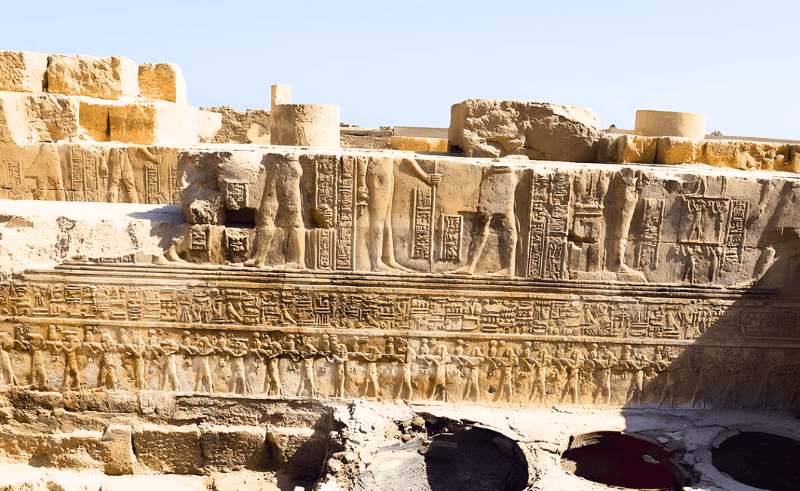
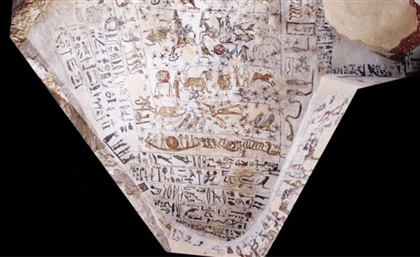
An Egyptian–German archaeological mission has uncovered around 13,000 inscribed pottery fragments, known as ostraca, at the ancient site of Athribis in Sohag during the latest excavation season.
The discovery brings the total number of ostraca recovered from the site to approximately 43,000. The excavation is being conducted by a joint mission from the Supreme Council of Antiquities and the University of Tübingen.
The fragments carry inscriptions written in several scripts and languages documenting everyday activities across the settlement.
The texts record tax payments, delivery orders, administrative lists, accounts and student writing exercises, alongside religious material including hymns, prayers and temple-related records. The inscriptions span more than 1,000 years.
The earliest examples are Demotic tax receipts dating to the third century BC, while the most recent are jar labels written in Arabic between the ninth and eleventh centuries AD. Demotic script accounts for the majority of the inscriptions, representing an estimated 60% to 75% of the corpus, followed by Greek texts at roughly 15% to 30%.
Smaller numbers appear in Hieratic, Hieroglyphic, Coptic and Arabic, along with a limited number of drawings and geometric designs.
Researchers also identified more than 130 texts linked to astrology and zodiac themes, mainly written in Demotic and Hieratic. The material is currently being analysed through the “Ostraca d’Athribis” research project led by Sandra Lippert, which has been studying the inscriptions and ceramics from the site since the 2018–2019 excavation season.
Athribis lies in Nagaa El-Sheikh Hamad, around seven kilometres west of Sohag, and formed part of the ninth administrative district of Upper Egypt with its capital at Akhmim.
In antiquity, the city served as a religious centre for the lioness goddess Repyt, who was worshipped alongside the fertility god Min of Akhmim and the child deity Kolanthes.
Related Articles
Trending This Week
-
 Apr 26, 2026
 -
-
-