





Palm Hills One Becomes Cairo Food Week’s Final Dining Room
The final dinner of Cairo Food Week brought Brazilian Flair as the culinary festival's fourth iteration came to a close.
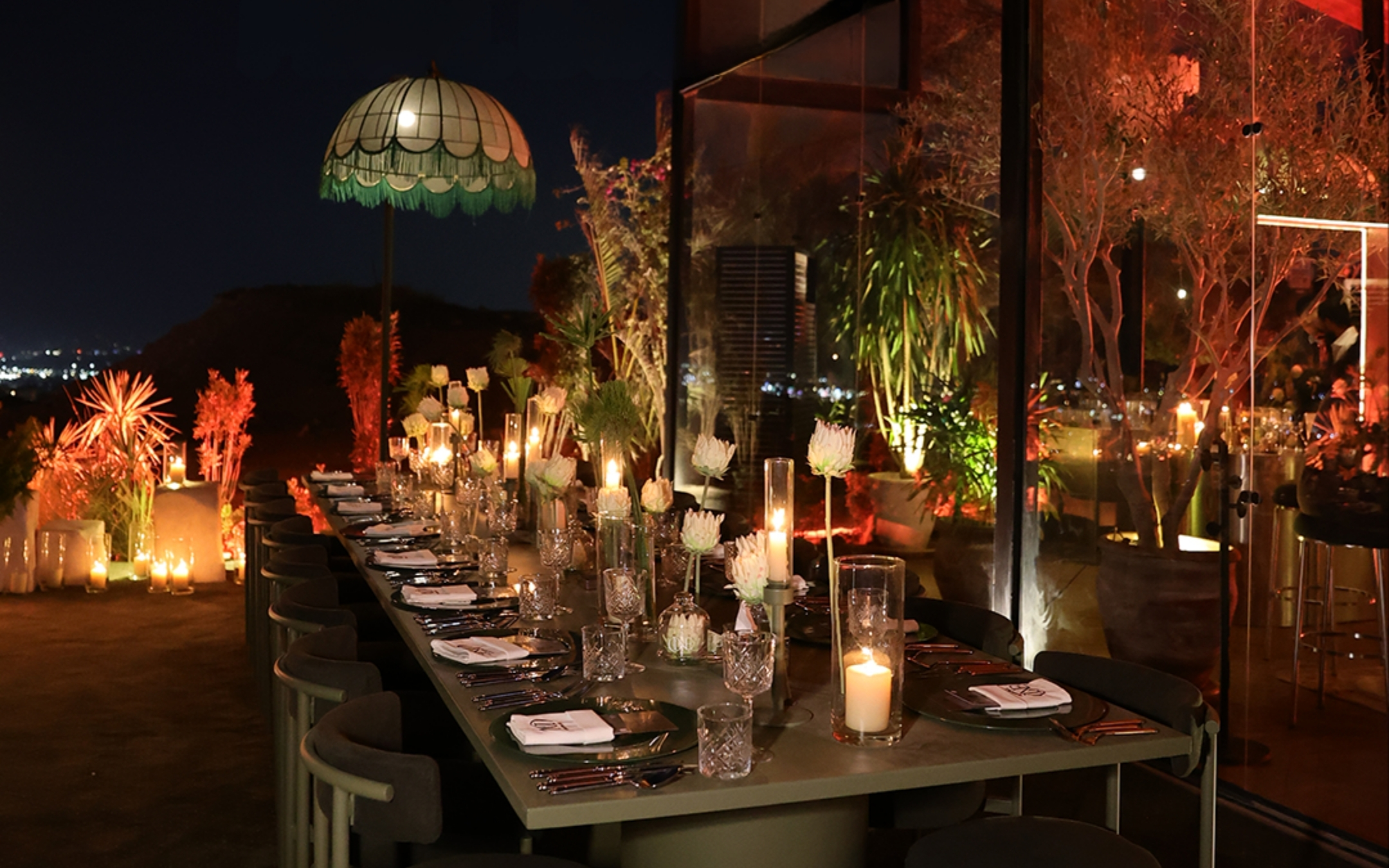
Cairo Food Week’s ten days came to an end at The Glass House at Palm Hills One, where Brazilian chef Manu Buffara was in the kitchen for the final dinner of the programme. Her menu moved between picanha, hamachi and crawfish, bringing her Brazilian point of view into one of Palm Hills’ newer West Cairo addresses. Around her, The Glass House offered something slightly different from the restaurant kitchens that had hosted much of the week: a glass-walled social space embedded within Palm Hills One itself, turning the development—and not simply a restaurant inside it—into the setting for Cairo Food Week’s finale.
That distinction matters to the larger Palm Hills story. Palm Hills One was conceived as more than a collection of homes, with architecture, landscape and shared spaces intended to make social life part of the experience of living there. The Glass House makes that proposition unusually visible. Rather than functioning as a conventional restaurant or standalone events venue, it sits within the development as a place that can change according to what is happening inside it. For Cairo Food Week, that meant becoming a dining room for Buffara and the final gathering point of a ten-day programme that had already moved through several Palm Hills communities.
Throughout CFW’s fourth edition, those communities became recurring sites for one of the programme’s central ideas: placing international chefs inside Cairo kitchens rather than simply importing their restaurants wholesale. At Palm Central, Danish chef Bo Bech stepped into Mamina’s, while Nicaraguan chef Gabriela Chamorro brought the Central American cooking of Dubai’s Girl & the Goose to Izakaya. Scalini joined the programme too, hosting The Cocochine’s Larry Jayasekara from London.
What had previously been a Cairo Food Week partnership largely rooted in Palm Hills’ western communities also travelled east. At Palm Hills Katameya, Michelin-starred German-Moroccan chef Fayçal Bettioui took over The Live Kitchen, operated by SAGE. The move made the geography of this year’s partnership considerably broader: Palm Central supplied the established restaurant ecosystem, Katameya extended it across Cairo, while Palm Hills One offered a different proposition altogether—a residential development becoming the setting for the programme itself.
By the time guests gathered inside The Glass House, then, Buffara’s dinner carried more context than a conventional closing event. Her cooking brought Brazil into the final exchange, but the room around it reflected something Cairo Food Week had been exploring throughout its fourth edition: food does not exist independently of the spaces, neighbourhoods and communities in which it is served.
For Palm Hills, that idea also gave tangible form to its longstanding language around “changing the living experience.” Across this year’s Cairo Food Week, restaurants became collaborative kitchens, a community in East Cairo became an international dining destination for an evening, and at Palm Hills One, a space belonging to the everyday architecture of a residential development became the dining room in which the entire programme said goodnight.
The Glass House was therefore more than the final address on Cairo Food Week’s map. After ten days of moving chefs through Palm Hills kitchens from west to east, the programme ended somewhere that suggested why those collaborations belonged there in the first place: not simply to bring people somewhere to eat, but to make food, gathering and cultural exchange part of what an address can contain.
- Previous Article The Ahly Fan in a Zamalek Shirt Who Became a War Hero
- Next Article OBJ Expo Showcases the Pieces That Make a House a Home at New Cairo
Related Articles
Trending This Week
-
 Oct 06, 2026
 -
-
-