




Rebellious Things is a (Rebellious) History of Modern Egypt in Objects
Facing copyright delays from the British Museum, Mohamed Elshahed decided to cancel his publishing contract and release this first-of-its-kind book online for free.
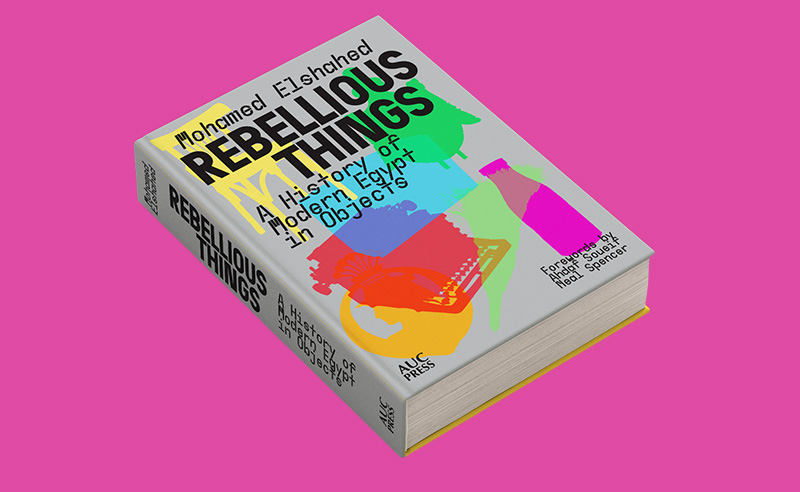
Pick a chapter in Mohamed Elshahed’s Rebellious Things, and you’ll find the story of Egyptian modernity told through the objects it produced, consumed, and left behind. In about 1,000 words, each entry of the 128 that make up this book delivers history in a capsule—a thoroughly researched, well-cited capsule, but one that weaves through time with the instinct of a storyteller, painting a portrait of a society undergoing profound transformation.
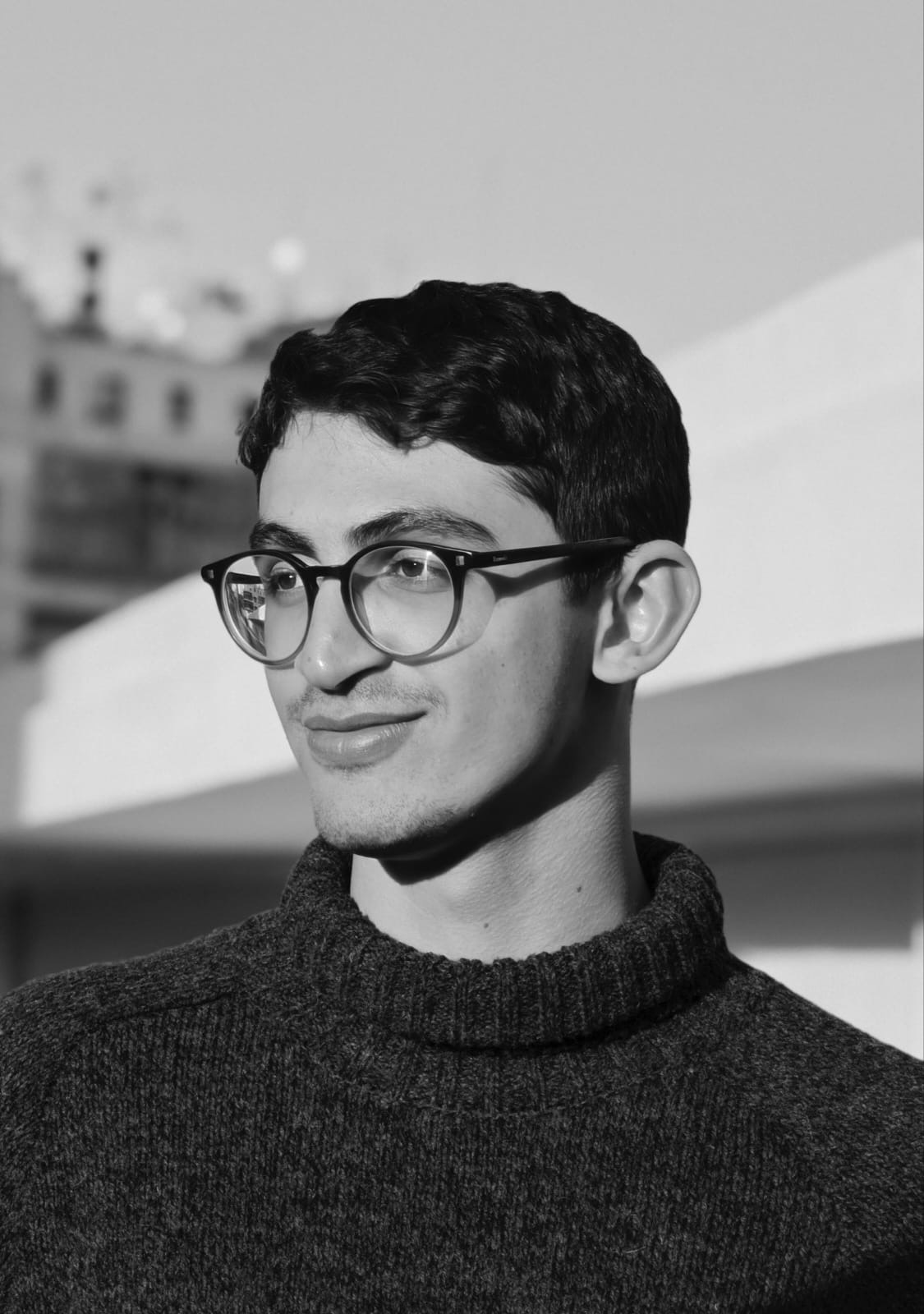
“This book cuts across history diagonally,” says its author, writer and architectural historian Mohamed Elshahed. “It tells complex stories in a digestible way through simple, everyday objects.” Elshahed is no stranger to uncovering the stories embedded within the inanimate: in 2011 he founded the online platform Cairobserver, and in 2020 AUC Press published his bestseller, Cairo Since 1900, which later won the Ministry of Culture’s State Incentive Award.
In Rebellious Things, rather than presenting Egypt’s modern development chronologically, Elshahed’s examination of the objects is carried out across ten sections that explore gradients like ‘Time & Territory’, ‘Pain & Pleasure,’ ‘Wealth & Poverty’, and ‘Spiritual & Occult.’ The book’s title earns its name from the objects’ insistence on telling a story that goes beyond their official narrative, Elshahed explains, and from the notion of modernity as a rebellion against tradition.
“Modernity disconnects objects from their contexts, but it also disconnects people from their history,” Elshahed says. “What I like about this book is that it’s a story of Egypt’s experience with modernity that tries to do the opposite: if modernity decontextualizes, my book is trying to recontextualize.”
The journey that eventually led to the book began in 2016 when Elshahed was selected as a curator for an experimental project at the British Museum. “The Museum wanted to complement their ancient Egypt collections with objects that speak to modern Egypt. I was interested in the project because I previously had a similar idea here in Egypt—our everyday is populated with anonymous things, and I wanted to bring the ones that formed a big part of our life into a museum.”
Over the course of two years, Elshahed travelled throughout Cairo and the governorates casting a wide net, eventually buying 1000 items of all kinds with the modest budget given to him by the Museum. He researched, documented, and photographed each object extensively, then sent them to London for cataloguing. Selections of these objects have since been displayed in the Museum under the title, ‘Modern Egypt Project’.
For Elshahed, whose work deals critically with imperialism and its lasting effects on society and architecture, working with an institution like the British Museum was not without second thoughts. Whereas Egyptians are typically demanding their objects—like the Rosetta Stone—back from the British Museum, Elshahed was sending them more. But, as the Museum’s first full-time Egyptian curator, Elshahed saw his role differently.
“I don’t want to say I felt like an infiltrator, but I was getting a perspective that my people usually don't get. It’s a very problematic institution. More than half of the Museum’s visitors come for its Egyptian artefacts, and yet they’ve never had a full-time Egyptian curator. This project opened up a lot of questions about racism and representation, and why the West gets to tell both their story and ours.”
After his commitment to the British Museum ended in 2018, it became clear to Elshahed that a book needed to be made about the objects he had collected. “No one has done a book like this about a non-Western country before” the author says. “I’m telling the story of an entire society over 100 years in 128 objects or entries.”
Elshahed began writing the book in 2022, at the same time as he completed two back-to-back fellowships in Washington D.C. and Columbia University. Selecting and researching the objects, which were now no longer in his possession, and connecting the dots between them, took him years, but his work paid off. When he submitted the manuscript to AUC Press in 2024 for peer-review, it was given something of a rave review: “This is a vitally important book,” the review concluded, “and there is no remotely comparable volume yet in existence.”
And yet, Elshahed soon ran into trouble. For nearly a whole year after submitting the book and signing a contract for its publication, AUC Press was unable to clear its image copyrights from the British Museum. “Although the objects were Egyptian, curated by an Egyptian, and photographed by an Egyptian photographer in Egypt, the Museum owned the image copyrights once the objects landed in their collection,” Elshahed says. “I had to chase them for the image rights.”
“I was very upset, and I was thinking: Is this soft censorship? Is it racism? Is it indifference?” The institutional stalemate between his publisher and the British Museum made it so that no other progress had been made in the book’s development by the time the image rights were finally cleared.
In September 2025, Elshahed decided to wait no longer and instead took matters into his own hands. He cancelled his contract with AUC Press for Rebellious Things and published the book’s contents freely online.
“I felt in my heart a sense of urgency in getting this book out,” Elshahed says. “History is moving fast, and we’re living in a rebellious time in which people are questioning everything. I became rebellious myself by deciding that if my book is being delayed for whatever reason, I’ll just put it out there myself.”
Between September 16th and December 14th, 2025, Elshahed published all ten chapters and 128 entries through a dedicated Instagram page, @rebellious_things_book. (Other components of the book, like the 12,000-word introduction and a multi-spread timeline of modern Egyptian history, have not yet been published.) He also launched a GoFundMe page to recoup past expenses relating to the book’s research and publication, and cover his own living expenses as he tries to land a new publisher.
“Instagram allowed me to add visual and audio elements that are very essential to the modern period and would not have been possible in a physical book, but there are still core components missing, and so the book is not fully ‘out there’ yet,” Elshahed says, explaining why he's still working on releasing a physical book.
Though a decade has now passed since its first seeds were planted, Elshahed is adamant that the story of Rebellious Things is not over. And, after an unplanned move to Mexico in 2020, he is considering returning to Egypt soon where he’ll continue to pursue the book’s publication. “If I were to return to Egypt right now, I’m going to use whatever’s in the GoFundMe to get me back and get the book out.”
Related Articles
Trending This Week
-
 Oct 06, 2026
 -
-
-