






Egyptian Fine Artist Ashgan Makarem Starts Every Project at the Museum
From glass and faience to fritware clay, Ashgan Makarem revives ancient techniques to create contemporary furniture, tableware, murals, and architectural pieces.
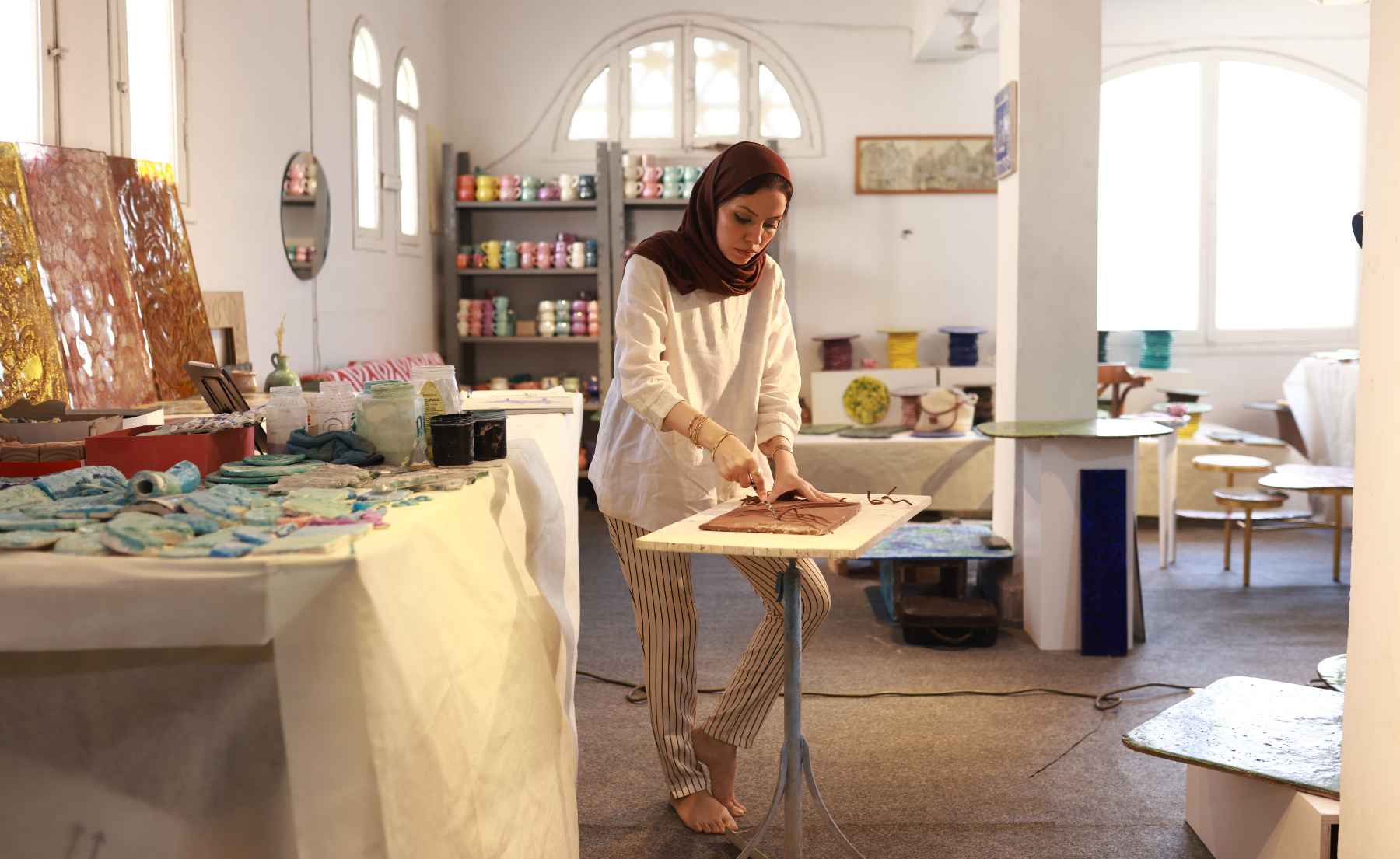
Ancient Egyptian design has spent thousands of years perfecting the art of ceramics, yet modern makers often look everywhere else for inspiration. Egyptian fine artist Ashgan Makarem is trying to change that narrative. From her furnace, she draws out objects created using the same techniques her ancestors once employed. Working across glass, clay and faience, she uses ancient techniques and innovates them to create artistic products that merge historical craft with contemporary aesthetics.
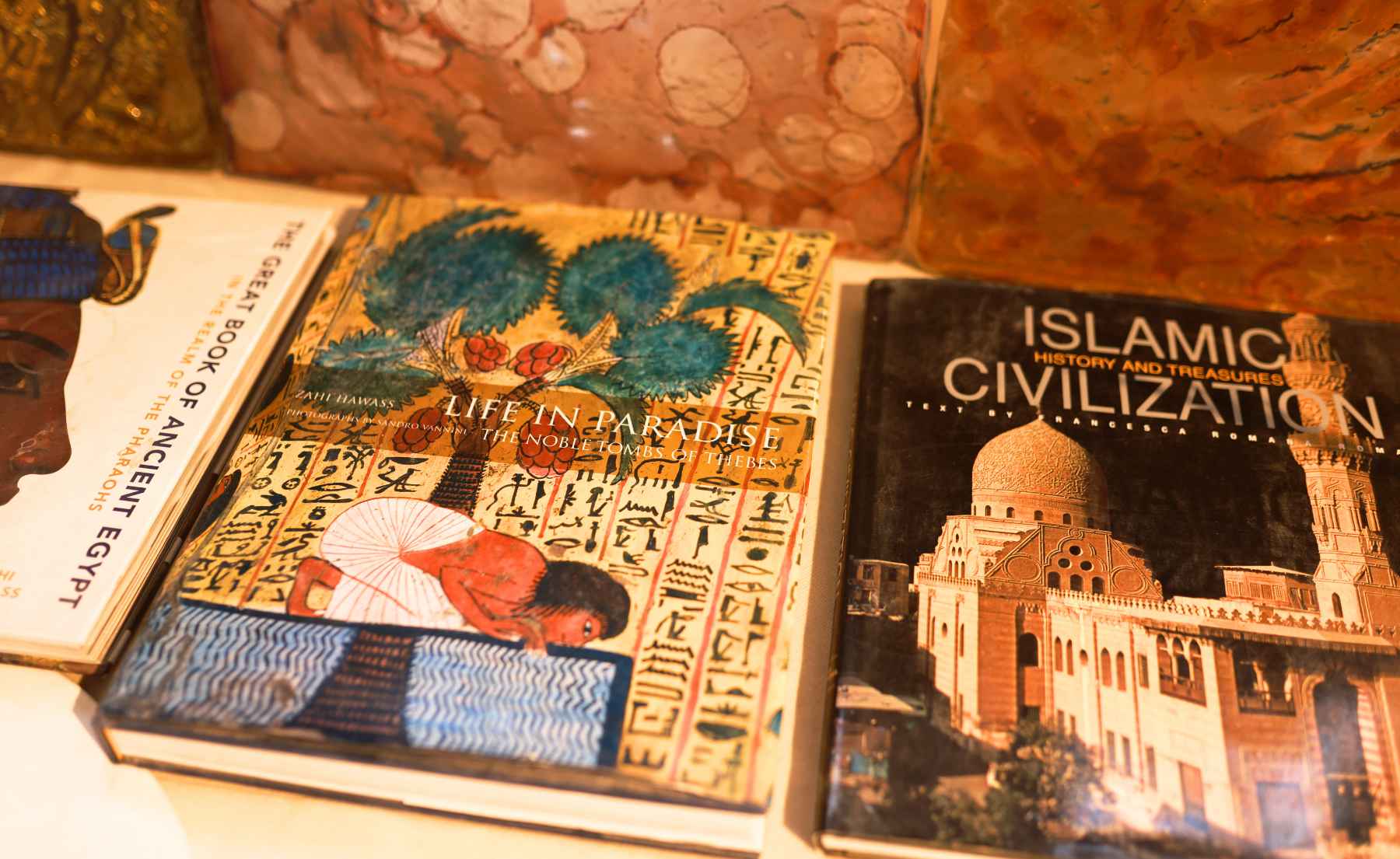
Her creative process begins with a visit to the museum. For her, museums are technical manuals that guide her work. When she looks at a pottery shard or a glass bead from the past, she sees more than an artifact. She studies how it was made, what materials were used, and what knowledge allowed it to survive for centuries. “I think the museum is the first school,” she says. “You go and study piece by piece. You don’t just look at the shape.” Each object becomes a clue, offering insight into techniques that have largely disappeared from contemporary production.
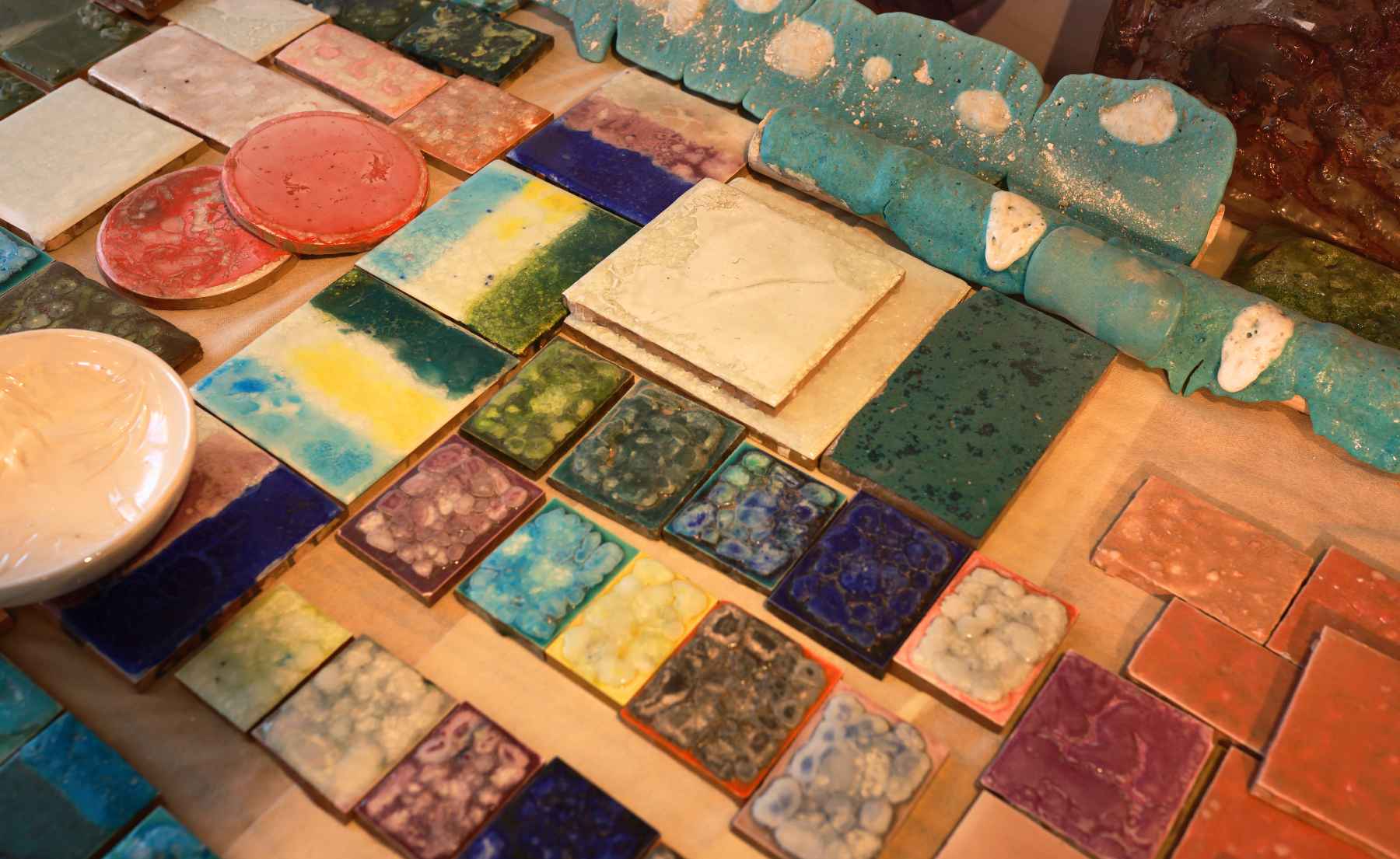
That curiosity has shaped years of her research into material technologies from different civilizations. Ancient Egyptian faience, Islamic fritware clay, and historical glassmaking techniques all find their way into her practice. “My work is based on employing historical technologies, rediscovering them, developing them again, and developing them in a way that fits our era,” she explains. Rather than reproducing historical objects, Makarem asks how these techniques might function today, whether as tableware, furniture, architectural surfaces, murals, or large-scale installations.
Makarem started studying fine arts at the age of 15 before pursuing art history and advanced academic research. During those years, she became interested in the technical knowledge embedded within museum collections. While many people admired ancient artefacts for their beauty, she found herself asking different questions: How were they made? Why were certain materials chosen? And what would happen if those methods were pushed further than their original makers could have imagined?
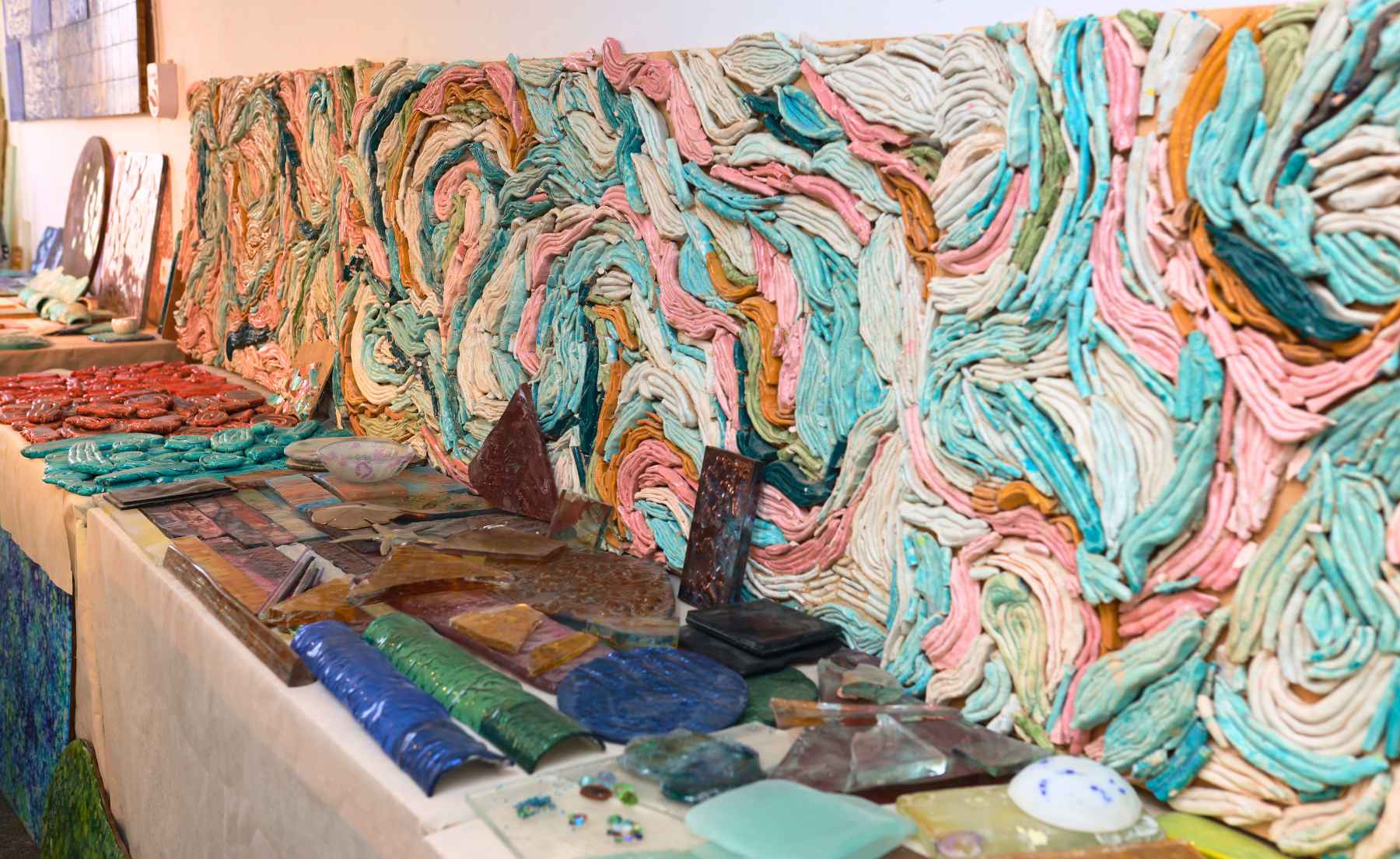
Those questions eventually became the foundation of Made of Ashes, the studio she launched after years of experimentation. Long before the work gained visibility, she spent countless hours testing formulas, building small-scale experiments, and developing material recipes from scratch. “The idea started very early,” she says. “I bought a small studio. I worked. I made new technologies, and I kept developing them until my time came.” Progress was slow, often requiring repeated failures before a process could be refined.
Working with glass and ceramics means surrendering a degree of control to the kiln. Outcomes can shift unexpectedly: a piece can crack, colours can transform, and months of work can produce something entirely different from what was intended. Yet those moments have become an essential part of her process. Failed pieces are rarely discarded. Fragments, cracks, and rejected experiments often find their way into new works, extending the life of materials that would otherwise be considered waste.
That philosophy is reflected in the studio's name. Made of Ashes emerged from Makarem's belief that creation often follows periods of difficulty, uncertainty and loss. “When something burns and comes back again, it comes back in a good way,” she explains. Her studio’s name reflects the nature of her materials as much as it reflects her creative process. Every project begins with raw powders, fire and risk. What emerges is never entirely predictable, but that uncertainty is precisely what keeps her returning to the furnace.
Today, her work spans tableware, furniture, murals and architectural elements, all rooted in the same conviction: that Egypt's historical technologies still have a future. Every piece begins with natural materials, whether glass, clay, faience, or fritware, and with formulas developed through years of research rather than industrial shortcuts. “We don't work with chemicals at all,” Makarem says. “They are all made from natural materials.”
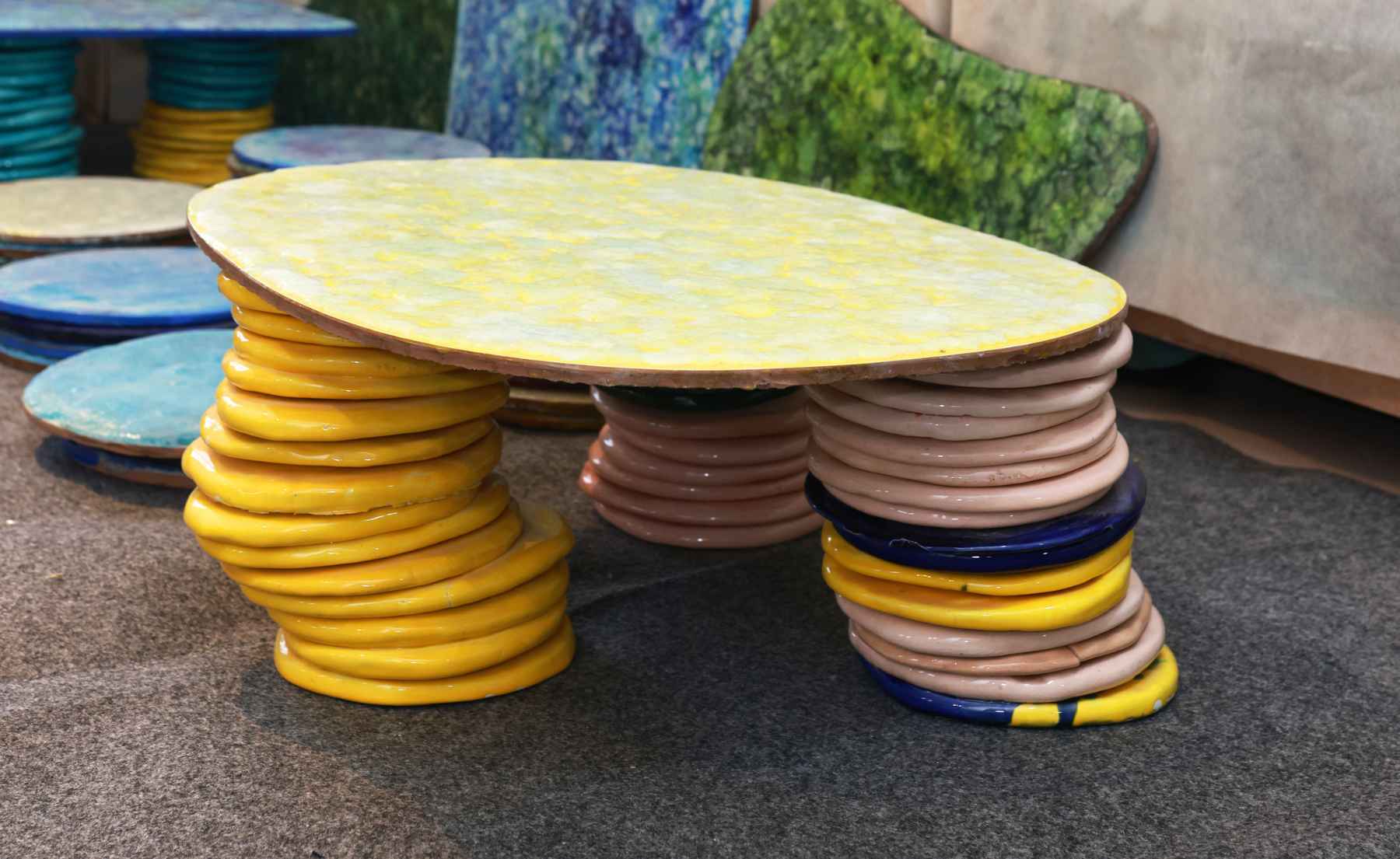
The work itself is equally collective. While Makarem develops the techniques, she often collaborates with artists, architects, and designers, each bringing a different perspective to the process and outcome. “Most of the projects we achieve are collective work,” she explains. For Makarem, reviving historical craft techniques is not the responsibility of a single maker but of an entire creative ecosystem. “We don't want to forget our heritage,” she says. Through each new collaboration and experiment, she continues to demonstrate that these centuries-old techniques still have room to evolve, producing objects and spaces that carry historical knowledge into the present.
Related Articles


Trending This Week
-
-
 Oct 15, 2026
 -

-