





Hilton Aqueduct Echoes Magra El Oyoun From the Nile to the Citadel
Hilton Aqueduct by El Ghoneimi International draws on Cairo’s Magra El Oyoun, connecting water, craft, and design.

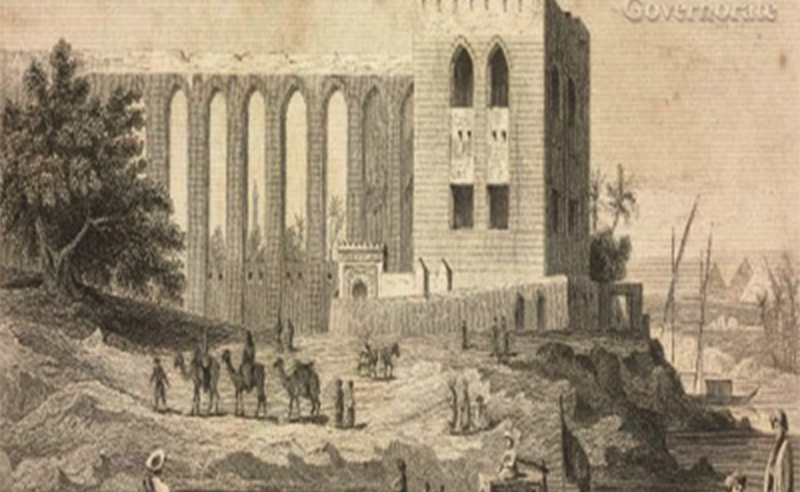
In Old Cairo, the city’s history is not confined to books and museums; it can be read through the fabric of today’s streets. The arches of the Magra El Oyoun Aqueduct still cut a deliberate line through the city, marking a centuries-old infrastructure that once carried Nile water to the Salah El Din Citadel. A connecting landmark that shaped how the area developed—influencing routes, trades, and settlement patterns along its path. Today, its presence remains legible, acting as a memory that continues to inform how the neighbourhood is experienced.
Positioned alongside this historic spine, the Hilton Aqueduct Hotel takes Magra El Oyoun’s connective logic as its conceptual starting point. Rather than reproducing historic forms in response to the context, the architect translates the infrastructure’s original role in linking landscape, craft, and the movement around it, into a contemporary hospitality framework. “The project draws from the aqueduct’s role as a connector, historically linking the River Nile, the Mokattam quarries, and the artisan quarters,” says Shadi El Ghoneimi, Partner and Head of Design at El Ghoneimi International. “The design is carefully curated to balance location, heritage, and the Hilton identity.”
This approach reflects a broader design philosophy developed over El Ghoneimi’s years in hospitality, centered on context-driven experiences. Projects such as Sofitel Legend Old Cataract Aswan and JW Marriott Hotel Berlin, along with upcoming developments like Dusit Thani Al Khobar and Moxy Cairo Lazoghly, show how careful material choices, spatial sequencing, and atmosphere consistently anchor hospitality experiences in their cultural and geographic context.
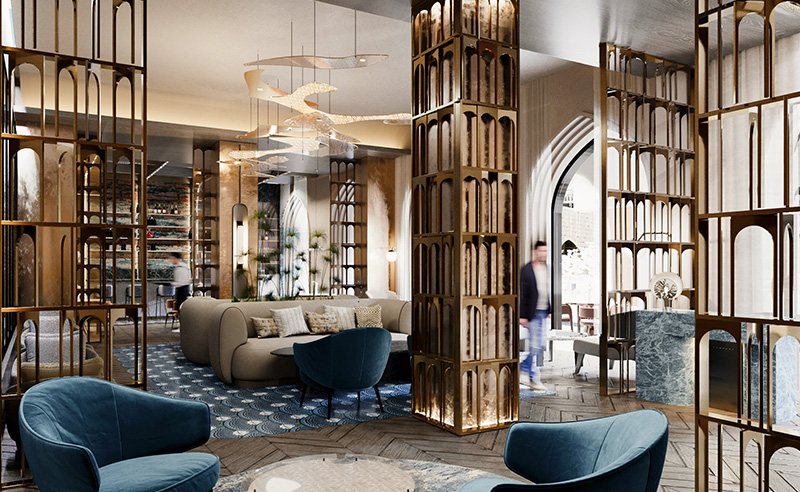
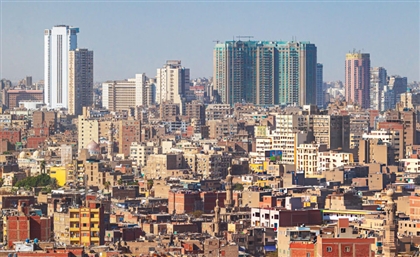
Building on this ethos, the project engages directly with the living context of the neighbourhood. The aqueduct sits within a vibrant urban fabric that is still defined by active craft traditions. Tanneries, metal workshops, and small-scale artisan production operate nearby, forming a living backdrop that informs the hotel’s interiors and material language.
“The aqueduct is more than an architectural relic; it remains a strong urban presence, influencing movement, craftsmanship, and daily life,” El Ghoneimi tells SceneHome. “The craftsmanship and human touch that form the soul of the concept, and shape the atmosphere of the interiors.” This emphasis on craft translates into the detailing, tactile surfaces and bespoke elements that prioritise creating an authentic experience over visual excess.
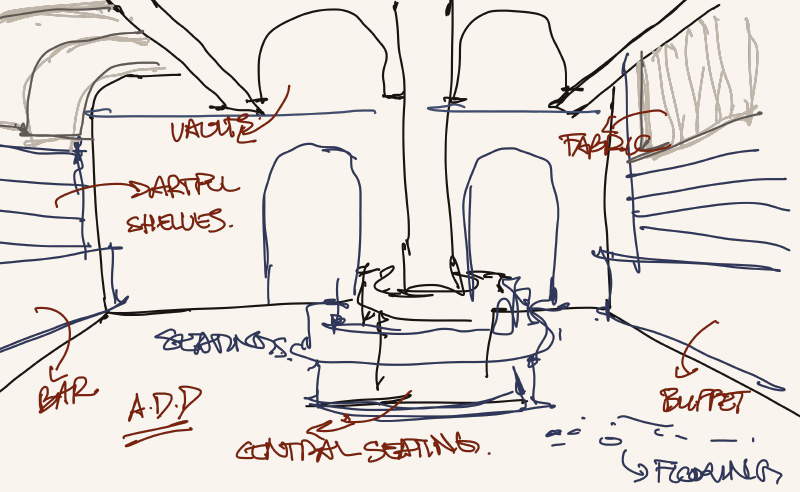
Circulation through the hotel is organised as a gradual spatial progression. Public zones open generously before transitioning into quieter, more contained environments, reflecting the idea of movement as an experiential sequence. “The aqueduct becomes a metaphorical and spatial journey,” El Ghoneimi notes, “guiding guests through materiality, atmosphere, and experience.” This principle informs planning decisions at every scale, from overall layout to the rhythm of thresholds and transitions.
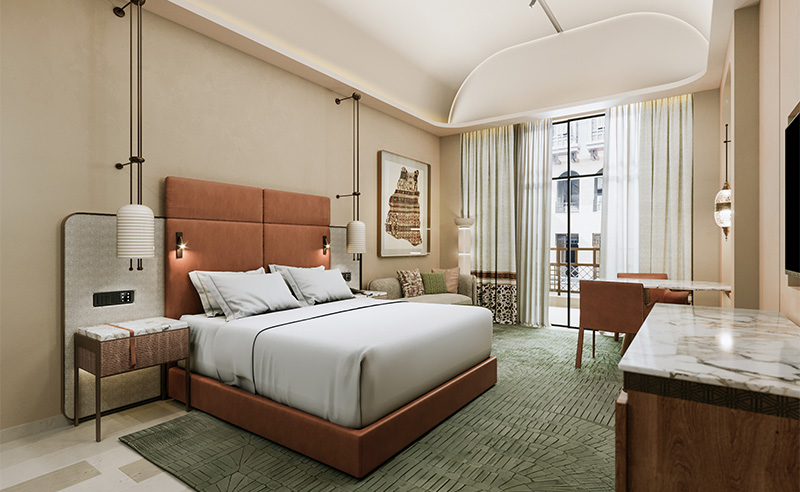
Arrival begins beneath a porte-cochère before opening into a double-height lobby that serves as the project’s central anchor. From here, circulation extends into dining venues, meeting spaces, and lifestyle amenities arranged as part of a continuous spatial sequence. The Regale Lobby Lounge and Bar, Brasserie Haneb for all-day dining, and the specialty restaurant Babou are positioned to support both social gatherings and quieter moments.
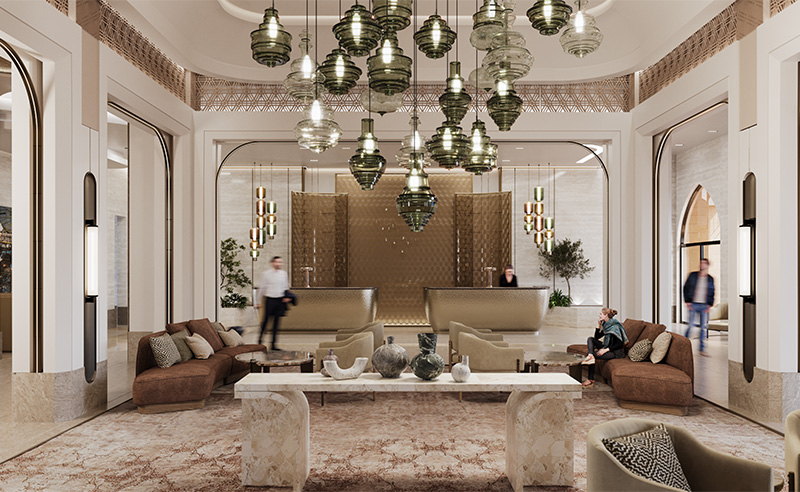
For larger gatherings, ballrooms and pre-function areas are designed to support easy movement while maintaining balanced proportions, and leisure facilities—including the pool, wellness areas, gym, and kids’ club—extend the spatial progression toward more relaxed, restorative environments.
Guest rooms and the executive lounge occupy the upper floors, where a restrained material palette intentionally curates a distinct atmosphere defined by light, proportion, and texture. Across 255 keys spanning multiple room and suite typologies, the interiors maintain a strong relationship with the project’s conceptual framework while prioritising comfort and clarity.
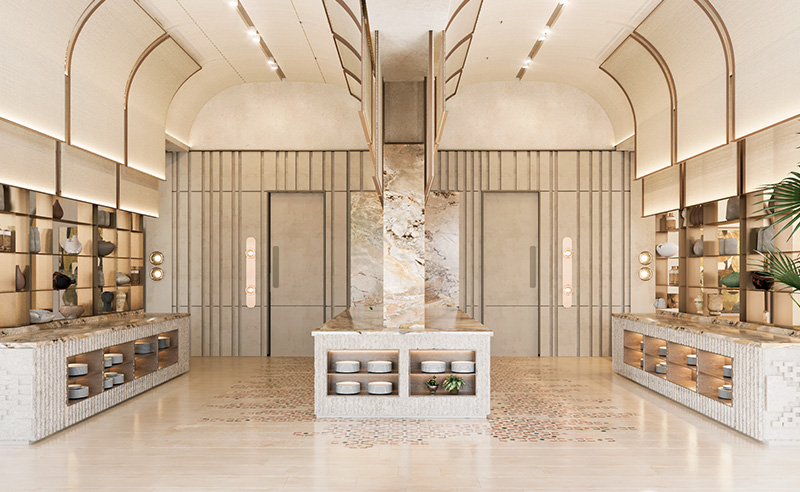
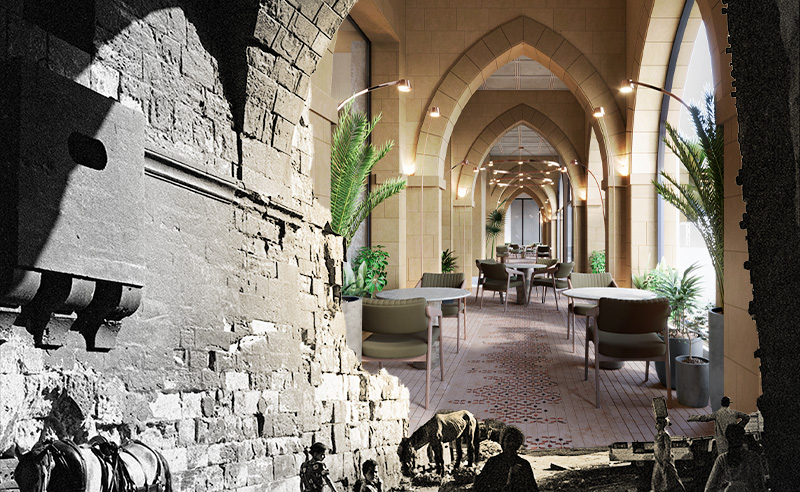
Three design pillars structure the interior narrative: River Nile, Quarry, and Artisan. The River Nile establishes the arrival language, where fluid forms and muted blue-green tones create visual continuity across lobby lounges, wellness areas, and leisure spaces. The Quarry draws from the Mokattam hills, historically quarried to build Cairo’s fortifications. Arches, vaults, and textured stone finishes lend public areas a sense of weight and permanence, grounding the interiors in earthy tones and architectural clarity.
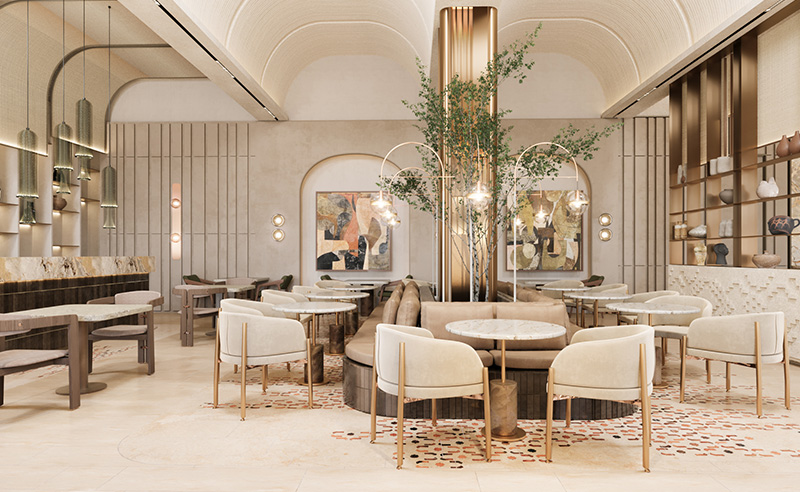
The Artisan pillar focuses on human scale and tactility. Leather detailing, mashrabiya-inspired screens, textured metals, and handcrafted joinery introduce layers of material expression rooted in the surrounding craft culture. These elements function not as decoration but as narrative devices, reinforcing the relationship between local making traditions and contemporary design.
Through these design pillars, the Hilton Aqueduct interprets its context without literal references, translating the aqueduct’s legacy of connection into a spatial experience grounded in place, craft, and contemporary design.