





The Cairo Artist Whose Characters Followed Her Off The Page
For 14 years Yasmine El Hazek drew the same faces on paper. They have since followed her off the page into bronze sculpture, rugs, ceramics and design, one recurring cast through everything she makes.
For the past 14 years, the same figures have followed Egyptian artist Yasmine El Hazek from one medium to the next: family, friends and strangers she passed on the street, all sketched into her books as a teenager.
They have changed since then, trading the doodle-like quality of her early illustrations for softer colours and more composed forms.
What began as quick, restless line work has settled into something calmer and more deliberate, though the cast of people at the centre of it has stayed remarkably consistent.
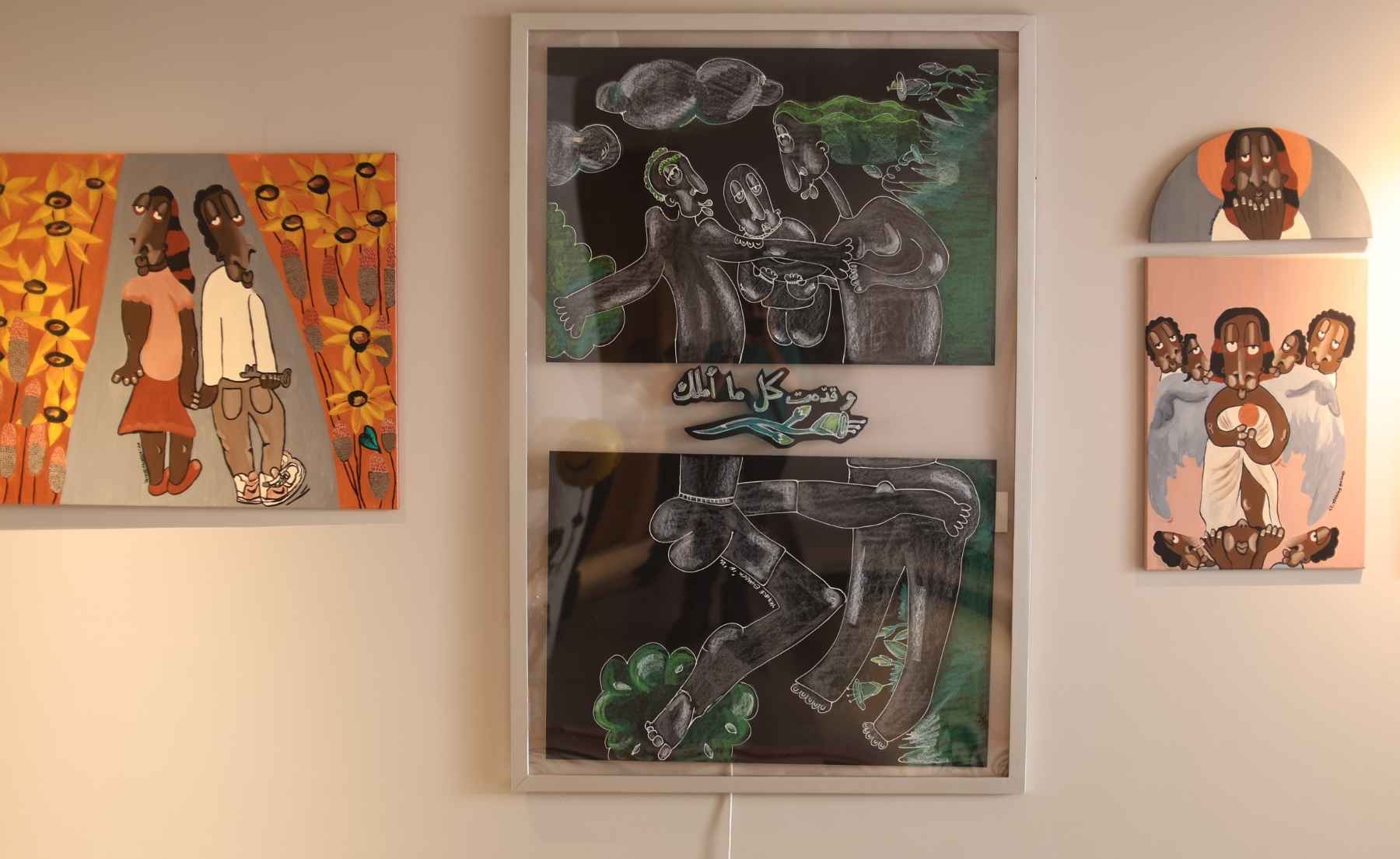
Today those same figures turn up in abstract paintings, bronze sculptures and collectible design pieces, still built around the people she started with.
Watching them travel across so many different materials is a large part of what makes her work feel like a single, continuous world rather than a series of separate projects.
El Hazek's relationship with art started early. Her parents took her to galleries and exhibitions growing up, and the curiosity that came out of those visits turned into a daily drawing habit that never really let up.
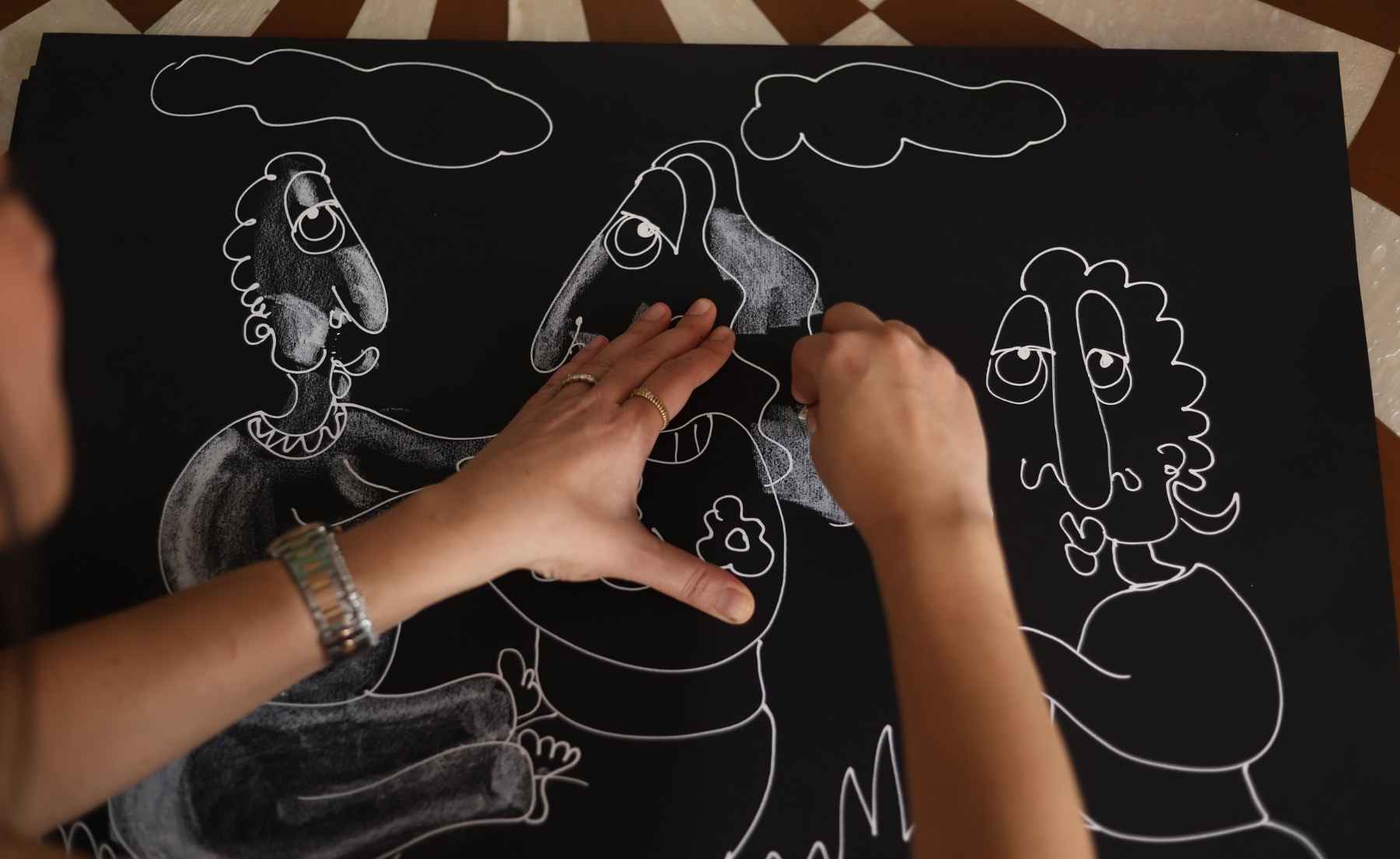
At 14 she began painting and illustrating in earnest, usually starting with family, then taking her sketchbook out into Cairo to catch whatever passed in front of her.
Her early works on black paper came out of nights spent watching and sketching the city, translating what she saw around her into loose, immediate images.
Those encounters could go either way. "People would get pissed at first," she recalls with a laugh, "then when they realised I was sketching them, they'd laugh too and it would make their day."
She enrolled in painting classes, took a minor in visual art at university, and later earned a master's in painting and sculpture in Florence. Each step widened the range of tools she had to work with, though the instinct behind the work stayed the same.
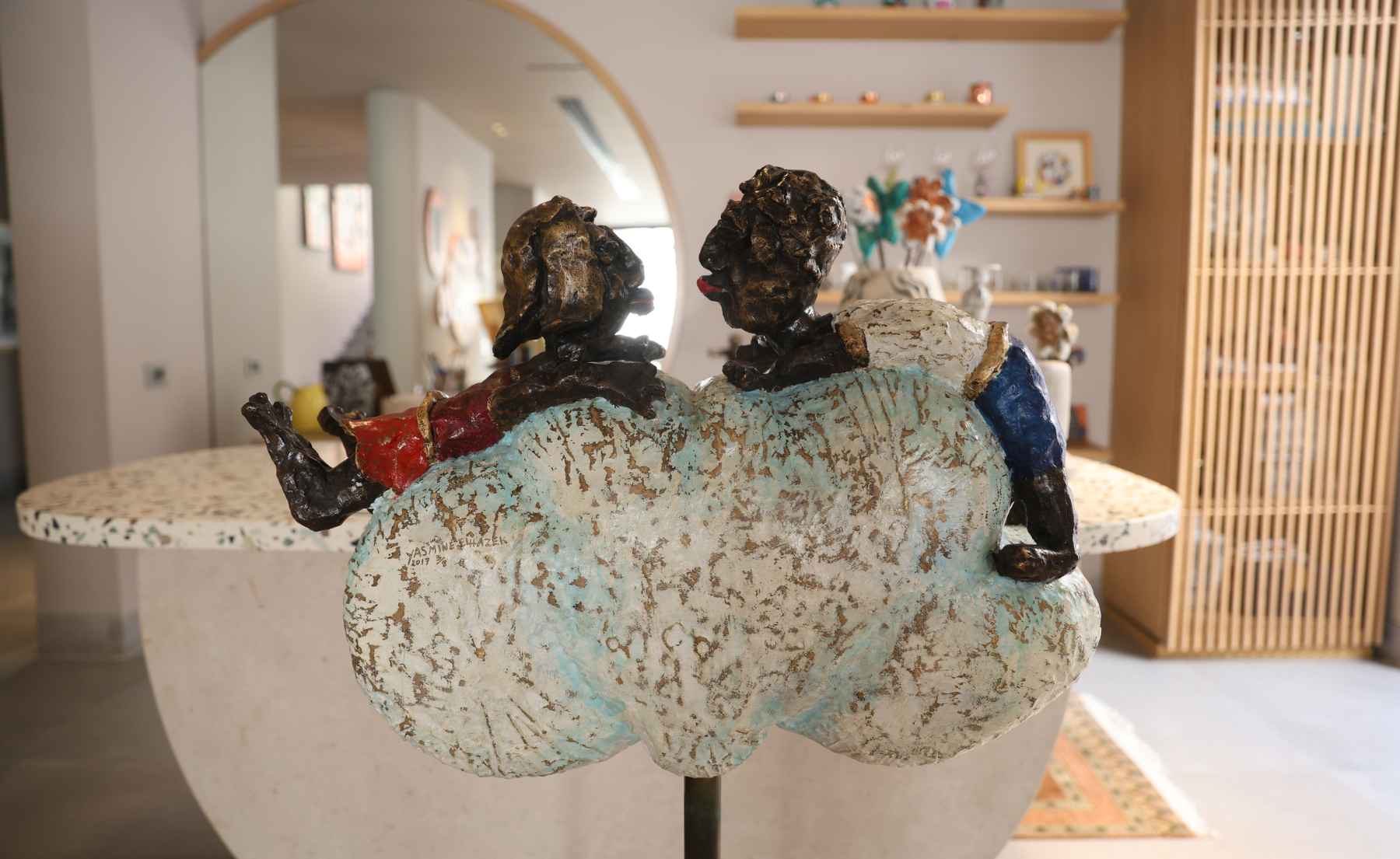
Florence is where those figures took on a new life. "My characters came to life, basically, because they were always on paintings and drawn on paper. I never got to feel like they were actual humans walking around," El Hazek tells SceneHome.
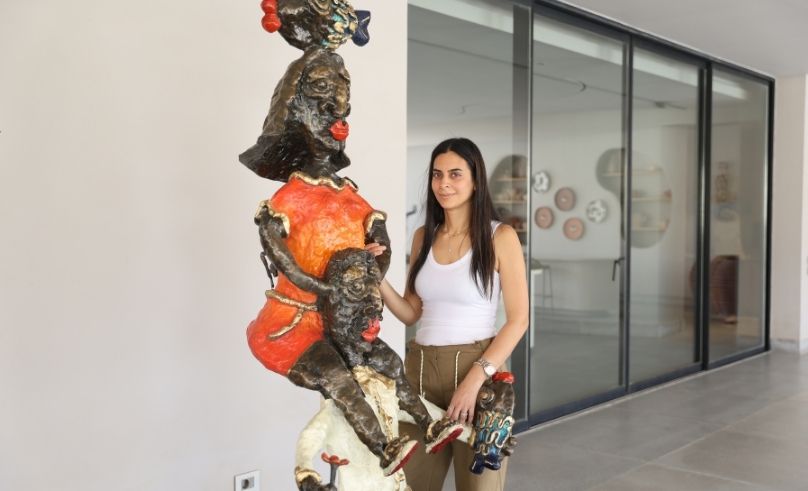
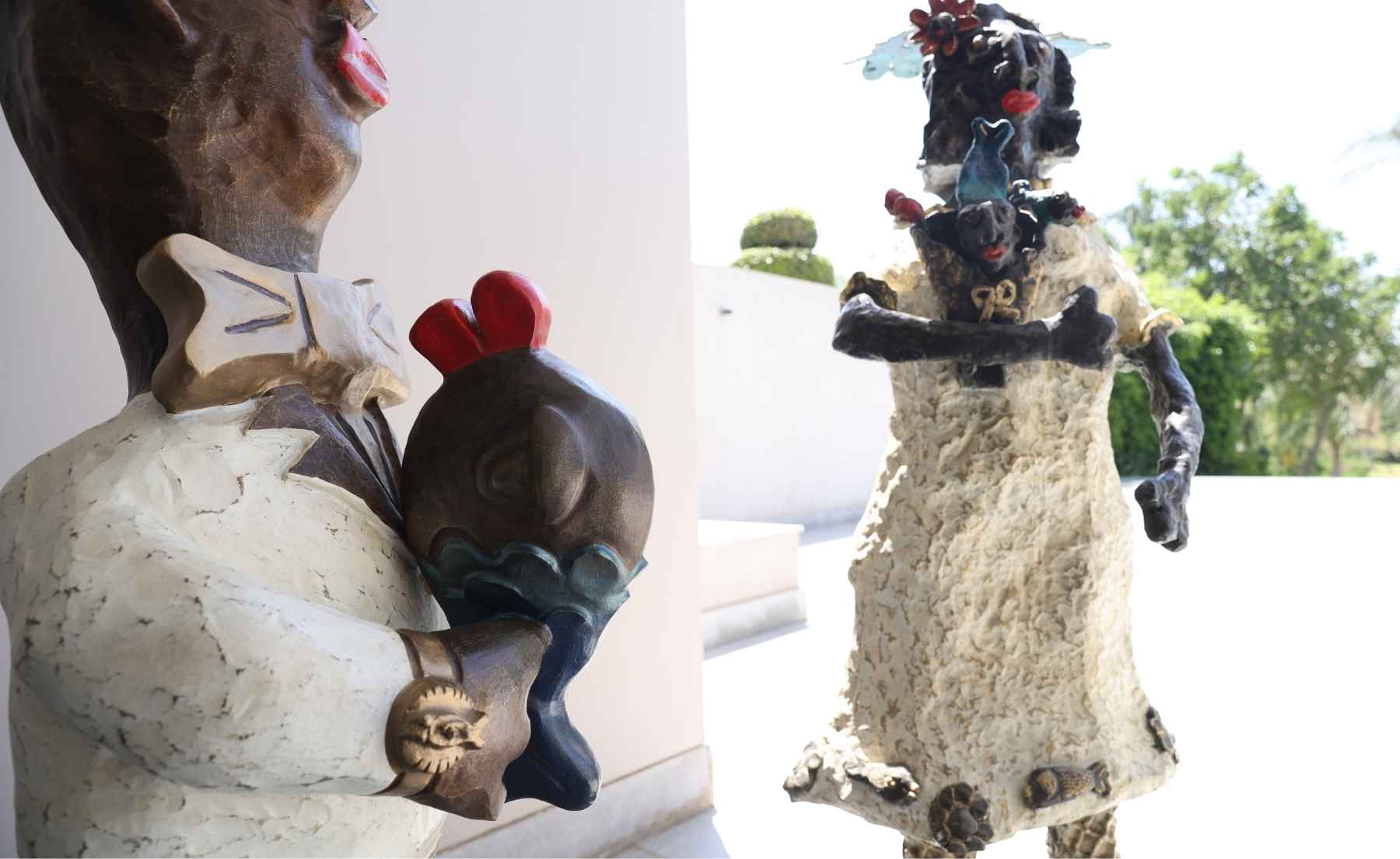
Sculpture let her meet her own drawings from a different angle. "I enjoy sculpting a lot because I get to see my characters in 3D form. I feel like I can talk to them, move around them. They're more dynamic."
Moving from two dimensions to three changed her relationship to the figures she had lived with for years, turning them into presences she could circle and study rather than images fixed to a page.
Her work looks playful, and every piece starts from something she wants to say. The material comes from watching: nature, a new city, life happening on the street.
"The more my eyes see and eat what they see and digest, that's when I create," she says. "But I'm not particularly influenced by a specific artist or genre."
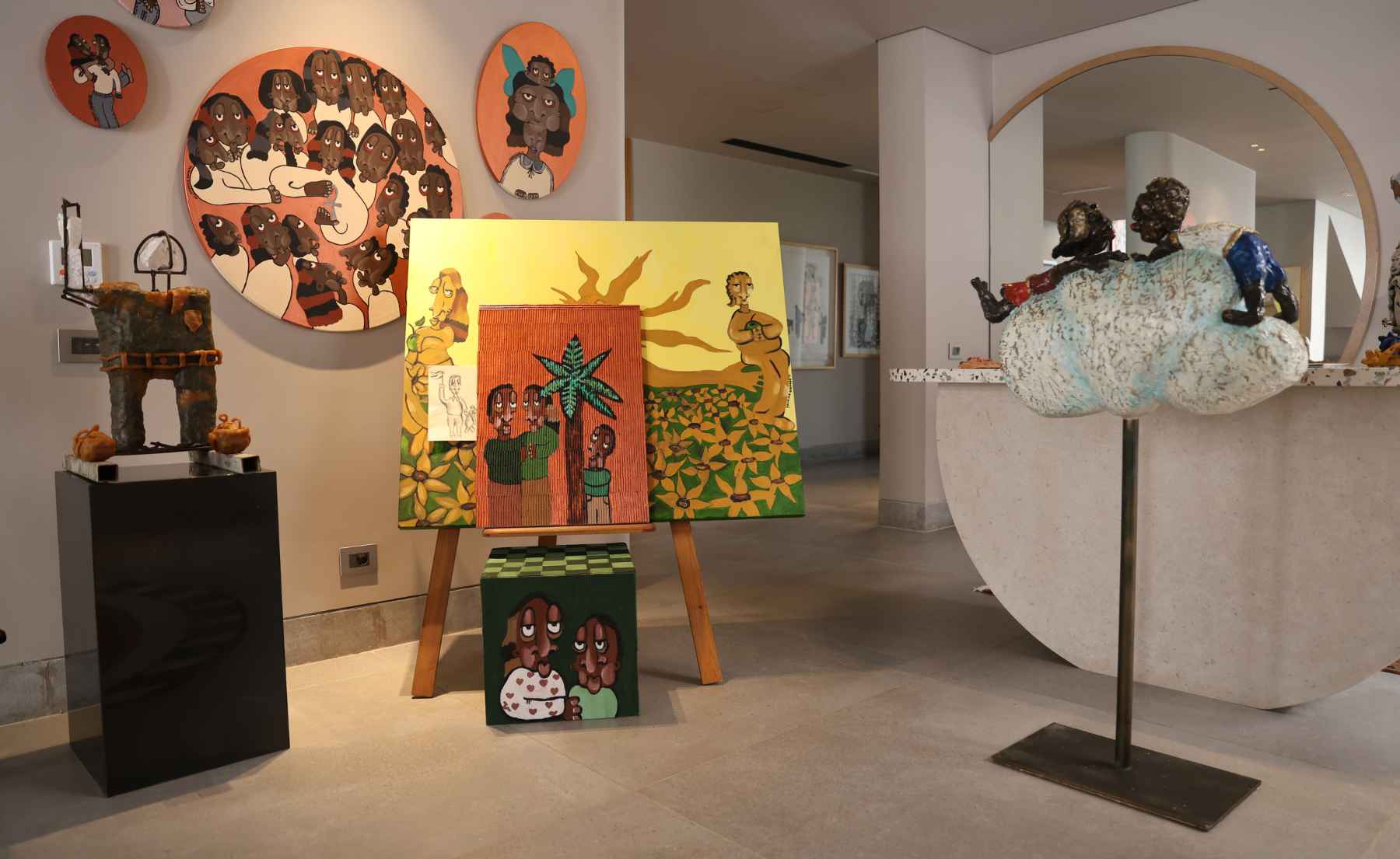
The people closest to her recognise themselves in her paintings, which makes the work personal while leaving room for everyone else to find their own story in it. That balance, between something rooted in her own life and something open enough for a stranger to step into, runs through nearly everything she makes.
"A lot of people will look at my work and think it's just very playful, but behind every piece there's a very direct message," she says. Most of those messages come back to love, patience, serenity and becoming better people.
Even on painful subjects, she chooses hope. "If I'm talking about Palestine or what's happening around the world, I'll try to capture it in a happier sense because I want people to be happier. I don't want to depress people," she says.
The optimism is a way of handing people a different door into something difficult, an invitation to sit with a hard subject without being crushed by it.
Her process runs on instinct. An idea comes from a situation she has lived, someone she has met, or a feeling she wants out of her head. She always starts with a sketch, though the finished work tends to end up somewhere else entirely, shaped as much by the material as by the original thought.
Depending on the piece, she works in oil paint, acrylic, oil pastels and recycled paper. Her sculptures pass through clay, wax and bronze before she hand-paints them to keep the characters playful, carrying the colour of her paintings into three dimensions.
She also has an unusual way of knowing when a painting is done. It hangs in her bedroom for at least a month first. "If the energy is good, it's good to go," she says. Her sculptures skip the test. Once the characters are standing in front of her, they are ready.
Her work has grown past painting and sculpture into the things people live with. She designed the candles and vases for her own wedding, and recently worked with Kahhal1871 on a rug showing two lovers at home.
Among the pieces closest to her are a painting inspired by the key of life, made while she was living in Kuwait, and Cloud Nine, a bronze sculpture of two lovers suspended in complete happiness.
Outside her home stands another: a sailor couple and their child, fishing from a boat. For El Hazek it holds the whole shape of a life. As children we are mostly concerned with ourselves, then we get older, start building things with other people, take on responsibilities, and find the point in looking after someone else.
Across every medium, El Hazek's characters keep changing. They have never stopped doing the thing they were made for: telling stories about the people who shaped her.