





Why This Church in Alexandria's El Tahrir Square Looks Like a Mosque
In Alexandria’s El Tahrir Square, a church that looks like a mosque hides a deeper story of imperial politics.

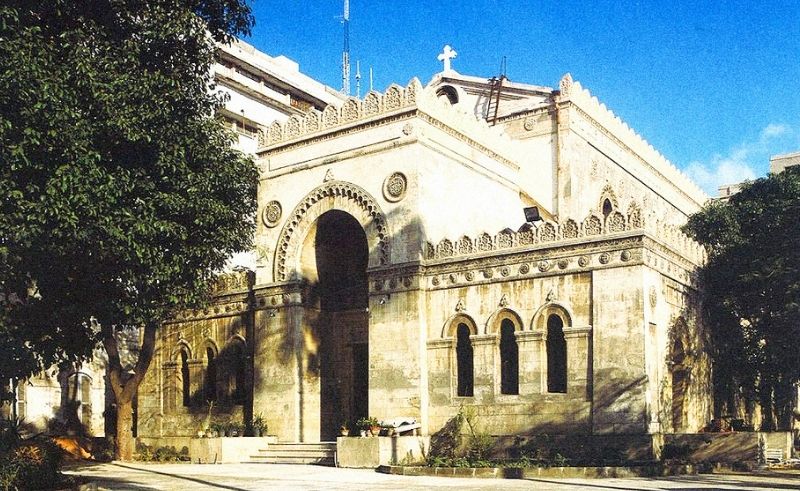
Tucked amongst the trees of Alexandria's El Tahrir Square stands a building that, at first glance, looks remarkably like a mosque.
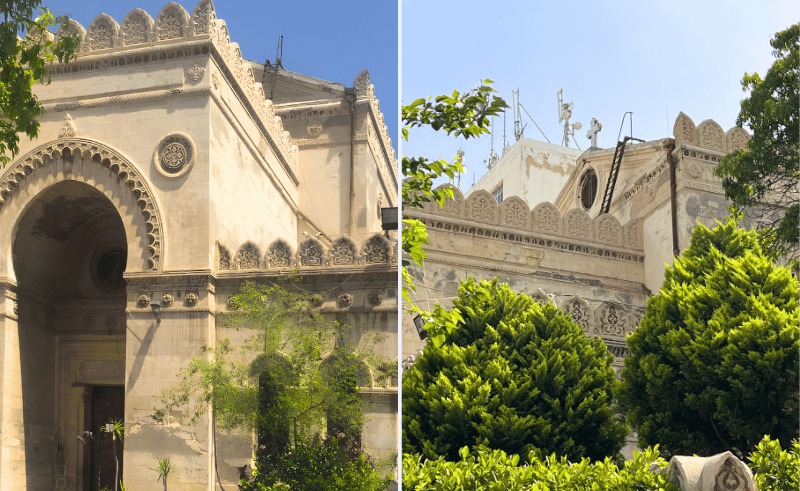
Horseshoe arches line its façades, comb-like cresting runs along its roofline, and its proportions echo those of the Mosque of Ibn Tulun. Your eye follows the structure upward, expecting a minaret. Instead, it finds a cross.
This is St. Mark's Anglican Pro-Cathedral, and the story behind its design is as much about politics as it is about architecture.
A Gift from an Unlikely Patron
In 1839, Muhammad Ali's Egypt was at war with the Ottoman Empire. During the conflict, the British consul-general withdrew from Alexandria, urging British residents to leave with him. Many refused.
Despite the political tensions, Muhammad Ali granted those who stayed a generous plot of land in what was then known as Le Place des Consuls, in the heart of Alexandria.
The gesture has often been interpreted as an attempt to secure British goodwill during Muhammad Ali's conflict with the Ottoman Empire. The British community, in turn, dedicated the site to building what would become the first permanent Protestant church in the region.
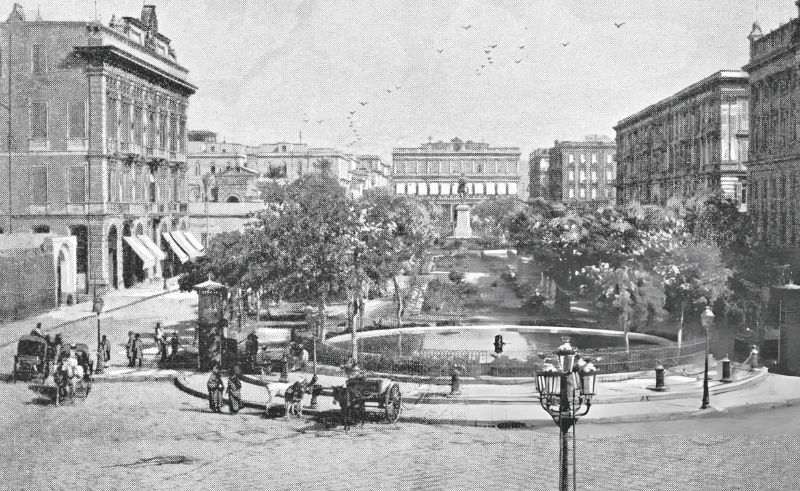
El Tahrir Square, Alexandria in the 19th century
The Architect Who Fell in Love With Cairo
The commission was given to English architect James William Wild.
Three years before work on the church began, Wild had joined a Prussian expedition through Egypt and Nubia, initially focusing on Egyptology. Once he arrived in Cairo, however, his attention shifted.
He immersed himself in the city's medieval architecture, seeking access to every house and monument he could. He studied hammams and mashrabiyyahs, mosques and carved door panels, stained glass and mosaics. Islamic Cairo became both his inspiration and his education.
Nearly a decade later, after years of revisions and sketches, construction was complete.
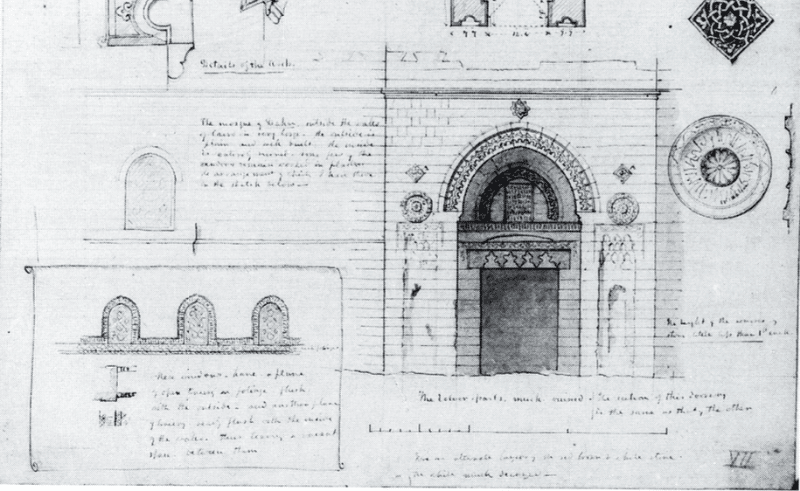
James Wild’s sketch for the Mosque of Sultan Daher in 1844 - details and plans of entrance.
From Minaret to Campanile to Neither
Wild's earliest design featured a bell tower that looked strikingly like a minaret. With its stacked levels, mashrabiyyah screens, muqarnas-supported balcony and polygonal pavilion, very little about it immediately suggested an Anglican church.
In later revisions, the minaret became a campanile before disappearing altogether beneath a pyramidal spire. Wild also added an inscription from Psalm 100:5 in English: "Lord is Gracious, His mercy is everlasting and His truth endures all generations."
These additions made the building feel slightly more familiar to British eyes, but its arches, proportions and ornament remained firmly rooted in the architectural traditions of the Islamic world rather than Gothic Europe.
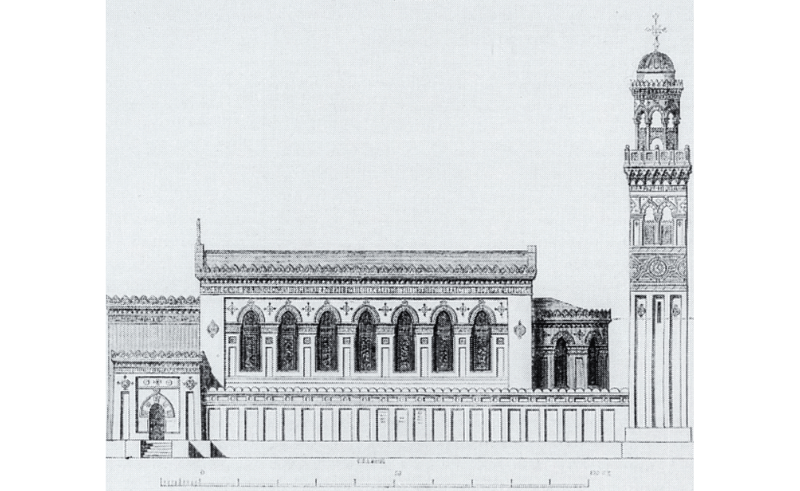 James Wild’s first scheme for St. Mark Anglican Church.
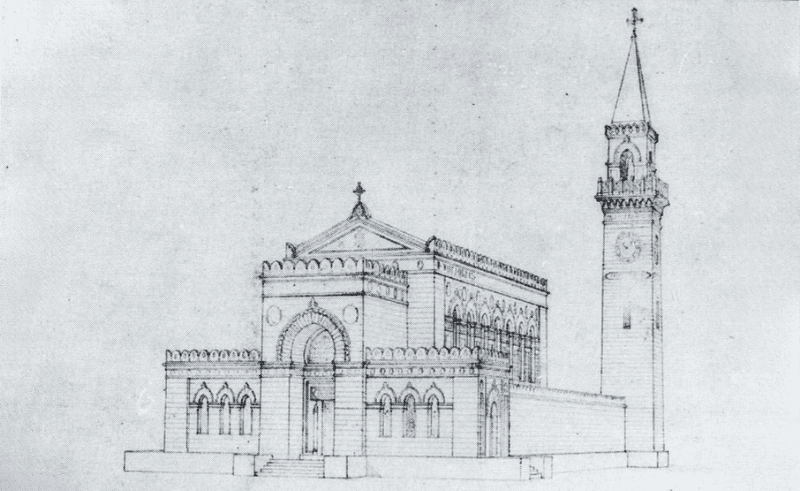 James Wild’s second scheme for St. Mark Anglican Church.
For the Ecclesiological Society, which regarded Gothic architecture as central to Anglican identity and national prestige, Wild's church represented a profound departure—and, to some, a betrayal. They had expected something closer to J.M. Derick's Afghan Memorial Church in Mumbai. Instead, they were presented with something entirely different.
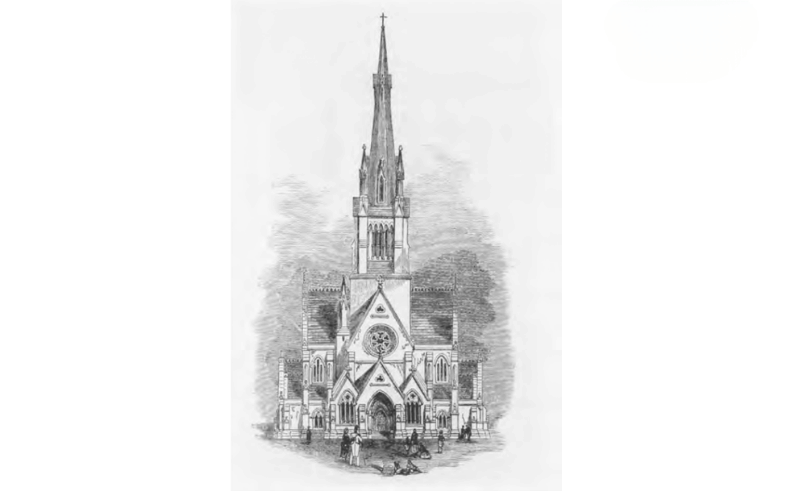 J.M Derick’s design for the Afghan Memorial Church in Mumbai, India.
Two Ways to Misread a Building
The British establishment eventually embraced Wild's design, but largely for reasons that overlooked his intentions.
Many interpreted the church's Islamic architectural language as a political gesture. To them, it communicated respect for local culture while projecting Britain's image as a tolerant colonial power. Read this way, the church became an early example of architecture serving imperial diplomacy.
In 1846, they published the following statement:
"To adopt a style of architecture creditable to the national taste and not repugnant to the feelings of the local population ... The establishment of the Protestant Church at Alexandria may also, by its simplicity and spiritual worship, be the means, under Divine favour, of ELEVATING CHRISTIANITY IN THE EYES OF THE NATIVE POPULATION who have only known the Christian religion through the medium of the Greek and Roman Churches of the East, in which Images and Pictures form their chief ornament, but to which all Mahommedans have a strong repugnance."
Seen from this perspective, Wild's church became a prototype for a new kind of imperial architecture.
Yet this appears to have been far from Wild's own intention.
Since arriving in Cairo, he had developed a deep interest in the shared origins of the Abrahamic faiths. Rather than presenting Anglicanism as something culturally separate from the Middle East, his design seems to argue the opposite: that it belonged within the artistic and religious traditions that had shaped the region since the earliest centuries of Christianity.
The Church From the Inside
Inside, the architectural language shifts. The space feels unmistakably like a church, yet many of its details remain rooted in local traditions.
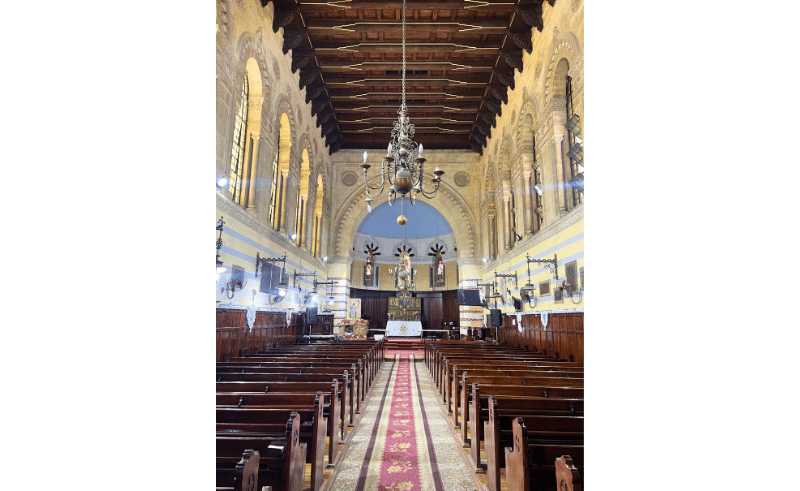 St. Mark’s Church from the inside.
The first thing visitors encounter is a heavy wooden door decorated with octagrams—the Rub El-Hizb, an Islamic symbol marking the quarter-divisions of the Quran. It is set within a wall of ablaq, the alternating bands of light and dark masonry associated with Mamluk architecture.
The nave is lined with square limestone piers topped by restrained geometric cornices. Above them spans an open timber roof structure that allows the interior to remain cool during Egypt's long summers.
Throughout the church, carved timber screens and pews feature geometric patterns that alternate between Christian crosses and six-pointed Stars of David—a reference to the Jewish and Christian communities that coexisted in Alexandria's Manshiya district when the church was built.
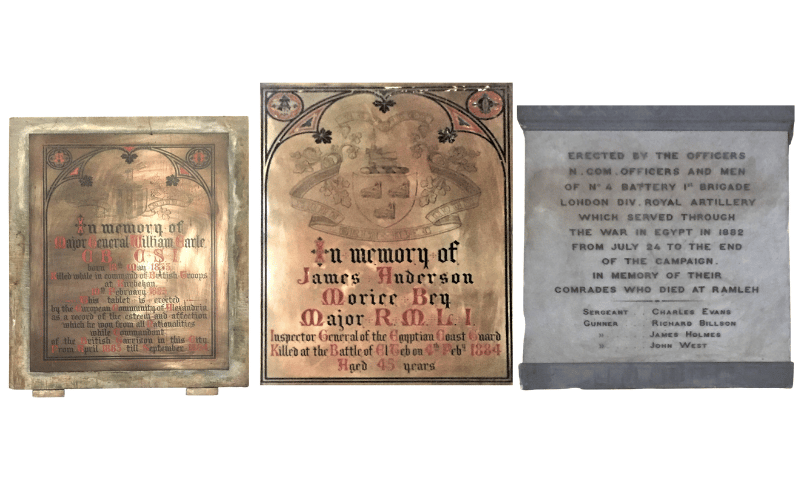
Marble tablets and polished brass plaques preserve the memory of Alexandria's once-cosmopolitan community. Many commemorate military personnel who died in the region during the First and Second World Wars. Their distinctly European design contrasts with the church's Coptic iconography, creating another dialogue between imported and local traditions.
Around the sanctuary, Coptic icons depict figures including St Anthony the Great, St Athanasius, St George, St Patrick and King David.
St. Mark's Anglican Church Today
More than 170 years later, St. Mark's has outlived British rule, the naval bombardment of Alexandria, political upheaval and the city's transformation around it.
Hidden among the trees of El Tahrir Square, it continues to hold Sunday services—and from a distance, it still catches many first-time visitors by surprise.
- Previous Article SceneNoise x Amsterdam Dance Event Present CROSSFADE: Egypt
- Next Article The Intricate Beauty of Ben Youssef Madrasa
Related Articles

Trending This Week
-
 Oct 15, 2026
 -
-

-