





Unusual Animal Remains & Greco-Roman Tombs Discovered in Beheira
The excavation revealed a range of burial styles, including pottery coffins and painted plaster coffins.

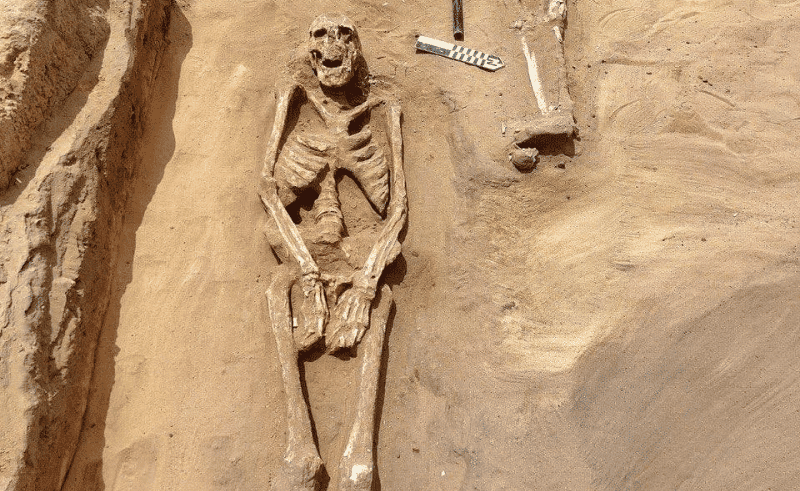
An Egyptian archaeological mission has uncovered part of a Greco-Roman necropolis at Tell Kom Aziza in Beheira, adding another layer to what researchers describe as one of the Nile Delta’s most historically rich sites.
The excavation revealed a range of burial styles, including pottery coffins and painted plaster coffins, alongside artefacts linked to daily life such as pottery vessels, ovens, storage jars and animal remains.
Among the most unusual discoveries were complete wild boar burials, a rare find in ancient Egyptian contexts due to the animal’s symbolic association with the god Set. Archaeologists believe the discovery could offer new insights into the site’s economic activities and cultural practices during a specific period.
Researchers also found evidence that Tell Kom Aziza was inhabited across several eras, from the Old Kingdom through to the Greco-Roman period, with the newly discovered necropolis built atop earlier settlement layers.
Rather than a single-period site, Tell Kom Aziza is increasingly emerging as a living archive of life in the Delta, preserving traces of how communities lived, worked and buried their dead over thousands of years. Further excavation seasons are expected to reveal more about the region’s long and layered history.