





Intibint Unpacks The Weight Behind her Moniker on ‘Hayati’
Yemeni-British artist Intibint explores womanhood and identity on 'Hayati,' a track rooted in self-love and freedom.

Yemeni-British singer, songwriter and producer, Intibint, has spent several years developing a sound that favours space and restraint over spectacle. Her latest release. 'Hayati'. is a lucid exploration of that sonic palette, lyrically diving into the societal pressures that have shaped her moniker.
Having started off as sparse piano composition, before a collaboration with Omani guitarist Moosa Al Lawati reshaped it into a guitar-led version, the track is a blend of Arabic folk-rock and psychedelic influences, through Intibint's collaboration with Scottish-Egyptian artist Omar Aborida at Glasgow's Dystopia Studios. A serpentine bass line opens the track, setting a brooding tone that Intibint lets sit for a while before her voice enters, direct and unadorned. Guitars eventually fold into the mix, but the arrangement never tips into excess; the tension stays coiled, mirroring the song's poignant themes.
The track's subject lies within the artist's name itself. Intibint, the stage name Noha Al Maghafi has performed under since 2020, translates from Arabic as "you are a girl," a phrase she's said is typically wielded to diminish rather than empower. On 'Hayati,' she turns that history over in her hands, tracing the stories embedded in her own name and, by extension, the experience of being a woman across the Arab world and its diaspora.
Structurally, the track works in two movements. The first looks from the outside in, voicing what she imagines society telling her, naming the fear and obedience those structures are built to instil. The second turns inward, where Intibint reclaims her own vantage point and asserts the freedom to make her own decisions and live her own life. Rather than ending on defiance for its own sake, she closes by stripping the equation down to its essentials: she loves herself, and she loves God, her creator, and beyond that, no other opinion is required.
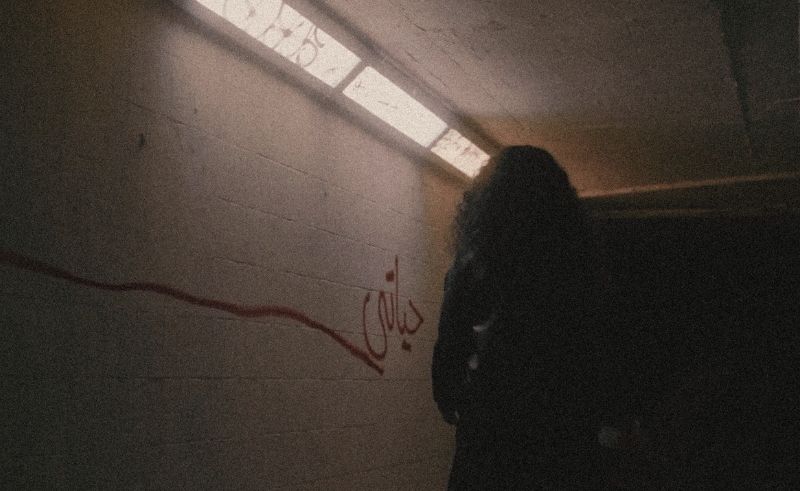
The accompanying music video, directed through a collaboration between Glasgow-based Sudanese filmmaker Osama Yassir, Egyptian filmmaker Fatma Hegazi, and Egyptian stylist Nadine El Wassif, extends that duality into its visuals. Shot on Glasgow's quiet, emptied-out streets late at night, it follows Intibint reframing the urban nightscape as an expression of freedom rather than a threat.