





Tell Nasser's Unearthed Ancient Bath Complex Reimagined by AI
Discoveries at Tell Nasser include private and public baths, an advanced water system and artefacts dating from the Ptolemaic and Roman periods

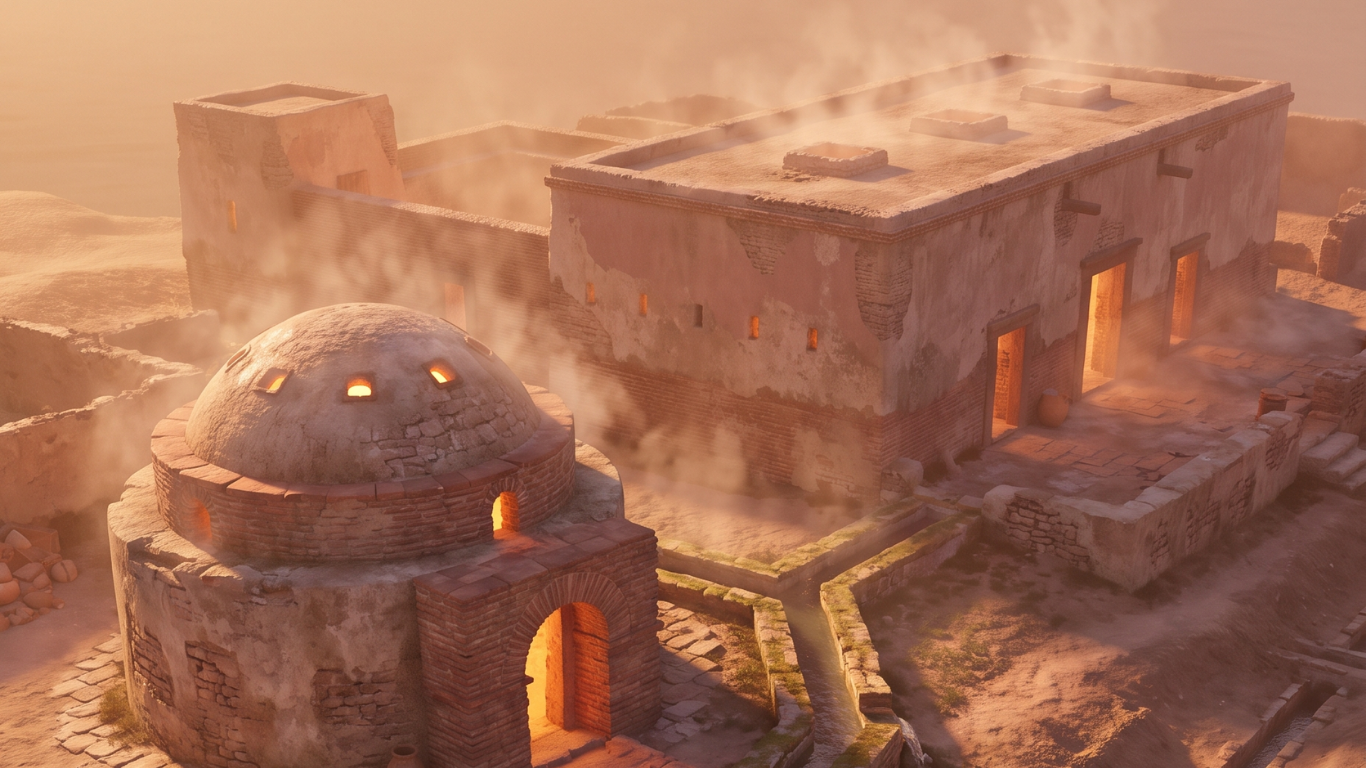
Archaeologists have uncovered a complete ancient bath complex at Tell Nasser, around 40 km south of Port Said, giving us new insight into how people lived and bathed in Egypt’s eastern Nile Delta more than 2,000 years ago. So, using the details uncovered at the site, we asked AI to reimagine what the ancient spa may have looked like.
Excavations revealed evidence of occupation predating the Ptolemaic period, dating to the late fourth and early third centuries BC, identified through Cypriot pottery and Greek jars. Later Ptolemaic layers contained stamped ancient jars from the Greek island of Rhodes, alongside locally produced and imported pottery, confirming continued settlement during the second and first centuries BC.
The complex, believed to have been built in the late first century BC, includes both a private bathing unit and a public bath connected by an integrated water supply and drainage system. The private bath features a 2.5-metre-wide circular basin built from red brick and lined with pink waterproof plaster, alongside two oval foot baths, a drainage network, and a structure believed to have been used for heating water.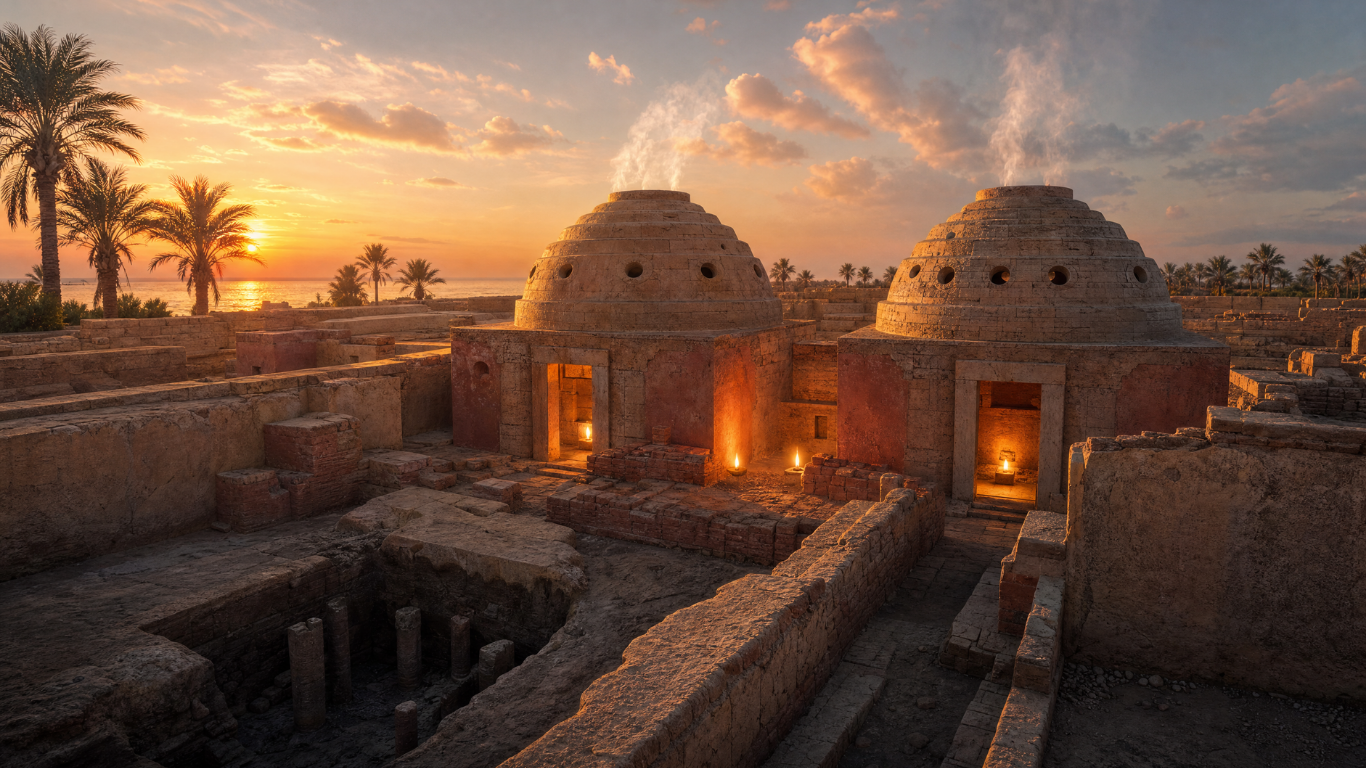 The public baths comprise two circular tholos chambers, each around five metres in diameter. One contains five-foot bath units, three of them well preserved, with backrests, armrests and circular foot recesses, as well as three rectangular basins, a quarter-circle water distribution basin, non-slip hydraulic flooring and an internal drainage system.
The bath complex remained in use throughout the Roman period until the second century AD, with later modifications preserving its original function before parts were eventually repurposed for storage. Excavations also uncovered a six-metre-long elevated water channel, an older canal beneath it, buried residential walls, and artefacts including stamped ancient jars from the Greek island of Rhodes, oil lamps, cups, jugs and tableware, helping archaeologists reconstruct the site's long history.