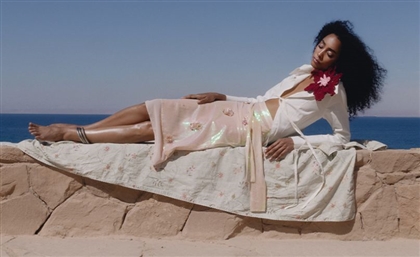






Amina Galal’s The Archive Revives Tally Through Contemporary Tailoring
Rejecting fashion’s accelerated present, Amina Galal turns to history in The Archive (Vol. I), reclaiming erased Egyptian visual codes through structure, tailoring, and the revival of Tally.


Fashion is shifting at a pace shaped by viral loops and constant newness. In response, Egyptian designer Amina Galal has stepped away from that instant churn to look backward, searching the past for her own understanding of authorship. The Archive (Vol. I) marks a shift in how she works: a project grounded in history and aware that many of the visual languages we use today are shaped by colonial influence. It becomes both a reclamation for Galal and a rewriting of sartorial codes that were diluted, reshaped, or erased over time.
"The primary focus of this collection is to return back to and re-write those visual and sartorial codes of Egyptian culture that have either been lost, diluted or changed due to colonialism," explains Galal, " this collection is about keeping these as wearable memories".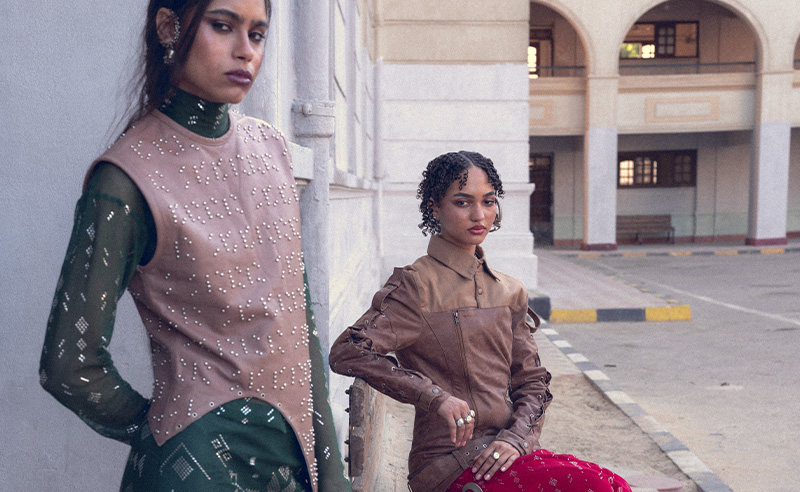 Galal elaborates on the fact that much about Egypt's own history is either not well-taught, concealed, or selectively remembered throughout the course of time. “There is a lot of untold, forgotten history,” Galal says. “Many people, events, social customs, practices, and visual languages have been virtually erased from our memory. As such, my research is like an excavation into an old room full of historical stories, and I am not finding that room until today, all these stories have gone untold in Egypt all along.”
“Whereas In Our Alleys was based on the intimacy of the street, body and time present, The Archive is focused on tracing back through Egypt's history in terms of fashion.”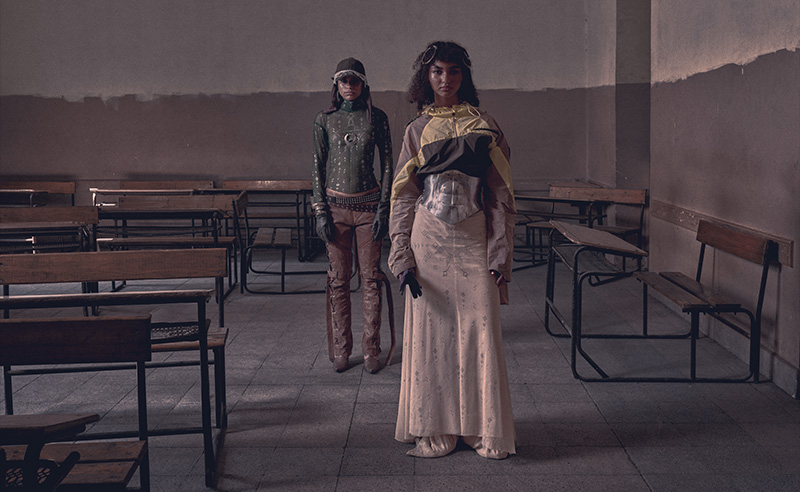 Structurally, The Archive echoes the framework of In Our Alleys, adopting a model built around volumes rather than annual, season-based collections. “In Our Alleys was designed to capture the immediacy of the present body, whereas The Archive looks back, tracing Egypt’s fashion history,” Galal tells SceneStyled.
Visually and materially, The Archive is much more authoritative than In Our Alleys. “I stepped away from the overt softness and modern utilitarianism of In Our Alleys,” Galal explains. Cargo elements, contemporary silhouettes, and functional details tied to the present are replaced with structure, and tailoring.
"I have taken on heavier palettes of colour and fabrics both wintery-toned and muted contrasts, to take on the seriousness of the collection; and to incorporate into the designs Tally - a traditional hand-embroidery from Egypt that women have historically worn to add element of protection, protection and storytelling.” In this collection, it is used more as replacement of decoration - not symbolic."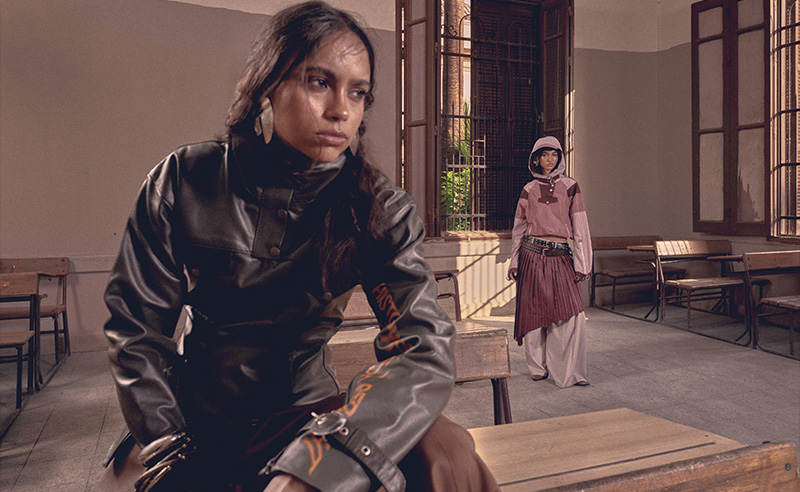 A newly developed crochet technique, with beading worked directly into the yarn, further blurs the line between tradition and contemporary construction. What struck Galal most was the emotional charge carried by the materials themselves. “A stiff fabric could feel authoritative or oppressive, while handwork suddenly felt like resistance.” That tension became central to the collection.
Despite its historical grounding, The Archive is not designed to be ceremonial. Galal imagines these pieces worn by a woman who is self-aware, culturally literate, and unafraid of presence. “These aren’t traditional occasion pieces,” she says. “They’re meant to live with you, age with you, and evolve as your relationship to them deepens.”
- Previous Article Halfpipes Under Siege: The Skateboarding Scene in Gaza & the West Bank
- Next Article Inside Egypt’s Seven UNESCO World Heritage Sites