




Molly Basterfield Brings Underwater Dance to Siwa This Novemberf
Molly Basterfield has built an underwater movement practice around trust, emotion and the body's response to water, which she is taking to Siwa this November.
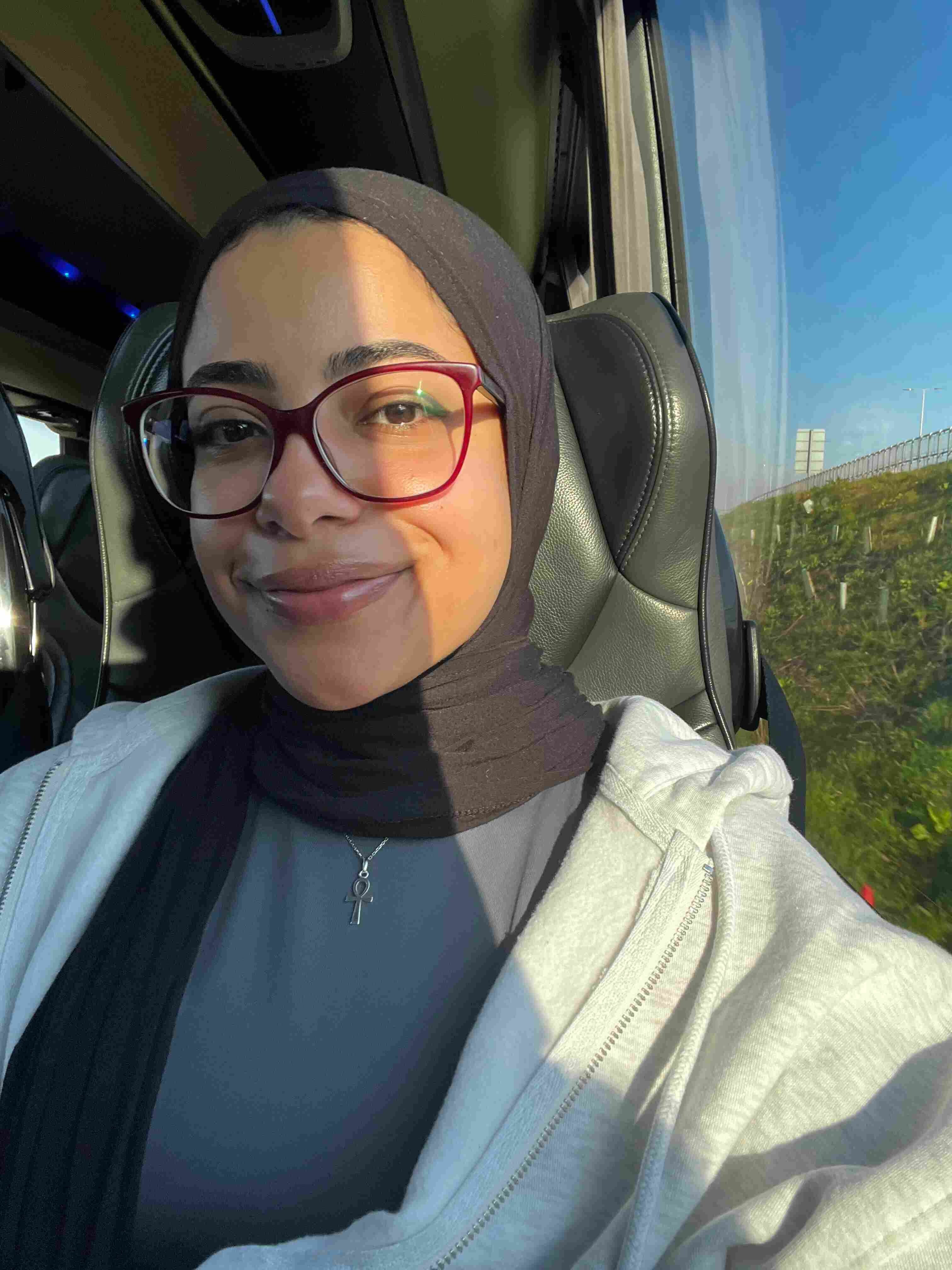
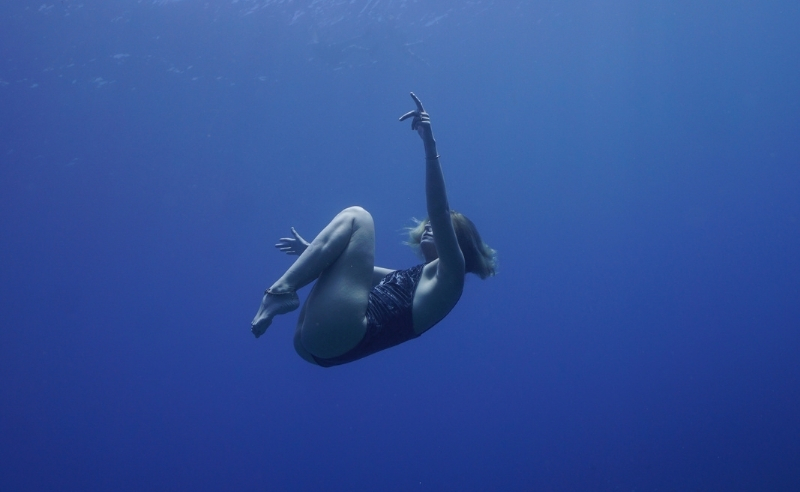
Dahab-based underwater dancer and water therapist Molly Basterfield is set to take her practice to Siwa Oasis from November 15 to 22 for Return to Source: Water & Desert Initiation.
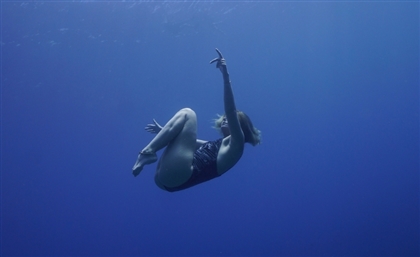
The retreat brings together water dance, somatic movement, voice activation and dream work in Siwa's salt lakes, thermal springs and surrounding desert. It is the latest expression of a practice Basterfield has spent years developing underwater, where bodies float, sink and twist with the water.
"Underwater dancing is about more than how cool it looks," she says. "For me, it's more about how it feels and how it allows you to release your emotions, to not carry them in your body anymore."
Basterfield grew up in Birmingham, England, and has been drawn to water for as long as she can remember. She swam competitively as a child and says being in the water gave her a sense of calm she struggled to find elsewhere.
"I was a very emotional child, but when I was in the water I felt okay and contained, like I could relax," she says.
A friend invited her to India when she was around 19, where she tried scuba diving for the first time.
"It was like travelling between different dimensions," she says. "It was like this feeling of being completely hugged. It's completely quiet and peaceful."
Her friend eventually returned home. Basterfield stayed in India for another two years, trained as a scuba diving instructor and began teaching.
Some of her students were frightened of the water, and helping them become comfortable in it shifted her attention towards what being underwater could do emotionally.
"I eventually became more interested in how being in the water can help us release fear and kind of find trust in ourselves," she says.
That interest deepened after she travelled to the Philippines to work as a scuba instructor on a liveaboard boat in the Sulu Sea. She was meant to spend two months taking guests on week-long trips between the boat and land.
COVID-19 lockdown restrictions came into effect during her first week. The crew was given a choice between staying on land for a month or going out to sea for a month. The boat's owner chose the latter.
One month became two. Basterfield then spent 14 days in quarantine at the harbour, followed by another six weeks in the Philippines with no way to return to India.
She had a fiancé, a dog and a life waiting for her there. Basterfield says the boat owner also refused to return her passport, citing the two-month work contract she had signed despite the absence of customers to instruct.
"I wanted to go back to India. I wanted to take my passport, book my flight and leave. But the boat owner would not give me back my passport saying that I had signed a contract to work onboard for two months, even though there were no customers for me to instruct anymore," she says.
Only four people remained on the boat. They had no internet, little contact with the outside world and little idea of how their families were doing.
Scuba diving was prohibited during that period, so Basterfield began freediving without formal training. It gave her somewhere to put her attention and a reason to leave the cramped boat.
"When you freedive, you have to meditate on the surface," she says. "When I was trying that and trying to relax, all of these thoughts that I'd pushed to the back of my mind would surface at the forefront of it. I had to face them."
Basterfield began acknowledging those emotions before going underwater. Once beneath the surface, she found the quiet that was missing on the boat.
"When you get past that point of it all, you're left with complete silence. You're no longer thinking. It's almost as if you're recharging your nervous system and your mind," she says.
The experience also made her increasingly curious about dreams and the unconscious. She began having unusually vivid dreams involving memories and family members, including her sister, who was stuck in Thailand at the time.
Basterfield began reading about accounts of dream incubation and temple healing in ancient Egypt, part of a wider interest in how dreams have been understood and interpreted. She later pursued a master's degree in psychology specialising in Jungian psychology, travelling back to England every two months over the course of a year.
Her relationship with freediving changed again when she arrived in Dahab.
Basterfield initially planned to spend a few weeks in the Sinai town while waiting for travel restrictions in India to lift. Dahab's established freediving community introduced her to a much more structured culture of depth targets, personal bests and training plans.
"When I came to Dahab, everyone was asking, 'What's your personal best? How deep are you diving today? What's your plan?' I felt like, oh my God, this isn't how I experience water at all."
She began spending more time around the reefs, sitting on the seabed, jumping, flipping and experimenting with movement without trying to reach a particular depth.
People started asking what she was doing and whether she could teach them. Basterfield began exploring underwater movement more seriously as a therapeutic practice around six months after arriving in Dahab.
India eventually reopened, though her life had already begun taking root in Egypt. Basterfield had made friends, developed her underwater dance practice and grown attached to the mountains surrounding Dahab.
When she later contacted her former fiancé about returning to India, she learned he was seeing someone else. She decided to stay.
"To be in the mountains here, in Sinai, feels as if they are truly holding me," she says. "It grounds me somehow in a way that other places haven't been able to, really."
That physical awareness became central to the way she teaches underwater movement.
Basterfield says somatic practice can use the body's reactions as clues. Rigidity might prompt someone to consider where they feel stuck, for example, without assigning a fixed psychological meaning to every movement.
Underwater dancing also requires participants to rethink the urge to move towards a destination.
"It's almost as if you're relearning how to move, as if you're a baby and you've just been put on earth for the first time," she says. "It needs a lot of patience. You need to relax."
Breath and buoyancy become part of that process. Participants learn to adjust the air in their bodies until they reach a point where they are neither sinking nor rising, then begin experimenting with movement.
"If I start sinking in a particular direction, I'll sink there, but if I start panicking I'll tense up," she says. "When you do any action in the water, you have to wait for the water to react, for it to move you. If you do too many actions simultaneously, you won't get anywhere. You have to be patient."
Her workshops build on that approach through exercises around trust, support and emotional awareness.
"In most trainings and retreats that I have led, one of the main things that surfaces is handling people's deep emotions and emotional issues, which means there's always something to contain and try to work through," she says.
The work has also moved into performance. Basterfield has collaborated with a dancer from Portugal's state ballet company, Companhia Nacional de Bailado, as well as a songwriter who wanted to create an underwater dance video for a release.
Sound has become another part of the practice. Basterfield began taking singing classes in India after attending a sound activation workshop and now experiments with singing and vocal sound during water therapy sessions. She also leads sound sessions using a harmonium.
Dream work appears in her retreats through circles where participants record dreams, share them the following morning and consider what they might reveal.
Egypt's geography has gradually entered the practice as well. Basterfield discovered Siwa around three years ago and began thinking more closely about the country's different relationships with water, from the Red Sea to natural springs and salt lakes.
"I don't think it's a coincidence that I ended up here doing this work," she says. "I can't really imagine it having the same depth if I were in the jungle or somewhere else. I feel like everything connects."
Return to Source brings those strands together in Siwa this November, moving Basterfield's practice from Dahab's sea into the oasis's salt water, springs and desert.
- Previous Article Kareem Rahma Works Best in Transit