





These Egyptian Twin Photographers Capture the World Two Different Ways
Twin photographers Georges and Samuel Mohsen trace architecture, street life and memory through documentary photography.
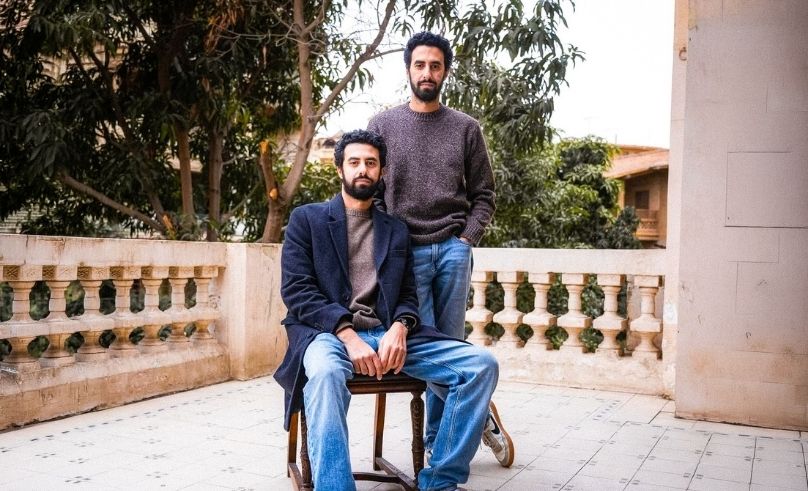
Cover: Georges and Samuel - Portrait by Roger Anis
The stained glass in the Chapel of Collège de la Salle was imported from France. So, to understand it, Egyptian twin photographers Georges and Samuel Mohsen travelled to France. They went looking for the archive of the glassmaker who had made it, and in the course of that search found themselves sitting with his grandchildren, turning over a family record that had travelled, in coloured light, all the way to a school chapel in Cairo. For the brothers, who have been photographing the chapel as part of a years-long study, this is the shape the work takes when a single building opens onto a history, that history opens onto a journey, and the journey carries them back, in the end, to the room where they started.
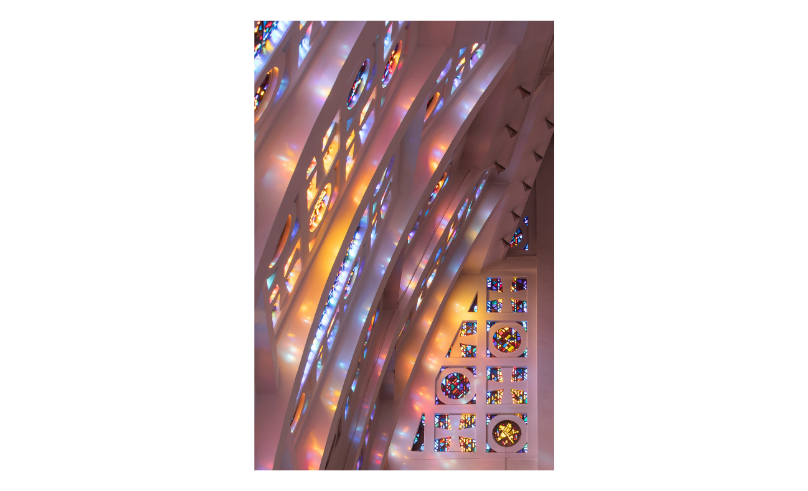 Chapelle De La Salle by Georges & Samuel
"The most interesting projects are the ones that take place on the cusp of architecture and culture," Samuel shares with SceneTraveller. The chapel, described by the brothers as a long-term research project in collaboration with architect and researcher Daniel Kaldas that involves the preservation of original sketches by Antoine Selim Nahas, exists precisely at that intersection. "The project involves research, archiving, travel, and documentation through photographs. We go to these lengths to understand the chapel within the wider historical and cultural context of Egypt." That ambition is rooted in the brothers' own relationship with architecture. "We are passionate about modern architecture," Georges says. "We've travelled extensively to study and document the works of Le Corbusier, making our own architectural pilgrimages to places like Villa Savoye, Sainte Marie de La Tourette, Unité d'Habitation, Maison du Brésil, and the Swiss Pavilion. Those buildings continue to attract architects and travellers from around the world, and we hope the chapel can become that kind of destination in Egypt."
Beyond photography, Georges envisions it as a place of ongoing study and discussion. "We are trying to create a centre that experts and regular travellers can come visit."
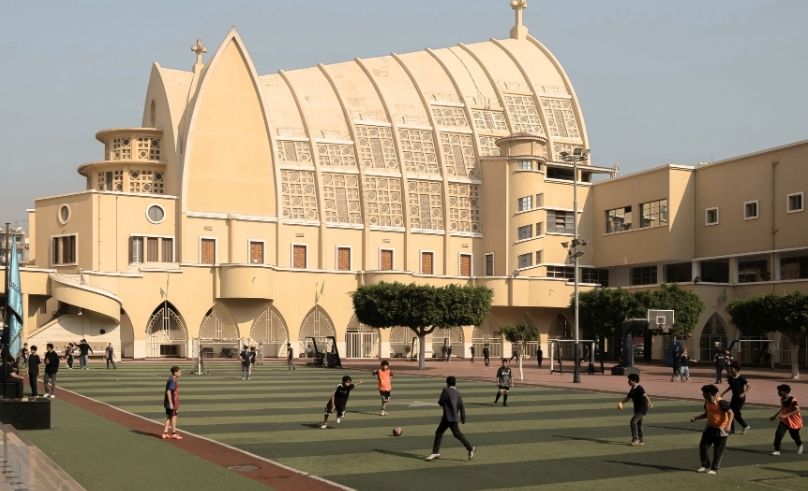
Chapelle De La Salle by Georges & Samuel
What the brothers do in architecture and street photography begins with the radicality of daring to slow down in this age. "I never feel I should follow an itinerary," Samuel says. "Slow travelling has helped regulate our practice, so that we observe more and understand more." That patience has produced two distinct ways of looking, one for each brother, which they have let run in parallel. Samuel's eye is drawn first to structure. "My street photography has a lot of architecture in it," he says. "I can see a place and start fishing: someone arrives and waits for something special, someone passing by, the colours." Lately he has been adamant on narrowing his frame, trying to “zoom in on the subjects more, letting the people in a scene come forward out of the geometry that surrounds them.”
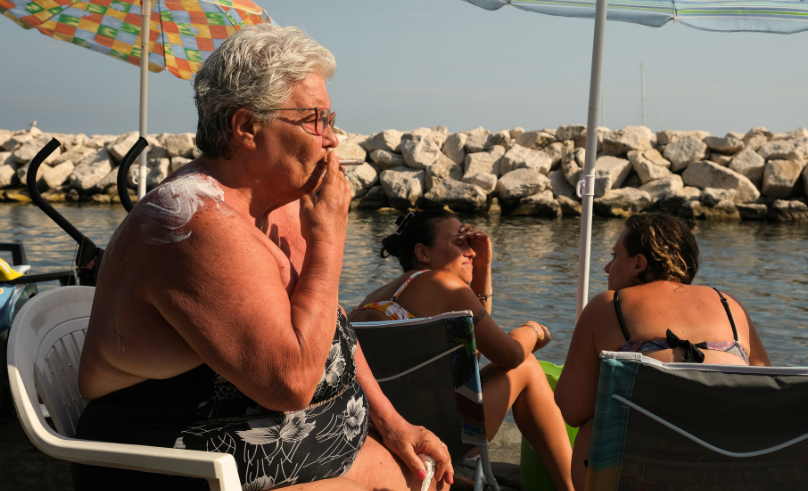 Napoli by Georges & Samuel Mohsen
Georges describes the opposite pull. "When I went to Naples, unlike Samuel, I found myself glued to the people," he says. He reaches for a French word to explain it. "There is a term, flâneur, for someone who walks through a crowd and observes it aimlessly. I started documenting them and their relationship with their city."
Between the two brothers, the building and the crowd are always being photographed at once, and the division of labour is rarely formalised. Asked how two people share a single body of work, they split projects organically, working out in the doing.
That instinct for the street is where the whole practice crystallised first. "We began as street photographers," the brothers say. The switch toward something more serious came with the upheaval of 2011. "During the revolution we joined the team at Al-Shorouk under Randa Shaath, one of the most important documentary photographers in Egypt, at a moment of monumental events in the country," they recall. "That was when it began to formalise into something serious." They stayed at the newspaper for two years, photographing a country in the middle of rewriting itself, before stepping out on their own. “After that, we continued doing documentary work and photojournalism as freelancers."
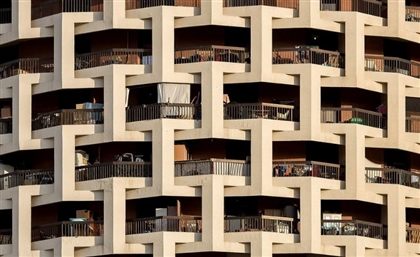
There has always been an unbreakable connection between the documentary instinct and the architectural one. "We work photojournalism with architecture quite a bit," Samuel explains, and the projects which have carried them farthest are the ones which encompass both. For instance, in Paris, Samuel and Georges were asked by Dar Arafa Architecture to document the Maison d'Égypte, the Egyptian student residence hall at Cité Internationale Universitaire of Paris, a building they designed with Sam Architecture. They photographed it on two separate occasions: the first in November 2023, prior to occupancy, and then in May 2024, during which they accompanied Egyptian architect Waleed Arafa to document his post-occupancy evaluation and photograph how the house was being lived in, its walls now bearing the marks of the students who occupied them.
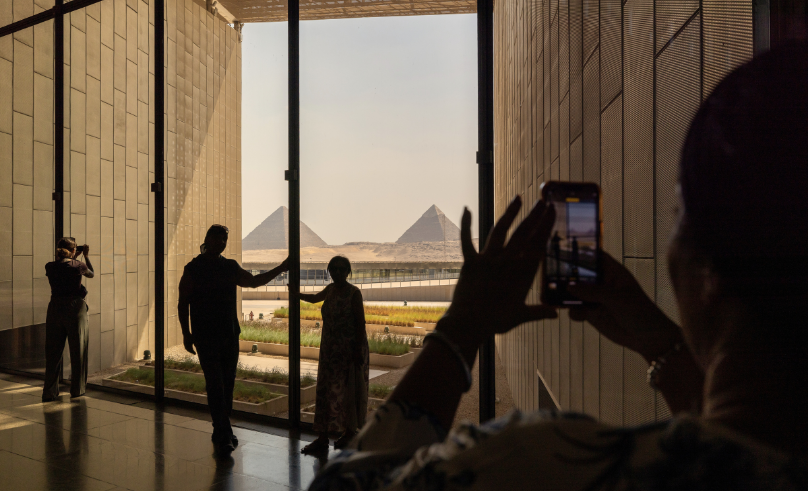 GEM by Georges & Samuel Mohsen
Their work on the Grand Egyptian Museum, whose photographs became part of the official record of the building as it opened beside the pyramids, grew out of the same drive to set the old and the new beside each other. The brothers had already documented the original Egyptian Museum in central Cairo, and they approached the vast new institution as a continuation of that older story. "With the GEM, we wanted to complement the story of the original museum with the new one," Samuel says. "It was like an excavation that led to the greater find."
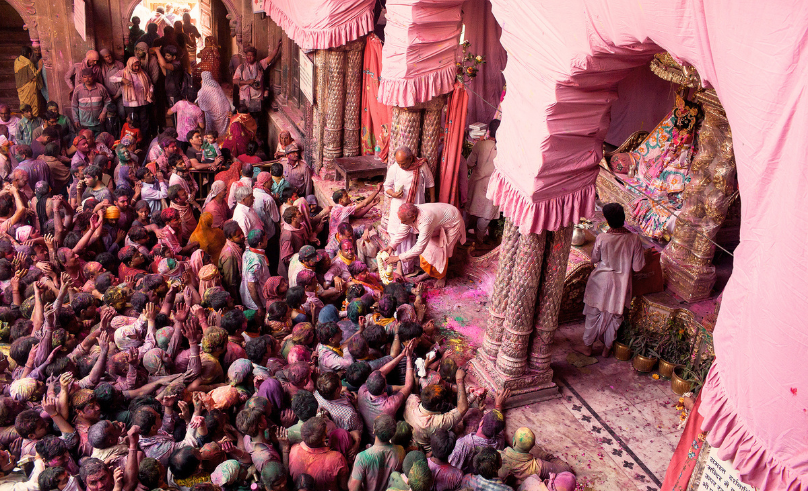 Holi Festival by Georges & Samuel Mohsen
Even an unplanned afternoon can become part of the archive. Travelling in 2014, during Holi, Georges walked into a temple at what turned to be a decisive moment, carrying a single lens that left him no way to reframe except with his own feet. "I had only one lens, so I had to zoom in physically to get what I needed," he says. "You come to know how vast life is."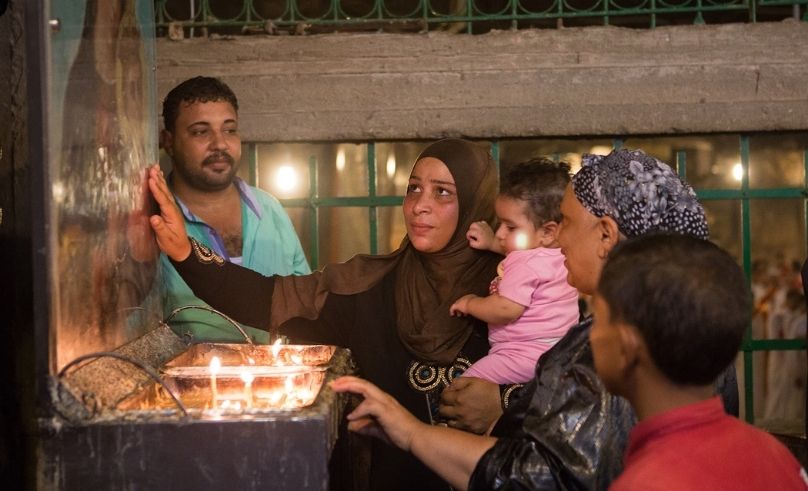 Dronka 2016 by Georges & Samuel Mohsen
That fascination with collective ritual had already been deeply embedded in Georges and Samuel’s practice, through years of documenting Egypt’s moulids and religious gatherings. Dronka, the annual pilgrimage to the Monastery of the Virgin Mary in Assiut, became one of the most powerful expressions of that interest. “The pilgrimage draws thousands of worshippers each year, including Muslims who also visit the monastery seeking blessings,” Georges tells SceneTraveller.
If there is an argument running underneath the brothers' images, it has to do with why any of this is worth preserving at all. Samuel sees a change in how his own country regards its buildings. "In Egypt there is an awakening to what architecture is and why it matters," he says. "But still, everything is turning to look the same; this is true all over the world."