


Archief Cairo is an Initiative Documenting Design at Street Level
From plastic bags to hieroglyphic printing presses, a Cairo-based collective is proving that the most profound design inspiration isn't found in textbooks, it's scattered across our streets.
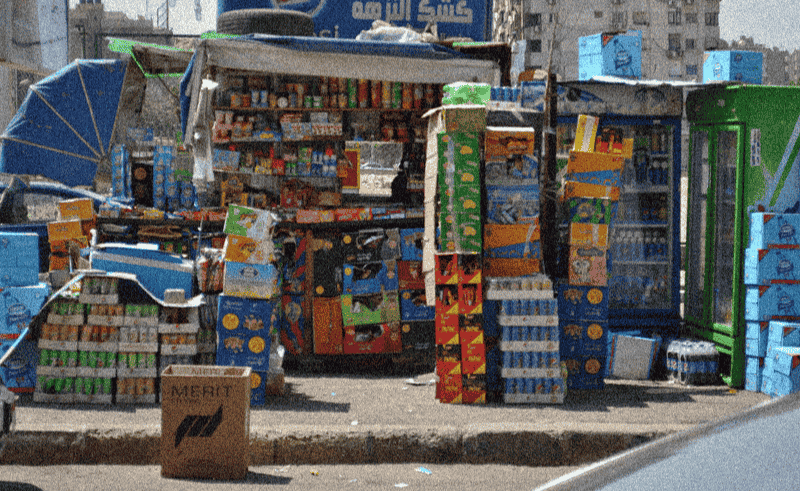
Cairo has its visual kits that lie beyond the Tower and the three Pyramids. Jelly Cola, the yellow packet with the goofy-faced bottle mascot, the way it appeared at every koshk and in every school bag, is a special identity to the place that is Cairo. No one remembers the first time they saw it. It was just always there, like the soup bowl in every kitchen that no one recalls buying, like the plastic white chair that has been a seat and table and stepladder and shopfront barrier. These objects have no singular origin story, but they create Cairo's visual memory. For Archief Cairo, they are the raw material of cultural recognition.
"From the street, we found more and more interest in unknown, forgotten or almost disappearing knowledge," says Ryan Vincente Lee Grees, one of the founding members of Archief Cairo, a multilingual research and design lab established in 2018. This is an attempt to document Cairo's non-academic design scene from ground level and has grown into something far more ambitious.
The collective started at the German University in Cairo, where Grees was a lecturer to co-founders Hana Neuman and Maram Al Refaei. Sherine Salla joined later. The group began simply paying attention to the mundane Cairo; stickers on cars, street sounds, shop signage, even rubbish on the ground. Cairo, they realised, was a sensory archive hiding in plain sight.
"Cairo is like an antique shop and so is its creative scene," notes Grees. "If you are looking for something in particular, you may not find it, but if you let yourself be drawn into the overflow of perceptions, you will be surprised and find something you may not have expected."
This philosophy of surrender over seeking defines Archief Cairo's approach. The studio has amassed a physical collection of found Egyptian objects: plastic bags, handwritten notes, product packaging. Over time, a designer's instinct kicked in, and the group began reinterpreting what they found, transforming street ephemera into publications and identity projects.
Central to Archief Cairo's visual language is Arabic typography, a communicative force in its own right. "Arabic calligraphy is already a kind of illustration for us," Mirna Hatim, designer at Archief Cairo explains. "So we don't necessarily need pictures."
This maximalist approach found full expression in their identity work for the 100 Best Arabic Posters Competition. Rather than creating something sleek and minimal, the team ventured to quintessentially Cairo-like districts—Attaba, Downtown, Maadi—gathering visual impressions that they distilled into an identity inspired by old Egyptian comic books. Comics represented an indigenous mode of visual storytelling, a way of connecting with people through folklore and narrative.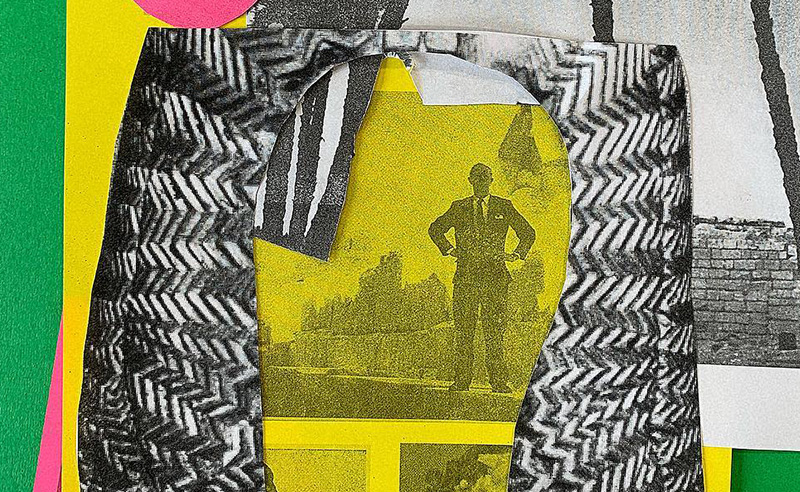 If Archief Cairo represents a methodology, Koshk Kairo is its pedagogical extension, an initiative that puts these principles into the hands of emerging designers. "The projects reveal a generation wrestling with questions of cultural identity through deeply personal lenses," Jana Shabrawy, designer at Archief Cairo, tells CairoScene.
There's Artisan Craftsmen, a publication connecting buyers directly with the makers behind Egypt's artisanal traditions, documenting processes that exist beyond Eurocentric design frameworks. Shifting Shores traces socio-cultural changes in Cairo from the 1950s to the 2020s. Tastes of Us explores everyday Egyptian foods, each dish serving as a chapter exploring origin, recipe, and personal story.
"An object stops being neutral when people begin to use it in ways that go beyond its original function," Maya Mourad, designer at Archief Cairo explains. "Meaning emerges through repetition, but also through variation when many individuals adapt the same object differently, in different contexts."
This attention to adaptation explains why the collective is drawn to objects like plastic chairs and taxis; cheap, movable, mass-produced. “Their affordability means they're available to everyone; their flexibility means they accumulate countless individual interpretations,” Basmala Sayegh, designer, tells CairoScene. A plastic chair is seating, storage, display, sometimes even a barrier and a taxi can be a private space, public interface, a capsule moving across social classes.
There is a risk here in all this, and the collective knows it. When objects become icons, they start to edit the city. The plastic chair gets archived; the person who drags it across the street each morning does not. The koshk becomes a symbol but the networks of informal labour that keep it running stay invisible. Who gets included when we decide what represents Cairo? And who, quietly, gets left out? For Archief Cairo, it is a reason to keep the archive open, unstable and unfinished.
Related Articles
Trending This Week
-
-
 Oct 15, 2026
 -
-