





Beit Barsoum is Crafting Egypt’s Next Generation of Jewellery Makers
A childhood spent in El Sagha's gold shops led Robeir Barsoum to build Beit Barsoum, a school where anyone can slow down, pick up a torch, and make something real with their own two hands.
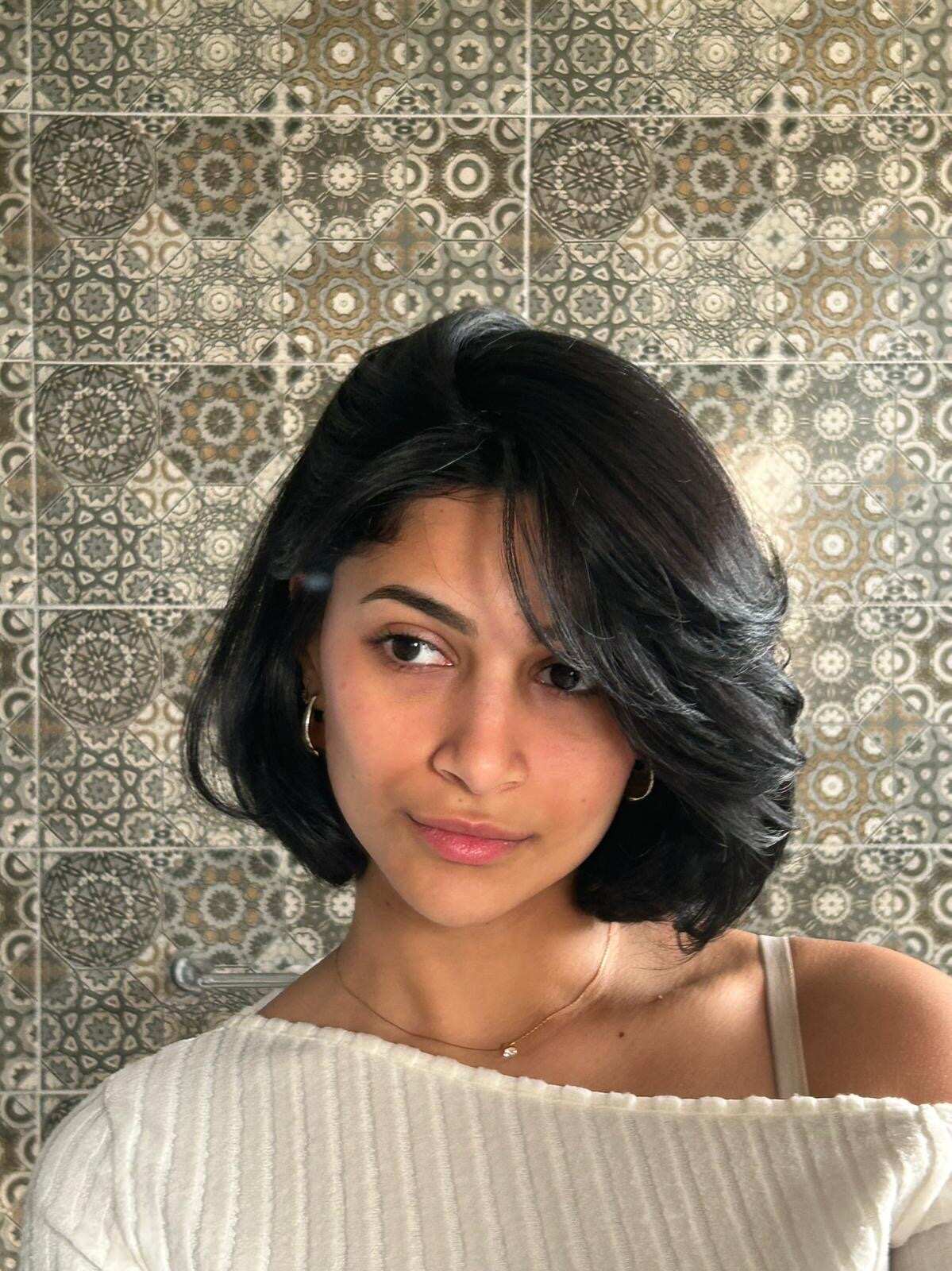
Through uneven steps — past loud hagglers and blue-eyed glances of perplexion — runs a boy trying to make his way to his grandfather's shop, which has stood in El Sagha since 1942. With an afternoon snack, he would sit and watch raw gold get manipulated, the precious metal yielding to fingertips that turn it into something legible, even sentimental. "My childhood was spent at my grandfather's shop, studying, playing, roaming around it," Robeir Barsoum recalls with a chuckle.
Years of quiet observation eventually led Barsoum to start selling informally, a teenager looking for a few extra pounds, before that grew into Rubies Jewellery in 2009. Even so, he kept the craft at arm's length for a while, letting his entrepreneurial instincts take the lead instead. He made his way through business school as his father inherited the trade and the 1942 shop his grandfather Fouad had opened in El Sagha, and it took something unexpected to pull him all the way back in.
That something arrived as an intensive silversmithing course, run through the Czech Republic Embassy in Egypt, where he finally understood the physics behind the craft. "I had to learn about the science that comes with it," he says of those weeks. "Applying maths, physics, chemistry is the only way to get consistent results, and most people don't really understand that." Barsoum liked being one of the few in Egypt approaching the trade this way, and by the end of the course his teachers kept him on to teach for a year before he returned to the family business.
He became head designer almost without deciding to, sketching every piece on a screen, arriving each morning to the same glowing rectangle, until he could no longer ignore the nagging feeling that something was missing. He tried to find it everywhere except where it was — through singing, acting, voice-over work, a scattershot search through anything that wasn't design software — until the pattern became obvious. "I realised none of it involved working with my hands. I love seeing what I can make," he says.
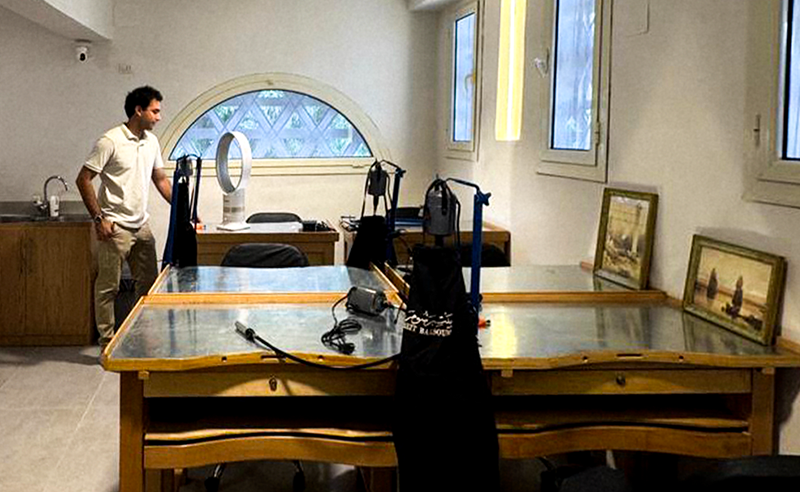
He returned to teaching, folding himself back into a classroom for three years as head teacher of the advanced level at Design Studio by Azza Fahmy. Somewhere in those years, between other people's hands and his own, the idea of Beit Barsoum began to take root. He didn't want to build another shopfront selling finished gold, but a school — a place where the making itself would be the point, open to anyone willing to sit down and try. He recognised in others a hunger he knew in himself: to make something real with their hands in a life that increasingly ran through screens. Beit Barsoum was the answer, a name he hoped would feel less like a signature and more like a welcome. "I chose 'Beit' because it feels warm. I really wanted people to feel like they're safe and home, not in an industrial place."
The doors, once open in Karyet el Fokhar, let in almost anyone, and Barsoum has learned to read who's walking through them before they've even sat down. There are the ones whose work is entirely done for them — bankers and accountants arriving with the restlessness of people whose last creative outlet was a high school play. They come for the One Day Ring Workshop, a small rupture in the routine, and leave holding a ring like it's the proudest thing they've made all year, because, as Barsoum puts it, "A computer never shows you a physical result like that." Then come the hobbyists, less urgent, more patient, breaking the ice with the Introduction to Jewellery Making Workshop and returning until the craft settles into something between a habit and a private joy.
And then there are the ones who arrive already certain, ready to leave behind whatever they were doing before and build a life out of gold and fire instead. For them, Barsoum becomes a guide through everything the craft doesn't teach on its own — pricing, branding, the unglamorous mechanics of keeping a business alive. "I studied Business, but I've also been positioned in the real Egyptian market," he explains. "I grew up within it, between the corners of El Sagha and Khan El Khalili — on the ground and in practice, not just in the books."
That same ground has a way of shifting beneath him. Running a heritage workshop in a market this volatile means learning to read gold as something closer to a mood. "It affects us one hundred percent," Barsoum says of the price swings that have rattled Cairo in recent years. "When the market sleeps for a while, you just wait it out, and it comes back in a couple of months." He has come to understand the psychology behind it clearly — the way people quietly redraw the line between luxury and investment depending on how uncertain the country feels that season.
That same instinct, reaching for something you can actually hold, shows up far beyond the price of gold. The more screens take up people's lives, the more it seems to pull them toward his classroom. "Gen-Z and millennials are actually moving back towards the analogue," he says, "because of how much technology and AI have pulled us out of touch with reality, but now they want to feel in touch again." He uses artificial intelligence sparingly himself, mostly to think out loud, never to design. What a machine offers is precision, a perfect circle every time, but what it can't offer is the five percent of imperfection that makes a hand-carved circle worth looking at twice — the same imperfection he reads in a sentence written by hand rather than smoothed flawless by AI.
He admits it's easy to romanticise the hand until you remember what a workshop actually asks of it. Safety, in a room full of open flame and spinning motors, is never treated lightly: goggles stay on whenever the machines run, hair gets tied back, no loose scarf goes near a workstation. "I'm clear about the instructions before we even start. I care a lot because in the 20 years I've been working, I've seen some really bad accidents," he says.
With over two decades of experience bending gold to his will, Barsoum has a clear picture of what comes next: Beit Barsoum expanding into goldsmithing and business classes, where his own grandchildren might one day run between benches the way he once ran through the Sagha. "I want Beit Barsoum to stay in the family," he says warmly. "And I want to build a school that teaches both sides — the jewellery craft and the business side — so people graduate with technique and knowledge." The sentence sounds like it's been sitting with him for a while, half memory and half business plan.
It's a doubled kind of legacy to want, equal parts heart and ledger, but Barsoum has never really seen them as separate things. He's 35 now, pulled back each time by the same certainty: a ring made slightly wrong by hand will always hold more than one made perfectly by a machine.
- Previous Article SceneNoise x Amsterdam Dance Event Present CROSSFADE: Egypt
- Next Article Rap of the Week | July 21 - 27