






Egyptian Actress Rosaline Elbay Is Learning to Live with Ghosts
Rosaline Elbay on ghost stories, excavation, and why acting and archaeology are not as far apart as they seem.
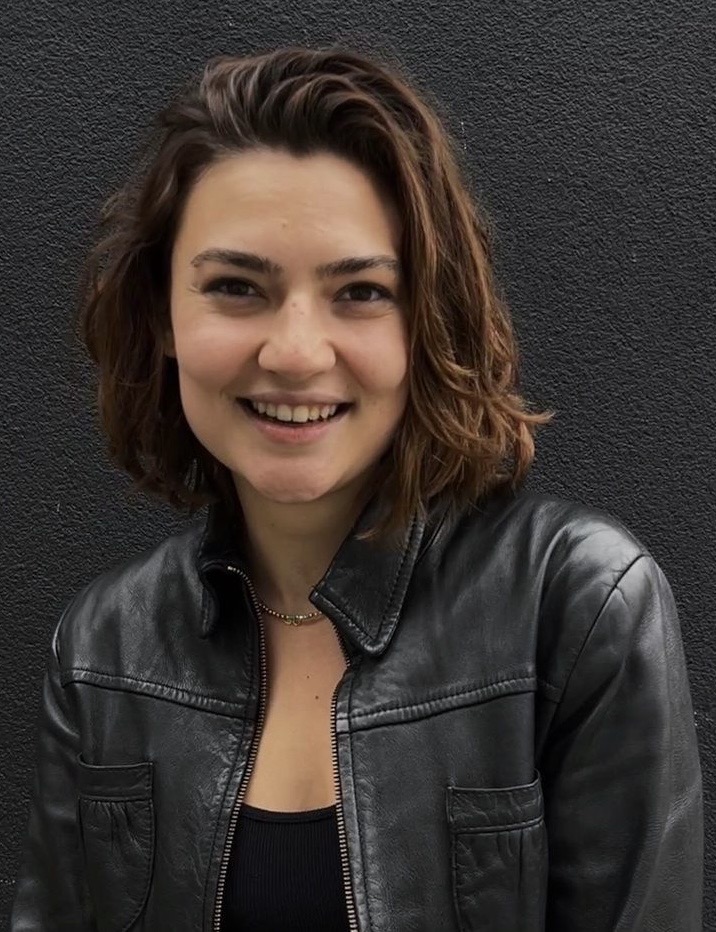
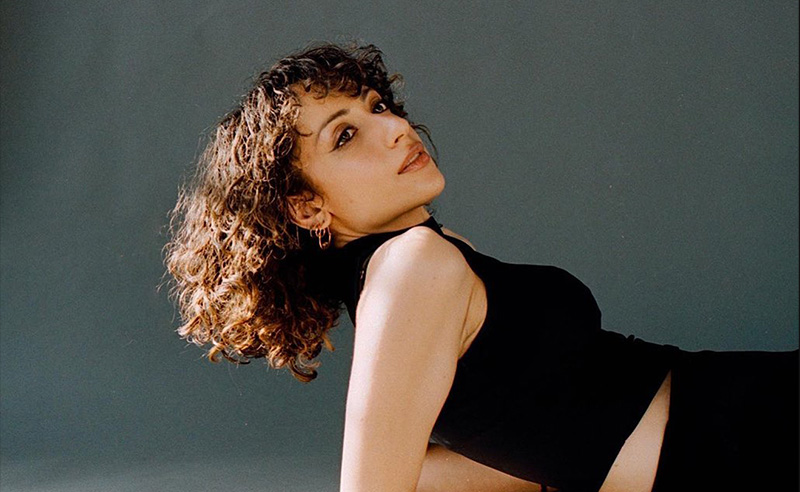
The first thing Rosaline Elbay tells me about shooting the next season of The Diplomat in the English countryside is the ghost stories. Not because the estate feels haunted, per se, but because it seems like the kind of place where a ghost might speak to you, in a country still shadowed by histories of women persecuted as witches.
It feels fitting. Even in casual conversation, and especially in the way she speaks about acting, her language is often closer to excavation. What is the historical context? What is buried beneath the obvious? What can be revealed under the architecture of a character?
This obsession with the past came long before acting. Growing up in Egypt, she was fixated on the Pharaonic Village, the living museum in Giza where scenes of ancient Egyptian life are reenacted across small islands in the Nile. She describes the experience with the vividness of a child for whom the boundary between education and enchantment had all but dissolved: the boat tour through canals, the recorded voice introducing Gods and rituals, the fishing scenes, the fragments of domestic life unfolding before her eyes. It was not enough to visit once. “I would demand to go so much that my mom eventually bought the VHS tape. I would just sit at home and watch the tour for hours,” she laughs.-88637817-a0cc-4506-9a16-b7f3f5f37d4a.png) And so when the time came to choose a university course, Elbay found herself scrolling through the UCAS portal, drawn almost immediately to archaeology. At Oxford, where she began studying the subject, acting grew almost accidentally alongside her degree. The university had no formal drama course, but its dramatic society was thriving, and its proximity to London meant that theatre felt within reach. In her first year, she was cast in a show co-produced by celebrated West End producer Thelma Holt, a summer opportunity she did not yet realise was semi-professional, but one that would mark the beginning of everything that followed.
And so when the time came to choose a university course, Elbay found herself scrolling through the UCAS portal, drawn almost immediately to archaeology. At Oxford, where she began studying the subject, acting grew almost accidentally alongside her degree. The university had no formal drama course, but its dramatic society was thriving, and its proximity to London meant that theatre felt within reach. In her first year, she was cast in a show co-produced by celebrated West End producer Thelma Holt, a summer opportunity she did not yet realise was semi-professional, but one that would mark the beginning of everything that followed.
“It was obvious you were going to be an archaeologist,” her family tells her. Then, almost in the same breath: “but also it was always obvious you were going to be an actor too.”
In retrospect, the two seem less like separate paths than twin expressions of the same instinct. Archaeology, as Elbay sees it, is about uncovering stories that history does not always prioritize. Acting, at its best, offers another way of animating them. Both ask versions of the same question: whose lives get remembered, and how?
This clarity only came later in life. By the time she finished her undergraduate degree and the question of what next loomed behind her, her focus had shifted again. “The Egyptian Revolution happened and I was like, ok, politics.” Acting was relegated to a hobby, and her attention moved from the ancient world to the urgent present, with politics suddenly pressing in everywhere. She applied to the London School of Economics imagining a future that might connect these interests in public life and cultural stewardship – perhaps in the Ministry of Education, perhaps the Ministry of Antiquities. Yet, “literally in the first lecture at LSE,” she recalls, “I was like, I’ve made a terrible mistake.” She sat there amongst her peers as the professor proudly stated you’re all meant to be here and realised with almost comic clarity: she should have continued acting.
Still, her LSE years matter deeply in the way she thinks now. To have the flexibility to act while studying, she shaped a course that let her move between Enlightenment philosophy, anthropology, colonial history, globalization, and the history of empire. “It was like two different lives happening simultaneously,” she says.
That doubleness still feels central to her. Elbay is not merely an actor who happens to be politically aware, nor a politically engaged person who happens to act. The two sensibilities are in constant conversation.-f0aa0271-23f4-4729-8a60-f75d176b8dca.png) This viewpoint cracked the allure of industry. Agents were coming to see her, but the conversations, she remembers, were revealing in all the wrong ways. It was the era when Game of Thrones was dominating cultural imagination and certain types of “Middle Eastern” casting were circulating with renewed appetite. There were two questions in particular she remembers being asked: whether she was comfortable with full nudity and playing a ‘political role’—a formulation whose meaning she understood immediately. “Terrorist?” The problem was not just offensive shorthand. It was being typecast and not taken seriously as an actor. Without formal drama training (particularly in the UK) she was just seen as a ‘girl who likes to act.’
This viewpoint cracked the allure of industry. Agents were coming to see her, but the conversations, she remembers, were revealing in all the wrong ways. It was the era when Game of Thrones was dominating cultural imagination and certain types of “Middle Eastern” casting were circulating with renewed appetite. There were two questions in particular she remembers being asked: whether she was comfortable with full nudity and playing a ‘political role’—a formulation whose meaning she understood immediately. “Terrorist?” The problem was not just offensive shorthand. It was being typecast and not taken seriously as an actor. Without formal drama training (particularly in the UK) she was just seen as a ‘girl who likes to act.’
Her mentor, Thelma Holt, helped name the dynamic clearly. Unless she went to drama school, Holt warned, people would continue to see her as a kind of package or brand rather than an actor with range. So Elbay went. First to the Actors Studio, then to LAMDA (London Academy of Music and Dramatic Arts). She is unequivocal about the impact: it changed her as an actor, yes, but it also changed how others saw her. “I was going to the same agents pre and post drama school and the conversation was suddenly different,” she says.
There is no triumphalist neatness in the way Elbay narrates that shift. Even as she speaks about what training gave her, she also speaks about access. In a class of twenty, those systems were not abstract. She saw them clearly, including in herself: “the fact that my parents were in a financial position to help me go, the fact that I spoke English and could go to a school like LAMDA.” Elbay holds both truths at once: training matters, and access to training is political.-f4984b70-9f2c-410e-8842-c68803af0ce0.png) That same political consciousness extends well beyond the mechanics of the industry. For Elbay, acting, writing, archaeology, and decolonial work all orbit the same central concern: stories, and who is permitted to tell them. She recalls hearing Ta-Nehisi Coates and Alexandria Ocasio-Cortez speak at an MLK Day event at Riverside Church, where AOC said, “Writers, journalists, activists, and artists shape public will and bring it to a point where [politicians] can translate it to policy.” It felt, she says, like a perfect articulation of what she is trying to do.
That same political consciousness extends well beyond the mechanics of the industry. For Elbay, acting, writing, archaeology, and decolonial work all orbit the same central concern: stories, and who is permitted to tell them. She recalls hearing Ta-Nehisi Coates and Alexandria Ocasio-Cortez speak at an MLK Day event at Riverside Church, where AOC said, “Writers, journalists, activists, and artists shape public will and bring it to a point where [politicians] can translate it to policy.” It felt, she says, like a perfect articulation of what she is trying to do.
Part of that sensibility is shaped by Egypt, where she grew up with a clear sense that performance could move beyond the screen and into public life. Elbay reflects, “If you look at Egypt, it has a really long history of Film and TV actively influencing parliamentary discussion and changes to the law and public policy. Having grown up in that, I think it informs how I think about it.”
To act is not simply to inhabit a role, but to participate in the production of social imagination.
These tools have travelled with her across mediums: from theatre stages in London to Egyptian television sets to international film productions. She recounts filming a recent movie with an Icelandic creative team, set in New Mexico, where the preparation became highly physical. The film was shot chronologically, with a lot of wides, rehearsal, and improvisation—a process that invited something more theatrical. By contrast, in The Diplomat, where she plays the sharp-witted Nora Koriem, Chief of Staff to the Vice President, the performance calls for a much more precise calibration. Her task instead, she says, is to remind the other characters of the stakes of government. “Every role demands something different.”-02ac8786-1a5f-4ece-9bf4-145e6dd8abbf.png) This flexibility also shapes the way she talks about ‘method’ acting. Elbay thinks the contemporary mythology around method acting is often harmful and toxic. Used sparingly, these types of embodied techniques may offer a way into a specific scene or emotional problem. But she is wary of the romance attached to losing oneself completely, of performing artistic seriousness through self-destruction. Ebay recalls “there was a tough scene that I was filming the next day in the TV Show Qabeel, with Tyson (Mohamed Mamdouh), and I just was like, oh, my God, I'm like lying awake, thinking of the best way to be traumatized tomorrow, what am I doing? This is so silly.”
This flexibility also shapes the way she talks about ‘method’ acting. Elbay thinks the contemporary mythology around method acting is often harmful and toxic. Used sparingly, these types of embodied techniques may offer a way into a specific scene or emotional problem. But she is wary of the romance attached to losing oneself completely, of performing artistic seriousness through self-destruction. Ebay recalls “there was a tough scene that I was filming the next day in the TV Show Qabeel, with Tyson (Mohamed Mamdouh), and I just was like, oh, my God, I'm like lying awake, thinking of the best way to be traumatized tomorrow, what am I doing? This is so silly.”
Admittedly, the work of an actor can seduce you into believing each new set should become an entire new life. And there is joy in that, she admits—the intensity, the closeness, the families that productions form. But the older and more experienced actors she admires tend to return to the same lesson: maintain your real life. Guard it. “Have a practice that grounds you to make day-to-day life real.”
Her phrasing on this is disarmingly funny. Acting, she says, “is an embarrassing job. Sometimes it is profoundly moving, yes, but it is also ridiculous.” She is currently shooting a video game, she notes, "and there is nothing less glamorous than having a camera in front of your face while wearing a motion-capture suit covered in tracking markers." The point is not to puncture the craft, but to keep it human-sized. Method, she jokes, has a lot to do with embarrassment and maybe with trying to defend oneself against it.
What emerges across all of this is a portrait of an actor unwilling to separate aesthetics from ethics, or craft from context. As she aptly puts: “Whether it's acting or writing or whatever work I'm still doing in the archaeology or decolonization space, it all has to do with the stories that we are allowed to tell. It’s about what we get to know about our own history, who tells our story and what we have access to.”-429b5e55-a501-451c-b42d-eab8f61bec08.png) When she speaks about the kinds of stories she wants to write and act in next, she returns again to women who have been told in a very particular way or women about whom we know very little at all. Similar to excavation, there is something almost archeological in the way she frames that desire.
When she speaks about the kinds of stories she wants to write and act in next, she returns again to women who have been told in a very particular way or women about whom we know very little at all. Similar to excavation, there is something almost archeological in the way she frames that desire.
It reminds me of the scenes she watched of ancient life unfolding in fragments in Pharaonic Village. Alongside Gods and Pharaohs everyday life was unveiled. Elbay tells me that one of the things that frustrates her about Egyptology as a discipline is how often it has been structured around treasure, rulers, and spectacle. Instead her two favorite artifacts are ordinary objects that look almost exactly as they do now: a toilet seat and a pair of tweezers. She is moved by them because they collapse time. As she reflects, “I think the connective tissue between people across history is also the connective tissue between people across the world right now. I think we need more of that.”
Maybe that is why the ghost stories feel like such an apt place to begin. Not because Rosaline Elbay is haunted by the past in any simplistic sense, but because she seems unusually willing to listen for what remains to be told.
- Previous Article AED 3 Billion Plan to Revamp & Expand Dubai's Public Beaches.
- Next Article The Ancestral Resilience of Omar El Farouk’s Fayoum Home
Related Articles
Trending This Week
-
 Oct 06, 2026
 -
-
-