




‘Hekayet Narges’ Blurs Criminal & Victim
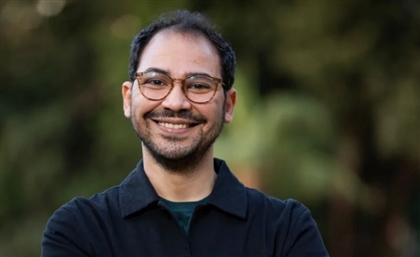
Cannes-winning Director Sameh Alaa on breaking into television moving away from archetypes.
.jpeg)
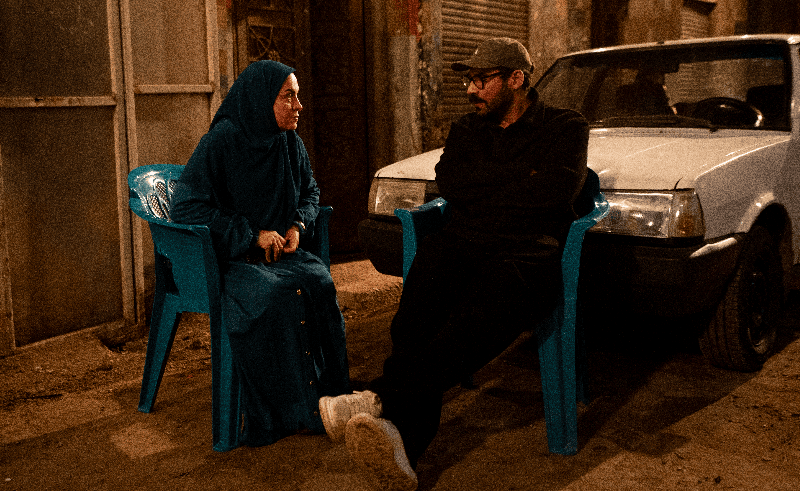
Envy, insecurity, and poverty are the main themes driving characters to commit crimes in ‘Hekayet Narges’. For 15 episodes, we watch a woman kidnap babies and root for her all the way.
Behind the hit show is a director stepping into television for the first time, most known for winning the Palme d'Or at Cannes for the Egyptian short I’m Afraid to Forget Your Face (2020): Sameh Alaa.
Inspired by a true story, Narges carries a gentleness often lost in the true crime genre. It’s not gory or sensational; it’s about a woman seeking to validate her womanhood, to earn it. A woman who raises her (kidnapped) baby to the sky like a trophy. A miserable woman yearning and plotting to climb the social ladder.
The series begins with Narges, brilliantly portrayed by Riham Abdelghafour, in a bathroom bathing a little boy. A slow, warm close-up reveals her hand massaging him with soap. Quickly, we realise we are in both her dream and her nightmare. We discover that she divorced because she cannot get pregnant. That warm, hypnotic bath scene lingers as a mirage, as we watch her plot and pull her new husband, Awny (portrayed by Hamza El Eily), into a journey of kidnapping to achieve the status of a mother.
‘Hekayet Narges’ joins a genre of survival crime in which the protagonist’s almost deadly agency leads her into jail, yet we carefully toe the line between victim and criminal. Until she’s arrested, we are completely immersed in her point of view as an audience. We watch her learn to kill and gaslight and become a criminal.
To bring that story to life, Alaa says, ironically, he does more pre-production for a short film, partly due to not having a team at the scale of a Ramadan show, Egypt’s peak entertainment season. Usually, Alaa films 15 scenes for a short film over four days; this year, he attempted to shoot 15 scenes in a single day. And he did that for 46 days. When the series was first announced, the name Sameh Alaa rang familiar within indie circles that know his work. On a mainstream level, however, Ramadan television series are usually referred to by the star’s name. The lead actor carries the show.
On set, Alaa says he wanted to move against the actor-director hierarchy. He discussed every scene with the actors, like theatre; they argued, and at times he would come out of the editing room and tell them they were right. And they did carry the show together - or the ship as Alaa would call it - each actor bringing their best performance to date, especially Riham Abdelghafour and Hamza El Eily.
In this interview, Sameh Alaa discusses why he chose to dramatize this true story, the contrast between film festival audiences and mainstream Egyptian drama, the thrill of telling a story over 15 days during Ramadan, and the unexpected delight of seeing the show inspire memes.-e93c0afa-44b6-4e66-97db-af3b303dd939.png) So you're used to festival circles, how does it feel to have your work so widely discussed, online and on a mainstream scale, with Narges?
So you're used to festival circles, how does it feel to have your work so widely discussed, online and on a mainstream scale, with Narges?
It’s a totally different feeling, not just because it’s online, but it’s a constant reaction for 15 days; it’s a whole experience. I never considered doing a series before, but now that I've done it, it’s so fun to tell a story and tell people, okay, now wait, I will carry on tomorrow.
You live with the characters, you watch them grow, you get attached to them in a totally different way.
How did the project come about? It’s your idea, but also a true story. Who approached whom?
I saw an interview about the case in 2018 or 2019, and I pitched the story to Mohamed Mashish, the showrunner and producer, about two or three years ago. I was really interested in how, after she got caught, she was still insistent. When people get caught, they usually admit guilt or regret. This attachment she had made me want to explore this type of obsession.
Obsession in general, with feelings we can’t share out loud, is interesting to me visually. Even in my shorts, this type of theme is present, someone is afraid to express their feelings, or shy, or afraid of people finding out what they want.
So you were drawn more to this obsession than the case itself?
Yes. I don’t think we were portraying the true story. Awny, for example, is a made-up character. We borrowed elements, but didn’t dig deep into the real story, which was set in the 1980s.
Why shift the timeline to the 2000s?
I wanted something current that people can relate to, and something I can relate to visually. I lived through the 2000s.
What concerned you most about stepping into television?
Losing engagement. I don’t watch series often; I usually lose interest after a few episodes. So I was worried about tempo. The best compliment is when people tell me they watched 11 episodes in a row.
And the Ramadan competition didn’t factor in?
No. I don’t worry about projects like that. I work on multiple things at once, it stops me from getting consumed by one project’s fate. Before this series, I wrapped a short film that hasn’t yet been distributed, and I’m finalising another short film now. Working on multiple things at once doesn’t allow me to get anxious over what will succeed. What I do worry about is the story not turning out the way I imagined it.
The real challenge was that for the first time I’m working with these types of actors, or that if I’m doing a short film that’s 15 scenes, I’m now filming them in one day. Filming many improvised scenes with the actors or the location.-c50d1511-38f0-40c9-a381-ebed3d5bb26e.png) Do you mean improvisation in Narges or in your work generally?
Do you mean improvisation in Narges or in your work generally?
All. Narges had a lot of improvisation because I had very talented actors. Before every scene, we would discuss it for 30 minutes or even an hour. We didn’t have this hierarchy; we were all on the same ship.
Which scenes changed the most?
The orphanage scene, it was originally a quarter of a page, and became a monologue through Riham. Even in the final scene with her mother, lines came during filming, and Samah Anwar suggested the hug. And the scene where Saad says he needs a baby, the actors suggested silence. I disagreed at first, but in editing, I realised they were right and removed the dialogue.
Narges embodies a totally new performance of motherhood. I remember that scene where she carries her babyborn in front of her co-workers, for example, it was shot and performed as if she’s emerging victorious, a hero after winning a battle, carrying the baby as a trophy. How did that portrayal come about? What’s the basis of this perspective on motherhood?
This pressure to have children, even after giving birth, asking when the sibling is coming along, it’s really intense. This idea of a trophy you’re saying is real, or a metric of how successful you are.
Personally, I’m not married, I don’t have kids, and I feel this pressure. Obviously it’s much louder with women. But as a man, I feel uncomfortable when someone asks me why I’m not married yet, or how after I achieve anything the next question is, when are you getting married? You know? When you’re a woman, the biological component as well makes it more heightened. So it’s something I’ve seen a lot and wanted to explore.-9fd77909-665b-4306-ae8d-8a539025a040.png) In Narges it was still a portrayal of that pressure that isn’t sensational or victimizing though.
In Narges it was still a portrayal of that pressure that isn’t sensational or victimizing though.
Yes. I think it has to do with archetypes and trying to stay away from them. I could’ve had a scene where her mother, for example, asks her when are you having your second child, but I tried to portray it in a new way. But the core idea is there even if it has been portrayed hundreds of times in films, series, and articles.
On paper, Narges is a villain. Were you scared the character would be scrutinised or hated?
I don’t see villains. The word “villains,” I think, works for cartoons or American films. This idea of a super evil person is very childish. When I see an evil character in a film, I think, does he not go home and get into his pajamas? The notion of a villain is very comic. So even Saad, I don’t see him as a villain.
Yes, people didn't think people didn’t hate her at all, quite the opposite. Which is interesting because female characters are usually socially scrutinised for the most minor or morally questionable on-screen actions. Why do you think that was the case?
I think because she wasn’t portrayed as black-and-white. I knew some people would hate her and some would love her. Some would understand. It’s a matter of point of view. I wanted to create that moral implication, not to purposefully implicate the viewer, but to make them question.
The last three episodes feel very different, almost like it’s not Narges’ POV?
We spoke a lot about the finale. We definitely didn’t want to end the show in court.It’s not always bad or cliche, for example, I liked how it was done in Lam Shamsiya (2025). But I wanted to explore how Narges felt after she left prison. I disagree about it not being her POV, though. It still is, but it’s not the same structure because we’re exploring a different emotion. And we also see how her actions impacted other people, like Youssef.
Some people were watching and telling me, “We feel like we’re watching a different show”, and it’s true, because she spent 10 years in jail.We always stop at that moment in court, even though what comes after is very interesting. And if I had more time, I would explore more things.
We see her go from someone who really wants to be a mother to someone slipping into insanity.
I actually removed the word “crazy” from the script. I wanted to portray someone normal. Obviously she has an issue with reality; obviously there are psychological problems, I can’t deny that, even though I’m not an expert.
So you don’t think she’s crazy?
No. Even when Awny kept calling her insane repeatedly in episode 14, I get sad when I watch that part. I think my relationship with the characters is different. I would never create a character that I hate. I don’t have to love them either, but I think art should not be that harsh. It has to have a certain gentleness.-4f0a70dc-da83-402f-bbff-56856d3664b7.png) Tell me about Awny as a character and why you included that detail about the amputated leg injury.
Tell me about Awny as a character and why you included that detail about the amputated leg injury.
This was Mohamed Mashish’s idea [the showrunner]. I was very scared of it, actually. Portraying that physical disability and acting it out is not that easy. Especially with a scene with lots of movement like the robbery at the orphanage.
The character is totally made up, and we had to think of who can be a partner to someone like Narges. Hazem El Eily is a brilliant actor. I really enjoyed working with him on set. He came in with a pen and paper with notes and questions before every scene. We spoke about the scenes with Riham like it was a play.
Awny, to me, is like a coming-of-age character.
How so?
There’s this idea of someone going through something that literally ages them. My first short film, 15, we see someone losing their parents. Then in my second short, I’m Afraid to Forget Your Face, his lover dies. Those heavy experiences make you grow. The “coming of age” isn’t tied to a specific age group. Many people are old, but emotionally they’re still children. Awny was like that to me.
Narges and Awny both come from homes where they were not seen, not loved, and oppressed. They needed each other.
We really see Awny grow up. Someone sent me one of those fan edits of him with a Tul8te track, and you see that coming of age. That scene when he breaks his prosthetic leg and looks in the mirror, if you watch that and compare it with him in the first episode, you really see him lose his innocence.
And why does he end up marrying Huda?
I think logic doesn’t really dictate relationships. We try to dramatize the reasons, but things sometimes just happen. If people go back, they will see how he looks at her after Youssef is born, when Narges’ attention is diverted from him to her baby boy. A bit of interest emerges then. And I wanted the audience to contemplate what happened with them in those seven years.
Which scene were you most worried about?
I was worried about the death of Awny’s mother, that sequence and that journey. It’s a moment of change of character. We see Narges kidnap, but to see her contribute to someone’s death is different. So I wanted to explore that moment of change and see her sad, scared, sad, worried but victorious as well. I was worried about this long stretch of silence on TV, and whether people can handle it. But luckily, it worked, and the music also helped.
Tell me more about the music.
Tamer Karawan was Mashish’s recommendation and it was really smart. Initially, I wanted a more horror soundtrack, but Mashish would tell me we need to tone it down and he was right. I love Tamer Karawan’s work, but I couldn’t imagine that genre of music with this genre of show.
What’s your personal favourite moment in the show?
When Narges' mother hugs her in the bathroom. The hug wasn’t written initially; Samah Anwar suggested it. I was so happy when shooting it. Narges, as a character, had many hugs on the show, this is something I thought about all the time, this evolution of the hug.
There are recurring themes in your work: lost young men, baby borns, and the niqab. Are these particularly intriguing to you? Is this intentional?
Not really. Honestly, there are common themes, but it’s like drawing. You find yourself drawing a similar thing, but you discover that later. Some directors, you watch their work and not find any link, and with some you notice an exaggerated link, like Wes Anderson. I don’t like his work anymore because it became almost like a brand, like a McDonald’s French fry, same taste every time. But I don’t mind having similar themes, but it’s not on purpose.-b8f419b6-2b99-4f06-b4f2-8383572fca4f.png) You’ve just won an award for S the Wolf, your first comedy short film, and it’s also an animation. Now you’re taking on a television series format - do you have a preferred format or medium?
You’ve just won an award for S the Wolf, your first comedy short film, and it’s also an animation. Now you’re taking on a television series format - do you have a preferred format or medium?
I think a short film is like a poem, it’s a moment, a feeling. Feature films are like a novella. Series are more like a novel, you live with the characters. In a Naguib Mahfouz novel, for instance, a character like Mahgoub Abdeldayem lives on. We call people Mahgoub Abdeldayem still, the characters are alive. It depends on the story. With Narges, who’s lived for 20 years, in jail and out, it can’t be a short.
But it could’ve been a feature.
Yes, it could’ve definitely, but the amount of emotions I wanted to explore is much deeper. I felt like I wanted to live with her and her husband and her world.
In your experience what’s the difference between a festival audience’s reception and a mainstream audience?
Who goes to the festival is the question. When I ask a taxi driver about the series and I get his take and we discuss it, that’s totally different and enjoyable. It made me want more of this.
But also when watching S the Wolf, a comedy, at Zawya Cinema, my friend kept track of how many times people laughed. Experiencing that interaction live is amazing. They’re both amazing feelings.
I think the audience reaction to series now is similar to how people used to react to cinema as well, that scale. For example, the reaction to a Chahine film, with critics writing instantly and fighting, this was also a moment of scale. Series create the same experience now. But we didn’t have that scale of visual entertainment back then.
So series are the “popular” form now?
Exactly. They’re accessible and people interact with them more. Cinema took a different turn now.
If you had to pick between a Cannes award or thousands discussing an episode you created minutes after it airs, which one would you pick?
I really can’t, especially after experiencing the latter. I can’t stop wanting both feelings.
Last question: what’s your favourite meme about the show?
A lot, actually! I think the memes are what made me the happiest with the series, I love memes. Watching people joke about the show every day was so fun; I have lots of screenshots.
- Previous Article Mo Salah’s Record-Breaking Liverpool Legacy in Numbers
- Next Article Nour Mobarak Turns Lost Opera into Sculptures That Sing Rare Languages