





How Sikka Art and Design Festival Reimagined Dubai's Future Identities
Dubai’s historic Al Shindagha Museum became the stage for over 450 artists, creators, and designers to explore the theme ‘Imagining Dubai: Identities of the Future.’

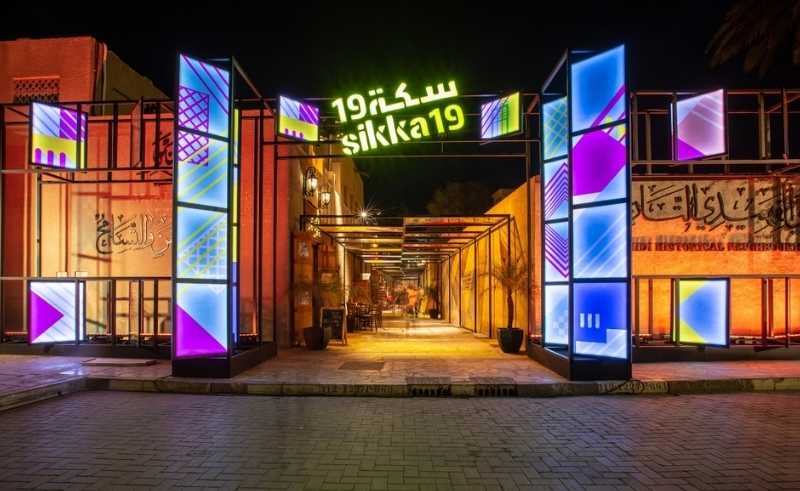
Culture and identity bend the boundaries of expression until they feel limitless, shaping the way we see ourselves and the world around us. Nowhere was this more evident than at Dubai’s historic Al Shindagha Museum, which became the stage for the Sikka Art and Design Festival, where over 450 artists, creators, and designers explored the theme ‘Imagining Dubai: Identities of the Future.’
Wandering through Al Shindagha’s calm streets and heritage homes, visitors are propelled through time and space, with identity continuously deconstructed and rebuilt through shapes and colours. Neutral tones, lower-rise buildings, and the iconic Dubai Creek give the 162-house district a slower, reflective pace—perfect for musing on legacy and tradition.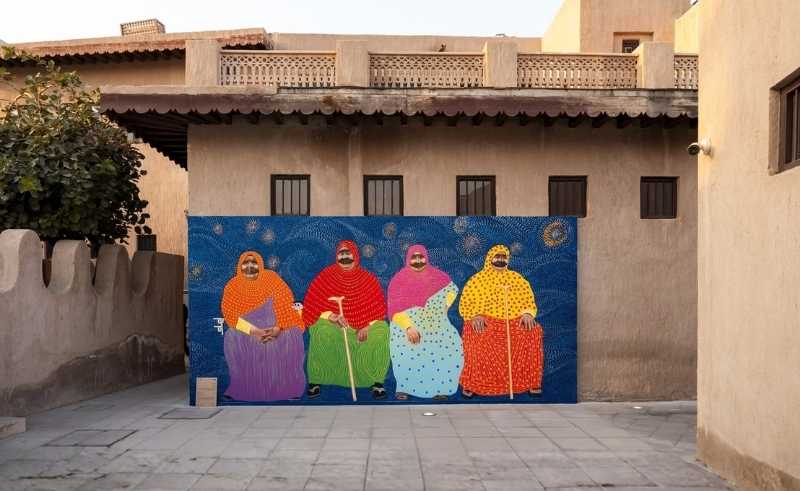 Striking murals punctuate the winding paths. Eman Alrasdi’s ‘A Heritage of Night’ (2025) acts as a visual blueprint for Sikka’s theme, bridging cultures with a quiet brilliance. Four Emirati women sit serenely amidst the swirling skies of Van Gogh’s Starry Night, bold oranges, yellows, and reds contrasting against deep navy. The inclusion of the battoulah sparks dialogue between 19th-century European art and Emirati cultural modesty, reimagining a space where both can coexist.
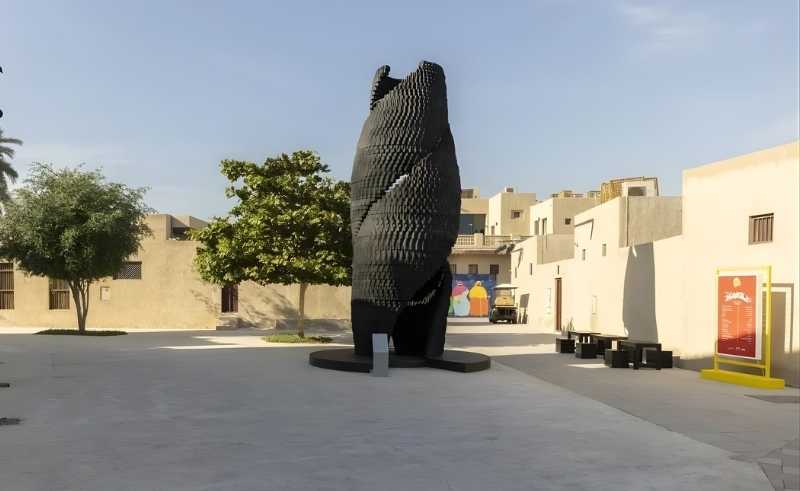 Roudhah Almazroveu and Sahil Ratha’s sculptural piece ‘Sikham’ (2025) celebrates national heritage through monumental simplicity. Made from steel, fibreglass, and Styrofoam, the seven-foot monolith honours the art of creating charcoal from Samra and Sidr trees. Its name, derived from sikhama—the blackened base of a cooking pot—anchors it in tradition. Acting as both sculpture and wind tower, ‘Sikham’ fuses industrial and natural elements to explore the layers of existence.
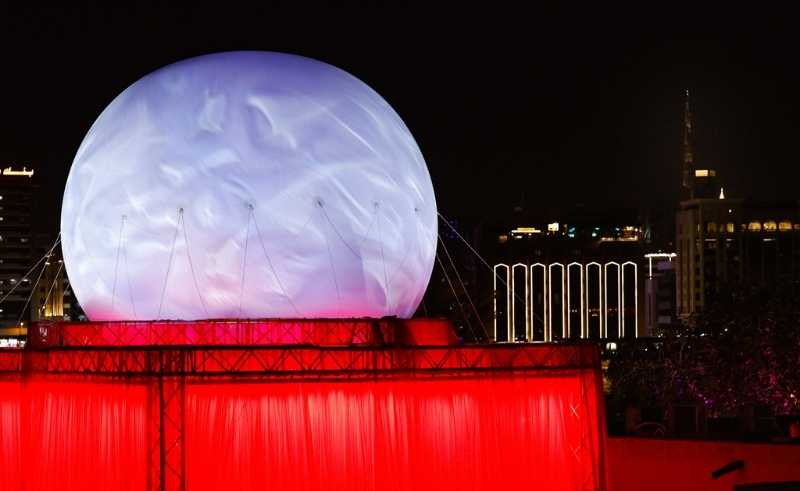
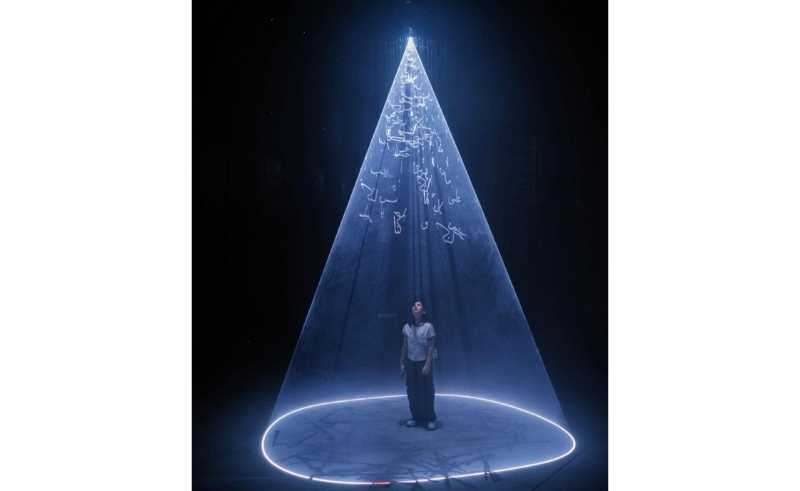 A short distance away, other installations bend the very idea of space. Fateema Alqasser’s ‘Passing Shadow’ (2026) is an immersive laser experience, where beams of light cut through darkness in a choreography of remembering and forgetting. The fleeting lights feel like stars, forming new memories while stirring old ones. Similarly, Duette Studio’s ‘The Pearl Majlis’ envelops visitors in vermillion nets and monumental scale. A glowing pearl floats above, honouring Dubai’s pearling history, while the installation fosters a quiet sense of connection among strangers.
 Elsewhere, the future of identity is made to face artificial intelligence. In one coral-stone house, Sana Waqar’s ‘Data Dreams’ (2026) juxtaposes human craft with algorithmic possibility. Inspired by data-generated imagery, three canvases shimmer with textured, spherical patterns, accompanied by synthetic music.
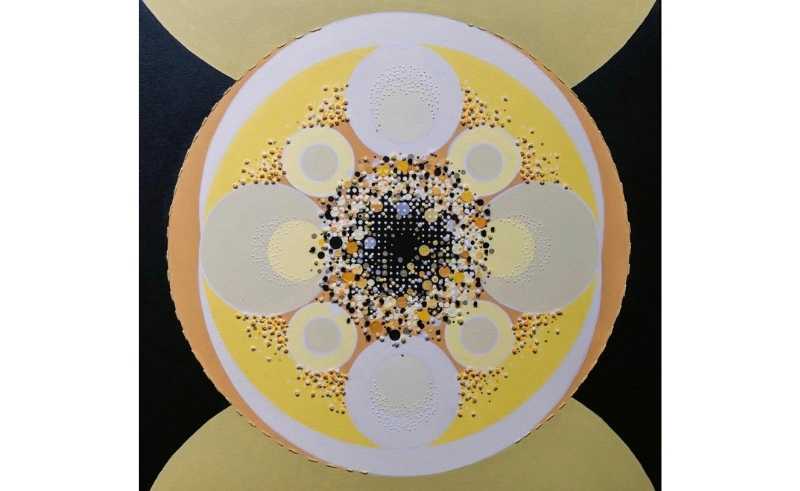 “For me, this dichotomy of handmade versus machine-made was the source of inspiration,” Waqar shares with SceneNowUAE. “The infinite algorithmic possibilities made me think of ways to bring back the human touch to something inspired by a machine.”
AI’s potential extends to care as well. In the courtyard project ‘Synthetic Memories’ (2025), led by the Mohammed bin Rashid Centre, technology recreates memories for patients with dementia. One image, ‘Boats of Childhood,’ shows fishing boats resting on Khasab’s summer shore, evoking the simple yet profound act of remembering a life once lived.
Deeper into the festival, Hobbs Design and Visual Culture—housed in the Institution House—champion independent publications and studios, ensuring literature and design remain accessible and interconnected. Highlights from their selection include: Iman Mersal’s ‘Archives and Crimes’ and Khalid Mezania’s ‘Feast: Shopopolis.’
“For me, this dichotomy of handmade versus machine-made was the source of inspiration,” Waqar shares with SceneNowUAE. “The infinite algorithmic possibilities made me think of ways to bring back the human touch to something inspired by a machine.”
AI’s potential extends to care as well. In the courtyard project ‘Synthetic Memories’ (2025), led by the Mohammed bin Rashid Centre, technology recreates memories for patients with dementia. One image, ‘Boats of Childhood,’ shows fishing boats resting on Khasab’s summer shore, evoking the simple yet profound act of remembering a life once lived.
Deeper into the festival, Hobbs Design and Visual Culture—housed in the Institution House—champion independent publications and studios, ensuring literature and design remain accessible and interconnected. Highlights from their selection include: Iman Mersal’s ‘Archives and Crimes’ and Khalid Mezania’s ‘Feast: Shopopolis.’
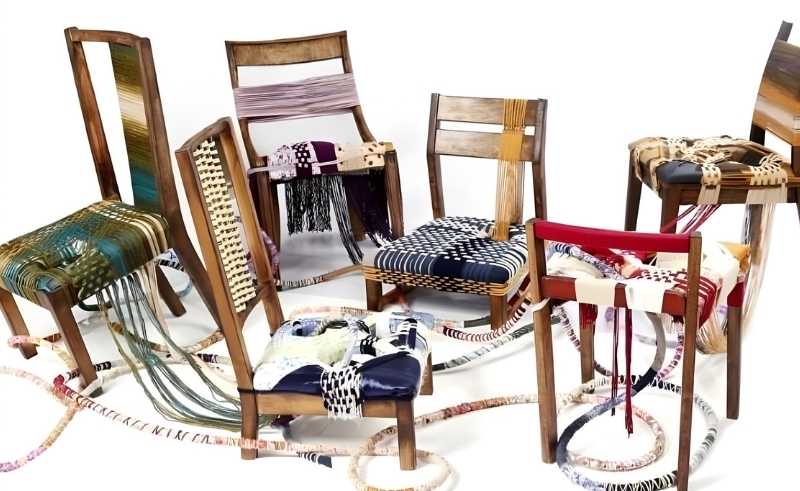 Finally, Maryam Al Riyami’s ‘Woven Identities’ (2026) intertwines memory, inheritance, and human connection. Wooden chairs entangle with fabric and yarn, stretching above and below the viewer.
“Through my weaving project, I explore the unseen threads that connect or divide families, raising questions about bridging generations and discerning what to hold onto or let go.” Riyami explains to SceneTraveller.
As visitors move from Sikka’s courtyard to heritage house, from sculpture to light installation, there is a sense that identity is never fixed, never singular. It stretches, overlaps, fragments, and rebuilds—sometimes visible in a pattern of thread, sometimes flickering in a beam of light, sometimes whispered in the nostalgia of a recreated memory. Sikka doesn’t offer answers; it offers experience, invitation, and provocation.
Finally, Maryam Al Riyami’s ‘Woven Identities’ (2026) intertwines memory, inheritance, and human connection. Wooden chairs entangle with fabric and yarn, stretching above and below the viewer.
“Through my weaving project, I explore the unseen threads that connect or divide families, raising questions about bridging generations and discerning what to hold onto or let go.” Riyami explains to SceneTraveller.
As visitors move from Sikka’s courtyard to heritage house, from sculpture to light installation, there is a sense that identity is never fixed, never singular. It stretches, overlaps, fragments, and rebuilds—sometimes visible in a pattern of thread, sometimes flickering in a beam of light, sometimes whispered in the nostalgia of a recreated memory. Sikka doesn’t offer answers; it offers experience, invitation, and provocation.