





Ibrahim Sarhan’s Lens Captures Places That Aren’t on the Map
Saudi visual storyteller Ibrahim Sarhan on the folk dance where locals believe dancers become possessed, a wedding he stumbled into mid-camel-race, and why he still won't call himself a photographer.
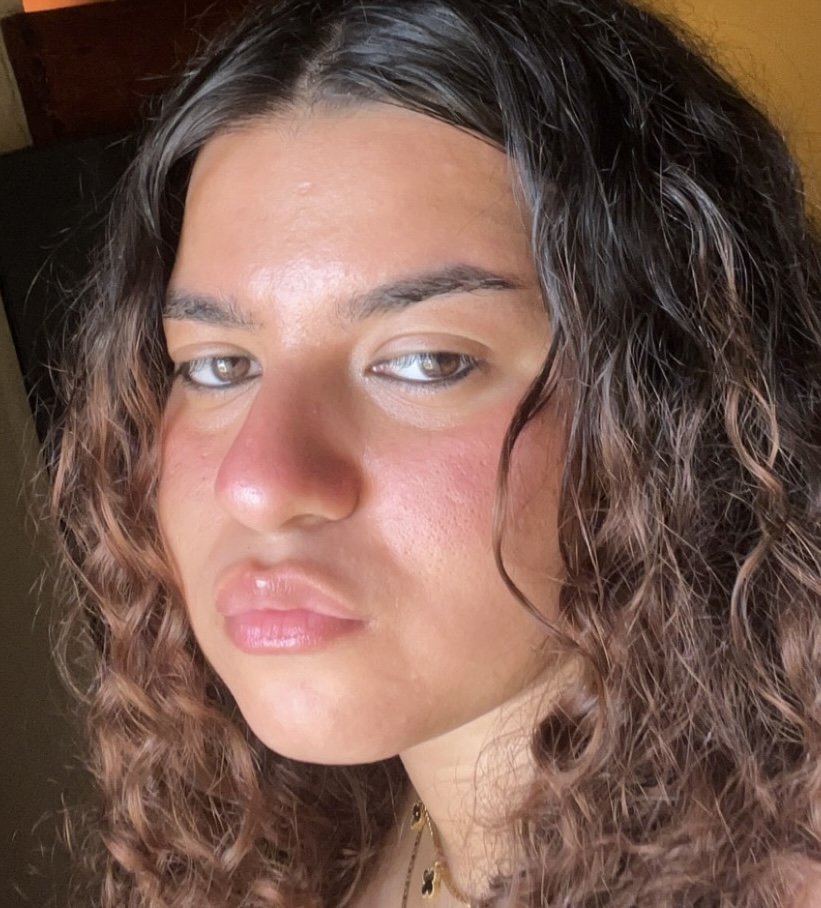
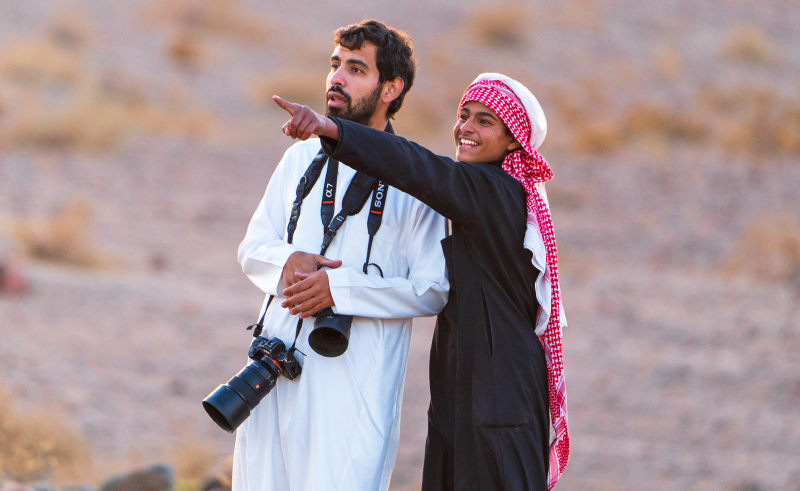
Ibrahim Sarhan, a visual storyteller and documentarian, spent years visiting a tribe in Saudi Arabia's southwestern Asir Mountains before he ever raised a camera. He wanted their trust first.
"You learn the technique so you can set it aside," he says. "All your focus goes into the story, the people you're capturing, the moment you're in. That's the challenging part."
Sarhan has spent his career going after the unseen parts of Saudi Arabia, determined to bring them to light. He's been drawn to nature for as long as he can remember, anything untouched or unseen by humans, and that pull led him to travel the globe searching for indigenous communities.
 Years passed, and Sarhan decided to return home and document his own country's marginalised communities instead. The more he documented, the more he realised how much was still out there.
"Saudi Arabia is a huge country," says Sarhan. "People in the North are completely different from those in the South; different attire, different dialects, different customs and traditions. You could spend a lifetime exploring all of it and still find things you didn't know, still be caught by surprise."
In the South, specifically on the rugged Asir Mountains in the southwest of the Kingdom near the border with Yemen, lives a community known as the "Flower Men".
The floral nickname comes from the fact that the men of this community forgo the ghutra, the traditional headdress worn by Saudi men, and instead wear crowns made of intricate arrangements of flowers, herbs and grasses.
Asir sits apart from the rest of the country. It is mountainous and green where much of Saudi Arabia is desert, and its distance from the capital has let its own dialect, dress and customs survive largely untouched.
Sarhan has been visiting the Flower Men community since 2018. Every other month, he would go and spend time with the men of the tribe, just hanging out, getting to know them and allowing them to know him.
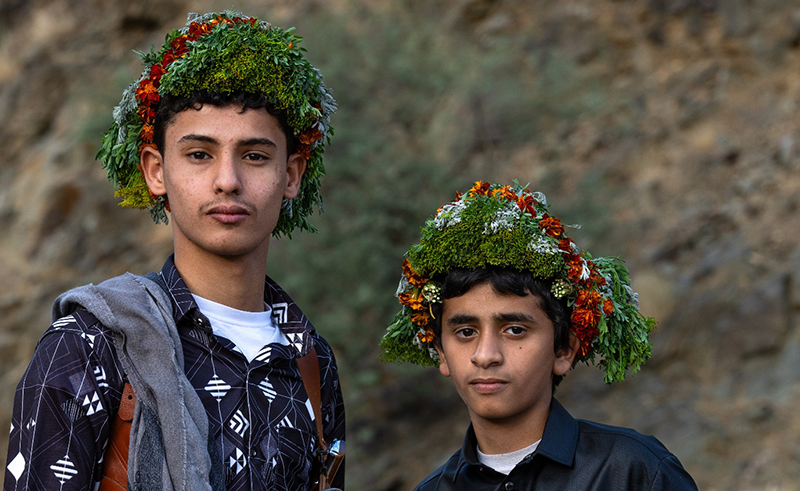 The tribe, which had lived in complete isolation until only 25 years ago, welcomed him with warmth and cordiality, but also with suspicion and a lot of questions.
"Some of these people have never been photographed before, while others have been dealing with misrepresentation and over-romanticisation since they gained attention from the public," he says.
He learnt that the trust he builds with them was going to be the main pillar of his project. This relationship he cultivated with the Flower Men is what made his pictures special.
He never asks them, or anyone he shoots, to pose for a picture. He just lets them be, as if he's not even there, and when the moment is right, that's when he raises his camera and captures it.
"This is the real art, you know?" he says. "People simply living, doing everyday things."
He never interferes with the pictures he takes; never Photoshops them or heavily edits them. If he doesn't like the picture he took, he waits until he takes a better one.
For Sarhan, his subjects are also his target audience. He believes that the most important outcome of a project is that his subjects look at the pictures and feel good about themselves. They are the main characters, directors and audience of his projects.
"It's all about them and has nothing to do with me. I'm just happy to be there."
The Flower Men project became one of Sarhan's most significant bodies of work. In 2022, his photographs from Asir appeared in luxury publisher Assouline's "Saudi Arabia: Flower Men", where he is one of three credited photographers alongside Laziz Hamani and Ziyad Alarfaj.
The project also led him, with the help of locals, to document rock art that had sat there for thousands of years, completely unknown to anyone outside of the community.
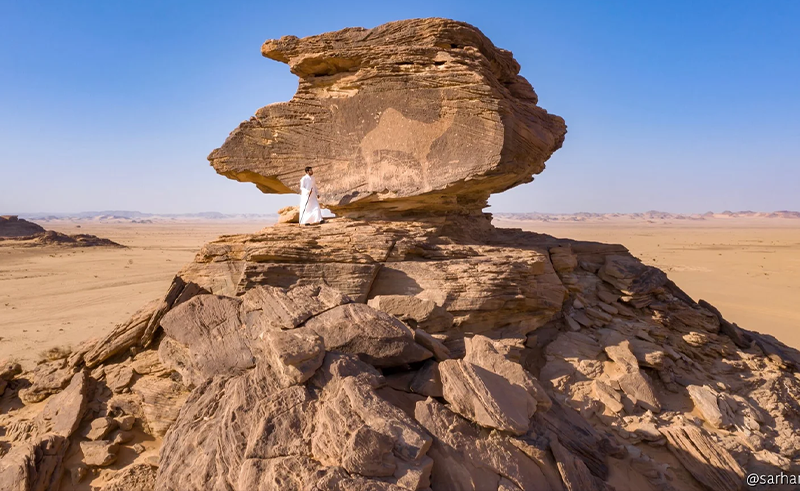 Still, it's one of many projects, each just as important, in which he explores and documents underrepresented living traditions, archaeology and untouched landscapes across Saudi Arabia.
In one project, he documented Rayeh Bisha, a Saudi folk dance from the Asir region that takes place at weddings and Eid celebrations, extending into the depths of night, when it's believed that spirits possess the dancers at the centre.
His photographs show hundreds of people circling around a few dancers who seem to be in a different reality. No one is even aware of the camera capturing them. Around the edges, the people watching stand still, some with their mouths open, all of them fixed on the same point at the centre of the circle.
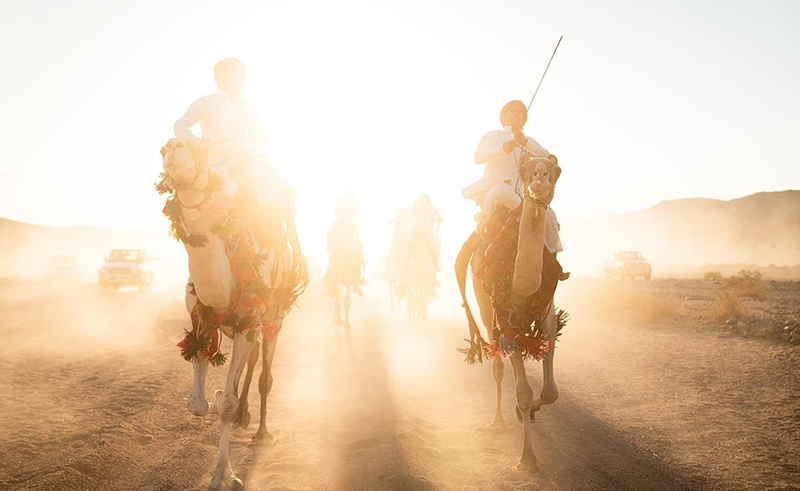
In another project, he documented the Tabuk camel races in northwest Saudi Arabia. Sarhan, who was wandering through the desert, suddenly found himself in the middle of a camel race that turned out to be a wedding.
"It was nothing like any wedding I've been to before," he recalls.
Tents were built in a big circle in the middle of the desert. Children, youths and elderly men rode their camels and raced around the tents. "These people don't really live in the desert anymore; they just chose to keep their traditions alive," he said.
"I'm not a photographer. I don't like identifying myself as one," he said, ending the conversation with SceneNowSaudi.
"I don't care if my pictures don't turn out beautiful or aesthetically pleasing, as long as they are real."
- Previous Article Chef Paul Farag Once Avoided Middle Eastern Food. Now He Embraces It.
- Next Article Inside One of the World's Best Kitchens ft. Paul Farag