





Inside Inanna Reborn’s World of Mythic Arabian Luxury
Inspired by erased Arabian queens and ancient mythology, Sheikha Bodour’s Inanna Reborn blends fashion, silver jewellery, fragrance, and heritage into a new mythic luxury house.

The story of UAE fashion label Innana Reborn starts with Arabian queens. The ones that ruled from the sands of what is now Yemen, from the heart of the Syrian desert, from the pre-Islamic trading kingdoms of the Arabian Gulf. These queens negotiated with Rome, commanded armies, minted their own currency, and helped shape the religious and commercial orders of the ancient world. Zenobia of Palmyra stretched her empire across the Levant before the Romans marched against her, and Bilqis of Sheba, a diplomatic genius, presided over a civilisation with wealth and sophistication that the world exemplifies till this day. Then there's Abi'el, a ruler we mainly know from some silver coins found in Mleiha, Sharjah. Her name appears in Aramaic script, but that's about it. The historical records barely mention her, and all we have are tiny scraps from a kingdom that used to be right on southeastern Arabia's trade routes.
These are the very same queens that Sheikha Bodour bint Sultan Al Qasimi unearthed over five years for her brand, Inana Reborn.
As a publisher and founder of the Kalimat Group, a UNESCO Goodwill Ambassador, President of the American University of Sharjah, and the daughter of Sheikh Sultan bin Mohammed Al Qasimi, the Ruler of Sharjah, she's been building and leading cultural institutions throughout the area for ages. But Mleiha, an archaeological site in Sharjah's interior desert, kept pulling her back. It was there in 1995 when she initially came as a prospective Cambridge archaeology student. A specific coin caught her eye - it featured a female ruler's face with "Abi'el" in Aramaic. Even her own father hadn't heard of her - no one had. Sheikha Bodour wrote later, "I wasn't just learning history; I was rewriting it."
 Fascinated, Sheikha Bodour poured her research into her book, 'Let Them Know She Is Here: Searching for the Queen of Mleiha'. Launched at the Sharjah International Book Fair in November 2025, the book blends personal memoir with scholarly research, exploring matriarchal kingdoms in the Arabian Peninsula. Al Qasimi uses Arabic poetry and artefacts from excavations to support her theory that Mleiha had a line of ruling queens. During the writing process, something unexpected occurred. The women in her study seemed to leap off the page, refusing to be contained within the book's confines.
"What lingered with me was not their power," she says, "but the silence that followed all their stories. I encountered women who ruled, negotiated, and shaped civilisations across the ancient Arabian world, and yet their continuity was interrupted. That absence demanded a response."
The response she chose was a fashion house, named Innana Reborn. Inanna, the Sumerian goddess of love, beauty, war, justice and political power, is the oldest complex deity in the Mesopotamian pantheon. People inscribed her myths on clay tablets around the third millennium BCE, making these the oldest epic poems we have. Her most famous story is the Descent, where she journeys into the underworld and must give up an item at every gate – her crown, lapis beads, breastplate, golden ring, and sceptre. Stripped of everything, she stands before her sister Ereshkigal, the Queen of the Dead. There, she is killed, and is hung there for three days. Afterwards, Inanna rises again and returns to the world above.
Fascinated, Sheikha Bodour poured her research into her book, 'Let Them Know She Is Here: Searching for the Queen of Mleiha'. Launched at the Sharjah International Book Fair in November 2025, the book blends personal memoir with scholarly research, exploring matriarchal kingdoms in the Arabian Peninsula. Al Qasimi uses Arabic poetry and artefacts from excavations to support her theory that Mleiha had a line of ruling queens. During the writing process, something unexpected occurred. The women in her study seemed to leap off the page, refusing to be contained within the book's confines.
"What lingered with me was not their power," she says, "but the silence that followed all their stories. I encountered women who ruled, negotiated, and shaped civilisations across the ancient Arabian world, and yet their continuity was interrupted. That absence demanded a response."
The response she chose was a fashion house, named Innana Reborn. Inanna, the Sumerian goddess of love, beauty, war, justice and political power, is the oldest complex deity in the Mesopotamian pantheon. People inscribed her myths on clay tablets around the third millennium BCE, making these the oldest epic poems we have. Her most famous story is the Descent, where she journeys into the underworld and must give up an item at every gate – her crown, lapis beads, breastplate, golden ring, and sceptre. Stripped of everything, she stands before her sister Ereshkigal, the Queen of the Dead. There, she is killed, and is hung there for three days. Afterwards, Inanna rises again and returns to the world above.
 The Descent tells the story of what transformations really cost and what you get out of them. After descending into the underworld, Inanna comes back with a deep understanding of darkness and a sense of self that passed an ultimate test of survival. Interestingly, this myth mirrors the real-life stories of queens that Sheikha Bodour studied - women who gained great power but were erased by those who followed them. All that remains now are some coins, old trade routes and crumbling buildings.
"These women were too vibrant to exist just on paper," Bodour explains. "Their leadership and the sheer force of their presence should resonate with women today."
Inanna Reborn asks what it means to return and how certain qualities appear on a living person's body as they go about their daily routine. "Mythic luxury is not a description; it's a state," Sheikha Bodour states. Each piece has a history, a specific woman's legacy - her power and the way she carries herself through life.
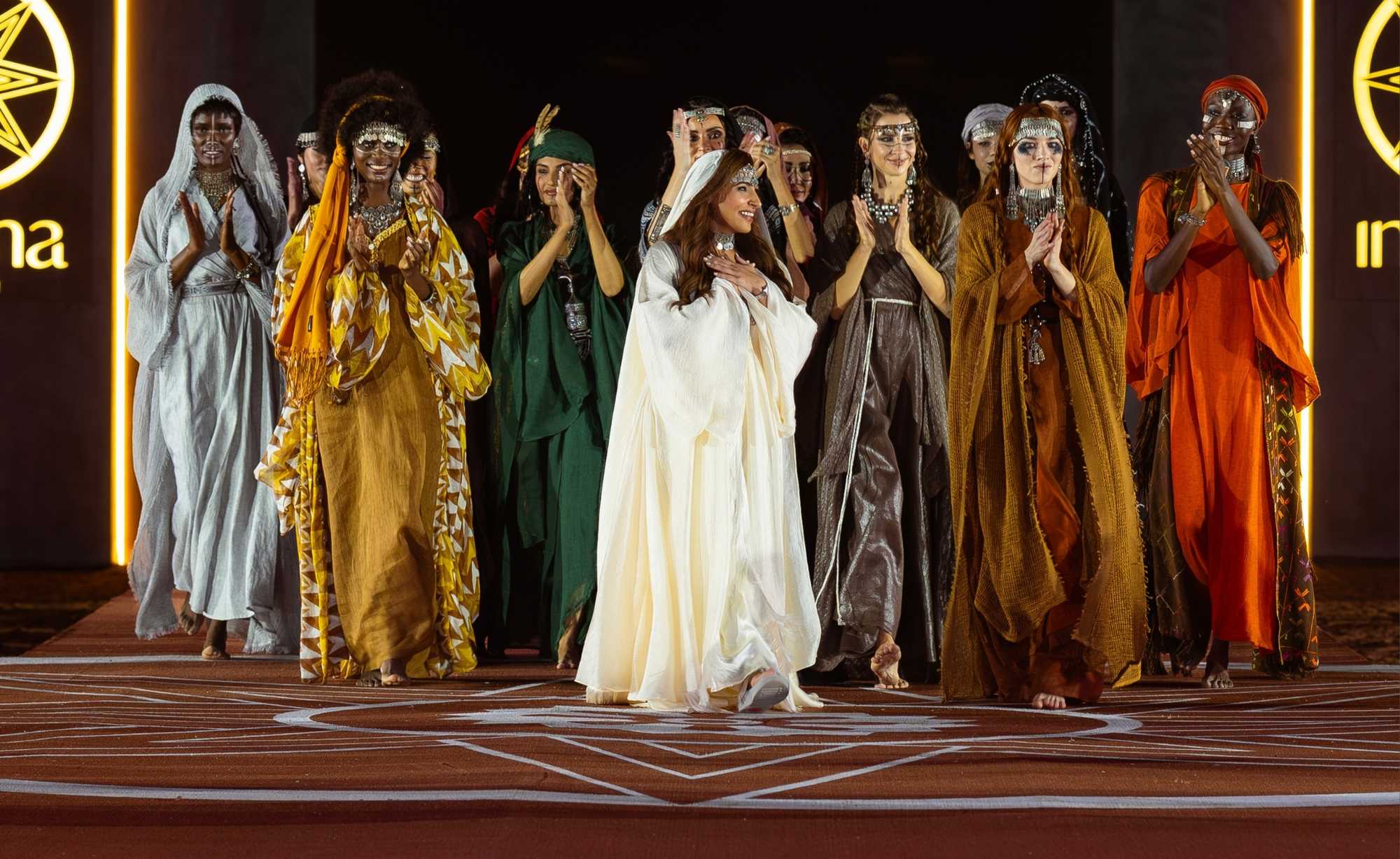
The debut launched on April 6th, 2026, starting at dusk in Mleiha National Park, Sharjah's desert interior. This spot's been an ancient trading hub for ages, carrying over 210,000 years of human history right beneath our feet. There's evidence from the Stone Age up through pre-Islamic times - tombs, tools, coins - spanning 34 square kilometres. In 1995, when Sheikha Bodour was just 17, she came here seeking a queen. Now, she was showing them to the world.
The Descent tells the story of what transformations really cost and what you get out of them. After descending into the underworld, Inanna comes back with a deep understanding of darkness and a sense of self that passed an ultimate test of survival. Interestingly, this myth mirrors the real-life stories of queens that Sheikha Bodour studied - women who gained great power but were erased by those who followed them. All that remains now are some coins, old trade routes and crumbling buildings.
"These women were too vibrant to exist just on paper," Bodour explains. "Their leadership and the sheer force of their presence should resonate with women today."
Inanna Reborn asks what it means to return and how certain qualities appear on a living person's body as they go about their daily routine. "Mythic luxury is not a description; it's a state," Sheikha Bodour states. Each piece has a history, a specific woman's legacy - her power and the way she carries herself through life.
The debut launched on April 6th, 2026, starting at dusk in Mleiha National Park, Sharjah's desert interior. This spot's been an ancient trading hub for ages, carrying over 210,000 years of human history right beneath our feet. There's evidence from the Stone Age up through pre-Islamic times - tombs, tools, coins - spanning 34 square kilometres. In 1995, when Sheikha Bodour was just 17, she came here seeking a queen. Now, she was showing them to the world.
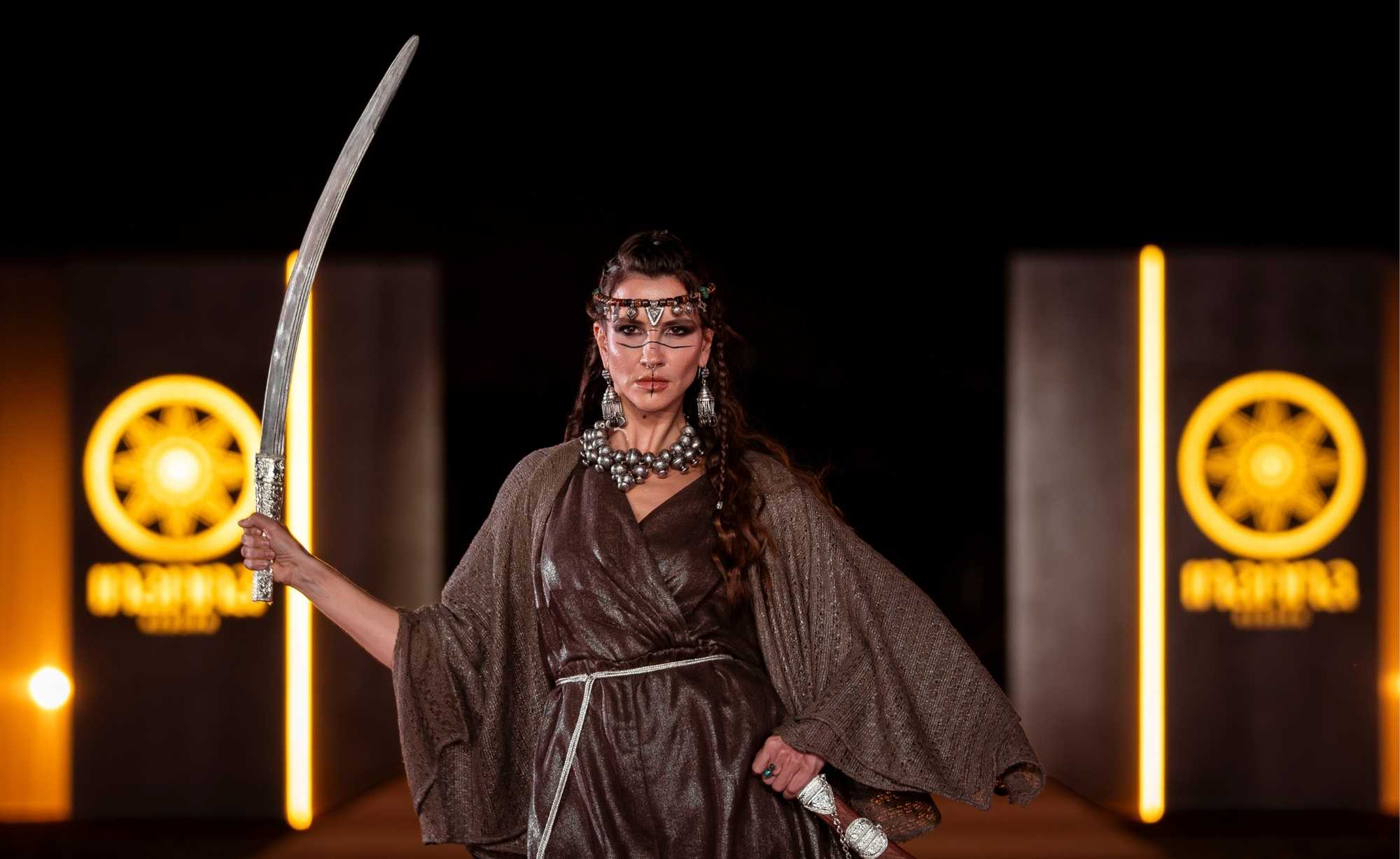
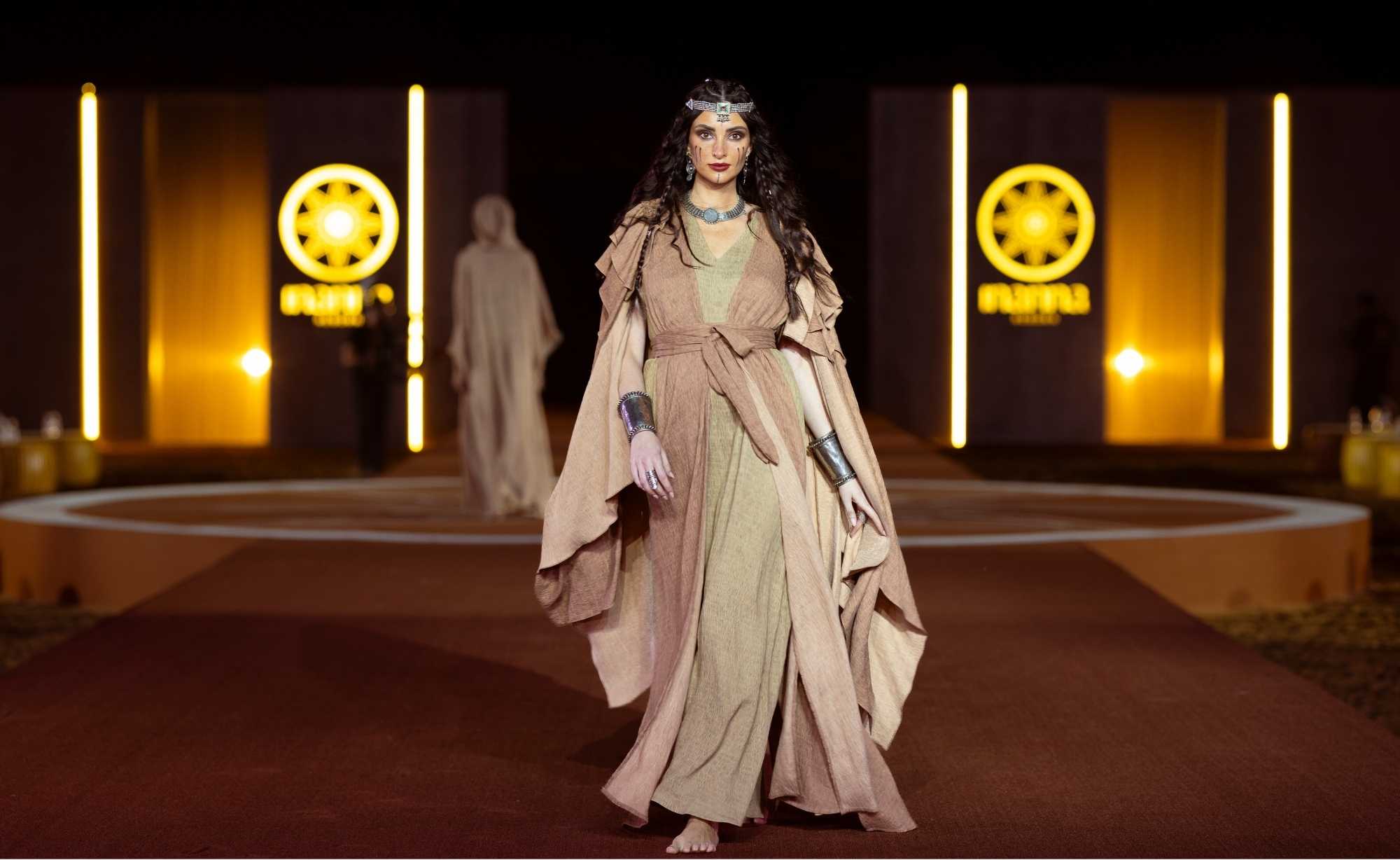
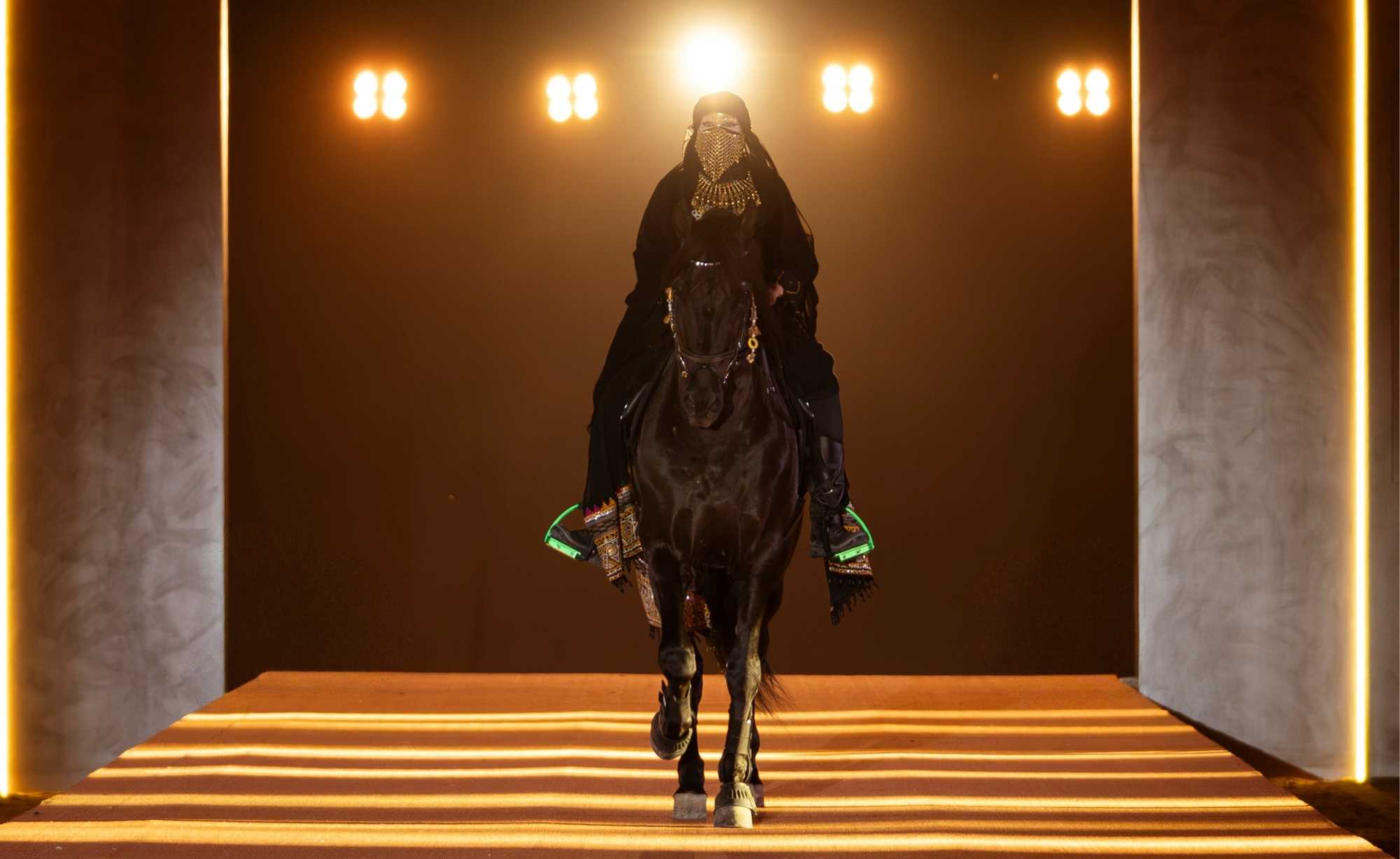 As guests arrived, the desert light shifted from gold to amber. The runway presentation unfolded beneath the open sky, accompanied by the Chamber of Inanna installation, which combined scent, sound and the evening breeze as part of the experience. Visitors were also invited into a more intimate setting known as the Caravan. Rather than a conventional showcase of seasonal trends, the event was conceived as a ceremonial experience. The presentation brought together three decades of exploration into the designer's roots and the objects and ideas that emerged from that journey.
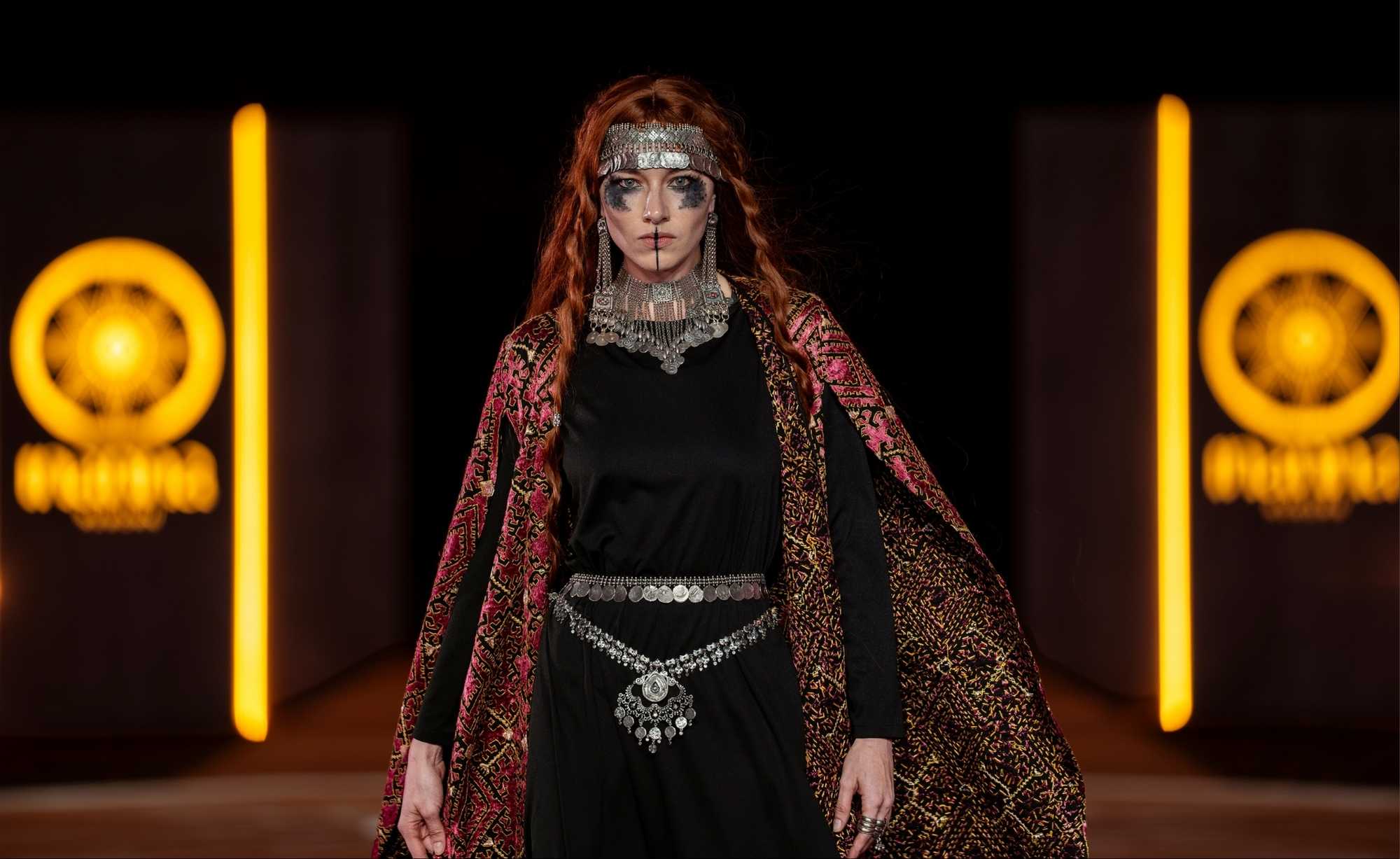
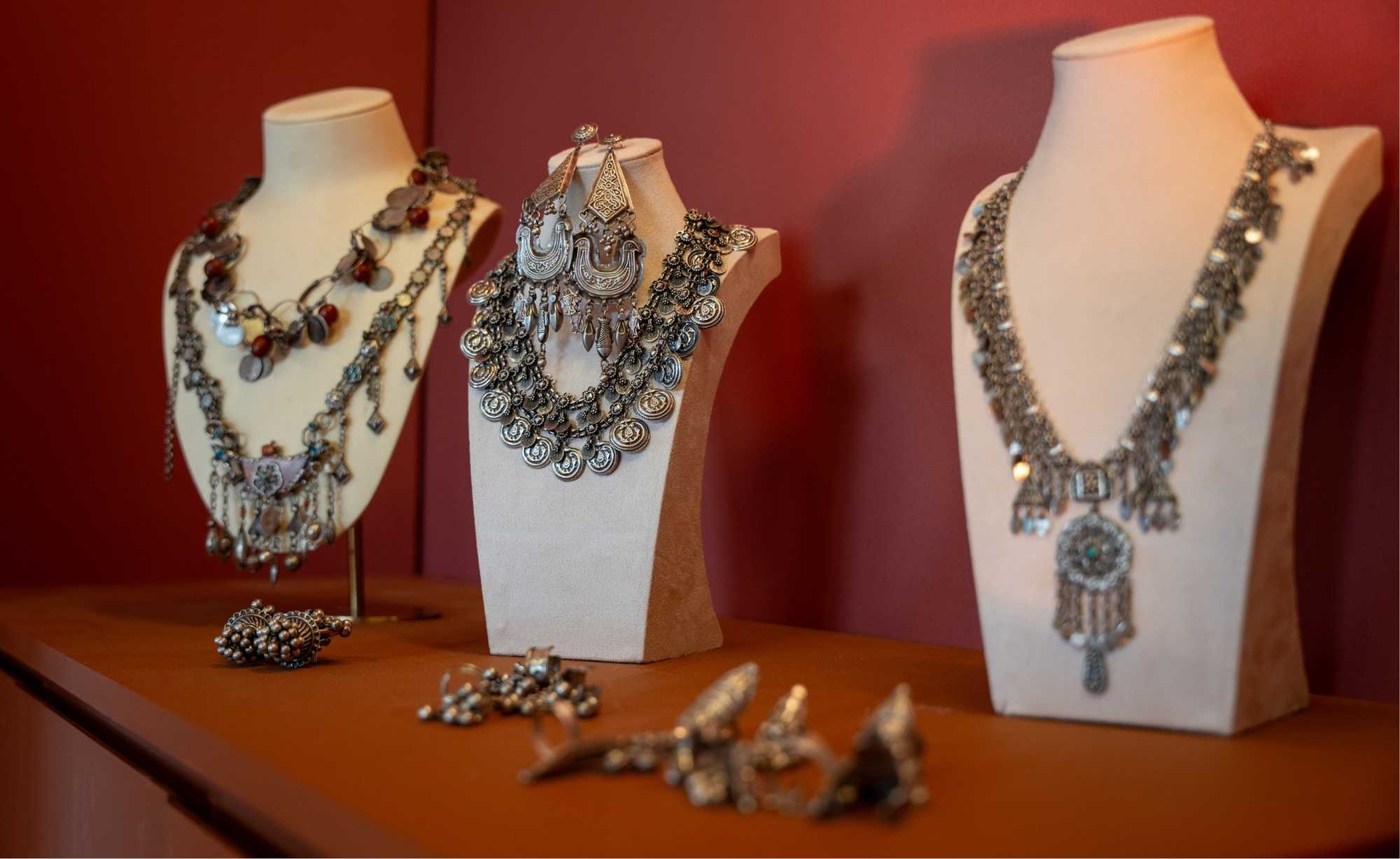
The first collection centres around the find that put Sheika Bodour on her journey: the coins from Mleiha. Dating to the pre-Islamic period, these small silver pieces are the only surviving physical evidence of some of the queens she had been researching. The Abi'el jewellery collection takes its motifs from those coins, crafted in solid silver, hand-engraved, designed to absorb use and age with the body. "Silver that ages with the body becomes personal," she says. "That is a talisman. A piece of Abi'el jewellery crafted in solid silver absorbs her touch and becomes, over time, something that is entirely hers."
As guests arrived, the desert light shifted from gold to amber. The runway presentation unfolded beneath the open sky, accompanied by the Chamber of Inanna installation, which combined scent, sound and the evening breeze as part of the experience. Visitors were also invited into a more intimate setting known as the Caravan. Rather than a conventional showcase of seasonal trends, the event was conceived as a ceremonial experience. The presentation brought together three decades of exploration into the designer's roots and the objects and ideas that emerged from that journey.
The first collection centres around the find that put Sheika Bodour on her journey: the coins from Mleiha. Dating to the pre-Islamic period, these small silver pieces are the only surviving physical evidence of some of the queens she had been researching. The Abi'el jewellery collection takes its motifs from those coins, crafted in solid silver, hand-engraved, designed to absorb use and age with the body. "Silver that ages with the body becomes personal," she says. "That is a talisman. A piece of Abi'el jewellery crafted in solid silver absorbs her touch and becomes, over time, something that is entirely hers."
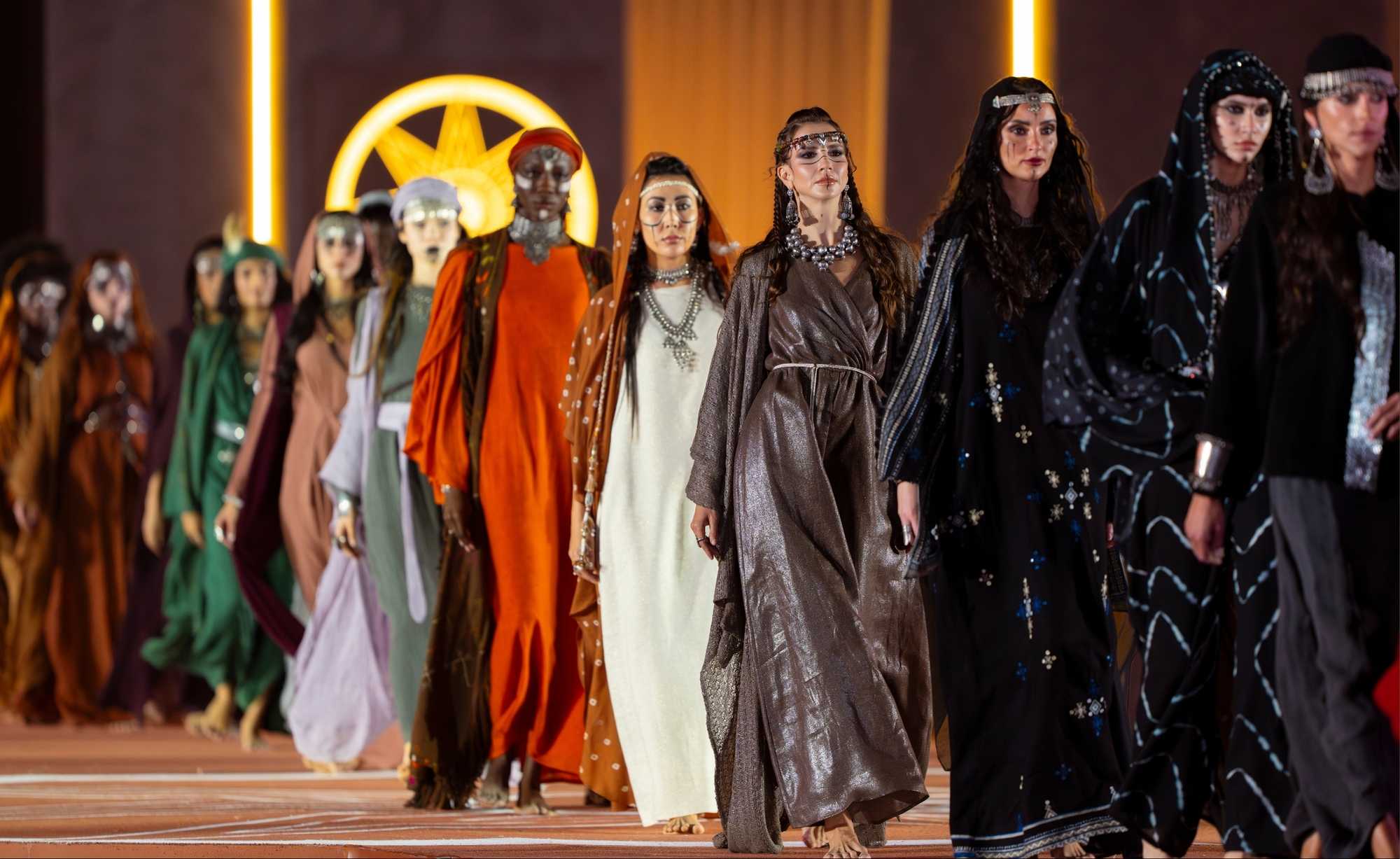 The collection spans through references to Aramaic letters, to incense routes, to Palmyra under Zenobia's reign. Working with ancient textile techniques - Ikat, Shibori, Kantha - Sheikha Bodour has integrated them into modern silhouettes that carry structural weight, the range of the collection moving from cape to gown, from architecture to silk. "We do not reference heritage," she says. "We continue it. Working with artisans means preserving a way of thinking, not just a technique. Kantha, for example, carries the belief that nothing is wasted. Everything transforms."
 Two weeks later, the brand moved inside to Bait Elowal, a century-old house that sits on Sharjah Creek, facing the water that once received dhows bearing black pepper, turmeric, dates, and fish from India, Persia, and North Africa. Built in 1925 for the Al Mazrou family, whose roots ran through Najd in Saudi Arabia, it takes its name from an Emirati word for the traveller who returns home after a long absence carrying stories and new flavours — eyes trained on the horizon for any sign of a ship to break the picture, perhaps carrying their loved ones back home.
 Renovated and opened by Sheikha Bodour in February 2025 as a restaurant, craft boutique, library, and cultural space, its interiors — smooth ivory arches, woven carpets, traditional wooden doors, Moroccan Zellige tiles in the central courtyard — are drawn from her personal collection. On the evenings of April 18th and 19th, the Inanna Reborn second capsule presentation unfolded across two nights, each element of the experience calibrated to pull a different sense into the past. A scent bar moved guests through the incense-rich notes that define the brand's Arabian Sovereign Aesthetic. Iraqi santur player Azhar Kubba performed live the santur, a hammered dulcimer of ancient Mesopotamian origin, an instrument that exists on the same historical timeline as Inanna herself. An artisan demonstrated coin engraving by candlelight, the same technique that produced the Abi'el pieces, performed in real time under the stone ceilings of a house that has been standing for a century. Celebrity stylist Cedric Haddad conducted individual styling sessions throughout, moving the brand's more mythological registers into the concrete question of how a specific woman - this woman, her body, her life - might actually wear these pieces.
"When all senses are engaged," Sheikha Bodour says of the experience, "you are no longer looking. You are also remembering."
Renovated and opened by Sheikha Bodour in February 2025 as a restaurant, craft boutique, library, and cultural space, its interiors — smooth ivory arches, woven carpets, traditional wooden doors, Moroccan Zellige tiles in the central courtyard — are drawn from her personal collection. On the evenings of April 18th and 19th, the Inanna Reborn second capsule presentation unfolded across two nights, each element of the experience calibrated to pull a different sense into the past. A scent bar moved guests through the incense-rich notes that define the brand's Arabian Sovereign Aesthetic. Iraqi santur player Azhar Kubba performed live the santur, a hammered dulcimer of ancient Mesopotamian origin, an instrument that exists on the same historical timeline as Inanna herself. An artisan demonstrated coin engraving by candlelight, the same technique that produced the Abi'el pieces, performed in real time under the stone ceilings of a house that has been standing for a century. Celebrity stylist Cedric Haddad conducted individual styling sessions throughout, moving the brand's more mythological registers into the concrete question of how a specific woman - this woman, her body, her life - might actually wear these pieces.
"When all senses are engaged," Sheikha Bodour says of the experience, "you are no longer looking. You are also remembering."