





Rania Zahra's Theatre Debut ‘A Room of Her Own’ Asks: Now What?
Rania Zahra’s theatre directorial debut at Rawabet Art Space packs Virginia Woolf’s room with inherited mother-daughter trauma.
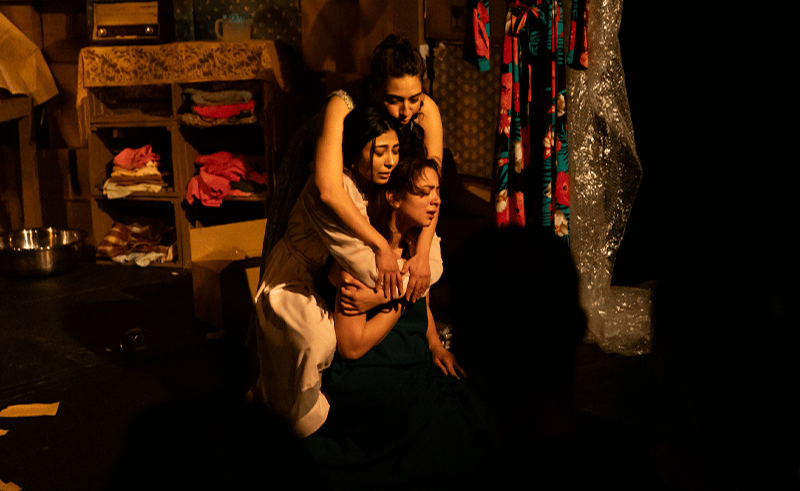
In a room constructed from cardboard boxes, empty jars, old photos, gas lamps and a radio, three generations of women in Rania Zahra’s poetic play come to terms with the lives they’ve lived, and with each other.
The women—played excellently by Dalia Shawky, Heba Yousry and Nelly Sharkawy—are a grandmother, her daughter and her granddaughter. The trio occupy the same room, but they do not see each other—both the grandmother and mother are deceased. Nevertheless, their influence on one another, which is the premise of the entire play, is immediately tangible.
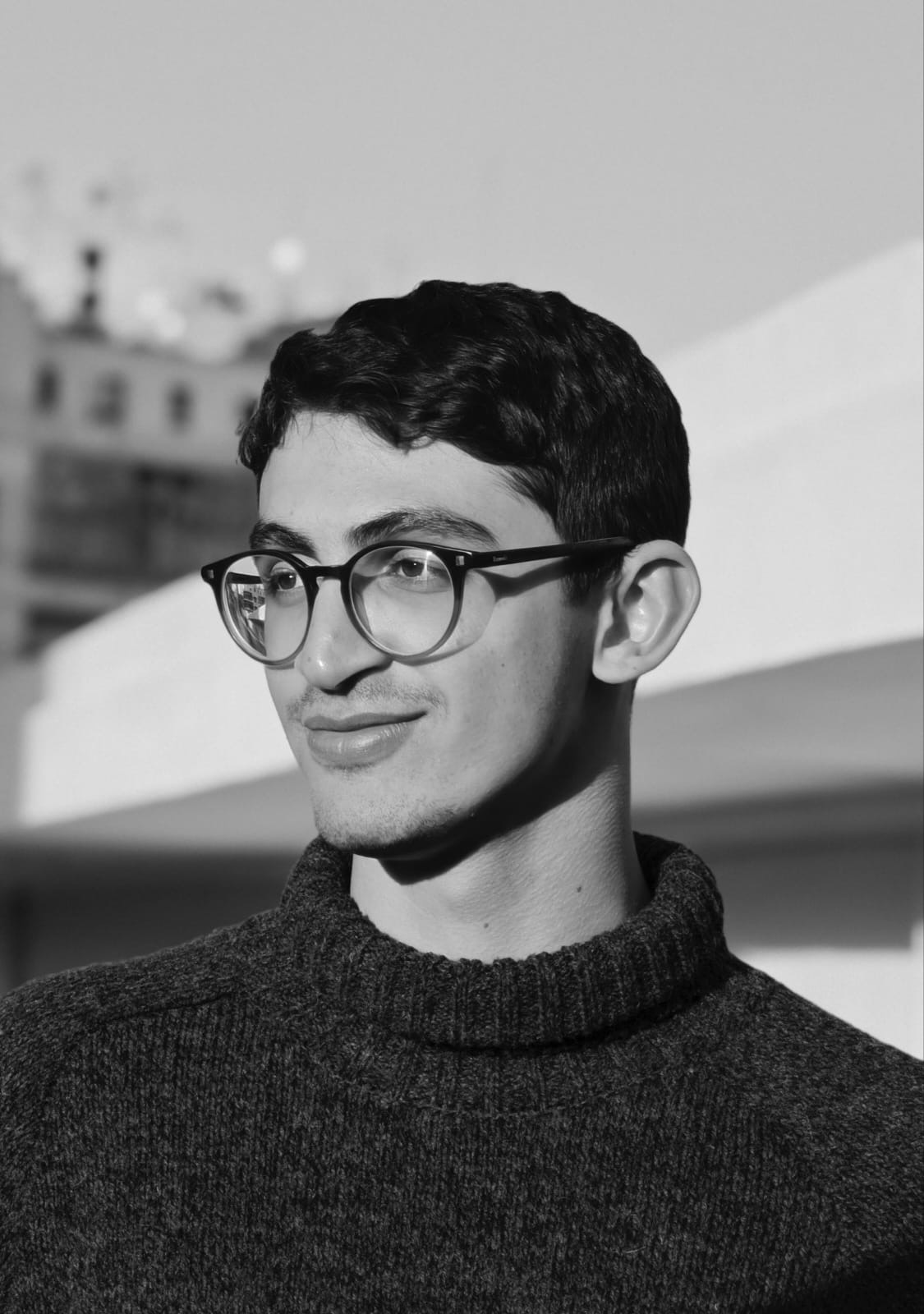
Originally an actress and writer, Zahra’s directorial debut in the theatre was born from a month-long residency she took up in Beirut in the summer of 2024. Two years later, as part of the 'Premières II × 2B Continued' programme between the French Embassy in Egypt and Orient Productions, what she’s brought to the stage is a deeply personal take on her own life, and a highly creative extension of Virginia Woolf’s seminal essay.
The most immediate nod to Virginia Woolf’s work is in the title of the play, even though the conflict revolves more around the mother-daughter relationship than economic independence or free self-expression. How did the connection come about?
I’m affected by all of Virginia Woolf’s work, and especially how her novels are like a stream of consciousness. I borrowed the title from her because I was thinking about how, in ‘A Room of One’s Own’, she talks about what’s needed for a woman to write: her own room. I think that in this age we do have this room, and we can write, but this room doesn’t always help us because we’ve become isolated inside it.
In the play, Mesada the grandmother had a connection with her neighbours and there was always noise outside. Amina the mother had a connection with the cassette, but the outside sounds have disappeared. Mariam, the daughter, is completely alone.
The progression with each new generation leads bit by bit to isolation and loneliness. You don’t know your neighbours and people don’t really interact with one another because they’ve become afraid of each other. So I was reflecting on this, and the loneliness that comes from it. I asked:
After we find a room of our own, what happens next?
The story unfolds in a very interesting way, with three characters who at first don’t see each other, but later do.
Can you tell us more about these characters?
The grandmother and mother and daughter are all the same age: 35. This is the age where I think women go through many transformations, including emotional, hormonal, and so on. They’re all the same age, but each is living it in her own era, and the audiences gets to see how these mothers and daughters have shaped each other across distance.
What happens in this play is that they have the confrontation that we’ve all never got have. We wish to confront our families with the traumas they’ve caused in us, and which they know nothing about, and in turn they confront us with the things we know nothing about.
In the play, all three women also had their own dreams, but society imposes upon them a different reality. Amina admits that she didn’t want to have children, which was not acceptable in her time. Mesada wanted to continue her studies and become a doctor, but she never could.
You’ve referred to Mariam as Rania a few times while we’ve been speaking.
Mariam is Rania, me. Amina is my mother, that’s her real name. Mesada is my grandmother, whom I never saw. So the play is partially based on these elements in my life, and of course partially fictionalised as well.
When I was selected in the programme, initially the characters were different, based on the novel ‘Hekayet Farah’ by Ezzedine Choukri Fishere. My mentor in the programme asked me why I chose it, and I said because my own story is very similar. So he said, then why use the novel? Use your own story.
It was going to be a lot of work to re-write the play because we only had four months and it was my first time ever directing a play, but I was convinced.
How else did the programme help shape the play?
The programme helped us with workshops that covered every aspect of creating a play, from funding to applying to festivals to stage management, set design, and so on. All of us in the programme were doing this for the first time.
It’s difficult when you’re working with people you don’t know, and it’s also their first time just like it was mine. You don’t know if you’re doing it the right or wrong way. It was very helpful to have the mentors there.
This being your directorial debut, what’s something you learned from this experience?
In the creative process, you don’t know from the beginning what this thing you’re doing will end up looking like. I learned you have to trust your feeling and intuition to guide you, and follow it till the end.
As someone who’s also an actress, what was it like not being able to act in your own play?
I was actually going to act in this play at first, so when the casting call went out for the mother and grandmother we were looking for people who looked like me, people with tan skin and black hair that’s preferably curly. But the programme convinced me that if I tried to both direct and act, I wouldn’t do either very well.
But as a director I got the chance to do what I wish had been done with me as an actress. Not just, ‘Here’s the script go memorize it’, but building the characters together and creating a strong connection between them so that they are like a real family.
What do you hope audiences took home with them?
I was hoping people wouldn’t come out depressed and too upset. We also wanted to give them relief, with some laughter in the middle. I wanted them to come out with questions and reflect on their life, but also have fun, not to add more trauma onto the trauma we’re already trying to break.
For me, the ending for Mariam is that Amina and Mesada help her break the cycle, but we don’t know what will happen. The question is still: will we able to overcome these traumas or not? This is the question left to the audience.
What’s next for the production?
I wish we can stage more performances so more people can see the play, and bring it as well to Upper Egypt and not just Cairo or Alexandria. I think this is a play that can go to many different places in Egypt, and even abroad. I would love to take it on tour.
And for you?
I’m still reflecting on the process because it was long and very hard. I was playing the role of the director the whole time, but when I saw the final show in front of me, it still touched me. When it was no longer in my hands, it really hit me hard and I cried. So this is something I have to process alone.
A Room of Her Own will debut in Alexandria at the Jesuit Cultural Centre on May 23rd, 2026. The production is part of Premières II × 2B Continued, a collaboration between the French Embassy in Egypt and Orient Productions, supported by FEF-Création.
- Previous Article SceneNoise x Amsterdam Dance Event Present CROSSFADE: Egypt
- Next Article The Abandoned Architecture of Villa Badran by Gamal Bakry
Related Articles
Trending This Week
-
 Oct 15, 2026
 -

-

-