



This Art Exhibit in Cairo Brings Nubia's Nature & People to Light
Traces of Nuba came to life after a one week residency on the Nile in the southern Egyptian region.

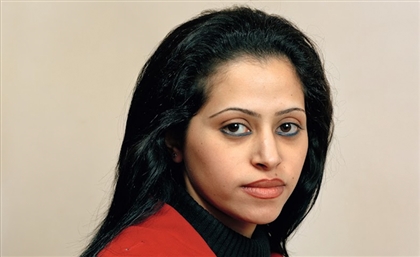
When Sabrine El Hossamy, one of Egypt’s leading percussionists, talks about Nubia, she doesn’t start with monuments or mythology. The multidisciplinary artist talks about the southern Egyptian region’s unique nature and geography, its people and their softness.
She mentions their sense of pride and how it doesn’t cancel out the deep humility they have, and about their generosity, how it feels disproportionate to what they materially have. “I have a very soft spot for Aswan and specifically the Nubians,” El Hossamy, known by her artistic name Sabrina Darbuka, tells CairoScene. “Maybe the Nile made them softer.”
Nubia is a place she has returned to for nearly a decade - sometimes to work, sometimes simply to be - and it’s a place that has continued to inspire her work. Nubia and its people anchors her latest video art piece,
'Traces and Ripples', which was recently shown as part of the group exhibition Traces of Nuba. Traces of Nuba presents new works by eight international and Egyptian artists, all inspired by a one-week residency aboard a Nile dahabeya in Nubia. The showcase brings together the artists who are all connected by a shared reverence for Nubia’s landscapes and communities, inspiring them to present Nubia in a new light.
“In contrast to the historical perception of Nubia as a land of displacement and plunder, this exhibition celebrates the generosity of the land,” explains Traces of Nuba curator Taya Elzayadi. “A land that gives through its stunning landscape, its history, mythology and people.”
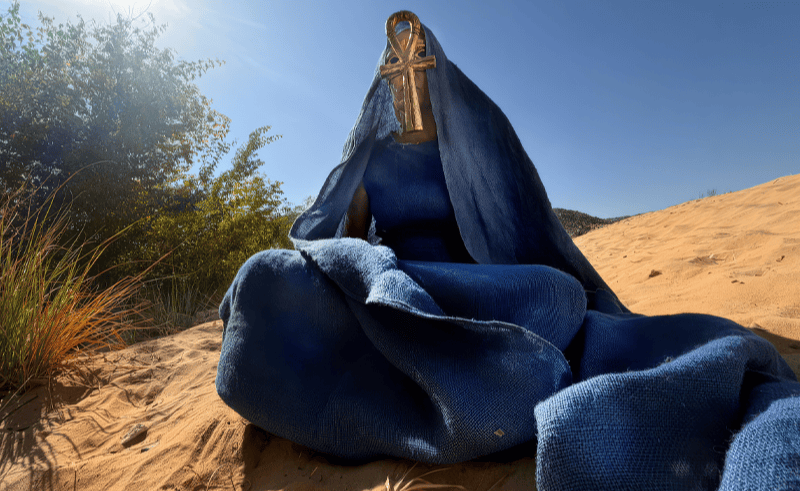
Across sculpture, painting, installation, and video, the exhibition doesn’t try to present a unified style. The works range from mythological figures to shifting river paths and scenes of childhood along the Nile. What overlaps is the sense of encounter. Many of the artists speak about Nubia less as a subject and more as an influence; the terrain, the light, and the pace of life shaping what they produced after leaving it.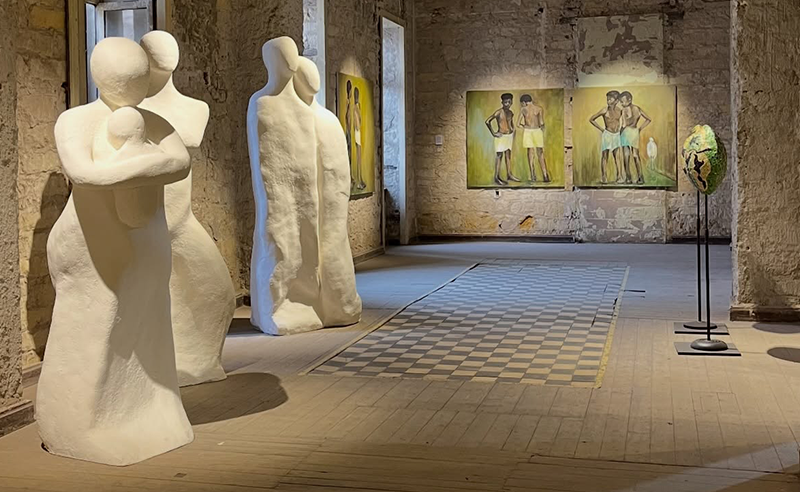 Recurring themes include motherhood, resilience, and childhood innocence in the paintings of Nada Mobarak and the video art of Hossamy. Nubian mythology is reimagined in Hedayat Islam’s monumental expressions of Malayket El-Bahr and Karen Williams’ female crocodile goddess inspired by Sobek. Meanwhile, Aurelie Berry, Rachel Goodison, Juliet Williams, and Katia Berezovskaya respond directly to the desert, sun, palms, and the eternal presence of the Nile.
The title of the exhibition draws from the ancient word “Nub,” meaning gold, not as ornament, but as something buried and searched for.
For El Hossamy, whose background is primarily in music and percussion, the shift into video and film has been gradual but deliberate. Her recent projects lean on ancient Egyptian symbolism, but her focus here is less on temples and more on memory, how landscapes store it, and how people carry it with them.
Traces of Nuba runs from February 3rd, 2026 to February 9th, 2026, at Access Art Space in Downtown Cairo.