





Sudanese Photographer Haneen Majdi on Blending Street With Fashion
Sudanese photographer Haneen Majdi broke down her portfolio, images that glide across street and fashion house aesthetics, while offering a visual vocabulary to our emotions where words fail.
Haneen Majdi loves to sit and watch a scene unfold before even picking up her camera. She notices the way a man sips his tea while watching a football match, the details of the chair itself, and, of course, the clothes he is wearing. For Majdi, street photography seeps into fashion and vice versa. Both freeze a moment, and a culture, in its frame.
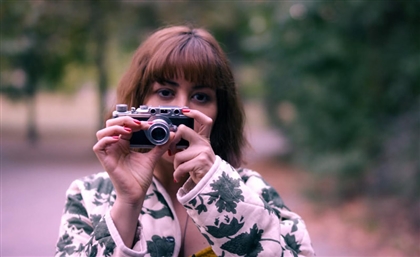
27-year-old Majdi is a Sudanese photographer and videographer born and raised in Jeddah. She started her career in fashion photography nearly 10 years ago, which led her to the streets, where she loves to capture any scene that tells a story and understand the person behind her lens. Majdi walked me through some of those images—where the grit of the street bleeds into the glamour of high fashion, and the approach to both gives way to a deeper exploration of her own emotions.
L: What are the stories that you want to tell through your photography?
H: Anything that captures my attention. I see myself as an observer, and street photography taught me how to observe more—people's behavior, what they're doing, whatever tells a story. I like to show how people are living and capture certain moments that show emotion. I have photographed different people from different nationalities, and I really like to discover new communities and new cultures every time I go down into the streets and shoot.
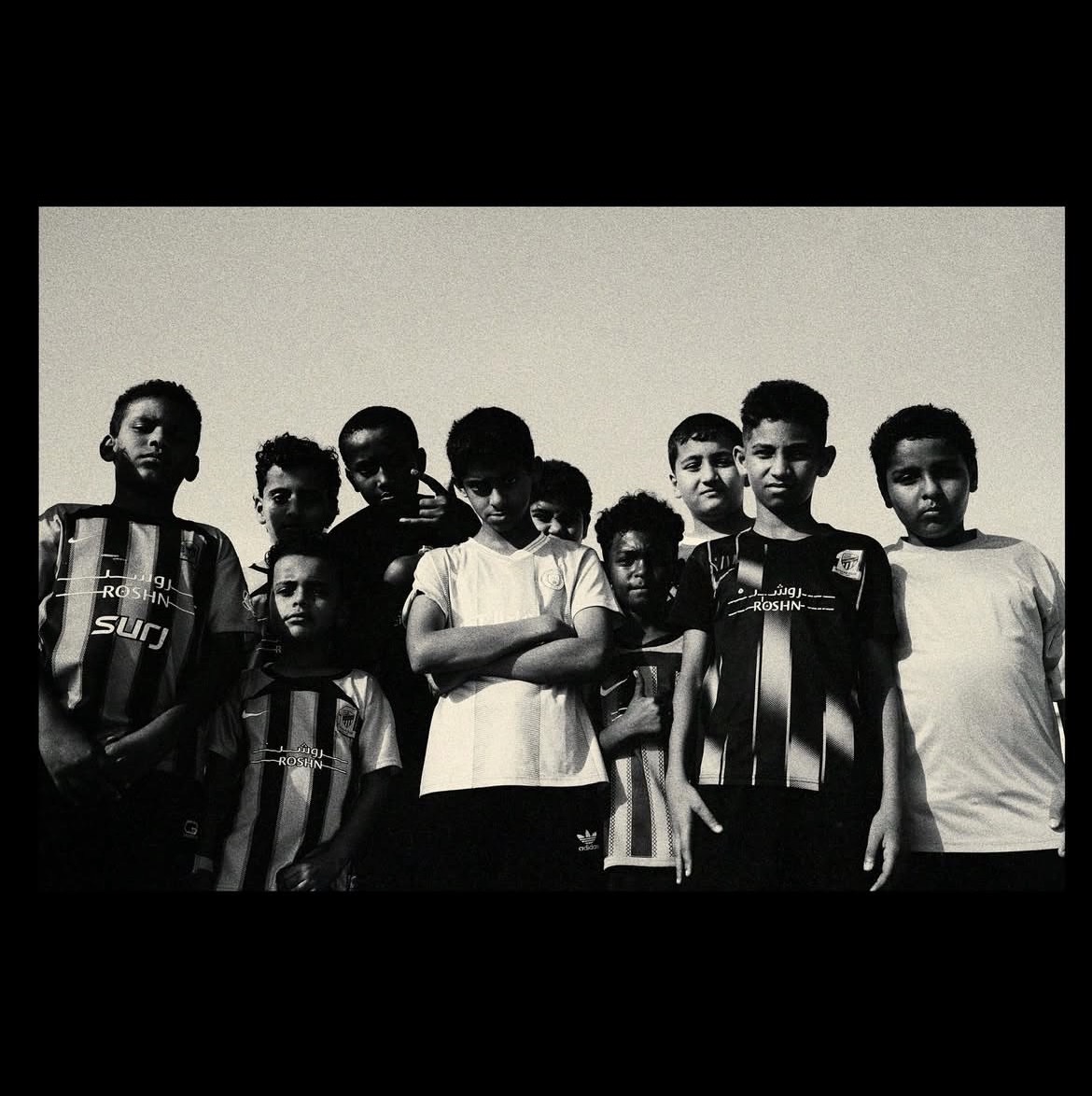
Kids playing, for example, gives a nostalgic feel. I captured kids playing in a neighborhood here called Al-Ruwais. It's an old neighborhood that is currently being renovated—they're removing everything, every building. So, I love to capture the kids and their happy moments, and playing football is a big part of the community there.
L: What is an example of a picture that helped you learn about a new culture or connect with somebody?
H: I shot in El-Balad (downtown) the whole 30 days of Ramadan, and it was something else. Everyday there was something new—activities, street food, people selling things on the street. I think after this project, I went to other streets and started to shoot other people, but like I said, I always had it in me.
I think the strongest example was when I captured the Sudanese community watching the AFCON game in Jeddah, because it showed Sudanese culture, and also, showed how the community is sticking together—the details of the clothes they’re wearing, the tea they're drinking, the way they sit, and the chairs they're sitting in. They're always together, even if they don't know each other.
-161-eb78cbaa-f17b-4255-8f58-3453445463ac.jpg)
Despite the national team training abroad due to the ongoing civil war that began in 2023, Sudan beat Equatorial Guinea for their first AFCON (Africa Cup of Nations) win since 2012. They were eliminated when they lost to Senegal in the 16th round.
Our project wasn't about the game. It was about why people keep watching, even if they lose. It's to keep encouraging Sudan given what they are going through right now with the war.
L: You said that you've always been an observer. If you're advising somebody on how to be a good observer, what details would you tell them to look for?
H: Always go to the place where you want to shoot, but don't start right away. Just sit and watch people, how they interact with each other. Look at the buildings, look at the people, look at everything, and you're going to find new, interesting things every single time, even if it's the same place. But you need to just sit for a while and just observe.
Look for the buildings, for the details. The people—how they interact with each other. The buildings—how they’re built. The windows—if they’re big or small. The little details that make a real difference in street photography.
I also like to focus on how people wear their clothes. I like to mix street photography with fashion photography, even if it's not a fashion brand, because people wear different clothes depending on their culture. So you're bringing a whole culture into a picture.
L: What's the difference between fashion and street photography?
H: I would say there is more to capture in street photography. I feel like it's more of a documentation—whether it's people or the beauty of the streets themselves. Fashion photography is similar, but it's more focused on the fashion itself. You always have to focus on the clothing piece that you're shooting, not the person. But I love to mix street photography with fashion photography, and nowadays, I see more artists and photographers doing the same—bringing culture and street life into fashion.
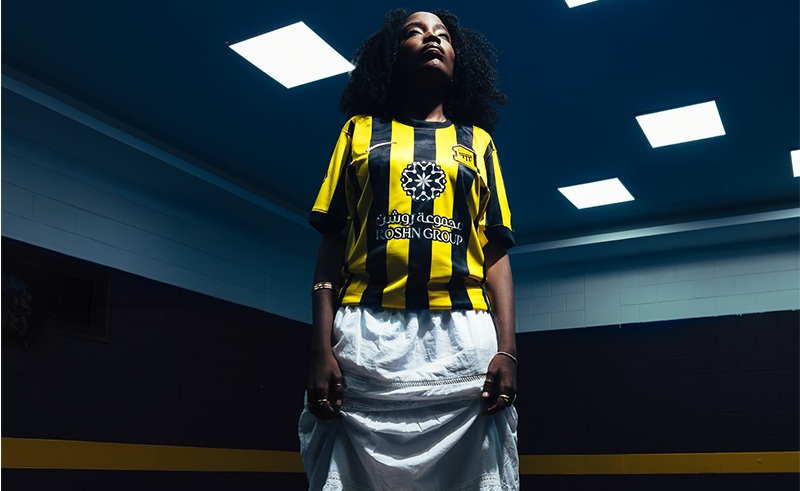
I did a photoshoot with Nike for the Al-Ittihad football club here in Saudi of their new jerseys, but we shot it in the streets to show that we're doing this in Jeddah. It’s fashion photography, but we're also showing the jerseys where they should be, where they belong.
L: Do you have any other examples of projects that have combined those elements? I see you’ve also ventured into music photography.
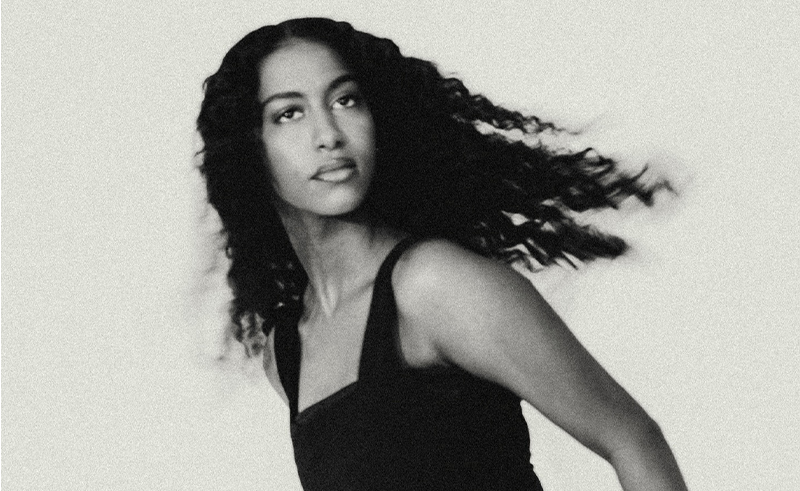
H: Yes—I’ve done photoshoots for Saint Levant, Mishaal Tamer, Dafencii, Elyanna and many other local artists. I have also done concert photography at festivals like MDLBEAST SOUNDSTORM and XP Music Futures.
L: I'm curious about the series of this woman shaving her head.
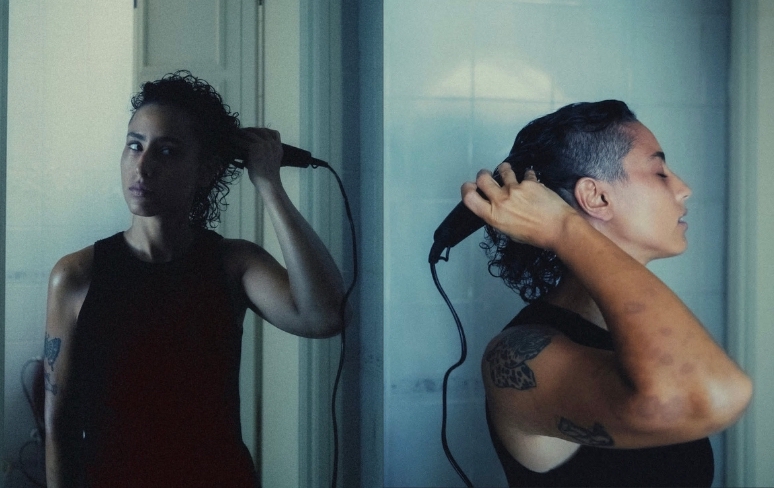
H: This one really touches my heart because she's also my friend, her name is Laila. She invited me to capture her shaving her head as a way to let go of all the bad memories and everything that had happened in the past year. She did it bravely in front of the camera.
L: That's amazing you got to capture that moment and be in the room with her. How did that feel for you?
H: I felt bravery, to be honest. It was a really strong feeling. During the shoot I didn't say a word. She didn't say a word. It wasn't planned. There was this shivering feeling, I don't know how to explain it. But it was really touching, really strong, and really brave of her, because usually we girls really care about our appearance and our hair, and it's really hard for us just to shave it off, you know?
I wanted to capture her story, and the feelings. I was hoping for the pictures and the video to deliver the feelings that I was feeling that day. Everyone who saw the video, every one of my friends kept telling me, this is just, ‘wow’. The whole shoot was 15 minutes max.
L: Why did you decide to color the last photo black and white?
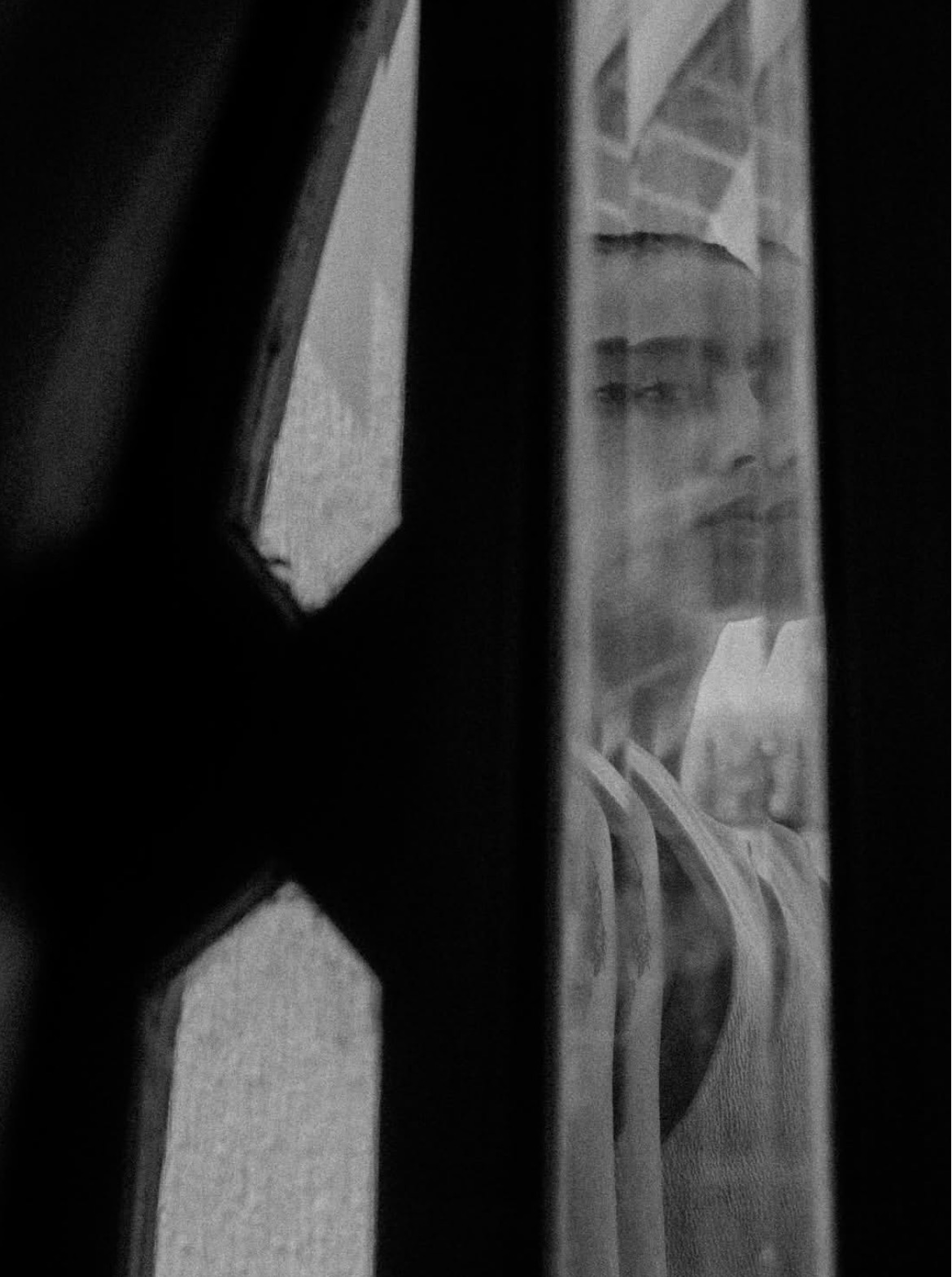
H: I feel like black and white images always tell you more, deeper feelings. When she was shaving her head, and the hair just kept falling, and she was almost bald—I'm not gonna say there was an awkward silence, but we were, like, oddly silenced. And black and white always seems silenced, in a way.
Colors are very important to show certain feelings and certain emotions. I don't like to repeat the same colors, because each picture has its own identity.
There is another project that is similar to Laila's, that captures sadness. The idea was to show her getting through a difficult day. I was going through a hard time, and I wanted to reflect it through my pictures.