





Late Period Papyrus Restored & Displayed at Egyptian Museum in Tahrir
An official was referred for investigation over delayed maintenance, while darker areas were identified as original ageing features, not mould.

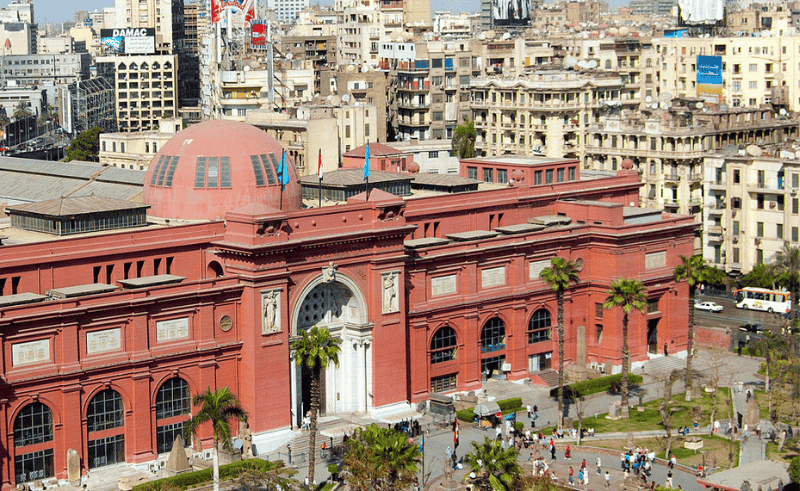
The Egyptian Museum in Tahrir has completed conservation and restoration work on the Late Period papyrus of the scribe User-Hat-Mes, returning the artefact to public display.
According to the Supreme Council of Antiquities, the papyrus was temporarily removed from its display case and transferred to the museum’s Papyrus Conservation Laboratory.
A specialised team carried out cleaning and treatment using scientific methods aligned with internationally recognised conservation standards before reinstalling the piece.
Secretary-General Hisham El Leithy stated that the papyrus had shown signs of airborne fungal activity, visible as small black spots that caused temporary discolouration. He noted that such occurrences are common in organic materials such as papyri and are routinely addressed through conservation procedures.
The fungi did not affect the artefact’s structural or chemical integrity and were not classified as destructive microbiological infections. An official responsible for failing to conduct scheduled periodic maintenance in a timely manner has been referred for investigation, in accordance with established conservation protocols.
Ali Abdel-Halim, Director of the Egyptian Museum in Tahrir, said that some darker areas visible on the papyrus are original features resulting from natural ageing and prolonged burial prior to its discovery, rather than mould.
Related Articles
Trending This Week
-
 Apr 26, 2026
 -

-

-