



Cairo Food Week Puts the Kitchen Back at the Centre of Conversation
At KOOK in Zamalek, CFW Conversations gathered chefs, growers, founders and financiers around a conceptual Kitchen Table as the four-year-old platform entered its most expansive chapter yet.
The food world has always conducted its most revealing conversations somewhere adjacent to the official programme. Usually in the hidden corners of a dimly-lit restaurant or in near a stove in a closed kitchen when everyone on the floor is softly sipping on their third wine pairing.
Cairo Food Week appears to have decided that this peripheral conversation deserved the main event.
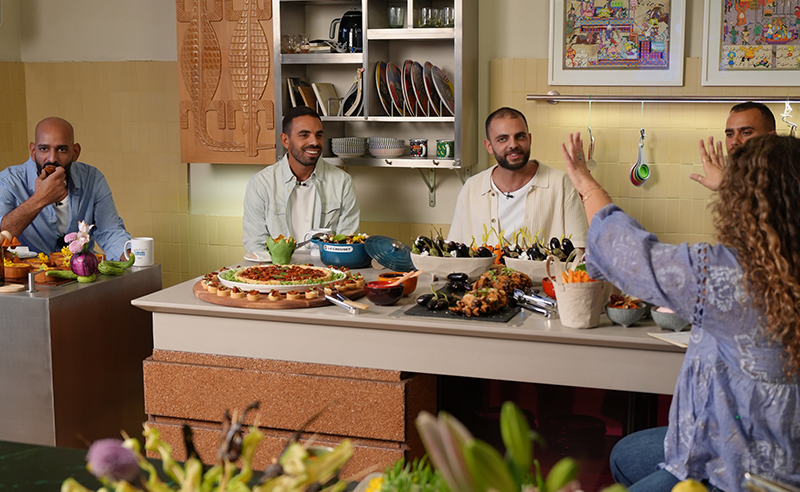
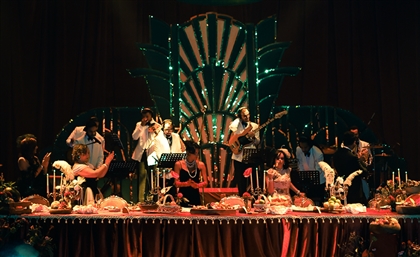
On September 26th, CFW Conversations moved into KOOK, the social kitchen in Zamalek, for a day that gathered chefs, growers, founders, financiers and the various people responsible for turning the abstractions of a food scene into an operating one. There were microphones and moderators, but very little of the ceremonial distance usually associated with them. Speakers gathered around what CFW called the Kitchen Table, eating and drinking as the conversations unfolded, close enough for the proceedings to acquire the conversational elasticity of a long lunch rather than the rigidity of a panel.
Curiously, this new intimacy arrived just as CFW Conversations was becoming more expansive. The platform began in 2023 with a single, largely industry-facing discussion about the demands and frustrations of the business. By 2024, it had stretched into a week-long salon, drawing the culinary world into conversation with the industries surrounding it. In 2025, it assumed a more substantial public life with a full day at the Grand Egyptian Museum. This year marked another enlargement: Conversations is increasingly being developed not as the discursive appendage to Cairo Food Week - the part where everyone stops eating and starts talking - but as a platform with an identity and future of its own.
The evolution is consistent with what has happened to Cairo Food Week more broadly. Founded by Flavor Republic in 2023, CFW has spent four editions expanding the definition of what a food festival in Cairo might contain. By 2026, its programme extended across the city through chef collaborations, restaurant takeovers, exhibitions, cultural encounters and dinners, placing visiting international chefs inside Egyptian kitchens and Egyptian culinary narratives within considerably larger conversations about culture, agriculture, design and place. Tables of Egypt, staged at the Grand Egyptian Museum, translated the country's landscapes and food rituals through photography, installation and cooking. Elsewhere, restaurants became temporary laboratories for chefs who ordinarily worked continents apart.
Conversations concerned itself with the machinery beneath all of this.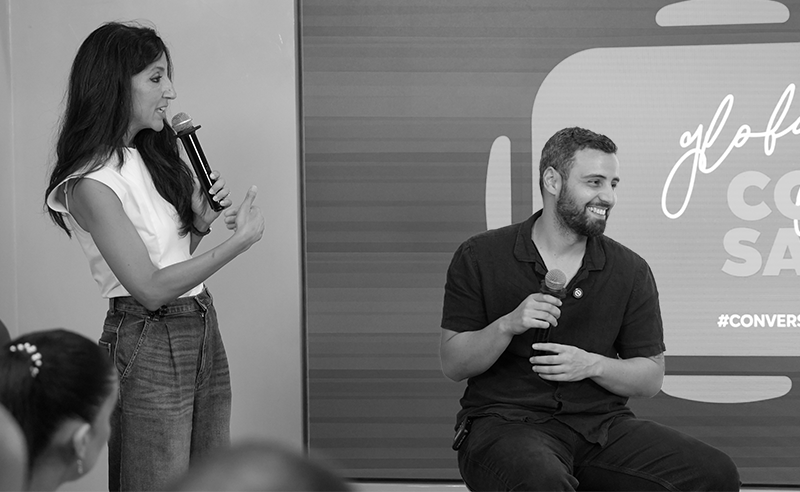 A restaurant culture, after all, is an elaborate feat of interdependence masquerading as dinner. Before a plate reaches a table, somebody has grown what is on it, somebody else has worried about whether enough of it can be grown next month, another person has designed the room in which it will be eaten, and several people have made financially consequential decisions about whether the entire enterprise ought to exist. The chef may be the most visible figure in this arrangement, but visibility and infrastructure are not the same thing.
At KOOK, that idea was rendered spatially.
Kesmat El Mehelmy - the brain behind Cake Café and Catering by Kesmat - worked with KOOK founder Hala Saleh to create the spaces and dining experience around the Kitchen Table concept, exchanging the orthodoxies of conference design - elevated stage, obedient rows, speaker on one side and listener on the other - for something more porous. A communal tablescape became the organising architecture of the day. Artisanal bites were intended to accompany rather than interrupt conversation; drinks remained within reach; a pantry-like backdrop borrowed its visual vocabulary from the domestic and professional kitchen. The design did not merely make the event prettier. It altered the social geometry of it, collapsing the little hierarchies that emerge almost automatically when one person is placed on a platform and everybody else below.
KOOK was particularly well cast for the experiment. The Zamalek space describes itself as a social kitchen rather than a showroom containing one, built around the older proposition that kitchens are places in which people do rather more than cook. Cairo Food Week had tested this before: when Asma Khan came to the festival, she cooked there from seasonal Egyptian produce sourced from local souqs, without measurements, adjusting the meal according to taste as it developed. For Conversations, the kitchen itself became part of the editorial apparatus.
The morning began, fittingly, at the point before food becomes food: the farm.
Grown Differently examined the increasingly intricate negotiation between what contemporary Egyptian kitchens would like to cook and what Egyptian agriculture can reasonably be expected to provide. Nature Works founder Abdelrahman Nassef grows lettuces, spinach, herbs and microgreens through aquaponics outside Cairo, using a system designed around the conservation of two things Egypt does not possess in casual abundance: water and cultivable land. Tru Farms' Hesham Shalash approaches the problem through boutique, pesticide-free agriculture, supplying chefs and pop-ups with specialty produce ranging from heirloom tomatoes and shishito peppers to kale and herbs.
On the other side of the equation sat COOLCAT founder and chef Hazem Abdelghany, whose menus are sufficiently mutable that the kitchen bends towards the crop rather than insisting the crop conform to the menu, and Akram Lotfy of The SAGE Experience, who occupies the useful intermediary territory between what chefs imagine and what can actually be sourced. With Aliyah Tarek moderating, “farm-to-table” was relieved of some of its pastoral romance and returned to its practical constituent parts: water, land, seasonality, quantities, consistency and the occasionally unreasonable desires of chefs.
If the first conversation reconsidered what must exist behind a restaurant, Meet the Next Gen entertained the more mischievous possibility that the restaurant itself need not exist at all.
The traditional trajectory of a serious food business once seemed relatively settled. Success eventually acquired an address: a dining room, a kitchen, a staff, reservations, linen, rent and all the expensive permanence implied by having one's name above a door. The younger founders represented in Meet the Next Gen have begun disaggregating that model, taking one narrow pleasure traditionally contained within the restaurant - the catered table, the sandwich, the pastry programme, the concentrated ritual of good coffee - and allowing it to constitute the business itself.
The CFW deck describes this generation as having chosen “the format before the menu,” which gets neatly at the inversion. The restaurant is no longer necessarily the culmination towards which every smaller culinary enterprise is expected to graduate. For some founders, specificity is not an interim condition but the proposition: fewer moving parts, greater attention to the part that remains, and considerably less devotion to the romantic notion that seriousness must eventually be expressed through a dining room.
By midday, Cairo Food Week had turned the examination inward.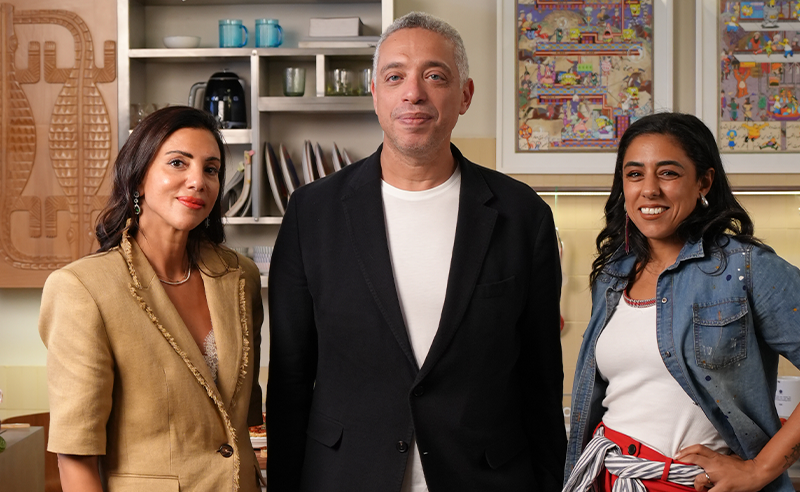 The Story of U placed MO4 Network co-founder Amy Mowafi across the table from Valu founder and CEO Walid Hassouna and Flavor Republic and Cairo Food Week co-founder Hoda ElSherif. The subject was the institutional biography of Conversations itself: how something that began as an ancillary gathering within a nascent food week accumulated enough purpose, partnership and audience to become a platform being discussed on its own terms.
ElSherif founded Cairo Food Week in 2023 and initially financed it herself, setting out to make the case that Egypt's chefs and food stories belonged within a global gastronomic conversation. Valu backed the project while it was still, as the programme puts it, “a week of dinners and an ambition,” and subsequently worked with CFW to build Conversations that Add Valu. Beneath the tidy retrospective was the less tidy reality familiar to anybody who has attempted to turn a cultural idea into an institution: money has to arrive before certainty does, partners have to believe in scale before scale exists, and each successful edition creates the mildly inconvenient expectation that the next one will somehow become more ambitious.
That history also explained why Conversations now occupies more territory within CFW. A food festival does not technically require a discursive life. It can assemble excellent chefs, produce excellent dinners and allow the plates to make the argument. Building a conversation platform proposes something more complicated: that a food culture should possess the vocabulary to examine itself, including the economics, failures, supply chains and questions of identity that are rather less easily arranged beneath flattering restaurant lighting.
By late afternoon, those questions of identity had travelled from Cairo to Sydney and back again.
Homecoming brought Egyptian-Australian chef Paul Farag together with Flavor Republic's Reem Khamis for a conversation about what happens to Egyptian food once geography interferes with it. Farag began cooking at fifteen, trained across Australia and Europe and, years later, found himself reading tenth-century Arabic cookbooks and reconstructing recipes from a culinary inheritance he had once resisted being professionally reduced to. His cooking in Sydney was never presented as an immaculate exercise in historical authenticity; it was a version formed by distance, migration, professional kitchens and the peculiar clarity with which people sometimes begin examining home only after leaving it.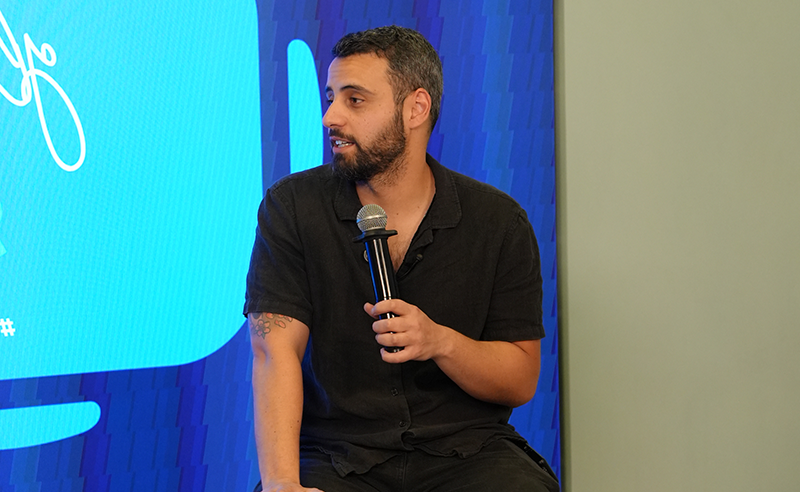 The conversation arrived at a contradiction familiar across the region. Arab food has acquired considerable cultural currency abroad: diaspora chefs interrogate it, ambitious restaurants reframe it, publishers commission books about it and diners encounter ingredients once confined to family kitchens as objects of fashionable curiosity. At home, meanwhile, another anxiety persists - over what is disappearing through familiarity, what has been flattened into shorthand and what “authenticity” can reasonably demand of a cuisine that has always moved with the people cooking it.
By then, the programme had travelled an impressive distance for a group of people who had largely remained around the same table. Aquaponics had given way to entrepreneurship; entrepreneurship to finance; finance to the history of Cairo Food Week; and Cairo Food Week to a chef in Sydney consulting medieval Arabic manuscripts. Heirloom tomatoes, consumer credit and tenth-century recipes had, improbably but not incoherently, become parts of the same conversation.
That breadth is perhaps the most useful measure of how CFW Conversations has grown.
Its expansion is not principally a matter of accumulating speakers, sessions or square footage. It lies in enlarging the cast of people understood to have authorship over a city's food culture. The chef is there, but so is the farmer trying to anticipate what chefs will want next season; the entrepreneur questioning whether hospitality still requires a permanent room; the financier deciding which ambitions deserve capital; the designer determining how strangers will inhabit a table; and the diaspora cook discovering that distance can complicate an inheritance without necessarily weakening it.
Which is why the Kitchen Table proved more than an aesthetic conceit.
Kesmat El Mehelmy and Hala created a physical environment that expressed the paradox of this year's Conversations rather elegantly. The platform had become broader in scope, more assured in its identity and more ambitious about the life it might have beyond Cairo Food Week. Yet the space in which that ambition was articulated became deliberately less monumental with people brought closer together rather than arranged at greater scale.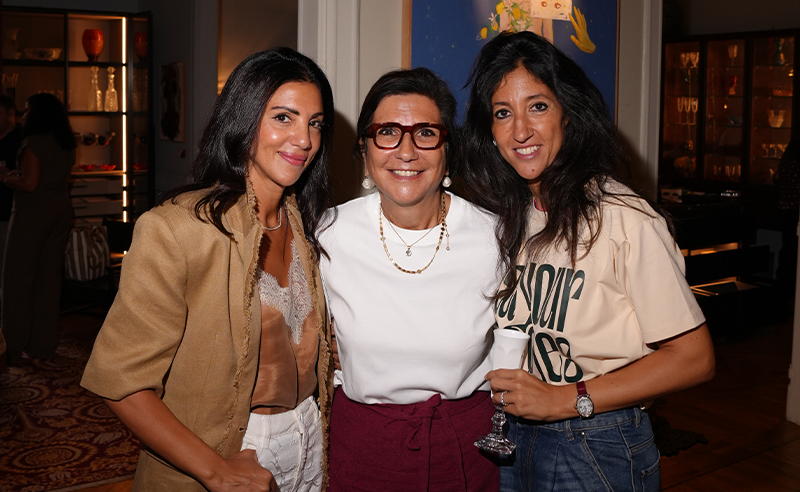 There were still microphones and schedules and the unavoidable mechanics of a programmed event. But there were also plates between speakers, glasses within reach, interruptions, digressions and the particular informality produced when everyone has been sitting around the same table long enough for its arrangement to cease feeling significant.
After four editions, CFW Conversations is becoming a considerably larger proposition. It just no longer requires a larger stage to prove it.
Related Articles
Trending This Week
-
-
 Oct 15, 2026
 -
-