





Altin is Designing Futuristic Furniture From Tunisian Ancient Crafts
Founded in Tunisia in 2023, Altin produces limited-edition furniture and lighting that move between sculpture and function, grounding contemporary design in clay, craft memory and experimental making.

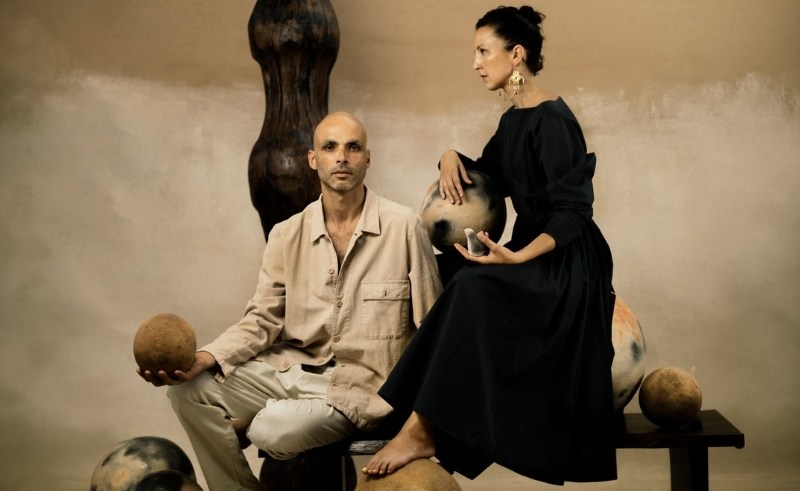
The word Altin comes from Al-Tin, Arabic for earth or clay. For Yasmine Sfar, the Paris-trained interior architect who co-founded the Tunisian studio in 2023 with her partner, civil engineer Mehdi Kebaier, this name is their entire worldview.
Altin makes limited-edition, numbered furniture and lighting that sit at the threshold between sculpture and function. Their debut collection, Orbite, unveiled at Maison & Objet in Paris and later at THEMA, comprised eight pieces built from four materials: clay, wood, metal, and sea rush. All of them are rooted in Tunisian craft traditions and all of them taken somewhere those traditions hadn't gone before.
The concept behind Orbite is about time - specifically, how past, present and future are never really separate. "I am personally obsessed by the question of time," Sfar tells SceneHome. "When you bring a memory to mind, you don't have a precise memory, you have an idea you created from the past. But you can collect it and use it in the present. And so with that, you can shape the idea of your future."
This is why Orbite draws as much from Jules Verne and Ziggy Stardust as it does from Berber kilns. Sfar is obsessed with the idea that humans have always imagined futures they couldn't yet reach and Orbite, at its core, carries the same impulse. "It is very human to want to discover the other, to project yourself into unknown worlds," she says. "And it is also a way of discovering yourself." The collection just happens to want to do it through clay and rush rather than rocket fuel.
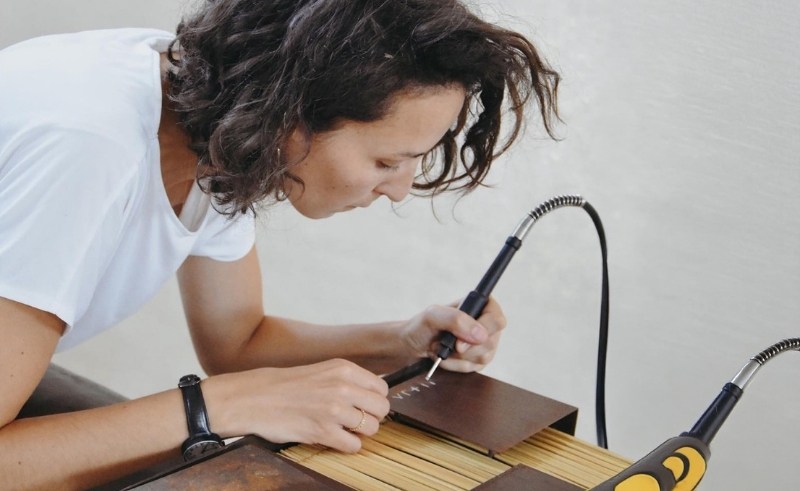
One of the more radical things Altin has done is hand-carve palm wood. Palm is fibrous - not really a wood in the traditional sense - typically split into strips for rattan furniture and nobody carves it. Sfar and Kebaier produced a piece four metres wide and two and a half metres high, assembled from 32 individually shaped sections, each one unique, together forming what Sfar calls a landscape. They'd previously finished palm surfaces smooth - so smooth that people would stand in front of the pieces completely confused about what they were looking at, confusing it for leather.
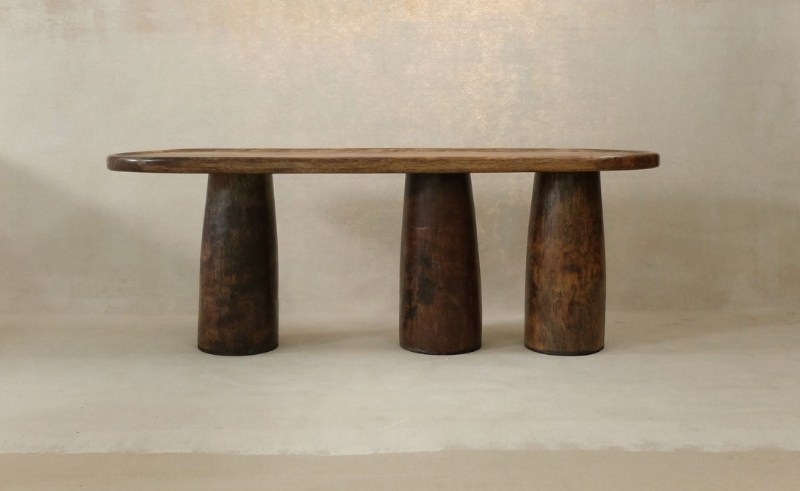
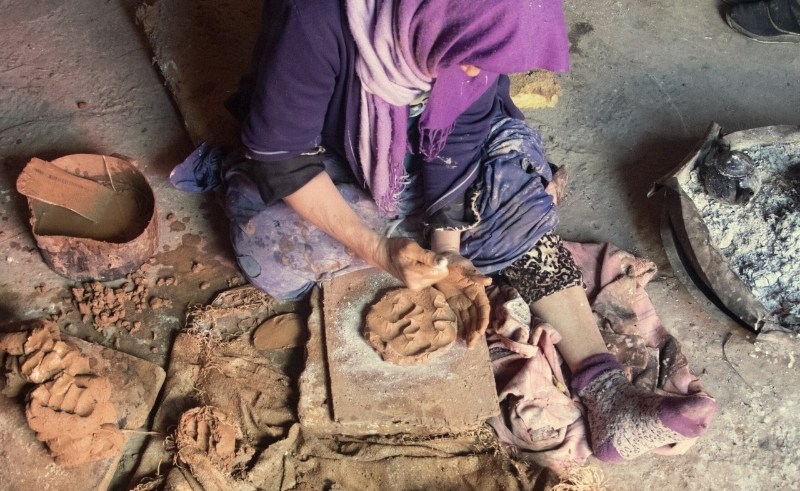
Every material in Altin's work carries its own geography. The Sejnane clay, from the Bizerte region in northwestern Tunisia, connects to Berber pottery traditions stretching back three thousand years; the fire marks from the kiln are intentionally left visible on the finished lamp. The sea rush woven into the Ganymede cabinet is harvested once a year from coastal wetlands and sold at government auction. The metal is worked in Altin's atelier in Tunis, while the woven panels travel hundreds of kilometres south to a woman who has worked with sea rush her whole life. "Traditionally, sea rush is used to make floor mats and coffins, Asking her to weave a cabinet was not easy. But when you build a relationship through time, people trust you enough to follow,” Sfar says.
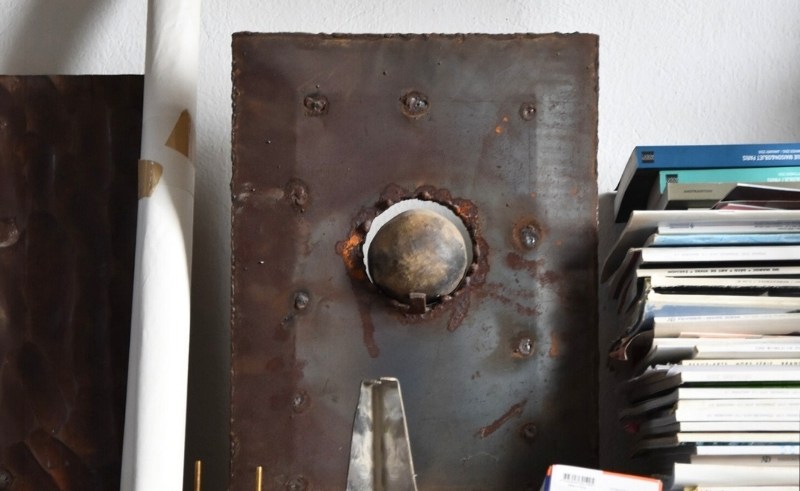
Kebaier comes at a piece from a completely different angle than Sfar does. She starts with an image; poetic, half-formed, closer to a feeling than a plan. He starts with the questions about how does this hold together? "He comes with the structural spirit first," Sfar says. "How is it going to be built, how will it be assembled and what are the solutions that will make this piece actually work?" Over weeks of making, of testing, of the artisans showing them what the material will and won't do, the two visions slowly converge. "At some point, everyone slightly changes their way of seeing things," she says. "It is a very enriching dialogue."
The limited, numbered editions are a consequence of how this kind of making actually works. Sejnane pottery slows in cold weather because the pieces need to air-dry without cracking and a single woven cabinet panel takes weeks of one person's time. "You can't imagine having big volumes," Sfar says. "The resource itself won't allow it."
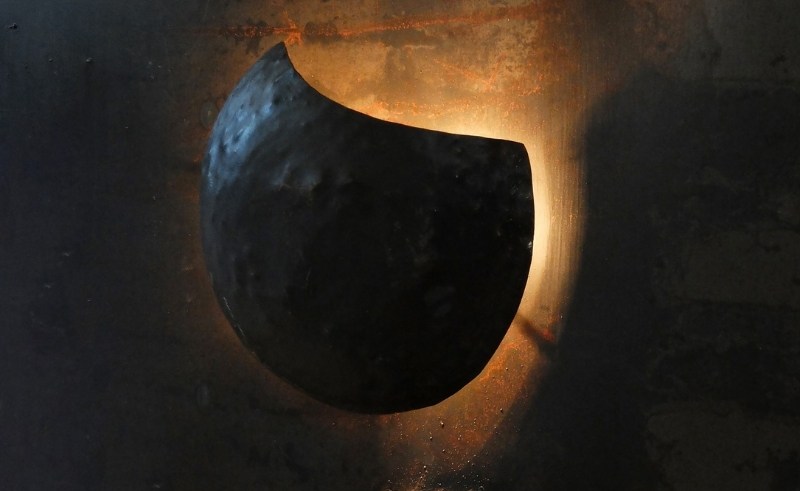
At a Paris fair, Sfar recalls that a Japanese man spent a long time in Altin's booth, walking slowly, not saying much, touching the surfaces. He didn't speak French or Arabic or English. When Sfar eventually asked what he was drawn to, he'd been standing at a piece made from olive wood, he said: emotion. "I don't know what it is about pieces where you can feel the human hand inside," she says, "but you can connect with people you never expected to. Different language, different culture, different everything and still there is something that links you."
Named to the AD100 2026 list and currently exhibiting in Paris at Cor Studio and Oasis Gallery, Altin is experiencing a moment of significant international recognition. In 2025, Sfar and Kebaier were selected for the second edition of the Arts AlUla Design Residency, spending three months in the ancient Saudi oasis immersed in research, material exploration, and a process guided by the landscape.
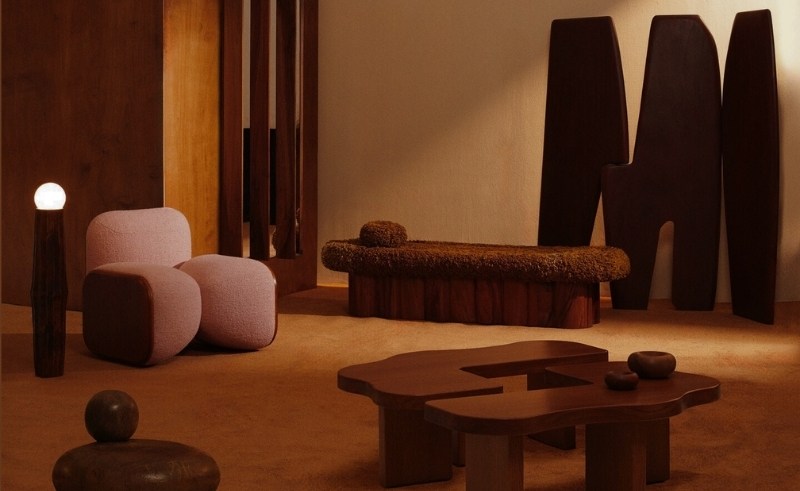
The residency resulted in a trilogy of works crafted from agricultural palm waste reclaimed from the region’s pruning cycles. Wadi, a monumental sculpture-library assembled from more than thirty palm-wood elements, reflects the humility of standing before AlUla’s canyon walls. Waha evokes the shelter and dappled light of the palm grove through suspended metal rods and fibre crowns. “AlUla and Tunis, it turns out, had more in common than we expected,” Sfar tells SceneHome.
The materials Sfar wants to explore next include blown glass and new clay traditions from other Tunisian regions. Each one requires the same slow process of building trust with artisans willing to try something strange. "It's about finding someone crazy enough to follow your ideas."