





Architecture of Light: In Conversation With Lina Ghotmeh
In this SceneHome interview, Ghotmeh drifts into a meditation on light as atmosphere and building material and previous projects through which she gives these ideas form.
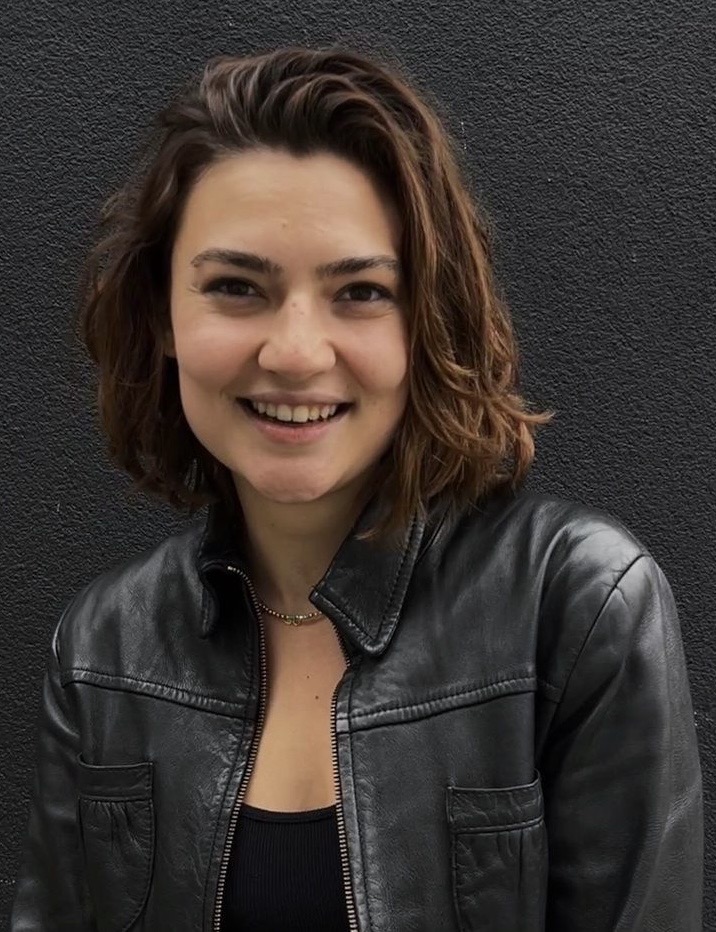
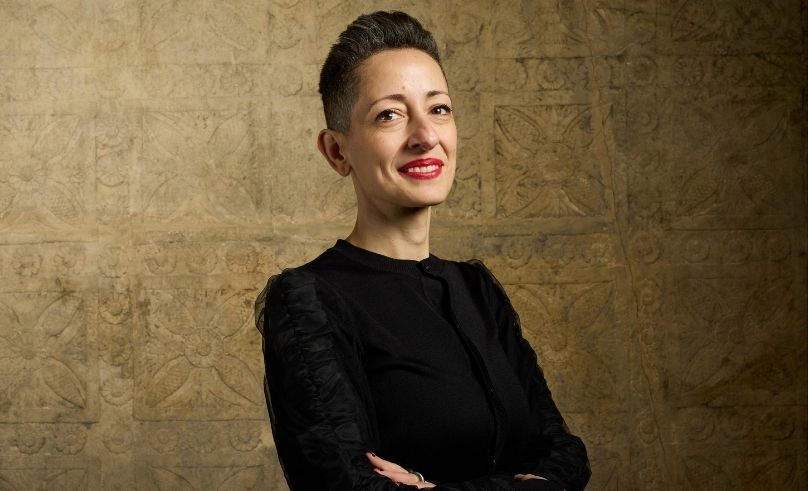
Photo by David Levene
For Beirut-born architect Lina Ghotmeh, light is never an afterthought. While architecture is increasingly discussed through efficiency, speed, and spectacle, Ghotmeh’s work insists on something slower and more elemental: how space is felt through light.
This conversation is prompted by the moment her Bahrain Pavilion at Expo 2025 Osaka - Connecting Seas - has become one of the most talked-about architectural works of the year, awarded for its synthesis of craft, sustainability and atmosphere. Rather than approaching it as a celebratory milestone, the project became a point of return to her broader practice: an ongoing investigation into light, material, and cultural memory. Speaking to SceneHome writer Kaja Grujic, Ghotmeh elaborates on her artistic process, and how her thoughts manifest through illumination, atmosphere and a way of working with nature rather than against it.
Le Corbusier famously described architecture as "the learned game, correct and magnificent, of forms assembled in the light." How would you respond?
Light is a very important material for architecture. And when Corbusier says that form is assembled by light, it's also how light reveals the different forms as well and creates depth and scale and contrast in space. I think architecture is more than forms assembled in light. It's also about matter and material assembled with light.
The fact that light is what actually reveals materiality and somehow by revealing materiality, it becomes material itself.
So, actually, funnily enough, if you come to my studio, a lot of the process of design is testing like materials, textures, bio-sourced materials and putting them against light and natural light and artificial light and trying to see how they behave and how they reveal their own qualities through that relationship that they establish. And you can feel like it's completely different when you put the surface horizontally, vertically inclined, and it's a completely different colour, different feeling, different experience that is revealed. So, in that sense, light is not only about, you know, it reveals materiality, but it becomes in this situation, the material itself.
well. Our relationship to light is a product of our culture. Coming from Beirut and from Lebanon, light is crucial. It's really what generates the beauty of a landscape. It is this sharp contrast that is revealed in spaces, in the city, and what renders everything beautiful despite all the atrocities that the city is living through.
If you look at the meaning of light in Asian cultures, like, for example, Japan, or like read the beautiful book of Tanizaki, 'In Praise of Shadows', here light is more about dimness and about the measure of light that subtly reveals space or material.
You've designed all over the world, do you take into account the cultural context of how certain materials can be interpreted and related?
Absolutely. And, also, the quality of light is something that is integrated in the design. For example, if we think of Hermès project, the manufacturer in Normandy, we have this very Norman, northern light in France. And you also have this mist sometimes in the sky. It's rather grey most of the times. The building is really conceived to draw on the poetics of such a landscape with this kind of colour of the brick that is not screaming. That is not red, but violet.
It really talks about also the depths of the sky and the depths of the light in this place and in this geography. And the movement of the arches as well may try to echo that softness of light that hits it and that is diffused rather than the sharp light that is present. So, I think the building cannot speak in the same way that would be in a Mediterranean climate. It would almost feel improper or too loud in a place like Normandy.
Thinking about light as a means to generate a certain atmosphere, how do you design spaces that use light in a way that generates certain behaviors, while also echoing the cultural context?
I'm thinking, for example, of the Palais Tokyo restaurant that we renovated some years ago. We are in a restaurant that is in a space that is very large, very high. I wanted to create an intimacy in this space. Here with artificial light, with these droplets of lights that come down almost to the height of humans, it generated a whole intimacy in this space. It completely transformed the relationship to the architecture and to the existing space through elements of light.
I’ve read another definition of architecture as a negotiation process between material, built environment, context and light. How would you respond to this definition?
I wouldn't say it's a negotiation. I would say it's an orchestration.
Because when you're negotiating, it means that there's always compromise. And it's more of a discussion, more of a dialogue and orchestration of different elements together. So, you have to find the right one. It's a bit like cooking as well. You have to find the right dosage of each element of what it is like, how much the material is speaking? How much is it revealed through light? How much light you let into space? How does it generate quality inside your own space? How the dimensions, the spatial volumes are created within the space.
For example, when I was designing Stone Garden in Beirut, the window is not only about bringing functional light inside, it's about creating this tension between the outside and the inside. You can feel that the window becomes a frame of the outside and at the same time draws the tension with the city because of the way the light comes in. This feeling was very evident also during construction time, when the building was like a shell. I took photos of the space without any artificial light. You could really feel how the different sizes of the window would really allow a completely different feeling inside the space and how they negotiate the relationship of the space to the city outside.
So yes, I think it's this kind of recipe, but also a sensitive friend that we try to compose with. And somehow in every project, it's going beyond the function to evoke this strong atmosphere, but evoke something, maybe divine, something a little bit spiritual that gets you out of your daily life and connects you to the extraordinary that life is.
When you speak of a window, it makes me think how buildings are almost keepers of time, in the way a window tracks how time moves through shadows and light. It’s almost like it's trying to catch light and time, something intangible, into something tangible. How would you respond to that?
Yes. This makes me think of Serpentine Pavilion as well. The whole project was about this pavilion that has a very simple approach to architectural expression that is not about spectacle, but about this interiority that is expressed from within. You have this oculus in the centre that brings in the weather—different varying light conditions of the outside—which somehow generates the whole mood of the pavilion. The whole feeling of its intimacy is created through that relationship to the light.
So in a way, it became a measure of nature and a measure of the passing time. You would sit there and then just feel the difference of light. Sometimes it became more gloomy as the sky became more like clouds and then as it cleared out on a sunny day during that summer, it suddenly brought more joy inside the space and then you would see all the patterns of the facade knitted and projected on the floor. Almost like a knitted gown inside the building. This idea and the fact of building that through the pavilion was also about measuring time and trying to expand time, the time of the dwelling inside that pavilion, where you could sit, you could spend time and really feel the rhythm of nature through architecture.
Many of your designs integrate a lot of nature. Is it about harmonizing with nature? Is it framing nature? How would you define this relationship?
It's a dialogue. It's trying to build these impulses with nature and to say that we are an extension of nature. We are nature and in a way architecture is a constant dialogue with it. For example, the Bahrain Pavilion in Osaka was about building with wood, so echoing really the local resources, trying to almost become like a build-up of tree trunks that become a suspended boat.
In every project, there is also a piece of nature that is present. In my project, you enter into a courtyard and behold nature. It is part of the windows and the loggias as they frame the city and now we're building a nature observatory in Japan in Toyama. It's also about create a relationship of observation with nature: to bring to focus time and architecture as the leaves change, as the colours of the trees evolve. This brings on a certain temporality and also a certain humility to what architecture can be actually in our cities.
What are your thoughts on biophilic design and architecture?
Biophilic design inspires us to look at nature and see how nature functions and how the plants are structured. I think we should learn from the living world to build our world because the living world is done with huge and amazing ingenuity. It's something that I keep on looking at, for example, for the pavilion structure of the roof. It was inspired by the leaf structure where you have primary structures and secondary structures that hold the whole roof of the pavilion. I think it's important to not fall into becoming a mimic, which falls into greenwashing in a way. It's really about understanding our living world and trying to live with it, but also being biophilic means that we have to be in symbiosis with the environment.
What is the starting point of a design or a building when you start to create something?
There is no one starting point. That's what I like about the way I practice architecture. It really goes from multiple points. I insist on that because I feel like somehow design is not a linear process. It's also a joy for me to bring on the complexity of the world in design and in architecture. It is what creates the beauty of our diversity. Somehow, when starting a design, there are many questions that we ask. We start to research about the history of the place, about the resources, about the living world, about the typology at hand, who will be using it. It comes from all those different questions and understandings and then becomes a project design and relevant structure in its place.
I would love to hear if you have any philosophical starting points that help you understand nature in a different way or understand architecture outside of the built environment. As you say, it is non-linear, so that process of stepping in and out I think is where the magic happens in a way.
It's about really understanding different disciplines and I think the fact that we can, as humans, try to reach out. We can assess the visible and what we need is also to include or to be more inspired also by what we don't see. That leads us to research and to look further into things. For example, the book that we published about light, like 'Windows of Light', was also an opportunity to bridge into other disciplines and understand light at its origin and look at other species and biodiversities that live with light like phytoplanktons or looking at naturally lit lighting mushrooms and looking at how we evolved in light throughout the ages.
All this is very inspiring but also substantial for architecture itself. That's what keeps drawing inspiration in every work I do.
While you were researching for that book, was there any particular that has changed how you approach your practice?
I think it was really shocking to see how we advanced in our capacity of capturing light, of generating electricity and controlling light, and how we still have so many disparities in the world where places don't have access to light or electricity at the moment. That's really something that one cannot really apprehend nowadays.
Looking at also all the pollution that we produce as humans on the universe itself and how much light pollution is produced by the satellites of Starlink in the sky that are creating lines in the sky that hinders the astronomers from seeing the stars. That was also shocking because sometimes we think that we are actually just polluting our Earth, but in reality it's also crossing beyond limits and echoed in the universe and in space itself.
Another photo that was really impressive was the first baby photo of the universe of our creation, the Big Bang in a way. It was a photo that was found that shows the universe as a series of different heat waves. You see the colours from blue to green to violet. It's really beautiful actually to see that we're all light and heat. I love when different senses translate into each other and how the colour becomes the way to show that connection.
I heard before you spoke about architecture as a means to capture the magic of living and being on this Earth. You also mentioned as you were speaking this idea of the divine and the spiritual. How do you approach that, especially in a building that’s not explicitly made as a palace of worship?
Yes. I think, for example, what comes to mind is the Ordea de Amaral exhibition in Fondation Cartier. Everyone who went there described it as very meditative as an exhibition. For me, it was about digging deep into the understanding of the works of Ordea de Amaral, who is a fabric artist, and trying to sublime the work through the quality of the spaces in Fondation Cartier and linking them to nature, linking them to the idea of landscape, because this is what inspired her work.
But also working with light as a material to reveal her work. On the ground floor, there were those huge tapestries that she produced. Then I brought boulders, black slates, inside the gallery. Just by creating this relationship with those slates the whole work started to feel more grounded in the garden and the outside, and this colour of grey that is brought in. Then the basement is more of this kind of internal space that is more cocooned or more intimate, and there light was creating the boundaries between the spaces. Then the way light reorchestrated it on every work that was suspended really created a sense of dialogue and discovery of every piece as a spirit and as a persona rather than just as a piece of fabric.
I think the work, the fact of digging deep into something and the design and trying to really use everything that is at hand as elements of nature as a story of the place and pushing that through design generates some kind of spirituality and some kind of maybe transportive aspect to architecture. That's something that I try to work on in every project, not necessarily in the aim of creating spaces that look religious, not at all. It's actually the fact of just going deep in the making of something and crafting something with a lot of care, actually, and it does generate an echo to nature that is really elevated with a lot of attention and awe.
- Previous Article UAE Leads World in Artificial Intelligence Adoption at 70.1% in 2026
- Next Article Egypt–France Trade Reaches USD 2.96 Billion in 2025