






'Between the Hand & Loom' Explores Egypt's Weaving Heritage
Ancient Egyptian murals inspire contemporary rugs and tapestries in a one-day exhibition at Cairo Design Week.

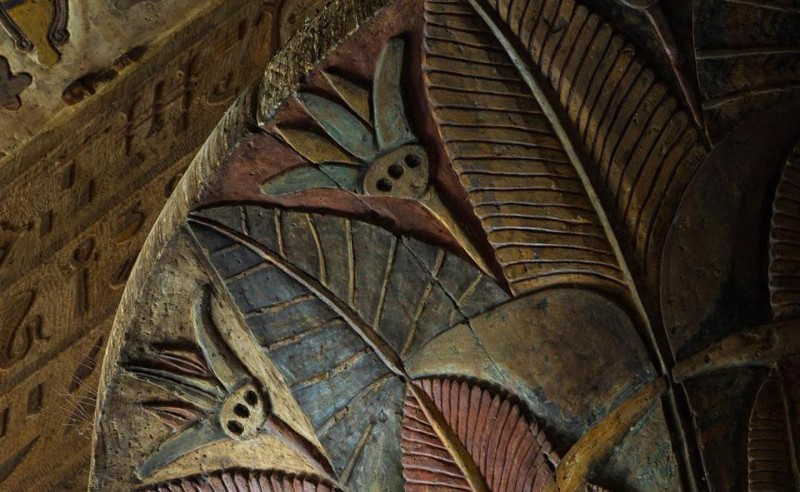
Egypt has a history of weaving that stretches back more than five thousand years, with generations of artisans turning thread into intricate patterns and images by hand. This tradition is the starting point for ‘Between the Hand & Loom’, an exhibition conceived and curated by Marwa Sabah, founder of cultural consultancy firm Communitas.
Presented as part of Cairo Design Week 2026, the exhibition will take place for one day on November 26th at MO4 Storytelling Space in the Egyptian Museum Gardens. Bringing together photographs by Sandro Vannini and rugs and tapestries by Kahhal Looms, it explores how ancient Egyptian art can inform contemporary textile design.
Central to the exhibition is the idea that ancient Egyptian artists employed visual systems that remain relevant to design today. They used grids to determine the placement and proportions of figures, symbols and hieroglyphs, maintaining these principles across different periods and artistic styles. The tomb of Khuwy at Saqqara and the Temple of Khnum at Esna, created more than two thousand years apart, both demonstrate this approach, offering early examples of the compositional principles used in graphic design.
The project connects three surfaces: the painted walls of ancient sites, Vannini's photographs of them and the textiles produced by Kahhal Looms. His images document entire wall compositions before revealing individual patterns, borders and painted details, which become the source material for woven designs developed in collaboration with Sabah and Communitas. "I wanted three kinds of hands in one room: the ancient painter, the photographer and the weaver. Each reads the same wall differently, and each reading is true," says Sabah.
Vannini's photography also reveals colours and details that can be difficult to appreciate at the original sites. "The controlled lighting we use today allows us to see the colours as they really are, but our perception remains the same as that of the craftsmen who lived thousands of years ago," he explains.
The exhibition also traces the materials and techniques behind Egyptian textile production. Linen, made from flax, served purposes ranging from burial wrappings to the wicks that illuminated tombs as artists painted their walls. Over time, weavers introduced other materials, including wool, and developed techniques such as flat weaving and hand-knotting. "It shows how heritage remains alive through each new generation," explain Mohamed and Hend El Kahhal, founders of Kahhal Looms. "Contemporary artisans can bring ancient imagery into the present while preserving traditional skills."
Visitors will encounter the exhibition in two sections. The first introduces the project's historical references through a series of display stations, while the second features a large screen presenting the original murals alongside the rugs they inspired. The presentation allows visitors to trace specific motifs from their place within a larger ancient composition to their reinterpretation in contemporary textiles.
- Previous Article Egypt to Host Air Cairo Skydive Pharaohs Cup From Nov 20th-22nd
Related Articles
Trending This Week
-

-
 Nov 13, 2026
-

-