


Dentist for 32 Years, Tamar Hadechian Now Shows Clay in Europe
She wanted art school at 18 and her family pushed her into dentistry. Five decades later she left Beirut for Copenhagen, stopped practising, and showed more than 50 hand-built works in Saint-Tropez.
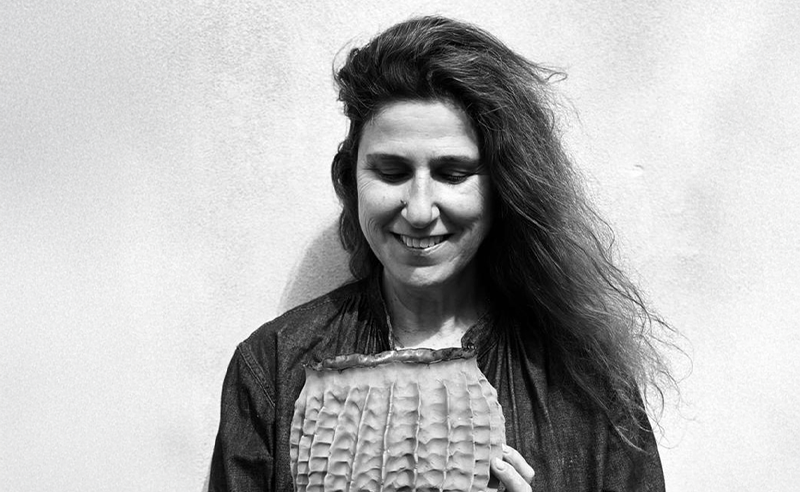
57-year-old multidisciplinary artist Tamar Hadechian spent 32 years as a dentist in Lebanon. She had passed the entrance exam for art school at 18, but family pressure and a country at war made the decision for her.
She came to love the profession, particularly its aesthetic side, and art never disappeared from her life.
The shift came after the Beirut port explosion, the pandemic and Lebanon's economic crisis. When she and her husband moved to Copenhagen, she decided against returning to dentistry in a foreign country.
"I've always been an artist and I've always wanted to have space for my art," she says. "But art needs to and it should take up the whole space. It's a way of living."
Hadechian is Lebanese-Armenian, and she works in clay, though she resists calling it a material.
"I don't really think of it as just a material," she says. "It's something that comes alive."
She works without a wheel or moulds, directly with her hands, leaving the marks, folds and irregularities that come with it. She begins with no fixed idea of what a piece should look like and lets the clay guide the process.
"The freedom of not knowing gives room for spontaneity in the work," she says. "I take the clay and then I just trust the clay."
She has never taken a ceramics course or worked to a particular technique. She responds to whatever is in front of her.
Hadechian had been painting, drawing and working with food storytelling when she started experimenting with clay, and something about it felt different. She could work without knowing where she was going, and the less she tried to control it, the more it seemed to give back.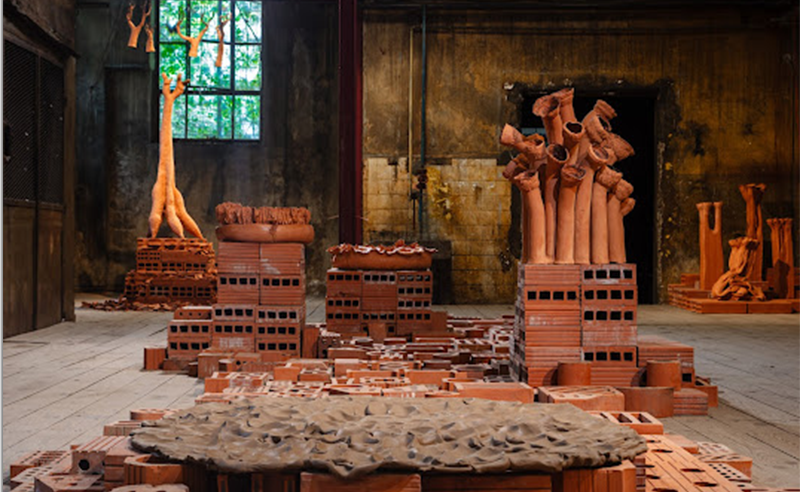
"I see it rather as an entity where there is a constant conversation that happens," she says. "And most of it with areas where you're not really aware of."
The fingerprints and uneven surfaces are part of that conversation, and she sees no reason to erase them for something more polished. The hand becomes part of what the object remembers.
Three months after she began working with clay, in 2023, she was accepted into an open call for the Venice Design Biennale with her Fingerprints series. Frieze London followed, where she met Cherine Magrabi Tayeb, the curator who founded House of Today, a Lebanese non-profit set up in 2012 to support Lebanese design. Tayeb later brought her work onto the platform.
In July 2026, Hadechian showed The Hand and the Tide, a solo collection of more than 50 works, at the first edition of PAD Saint-Tropez. The fair, short for Pavilion of Art and Design, ran from 2 to 5 July at Maison Jean Despas on Place des Lices, its first outing beyond Paris and London, with around 20 galleries taking part.
Without gallery representation, Hadechian sells her work through exhibitions and directly to collectors.
Across her work are hand-formed vessels and sculptural pieces, some closer to recognisable objects and others taking on more organic, figure-like forms. Their surfaces keep the traces of the process: fingerprints, folds, ripples and uneven edges. The mineral tones and forms echo the sea, sand and landscape around them.
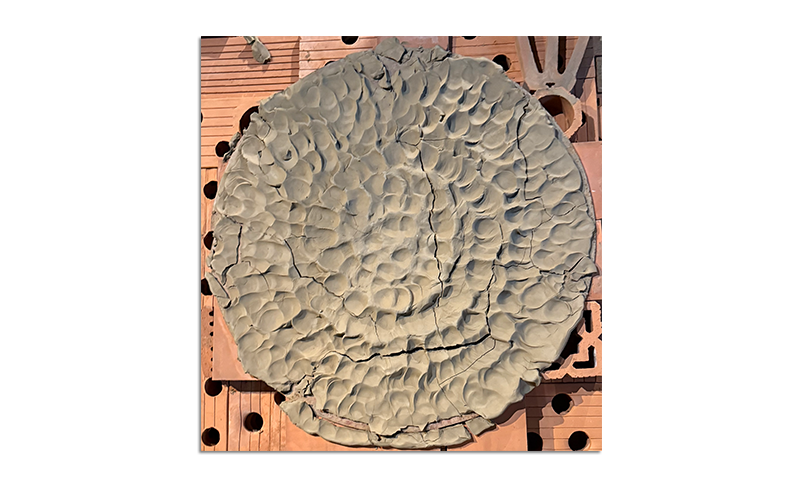 Clay has its own history before it reaches the artist. It has travelled through water and earth, been exposed to air and fire, passed through countless human hands. Her interest in the material has become an interest in memory.
That is the centre of Material Memory, a work she made in Lebanon using local terracotta. Terracotta is often dismissed there as cheap or vulgar, associated with plates and tiles rather than contemporary art. For Hadechian, that was precisely the reason to use it. If she was going to make work in Lebanon, she wanted the clay to belong to the place.
"If I am working on something in Lebanon, I am doing terracotta," she says. "I am a small artist. So I went and did the whole work at the factory, to also remind people of what the factory holds as a place for the clay and what clay represents as material memory."
She made it inside an old Armenian factory, which brought another part of her background into the process. She became interested in the people who worked there and what they knew about the material.
The installation explored the five elements: earth, water, air, fire and ether. The raw clay was earth, and the others became part of its transformation.
"It is before us and after us, around us and within us," she says of clay. "It is the reservoir of water. It is the material memory, but it has everything within."
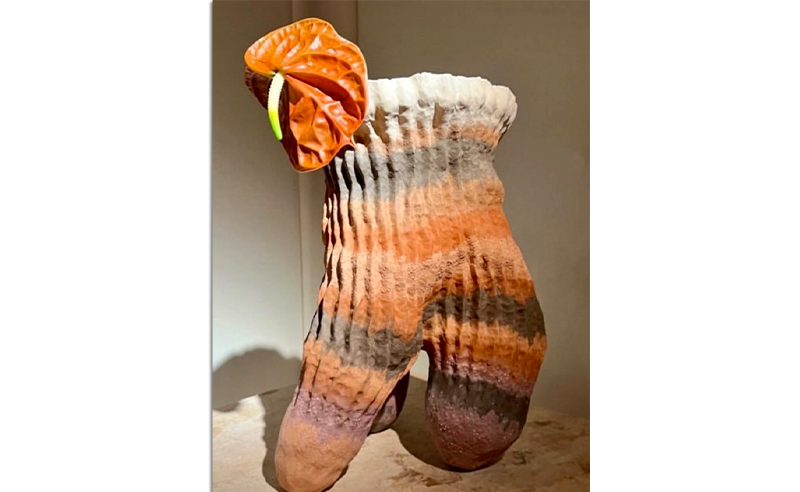 She also put her own body into the work, performing with the clay, filming herself, then projecting the footage back onto the installation. The hands that shaped it stayed present after the act was over.
Fire she represented through the strawberry tree, which grows in Lebanon and survives fire underground before growing back. For Hadechian, it became a way of thinking about what remains after destruction, and about her own Lebanese and Armenian identity.
"When the fire passes, you don't start from scratch," she says. "You have your basis that is untouched, and the branches sprout again in a natural way."
"I wanted to also bring that as Lebanese, as Armenian, to also show that our strength also comes from our core, our basis."
Leaving Lebanon made her more aware of her own culture. Distance let her look at Lebanese and Armenian traditions differently. Sometimes that identity is there in the material or the story, and sometimes it emerges only after the work is made.
That is what happened with The Hand and the Tide. The collection responds to the landscape around Saint-Tropez, drawing on sea, sand and waves. Its hand-formed vessels and coral-like structures take on soft, undulating shapes, their surfaces marked by folds and ridges that recall the movement of water, in a mineral palette that recalls the Mediterranean coastline.
Hadechian had lived in Batroun, on the Lebanese coast north of Beirut, and the sea around Saint-Tropez took her back without her trying to recreate it.
"It's the sea that bridges between them," she says. "It's the same sea as Beirut. And so it's a nostalgic, very familiar tide."
Tayeb wanted the tide brought into conversation with the marks Hadechian's hands leave.
"She wanted the tide. I had the hands and we met halfway," Hadechian says. "It was a conversation between the hands and the tide."
The clearest case of cultural memory entering her work is a series of human-bird forms, the Ba birds: bird-like clay figures topped with human heads, often with brightly coloured wings. She started making them during a period when she was deeply affected by the deaths of children in Lebanon, without intending a cultural reference
Only afterwards did she look into the history of human-bird imagery, which led her to the Egyptian Ba bird, associated with the parts of a human being that continue beyond death. The discovery changed how she understood forms she had already made.
"Somehow, it just softened my pain," she says.
It happened again when an Armenian artist sent her an image of an Armenian jar shaped like one of her own human-bird vessels. She had not put the link there consciously.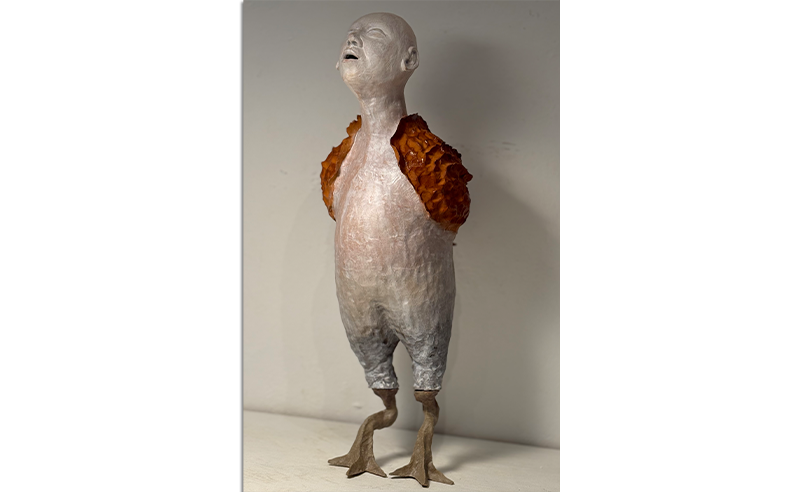
"When you just stay with your emotions, the collective consciousness gives you some answers," she says.
For Hadechian, meaning does not always come first. Sometimes the work comes first, and the meaning follows.
- Previous Article MNZL Secures Egypt’s First Dual Digital Lending Licenses
- Next Article Vodafone Business Egypt Announces AI Infrastructure Partnerships
Related Articles
Trending This Week
-
-
 Oct 15, 2026
 -
-