





These Lebanese Terraced Homes Are Shaped by Batrouns Cliffside History
Marea’s terraced Lebanese homes blend landscape and architecture, framing the Mediterranean with precision and care.

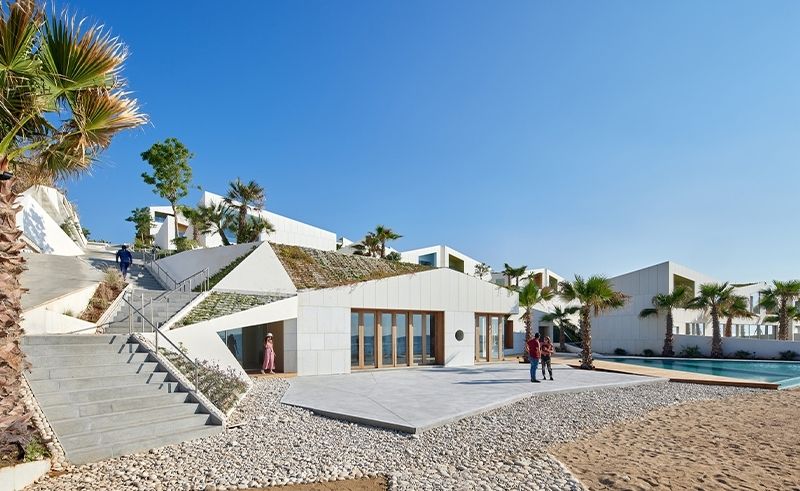
Just outside Batroun, one of the world’s oldest continuously inhabited cities, Marea is a terraced multi-family development designed by WORKac in collaboration with Chafic Saab. Set on a steep Mediterranean slope, the project arranges homes to follow the natural topography rather than the typical pattern of isolated villas or towers. Layered terraces, planted slopes, and pathways structure the site while maximising views of the Mediterranean.
The land has a layered history. During the Syrian occupation, the cliffside plot was used as an army camp and abandoned in 2005, leaving concrete blocks, rusted steel, tents, tires, and scattered debris. Despite this, the uninterrupted horizon remained, guiding the placement and orientation of the homes.
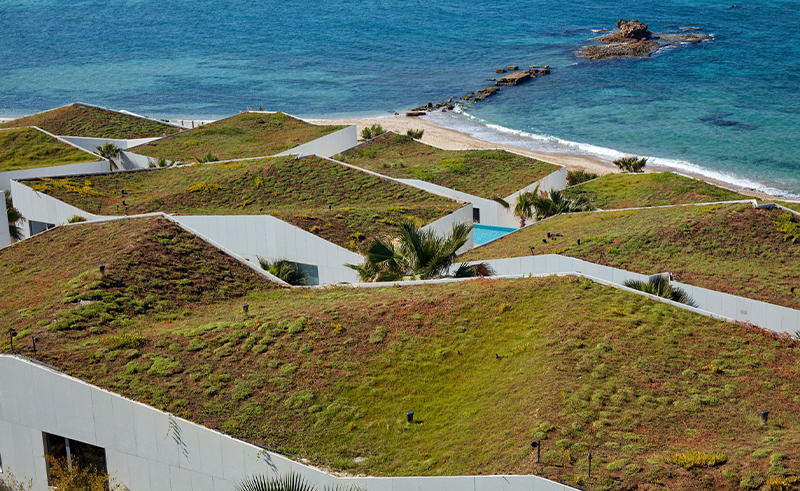
Commissioned in 2017, WORKac approached density as a spatial and social opportunity. Volumes are arranged in four descending rows, stepping down the slope so each unit maintains an open view. Triangulated green roofs form a continuous, faceted surface that blurs the boundary between landscape and architecture, while planted terraces extend the interiors outward. Paths, patios, and small communal platforms weave through the terraces, creating a network of semi-public spaces that reinforce both privacy and community.
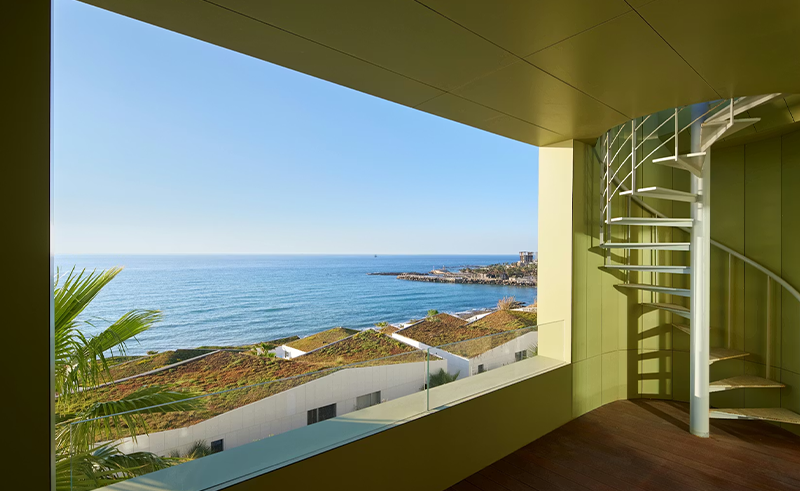
Circulation takes cues from Mediterranean hill towns. Narrow streets and stairways wind between the homes, connecting upper terraces to the lower houses and ultimately to the public beach. Vehicles are largely hidden, either routed underground or limited to small carts, giving the pedestrian routes a human scale and encouraging informal interaction between residents.
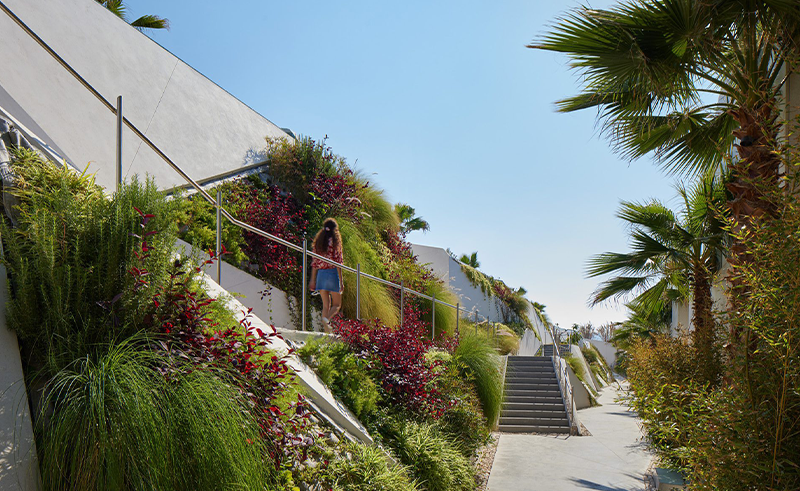
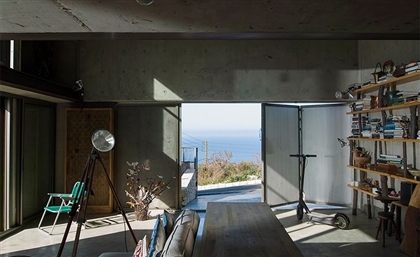
Each unit features a double-height living space opening onto a patio or roof deck, with pools integrated into the terraces to further extend the domestic space. The careful layering of volumes, shifts in height, and orientation maintain visual separation between homes while allowing them to feel connected to the wider landscape. The impact of the design lies in these cumulative choices: terraces that follow the slope, green roofs that soften the geometry, paths that frame views, and walls positioned to allow natural breezes.