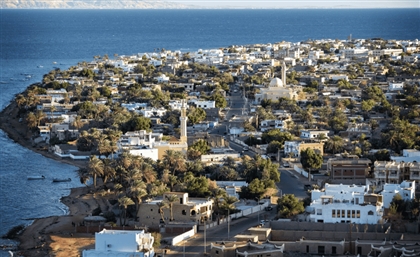






Inside the First Library Being Built During the Genocide in Gaza
“Even if the planes are above us, the tanks in front of us, and bullets behind us, nothing can stop us from protecting knowledge.” - Omar Hamad, Co-founder, Phoenix Library.

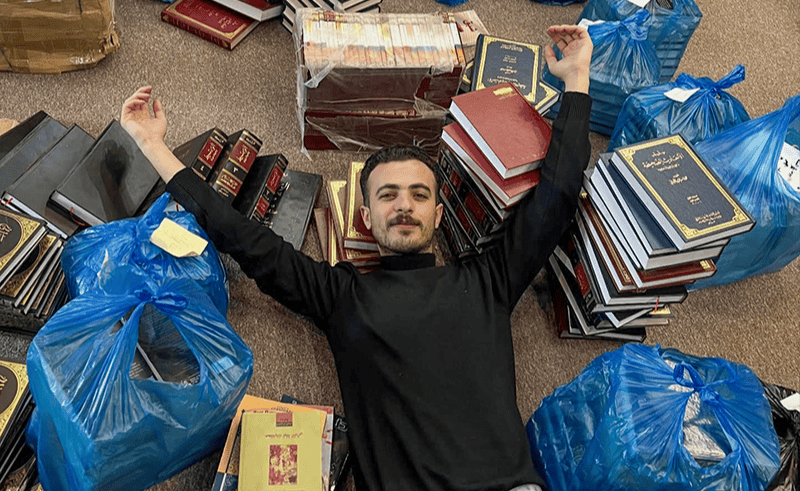
When Israeli bombardment forced Omar Hamad, co-founder of Phoenix Library - Gaza’s first library built amid the ongoing genocide - to flee his home in Northern Gaza, he took what mattered most: 70 of his own books, crammed into a bag. “If they weren’t books, then they weren’t important to me,” he said. “I knew they were among the last remaining in the city.” Those volumes became the foundation of the library he is now building with his childhood friend, Ibrahim Massri.
Since the genocidal war started in 2023, libraries across Gaza have been reduced to ash, along with entire archives of intellectual heritage. Over the past two years, 70% of Gaza’s archives have been lost, including the Gaza Central Archive, which held more than 150 years of historical records. More than 87 libraries have been damaged or destroyed, and all 12 universities have been reduced to rubble or rendered unusable - cutting off access to education, cultural memory, and turning books into endangered relics.
In the midst of this destruction, Omar was determined to protect what remained. “I decided to open a library, a space for people to sit and read,” he said. “Ibrahim and I were determined to display meaningful books. Books that deserve to be read.”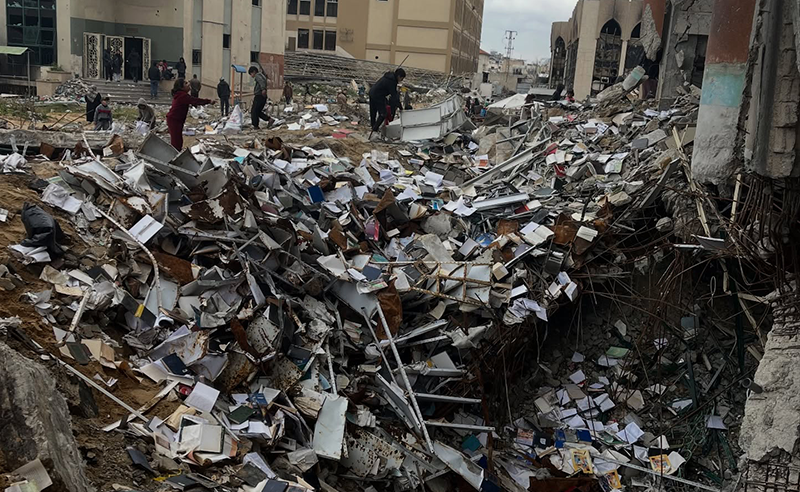 One pivotal moment came when Omar rushed to the Islamic University after the occupation withdrew. “I saw books being burned for firewood, some over a hundred years old,” he recalled. “I didn’t know what to say to the people burning them. I just tried to save as many as I could.”
Witnessing that indifference, Omar realised preserving Gaza’s books could no longer be left to chance. That resolve, shared with Ibrahim, planted the seeds of Phoenix Library. “Before the war, I used to read endlessly,” he said. “I realised we were being shaped by the occupation. So I chose to think differently. I read to think freely. And that’s what I want for Gaza, to give knowledge a chance to survive and grow.”
Expanding the collection beyond the 70 books he carried meant relying entirely on the community. There were no suppliers or bookstores, only personal libraries and people willing to share. Omar and Ibrahim posted on Facebook asking for donations or temporary loans. Two private library owners stepped forward, one donated 120 books, and the other 60. Others contributed smaller stacks. It wasn’t large-scale, but it was enough to begin.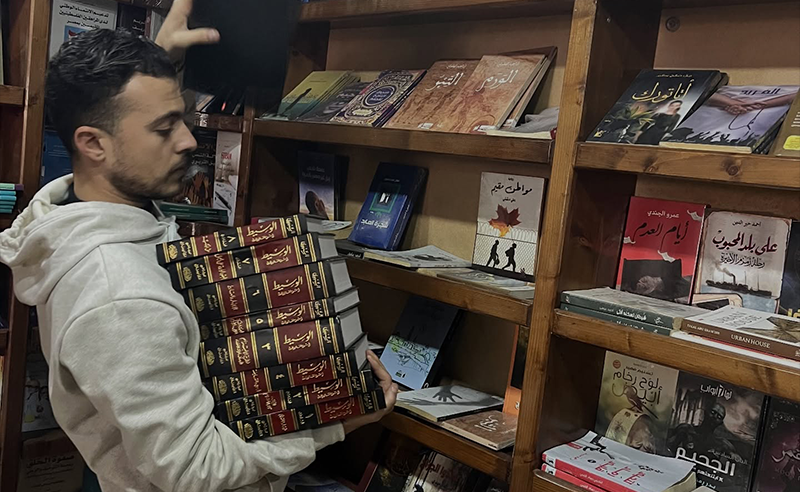 “That moment, returning to my tent with over 200 books, is one of the most enjoyable moments of my life,” Omar said. Today, the Phoenix Library houses between 10,000 and 13,000 volumes.
Finding a home was the next challenge. It had to be quiet, away from the most devastated areas, a place where people could escape daily realities and rediscover curiosity. “We spent a month and a half searching until we found this building. It had the foundations of a library, which is more than we could have asked for,” Omar told me.
They renovated it from the ground up, measuring every corner, sketching layouts, imagining reading nooks filled with natural light. Shelves were designed to maximise space, many on rollers with hidden storage behind them. Communal areas invite discussion, while quiet corners offer solitude.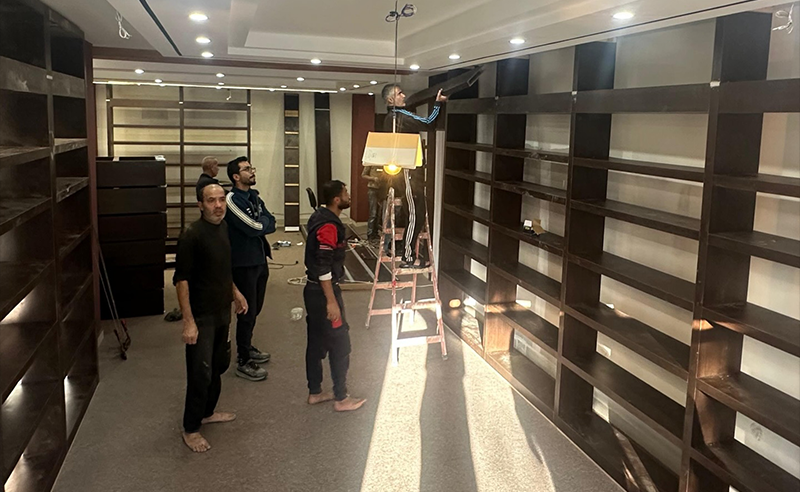 Every step was slowed by life under siege. “The situation around us makes everything harder, especially getting materials into Gaza,” Omar said. Construction supplies were scarce, costs had skyrocketed, and importing paper, wood, shelving, or educational tools was nearly impossible. Printing presses, tools, and even pencils were difficult to access — making every new book, shelf, or table a small victory. Volunteers helped wherever they could, carrying shelves, painting walls, and cataloguing rescued books.
Obstacles remain, especially the scarcity of books and the soaring cost of paper, which has made printing nearly impossible. Plans to print new titles have been put on hold. For now, the library relies on donated volumes, rescued texts, and what people are willing to share.
But Omar does not speak of the project as fragile.
“We risked our lives to save what little remains of books and knowledge in Gaza,” he said. “Nothing can stop us from protecting knowledge and preserving learning. Even if planes are above us, tanks in front of us, and bullets behind us, we will continue.”
The library is still a work in progress, but with shelves filled and reading spaces ready, Phoenix Library is nearly prepared to open its doors.
Related Articles
Trending This Week
-
 Apr 26, 2026
 -
-
-