






Emergency Vehicles Can Now Trigger Green Lights Across Abu Dhabi
The system forms part of wider road safety measures, including weather-responsive speed controls and infrastructure upgrades that have reduced accidents and fatalities.

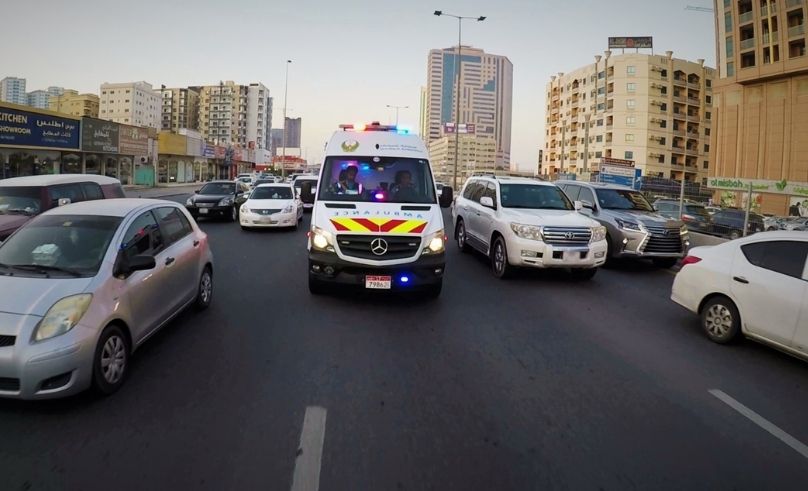
Emergency vehicles in Abu Dhabi are now able to trigger green traffic lights from up to 400 metres away under a smart-response system designed to prioritise ambulances, fire engines, and police patrols at intersections. The system, implemented by Abu Dhabi Civil Defence, allows vehicles to communicate directly with traffic signals, reducing delays during emergency responses while maintaining traffic flow for other road users. The technology has already been installed on a large number of vehicles, with plans to expand it across the full fleet.
The update was shared during Gulf Traffic Week, alongside data on wider road safety measures introduced across the emirate. According to Abu Dhabi Police, a weather-responsive system that detects fog, rain, and dust has reduced weather-related accidents by 50% since its deployment. The system automatically adjusts speed limits and sends alerts to drivers on affected roads.
Speed-related accidents have also declined, falling from 15% of total incidents in 2019 to 9% in recent years.
Data from the Integrated Transport Centre showed improvements in pedestrian safety. Pedestrian run-over incidents dropped from 18% of total accidents in 2023 to 13% in 2025, while related deaths and injuries declined from 13% to 11%.
Infrastructure upgrades have supported these changes, including the completion of pedestrian bridges in Al Sila and Al Mafraq, with additional bridges and signal-controlled crossings under development across Abu Dhabi and Al Ain.
Officials said road fatalities in the emirate have fallen by 73% since 2011, while serious injuries declined by 18%. Abu Dhabi now ranks among the lowest globally for road fatality rates per 100,000 people.
- Previous Article SceneNoise x Amsterdam Dance Event Present CROSSFADE: Egypt
- Next Article The Abandoned Architecture of Villa Badran by Gamal Bakry
Related Articles

Trending This Week
-
-
 Oct 15, 2026
 -
-