



Temple Skate Shop is on a Mission to Connect Egypt Through Four Wheels
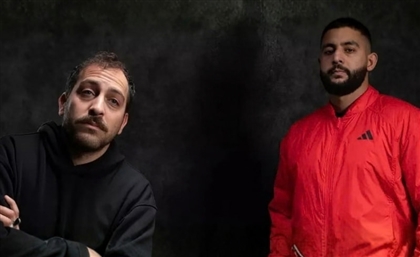
Temple Skate Shop founder Ahmed Magdy is building Egypt’s skate scene through competitions, road trips, fashion and community.

Originally published on September 6th, 2026.
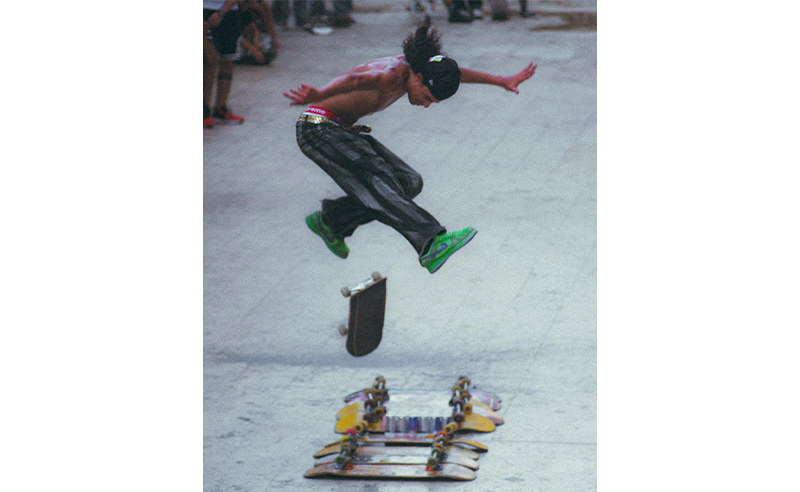
To most people, a sidewalk is just a sidewalk. But to a skater, the city becomes a moving amusement park, where every ledge, pavement, and cracked street corner holds the possibility of a new trick. “Take stairs, for example,” says Ahmed Magdy, founder of Temple Skate Shop. “When you’re skating, you see them in a completely different way. You look for good ledges, ramps or the perfect gap for your next trick.”
That new way of seeing extends beyond architecture. Skateboarding has always been as much about personal style as physical movement: the clothes worn, the music playing and the way a trick is landed all become forms of self-expression. Unlike traditional sports, there is no single uniform or prescribed way to look. As Magdy puts it, “Skateboarding is something to describe yourself.”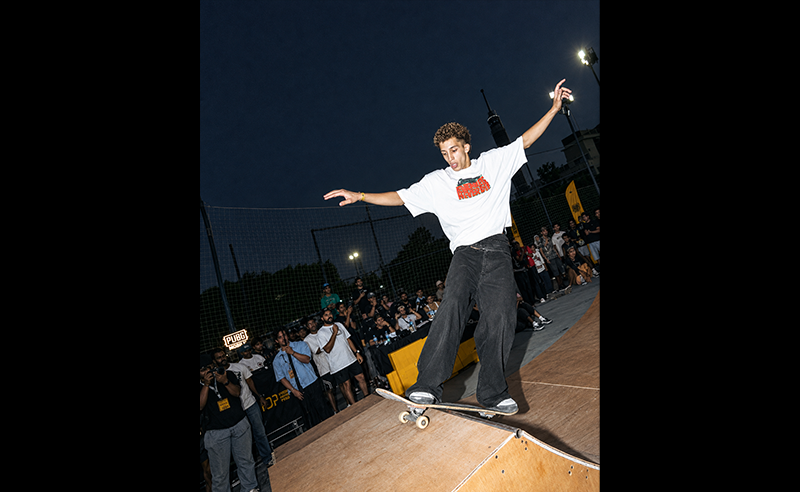 Magdy found his way to skating during the stillness of 2020. Stuck at home during the pandemic and searching for something new, he bought his first skateboard and was instantly hooked. “I discovered myself through skateboarding, and through it I got introduced to a beautiful community.”
Eager to help that community continue to grow, Magdy opened Temple Skate Shop, supplying decks, trucks, wheels, bearings and other essentials that were otherwise difficult to find locally. The shop became part of a wider mission of both making skating more accessible and giving Egypt’s emerging scene somewhere to gather and define itself.
By 2021, that mission had expanded into Red Bull Mind the Gap, an open street skateboarding competition that Magdy describes as the point where his two passions — curating events and growing the skate scene — converged. Since then, he has organised around 25 events across Egypt while also taking the community beyond competitions and onto the road, with skate trips to Alexandria, Suez and Port Said, and Marsa Alam planned for October. Each trip offers skaters a different way of moving through the country, encountering its cities through their concrete, while introducing communities beyond Cairo to a culture still often seen as belonging solely to the capital.
Part of taking the scene on the road is also challenging the stereotypes attached to it: that skating is merely an underground hobby, that skaters are unserious, or that the culture is only about looking cool. Magdy rejects all of it. “To be a pro, you have to skate the streets, and the streets have no mercy,” he says. “You meet people who don’t like what you do. You have to practise every day. You have to push yourself to go outside in bad weather and hot weather.”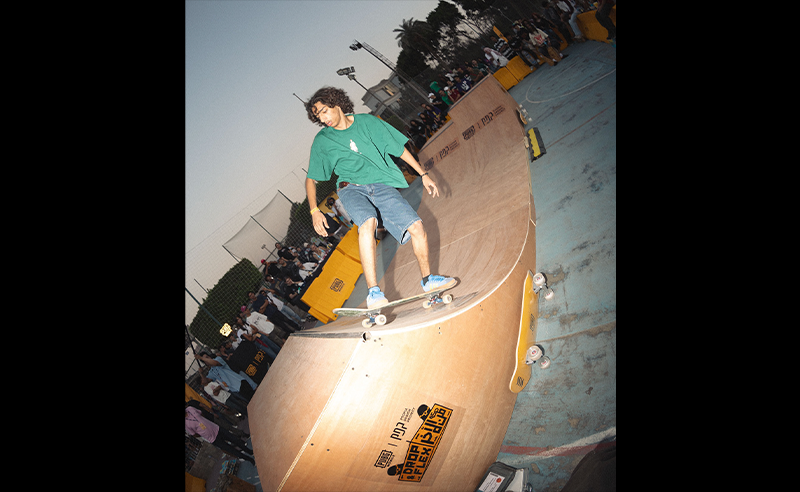 The style may appear effortless, but the discipline behind it is anything but. The clothes, tricks and music are not superficial additions; together, they create an identity. As professional skater Paul Rodriguez explained in Nike SNKRS’ 'The Story of Dunk', skating differs from traditional sports because everyone does not wear the same uniform. How a skater looks and moves becomes part of the performance.
Magdy’s eyes light up as he speaks about this rich culture: “You have everything. Good people, good talents. Skateboarding is not only a sport. It’s a combination of fashion, communication, music and community.”
That combination has shaped fashion for decades. Born from the surf culture of Southern California, skate style absorbed punk, counterculture and hip-hop as it evolved. In the 1970s, the Z-Boys popularised a loose, lived-in uniform of T-shirts, plaid shirts and dishevelled hair. By the 1980s, punk, early hip-hop and Thrasher magazine had carried the aesthetic beyond the skatepark and into popular culture. The 1990s and early 2000s brought baggy denim, oversized graphic tees, hoodies and battered sneakers. During the pandemic, Gen Z’s nostalgia for the pre-social-media era revived those silhouettes, repackaging what had once simply been skate clothing under the label “skatercore.”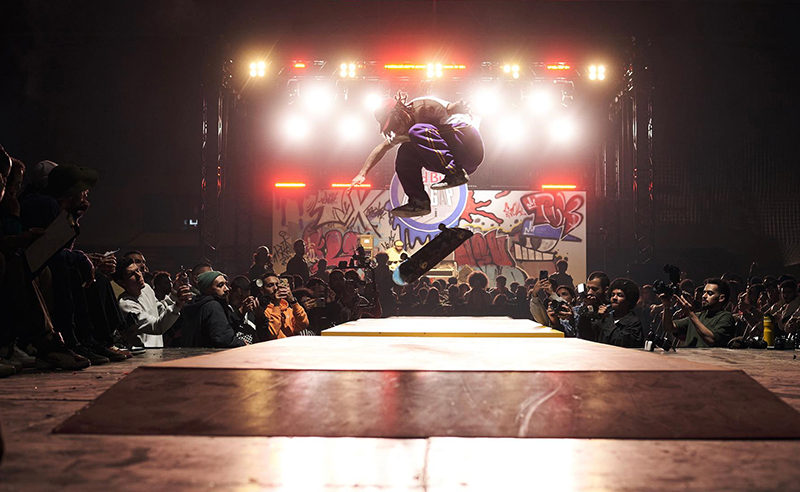 In Egypt, that visual code is now being experimented with locally. Brands such as Fear2FuckUp and Coddiwomple draw from streetwear and skate culture, reflecting a scene becoming more confident and visible. As more people begin skating, the fashion surrounding it is also developing its own vocabulary.
Yet the city’s infrastructure has not kept pace with the culture. “What we need first are skateparks,” Magdy says. Egypt has one private skate park in Sheikh Zayed, but he hopes to see it expand to public spaces where young people can practise safely. Most equipment is also imported, making local manufacturing essential to bringing down costs and widening access.
Still, the wheels keep turning. As more people take to the streets and professional skaters rise from the region, the fashion and music surrounding them moves forward too. These cultures have never existed in silos. Egypt’s skate scene is not just learning how to move through the city, but beginning to shape how a generation looks and sees itself.
- Previous Article Riyadh Airport Will Close Until October 17th
- Next Article Abu Dhabi Targets AED 235 Billion Investment Across Four Clusters
Related Articles
Trending This Week
-
 Oct 06, 2026
 -
-
-