





Three New Kingdom Tombs Discovered in Saqqara Reveal Near East Links
The Egyptian mission at Saqqara’s Bubasteion identified tombs of Mentuhotep, Parr-em-wia and Nehesy with hieroglyphic titles.

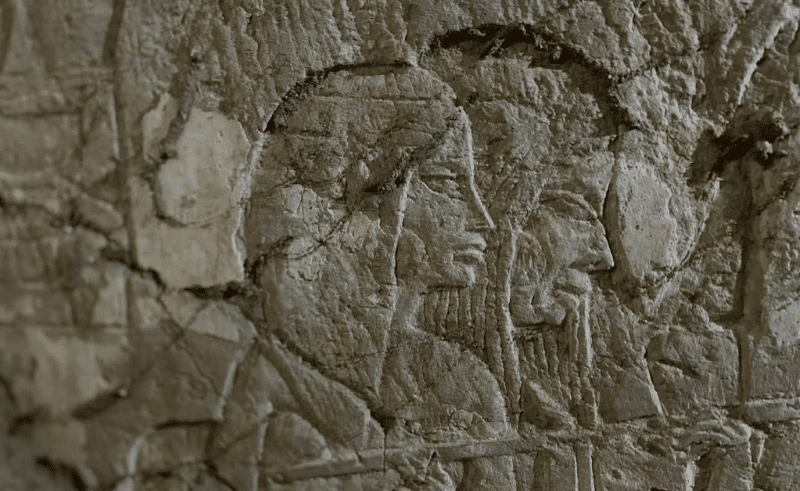
An Egyptian archaeological mission has uncovered three rock-cut tombs dating to the New Kingdom at the Bubasteion necropolis in Saqqara.
The tombs were found during excavations in the eastern sector of the necropolis and contain hieroglyphic inscriptions and architectural elements offering new information on senior officials buried within the ancient Memphite necropolis.
One of the tombs belonged to Mentuhotep, whose recorded titles indicate that he held senior administrative and military positions during the early New Kingdom. These included hereditary prince, mayor, follower of the king, director, overseer of foreign lands and overseer of the army of the city of Khabshit.
Scenes on the tomb’s northern walls depict offering bearers and hunting activities, alongside a large image of Mentuhotep seated with his mother, Iahhotep.
The second tomb belonged to Parr-em-wia, also known as Samut, who served as chief of traders in the House of Ptah. Its inscriptions preserve details about his family, including his wife Tui, who held the title lady of the house; his mother Atbyu, identified as a singer of the god Amun; and his four sons.
A third tomb belonged to Nehesy, who was identified as overseer of the house. Although the tomb is in poor condition, surviving inscriptions also record his wife, Nefru-Ptah, as lady of the house.
A fragment of a column found inside the tomb bears a hieroglyphic inscription referring to the return of a military commander from Nahrin, an ancient territory in northern Syria. The text provides further evidence of Egyptian military and diplomatic connections with the Near East during the New Kingdom.
- Previous Article SceneNoise x Amsterdam Dance Event Present CROSSFADE: Egypt
- Next Article The Intricate Beauty of Ben Youssef Madrasa
Related Articles
Trending This Week
-
 Oct 06, 2026
 -

-
-