





It Felt Like Going to a Football Match. But Does It Need To?
How esports is competing for the mainstream appeal of traditional sports.
.jpeg)
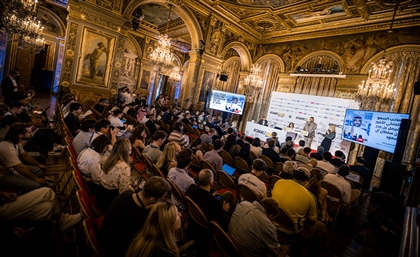
“It was amazing, it was like going to a football match,” said one of the commentators on stage following a match at the Esports World Cup in Paris.
The tournament marks the first international edition of the Saudi-born and funded cup, and across every corridor, stage and game at Porte de Versailles, a comparison with football, or a dismissal of such comparisons, was impossible to ignore. It was the football in the room. The cultural legitimacy of esports is still taking shape.
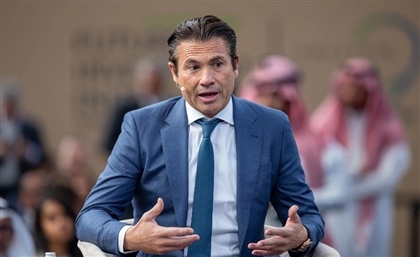
The Esports Foundation's Chief Games Officer, Fabian Scherman, believes there are three tiers of audience: the professional gamers competing at the highest level, the casual hobbyists and spectators who watch for entertainment, and finally, the mass audience. The latter is the equivalent of the Men's Football World Cup’s audience, where people cheer, dissect and debate regardless of football expertise. “We need my mother, your mother, to understand that there's something big happening in this space,” Mohamed Al Nimer Chief Commercial Officer of the Esports Foundation tells me in Paris.
That mass audience, or mothers, however, aren’t choosing only between traditional sports and esports. Monica Dinsmore, Head of Esports and Senior Director of Esports Brand Strategy at Electronic Arts (EA) believes ESports is competing for a bigger share of people's attention spans.
"We think of it in terms of time, so someone can be watching/ playing a game or streaming a show on Netflix. It's not just sports, we’re looking at entertainment products altogetherr."
Across roundtables and press conferences, the rhetoric is consistent: we are building a “global sport”.
Nearly a century ago, in 1930, the Men's Football World Cup was held for the first time in Uruguay. Back then, FIFA President Jules Rimet envisioned a tournament that would take football beyond the Olympic Games, creating a separate world championship open to the sport's best players. As FIFA's official website notes, Rimet was "inspired by the idea of unifying and reconciling nations through sport."
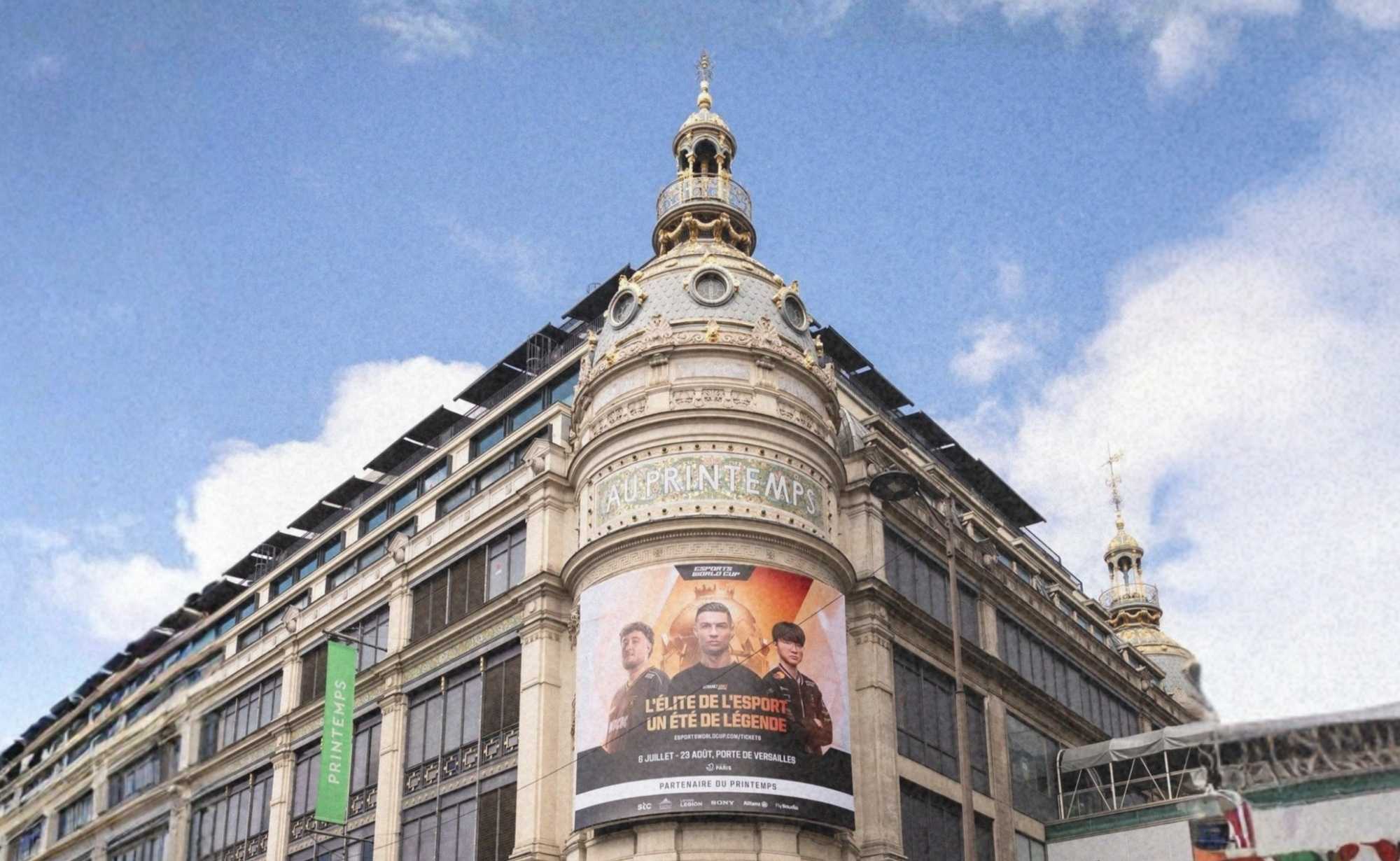
Today, a similar ambition is unfolding in Paris, while France is simultaneously competing in the 2026 Men's Football World Cup. (At the time of writing, France had not yet been eliminated from the tournament.) On the streets of Paris and across the walls of its Metro stations, the face of Cristiano Ronaldo appears on giant billboards. Not for football, but for esports, where he serves as a global ambassador.
"Cristiano is the most famous human being on earth today. He has values that we relate to a lot: competitiveness and success," Mohammed Al Nimer, Chief Commercial Officer of the Esports Foundation tells SceneNowSaudi. "We want esports to sit on the same pedestal as some of the biggest sports in the world."
Alongside Cristiano are the faces of esports' own stars, Chovy from South Korea, Vivian from Indonesia and more, signalling the arrival of a global, largely nationless phenomenon rooted not in national teams, but in clubs.
Unlike football, the Esports World Cup is contested between clubs rather than countries, with each club fielding players across the tournament's 25 games. I asked Musaed Al Dossary, Saudi esports player and co-founder and CEO team Falcons, whether that presents a barrier to building fan loyalty. In traditional sport, national identity, geopolitics and shared cultural histories naturally create allegiances. Esports doesn't have that advantage. He didn't seem to think it mattered.
"We do prioritise having Saudi talent on the team but as a club we need to also sign the best players, regardless of where they are from," Al Dossary tells SceneNowSaudi.
Inside the tournament, the space itself feels global. It doesn't feel particularly Saudi, nor particularly French. Even early in the morning, the venue is dimly lit, the gaming aesthetic superseding anything rooted in national culture. It almost supersedes time and place. The only culture here is gaming culture.
People are meeting for the first time in real life after years of knowing each other online. One couple told SceneNowSaudi they met playing the tactical hero shooter game Valorant and are now dating. They travelled to Paris to watch their favourite game, which also appears to be a favourite among French audiences.
"Gaming brings online communities together in a way that no other sport does. That digital-first connection is something you can't get through traditional sports," Dinsmore says.
Crowds gathered around giant screens projecting the match unfolding between two players seated silently on stage. The commentators roared, the audience held its breath, then erupted together. Close your eyes, and it could have been a football match. “We are aiming for a global entertainment sports brand that is not there yet. We can become our own thing, maybe like tennis.” Scheuermann explains.
According to the Saudi Press Agency, the global gaming market recorded more than USD 184 billion in revenues in 2023, with esports estimated at USD 4.3 billion in 2024. The gaming market is projected to reach USD 205.4 billion in 2026.
Beyond the billions invested by Saudi Arabia, the record viewership and the streaming numbers, esports finds itself at an interesting cultural segue. Five years ago, gaming was still widely dismissed as excessive screen time or an isolating hobby. Today, it is trying to position itself as a global spectator sport, primarily designed to be watched, and rooted in a social collective culture, just like traditional sports.
For anyone outside that world, it's difficult to comprehend the scale of its audiences, economies, subcultures and communities. It is an ecosystem unto itself. Whether it ever becomes the next football remains to be seen. Or, as the Esports Foundation's own Chief Games Officer Fabian Scherman puts it, "Maybe not football, but we can be like tennis."
- Previous Article SceneNoise x Amsterdam Dance Event Present CROSSFADE: Egypt
- Next Article Early Islamic Settlement Unearthed at Hulayit in Al Dawadmi