



Palestine Sports for Life Uses Sport to Support 1,250 Children
Palestine Sports for Life's new programme is training local teachers and community trainers to deliver sport-based learning and psychosocial support to children across Gaza and the West Bank.
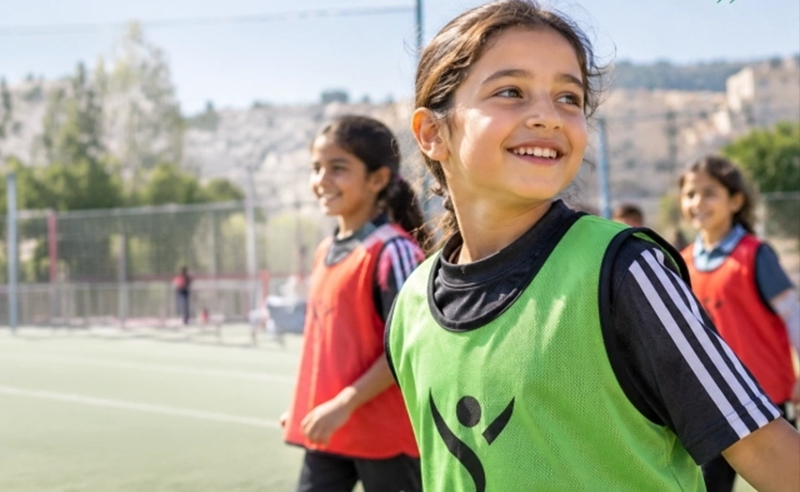
Teachers and community trainers across the West Bank and Gaza began delivering Circle In in June 2026, a three-year programme designed to reach 1,250 Palestinian children through sport-based learning and psychosocial support.
Delivered by Palestine: Sports for Life (PS4L), with funding from Qatar Foundation, Education Above All Foundation and the International Olympic Committee, its first phase is designed to reach 1,250 children from 25 schools, with a particular focus on girls, children with disabilities, refugees and displaced children.
That work is unfolding within an education system in Gaza where nearly 98 per cent of school buildings had been damaged by April 2026, according to UNICEF. Circle In relies on local teachers and community trainers, reflecting PS4L’s wider use of community-based networks as conventional schooling and movement between communities remain disrupted.
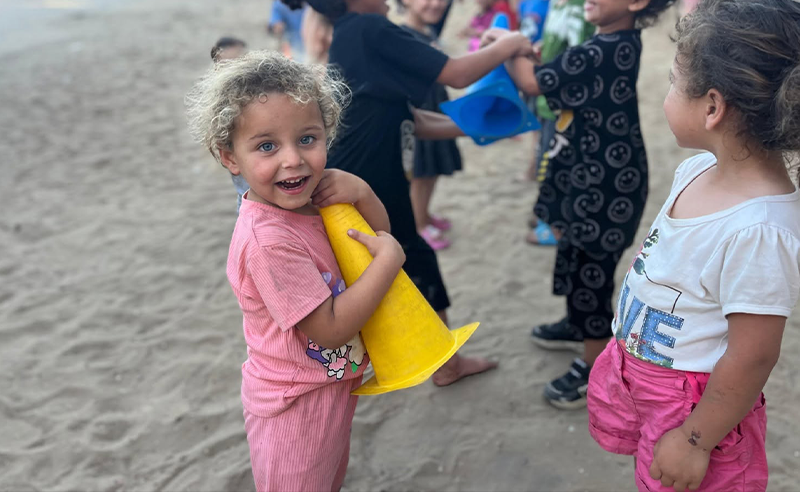 The initiative builds on an approach PS4L has developed since 2010, using sport to give children access to opportunities, relationships and skills that extend beyond competition.
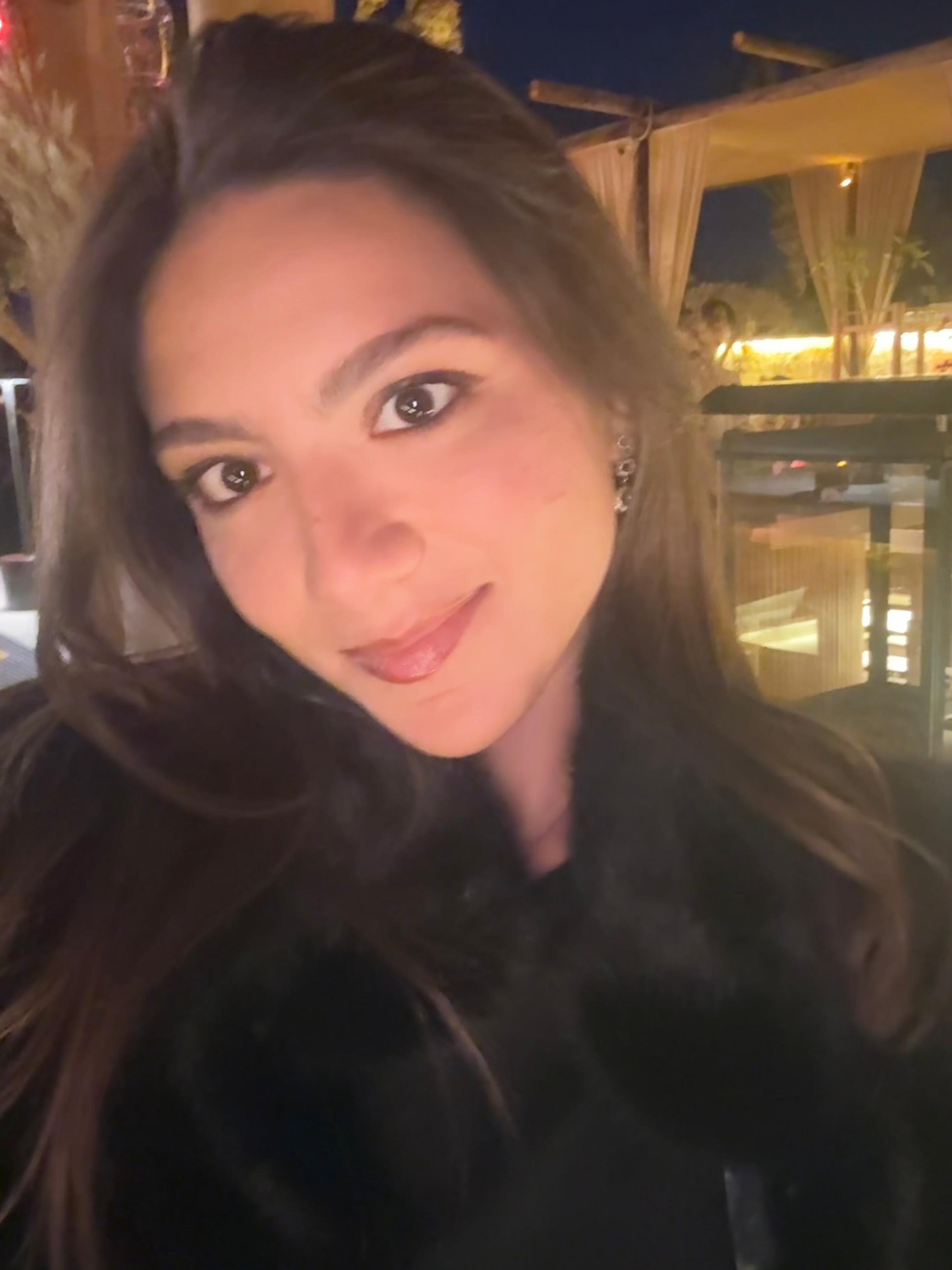
Co-founded and directed by Tamara Awartani, the Palestinian nonprofit works across the West Bank, East Jerusalem and Gaza, training teachers, coaches and community facilitators to incorporate sport into their work with children.
“We started small, but then, because of our reputation, anyhow, we grew up here,” Awartani tells SceneSports. “And this is how it grew.”
The organisation’s approach is rooted in Awartani’s own experience. Growing up in Palestine, she played basketball, swam and rode horses before representing both Palestine and Jordan in basketball.
Playing abroad introduced her to the freedom that sport could offer beyond competition: the chance to move, travel, build friendships and find a community away from the restrictions surrounding everyday life.
“It always gave me a feeling of having some kind of freedom on the basketball court or in the swimming pool,” she says. “You just lock out everything else that is surrounding yourself, but then in that moment, in that sense, there’s a whole different story.”
She returned to Palestine wanting other children to experience some version of that feeling.
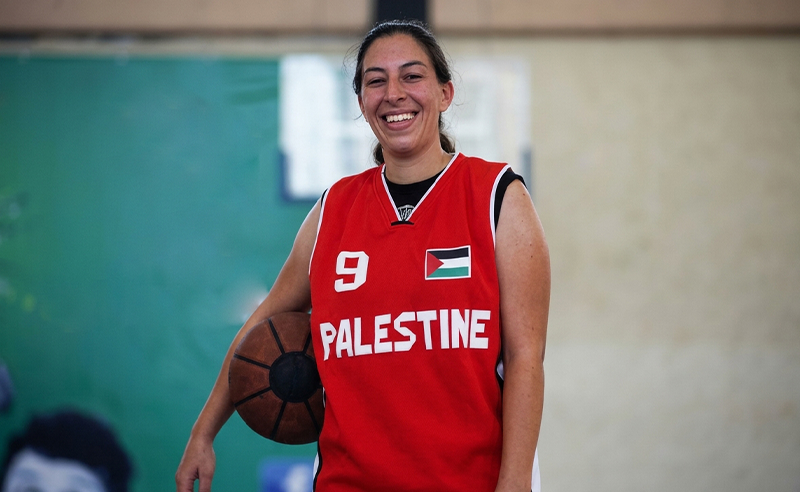 “I learned so much through sports, and I wanted to give that back to my country as well, to the children who did not get the chance to leave, or even join any team,” she says.
What began as a small group of athletes volunteering their time has developed into a wider network of teachers, trainers and community organisations.
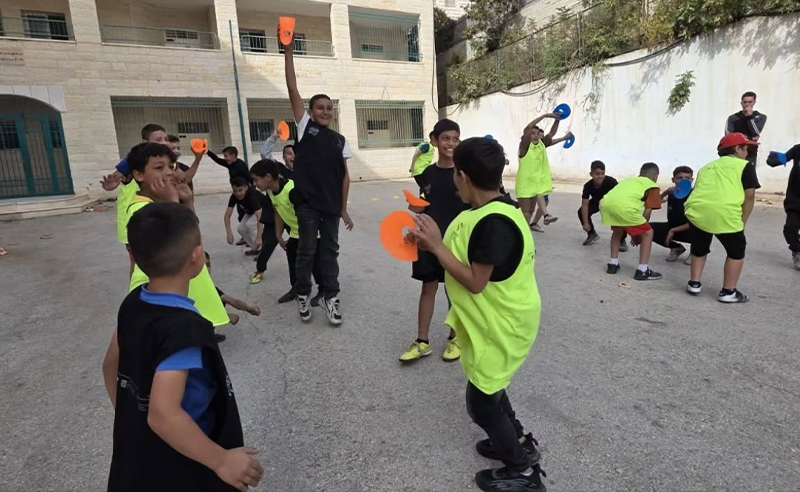
PS4L works through schools and youth centres, equipping people already connected to children to use sport to develop life skills, encourage inclusion and support their wellbeing.
A physical education lesson, for example, can become an exercise in communication, decision-making or teamwork.
Sport can also be incorporated into existing psychosocial support, allowing children to participate without being expected to explain what they are experiencing.
“We teach someone, and they teach that to the other ones,” Awartani says.
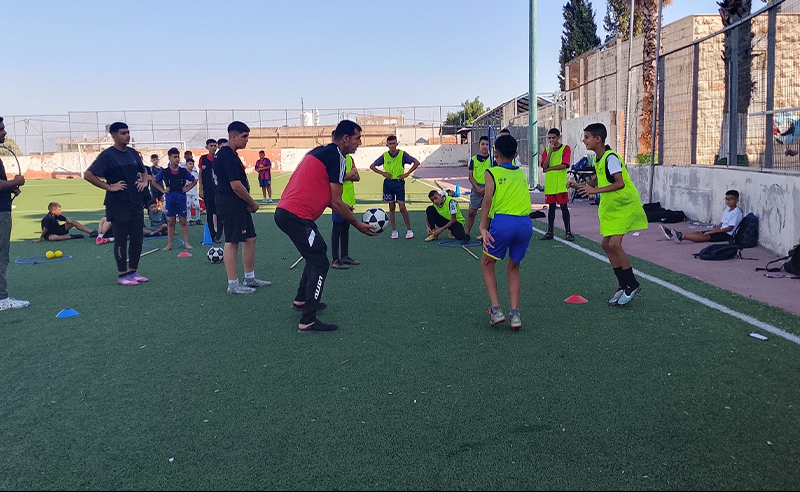 That model has become particularly important in Gaza, where PS4L has worked since 2016. Restrictions on movement have long made it difficult for staff to travel between the West Bank and Gaza, leading the organisation to train local instructors who can continue working within their own communities.
The need for that local network has grown since October 2023, as displacement, disrupted education and the loss of familiar spaces have affected children across Gaza.
PS4L has adapted its activities to changing conditions, including establishing temporary learning spaces from 2024.
The organisation has also run programmes focused specifically on mental health and psychosocial support. PS4L partnered with Free to Run in April 2025 to launch Al Amal, a programme for adolescent girls and young women in Gaza.
It combines movement-based activities, including yoga and strength training, with practical techniques for stress management, anxiety reduction and self-regulation.
 The programme operates in Deir al-Balah, Khan Younis and Gaza City and had reached more than 300 girls and young women by October 2025, according to the organisations.
Sessions provide a structured space for participants to connect with others and work through difficult emotions amid ongoing displacement.
One mother told the organisations that her daughter, who had stopped speaking following trauma, began interacting with her family again after attending several sessions.
The account reflects a central part of PS4L’s approach: participation does not have to begin with conversation. Physical activity can provide a way for children to engage with others at their own pace, with structured sessions creating opportunities for communication and reflection.
“You don’t have to talk at first, you know, you are just playing,” Awartani says. “Passing the ball is already communicating, because you’re looking at someone in the eye. You are communicating with them.”
PS4L combines sport with psychosocial support and does not present physical activity as a substitute for specialist mental health care.
Circle In relies on the same local-delivery model. The programme had trained 15 teachers and community trainers in the West Bank and 10 in Gaza at launch to deliver activities to participating children.
The training includes sport-based learning, psychosocial support, mental health, child protection and inclusion, helping local facilitators create safer environments for children.
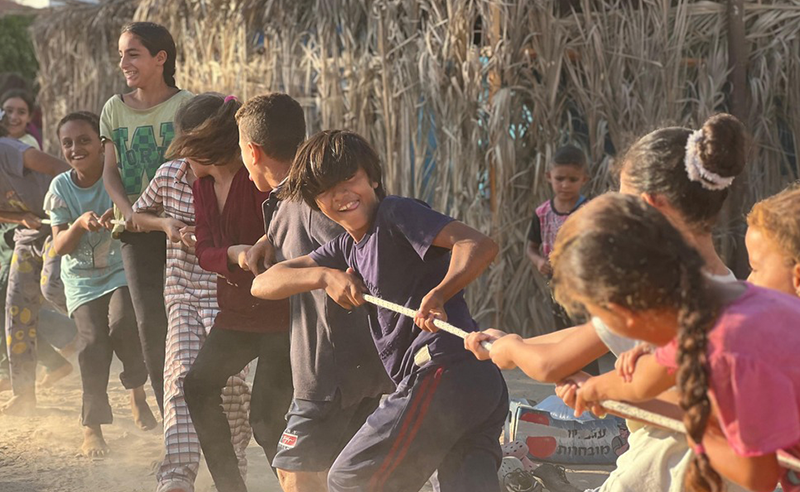 The emphasis on local delivery also reflects the realities facing communities in the West Bank.
Displacement and restrictions on movement in Tulkarem, Jenin and Tubas have made it harder for children and programme staff to travel between communities.
Activities that would ordinarily bring participants together can become difficult to organise, requiring PS4L to adjust plans around what is accessible and safe.
The organisation’s community-based model allows trained facilitators to continue working close to where children live, even when travel between districts becomes impossible.
“At first, we did this as part of tradition, culture, different ways of, you know, needs in the different communities, so we would train the ones that are in the community,” Awartani says. “But now it’s also coming in as the mobility, because you cannot really move how you want.”
Planning requires constant flexibility.
“You never have one plan for one thing,” she says. “You always have a thousand.”
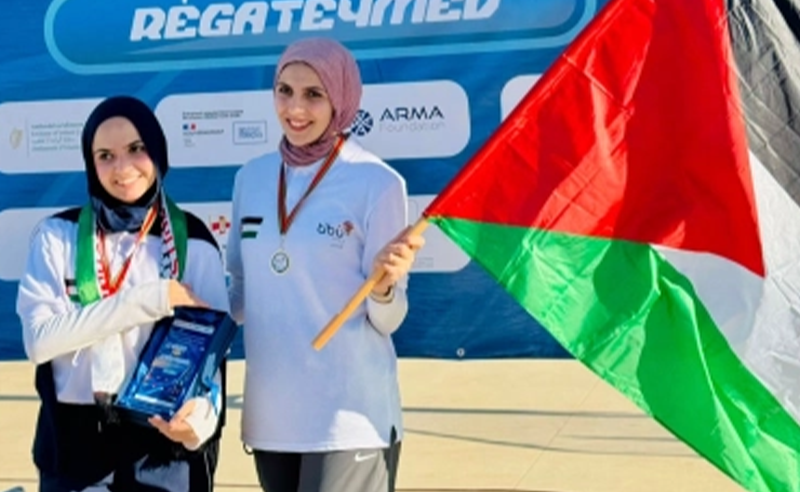 Access to sport can open further opportunities for girls. Awartani estimates that around 70 per cent of PS4L’s programmes are designed for girls, with initiatives spanning football, running, leadership, education and financial skills.
Ten girls from Tulkarem travelled to Mexico City in May 2026 for the Street Child World Cup, an international event combining football with cultural exchange, leadership development and advocacy for children’s rights.
Their participation gave them a platform to represent their community internationally and bring their experiences to a wider audience.
PS4L also points to longer-term outcomes beyond the number of children reached. Awartani says girls who have participated in its programmes have gone on to university and received educational funding, with opportunities emerging from the skills and relationships they developed through sport.
PS4L won the International Sport and Culture Association’s Global IRTS Award in the IRTS & Mental Health category in 2025, which recognises projects using sport and physical activity to support mental wellbeing, resilience and empowerment.
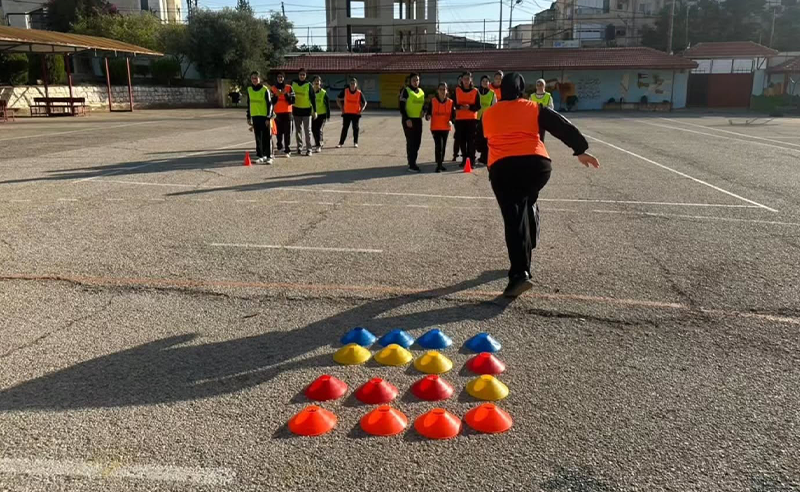 For Awartani, the value of the work lies in what sport can make possible beyond the activity itself.
“The belief that sports can do so much more than just playing sports, but it can affect the person’s health, the person’s mental health, the person’s economic situation, the person’s education,” she tells SceneSports.
PS4L’s work continues to rely on the people and communities who keep those opportunities accessible more than 16 years after it began with a small group of athletes.
Circle In is the latest expansion of that model, with sport serving as an entry point to learning, connection and support under circumstances that continue to reshape how and where those activities can happen.
“As I said at the start, sports is not just what you do on the court, but it’s also the family you build, and it’s everything that you connect with it off-court,” Awartani says.
- Previous Article Your Teta is Your Plus-One at Teta Loula’s Dish Party
- Next Article The Book Department Opens Its Doors in Diriyah’s JAX District
Related Articles
Trending This Week
-
-
-
 Nov 08, 2026
-
 Nov 09, 2026