




Why Egypt Was Denied a Request to Move to Seattle Ahead of Iran Game
"Security reasons cited" could mean a number of things.

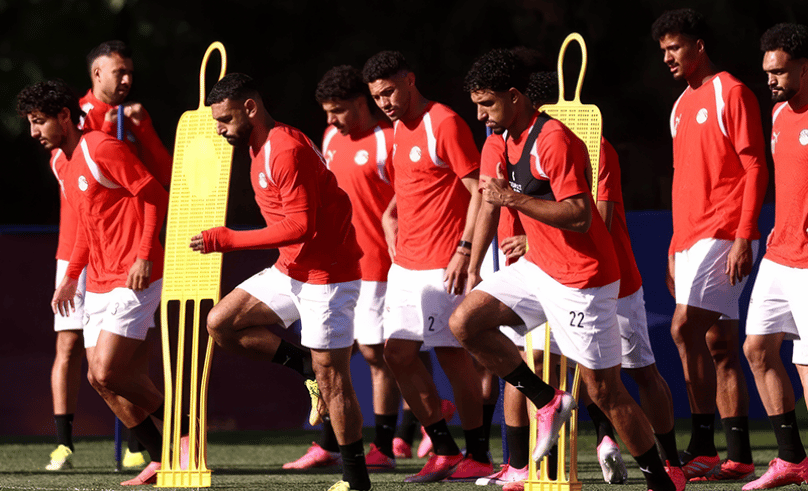
Following a historic win against New Zealand in their second group stage game at the 2026 FIFA World Cup, the Egyptian National Football Team wanted to change course and fly directly to Seattle, where they will take on Iran in the final first round game.
For the duration of the World Cup’s group stage games, the team has set up camp in Spokane, Washington - about a four-hour drive away from Seattle. According to a statement released by the Egyptian FA, the team had “wanted to travel directly to Seattle to preserve the players from travel fatigue due to the numerous trips” in preparation for the match on June 26th.
That request, however, was rejected. Egyptian manager Hossam Hassan said that “security authorities refused the team's request to stay in the city of Seattle as planned after the New Zealand match in the World Cup, and therefore the team's delegation will return to the city of Spokane.”
-ac2751bf-5297-4c32-ab3e-26b5c937bdad.png) The news has since become widely circulated, with several news outlets and media publications claiming that Egypt had been denied entry into Seattle. Some have gone to the extend of claiming the national team was “barred” from accessing the city prior to the game.
Throughout the course of the FIFA 2026 World Cup, security issues have become a topic of discussion. Iran was forced out of LA and back to their training camp in Mexico immediately following their game against New Zealand.
Senegalese and Ivorian fans have been denied from entering the US entirely, Uruguay’s National Team flight from Cancun, Mexico to Miami, Florida was temporarily denied airspace clearance, and a number of players and staff were on the receiving end of excessive security searches, including Iraq’s Aymen Hussein who was reportedly interrogated by U.S. border officials for seven hours. While Egypt’s case looks the same on the outside, it is a different situation than the aforementioned cases.
There were no reasons cited as to why Egypt’s request was refused. But FIFA has set out a number of strict rules and regulations both for the selection of training grounds and for local authorities to follow when securing and ensuring the safety of the teams and their players.
The news has since become widely circulated, with several news outlets and media publications claiming that Egypt had been denied entry into Seattle. Some have gone to the extend of claiming the national team was “barred” from accessing the city prior to the game.
Throughout the course of the FIFA 2026 World Cup, security issues have become a topic of discussion. Iran was forced out of LA and back to their training camp in Mexico immediately following their game against New Zealand.
Senegalese and Ivorian fans have been denied from entering the US entirely, Uruguay’s National Team flight from Cancun, Mexico to Miami, Florida was temporarily denied airspace clearance, and a number of players and staff were on the receiving end of excessive security searches, including Iraq’s Aymen Hussein who was reportedly interrogated by U.S. border officials for seven hours. While Egypt’s case looks the same on the outside, it is a different situation than the aforementioned cases.
There were no reasons cited as to why Egypt’s request was refused. But FIFA has set out a number of strict rules and regulations both for the selection of training grounds and for local authorities to follow when securing and ensuring the safety of the teams and their players.
-6cd7edae-3390-4749-bf98-42fdf12bc26f.png) FIFA regulations listed on its website state that “training sites will need to have security perimeter fencing to prevent any viewing of the site from beyond its perimeter. Team training and movements around a training site can provide information on tactics, player selection and conditions, and are consequently sensitive. Therefore, it is essential to ensure that site access is secure and the potential for remote viewing, including drone footage, is considered.”
The governing body also states on its website that secure fencing is a minimum requirement for all training sites. CCTV monitoring, which requires clear lines of sight, is essential at the elite level and recommended for most site types.
There's also a scheduling factor worth considering. Seattle's Lumen Field, known as Seattle Stadium for the duration of the tournament, hosts Qatar vs. Bosnia and Herzegovina on June 24th, just two days before Egypt's match.
FIFA regulations listed on its website state that “training sites will need to have security perimeter fencing to prevent any viewing of the site from beyond its perimeter. Team training and movements around a training site can provide information on tactics, player selection and conditions, and are consequently sensitive. Therefore, it is essential to ensure that site access is secure and the potential for remote viewing, including drone footage, is considered.”
The governing body also states on its website that secure fencing is a minimum requirement for all training sites. CCTV monitoring, which requires clear lines of sight, is essential at the elite level and recommended for most site types.
There's also a scheduling factor worth considering. Seattle's Lumen Field, known as Seattle Stadium for the duration of the tournament, hosts Qatar vs. Bosnia and Herzegovina on June 24th, just two days before Egypt's match.
-b8783b7d-f195-41bf-ace9-62a52586828f.png) Host cities running consecutive tournament fixtures typically lock in security perimeters, hotel allocations, and law enforcement coordination on a per-match cycle. An unscheduled early arrival from another delegation, even one as low-risk as Egypt's, can complicate that timeline before the city's resources have shifted toward the next fixture.
There's no shortage of evidence that US immigration and border enforcement has created real, well-documented friction for World Cup delegations this tournament. But Egypt's situation, as it stands, doesn't carry the same fingerprints.
Host cities running consecutive tournament fixtures typically lock in security perimeters, hotel allocations, and law enforcement coordination on a per-match cycle. An unscheduled early arrival from another delegation, even one as low-risk as Egypt's, can complicate that timeline before the city's resources have shifted toward the next fixture.
There's no shortage of evidence that US immigration and border enforcement has created real, well-documented friction for World Cup delegations this tournament. But Egypt's situation, as it stands, doesn't carry the same fingerprints.
- Previous Article SceneNoise x Amsterdam Dance Event Present CROSSFADE: Egypt
- Next Article Haridi Breaks Egyptian Record With Double Gold Win in Croatia